
Thoreau-back Thursday is my homage to Henry David Thoreau. This storied naturalist wandered the fields and forests of Concord, Massachusetts over 150 years ago; leaving a wealth of observations as his legacy. These are the same lands I now explore myself. There have been many changes in the landscape since Thoreau’s time, but there is still much to be learned from his writings.
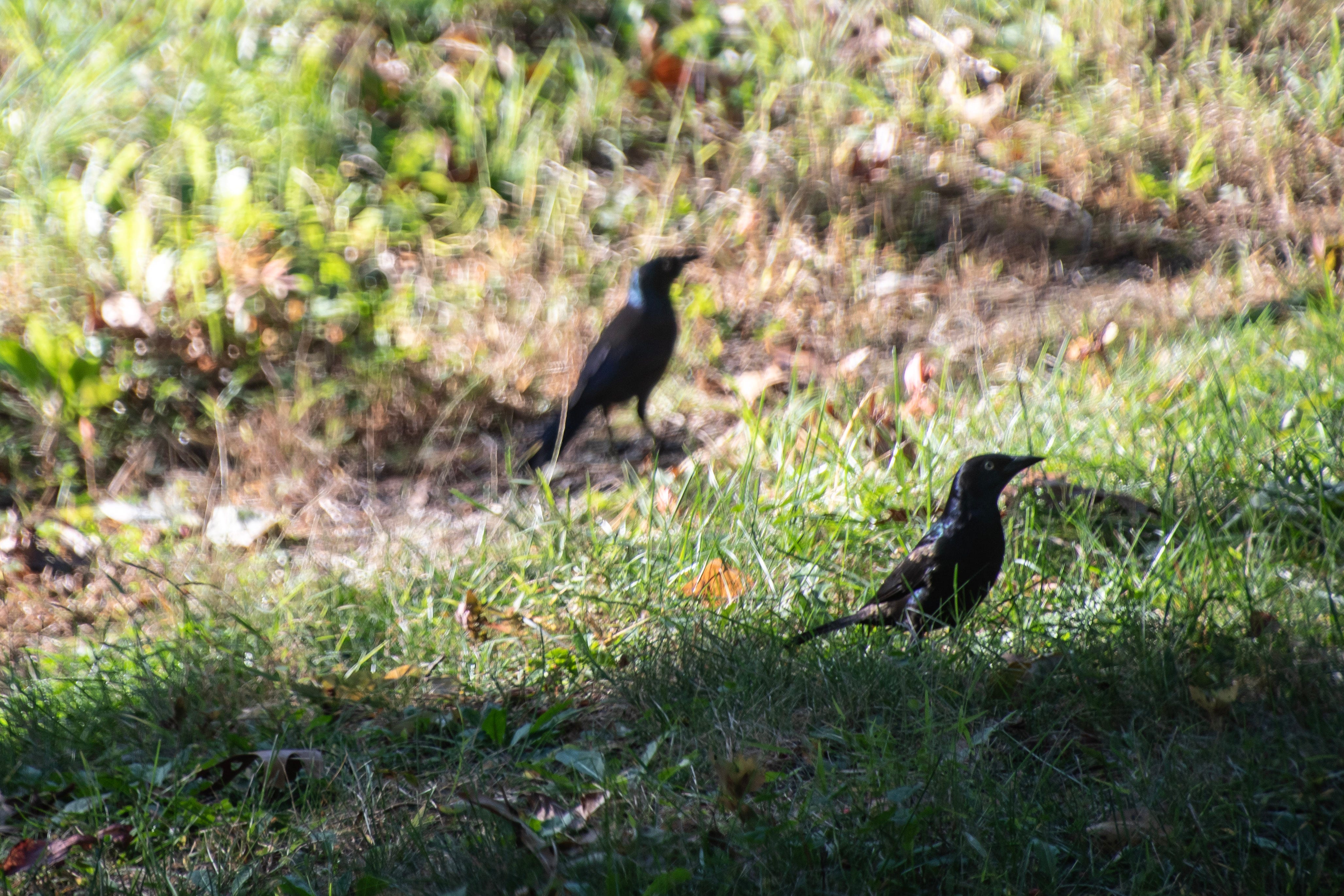
Every fall our front yard is swarmed by enormous flocks of common grackles (Quiscalus quiscula). They cover the ground, fill the trees, and chatter so loudly that they might even momentarily drown out the private jets flying from Hanscom. My wife and I joke about their annual arrival being a “grackle-pocalypse.” Thankfully, they haven’t brought the end of the world yet. The video below provides a brief example of an autumnal grackle gathering here in Concord (November 10, 2023).
Their burst of abundance typically occurs between late September and mid-November, usually in multiple waves. In his journal, Thoreau records grackles in both spring and fall; often highlighting the size of the flocks he observes [1].
“A large flock of grackles amid the willows by the riverside…There they keep up their spluttering notes, though somewhat less loud, methinks, than in spring. These are the first I have seen, and now for some time, I think, the red wings have been gone. These are the first arrivers from the north where they breed.” September 30, 1858
In several journal entries he notes that the grackle’s Icterid cousin, the red-winged blackbird (Agelaius phoeniceus), often leaves the area before large numbers of grackles arrive. Both the Cornell Lab of Ornithology [2] and Peterson [3] show all of Massachusetts as year-round range for the species. However, they also depict the primary grackle breeding grounds well north of the state line.
“See a large flock of grackles steering for a bare elmtop near the meadows…I have not seen red-wings [for] a long while, but these birds, which went so much further north to breed, are still arriving from those distant regions, fetching the year about.” October 16, 1858
“Where are the red-wings now? I have not seen nor heard one for a long time. Is this a grackle come from its northern breeding-place? September 20, 1859
My most notable grackle encounter occurred not in Concord, but in the Blue Hills Reservation to the south of Boston. While on a hike I came upon a beech nut feeding frenzy. As husks rained down from the canopy I heard the cacophony above. When one group flew off from its perch you could feel the force that it made launching back into the sky.
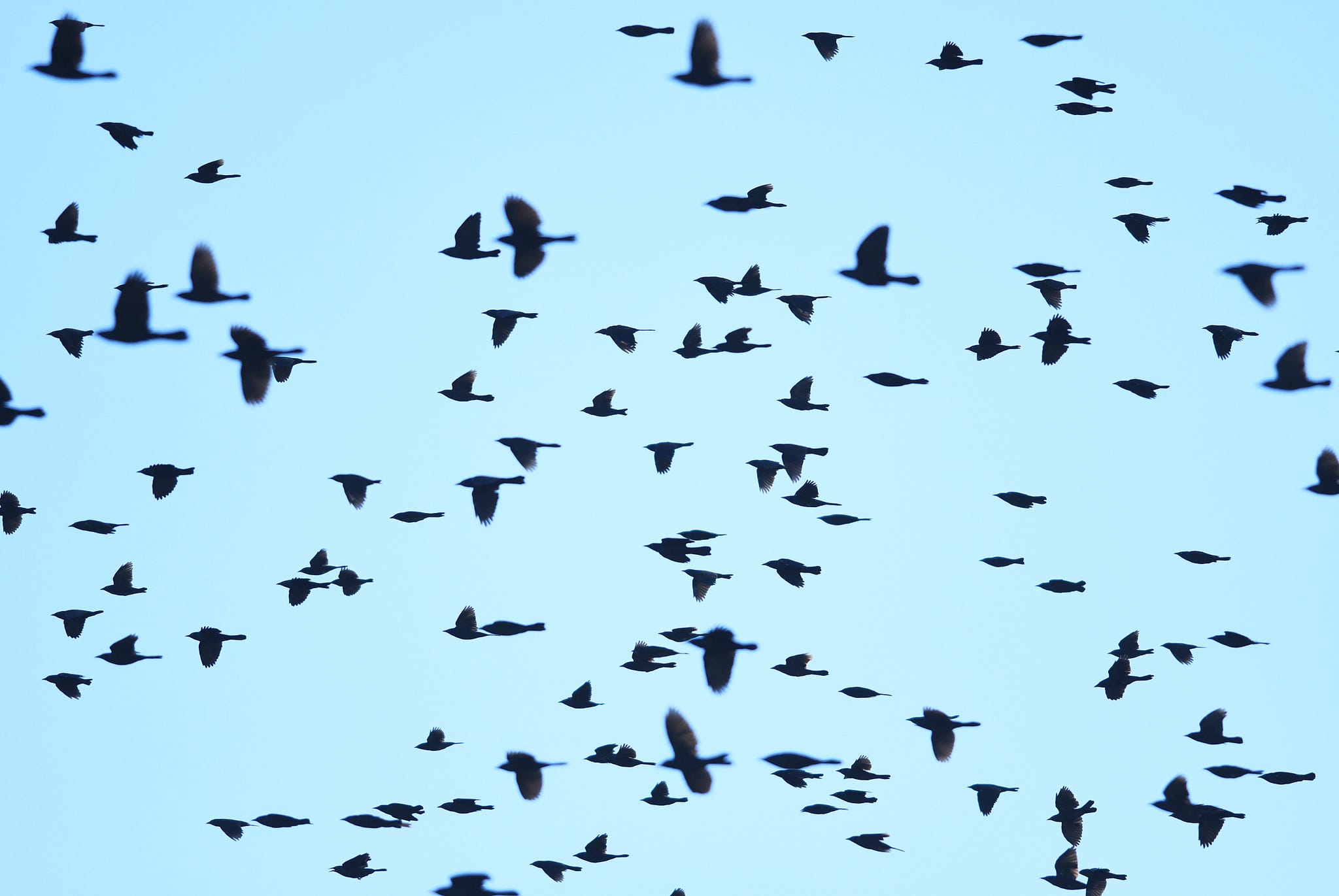
According to MassAudubon, these impressive flocks can sometimes reach one million birds as they gather before heading south [4]. Apparently, they do not travel far, but as the flocks always seem to leave Concord as quickly as they arrive, I suspect that wherever they overwinter is south of here. Ludlow Griscom’s Birds of Concord provides some historical context to their presence in the region [5]. He notes that they are a “local and uncommon breeder in scattered small colonies” but “a transient in spectacular abundance both spring and fall.” He goes on to mention a handful of extraordinary observations including one from October 28, 1903, where there was “an unbroken flock two miles long.” Another observation from November 11, 1947, describes “an unbroken dense flock, about 20 birds wide and over one-quarter mile long, estimated to contain at least 27,000 birds.”
Richard K. Walton’s Birds of the Sudbury River Valley echoes much of Griscom’s accounts [6]. The author describes the common grackle as “a common spring migrant and summer resident, abundant at times in the fall.” Walton notes a peak of late October “when tremendous flocks of grackles are noted.” A maximum count by Wellmen et al. on October 26, 1952, is listed as an astounding 500,000 birds.
Thankfully, their status in Massachusetts seems secure. In the first Massachusetts Breeding Bird Atlas (1974-1979), the species was found in 84% of surveyed blocks across the state. During the second Atlas (2007-2010) they were found in 95%. In the area where I live, the common grackle was found in 99.3% of surveyed blocks [7]. Granted, the vast majority of grackles moving through Massachusetts every fall are coming from points north. In Vermont the species appears to be stable as well. A similarly timed set of Atlas projects shows a decrease of 2% in surveyed priority blocks [8]. Despite earlier human persecution, brought on by the grackle’s “crop raider” reputation, it seems we may continue to enjoy their presence throughout the northeast.
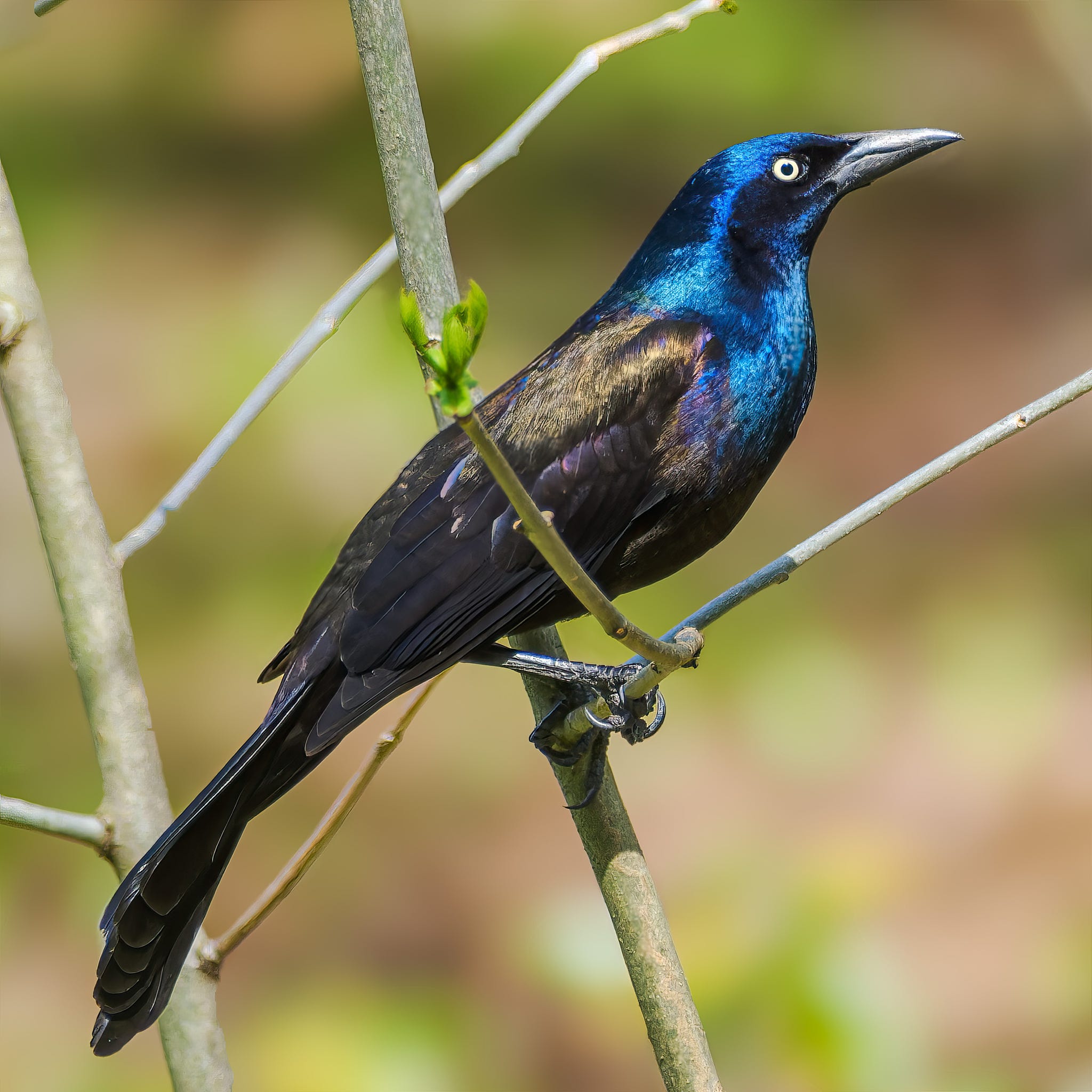
Keep your eyes and ears out for these impressive swarms this time of year. They’re hard to miss. If you’re lucky enough to see one stay still for a minute, they are a beautifully iridescent bird in the right light.
[1] Ray Angelo has prepared a PDF of the complete 1906 limited edition 14 volume set of Thoreau’s Journals. The search term “grackle” can be found 73 times in Thoreau’s journal. However, 12 of these represent the “rusty grackle”, or rusty blackbird; a different species.
[2] Cornell University’s “All About Birds” website has a nice range map for the species. This site also has a dynamic observation map based on eBird reports.
[3] Roger Tory Peterson’s classic Peterson Field Guide to Birds of Eastern and Central North America 6th ed. (2010) has a range map almost identical to that of Cornell.
[4] MassAudubon has a webpage with some basic grackle information.
[5] Griscom, Ludlow. 1949. Birds of Concord. Harvard University Press.
[6] Walton, Richard K. 1984. Birds of the Sudbury River Valley: An Historical Perspective. Massachusetts Audubon Society.
[7] Mass Audubon surveys from 1974-1979 produced the Massachusetts Breeding Bird Atlas 1. A second Atlas was produced with data between 2007 and 2011. Concord lies within the South New England Coastal Plains ecoregion. It’s important to note that these Atlas efforts focus on presence across the state and do not necessarily imply that species abundance is at a sustainable level. Additionally, the surveys focus on the breeding season; not the time of peak migration through the state.
[8] The Vermont Center for Ecostudies produced a first Breeding Bird Atlas from 1976-1981, and a second from 2003-2007.
No posts
Comments
Nothing yet. Say the first thing.
Sign in to join the conversation.