
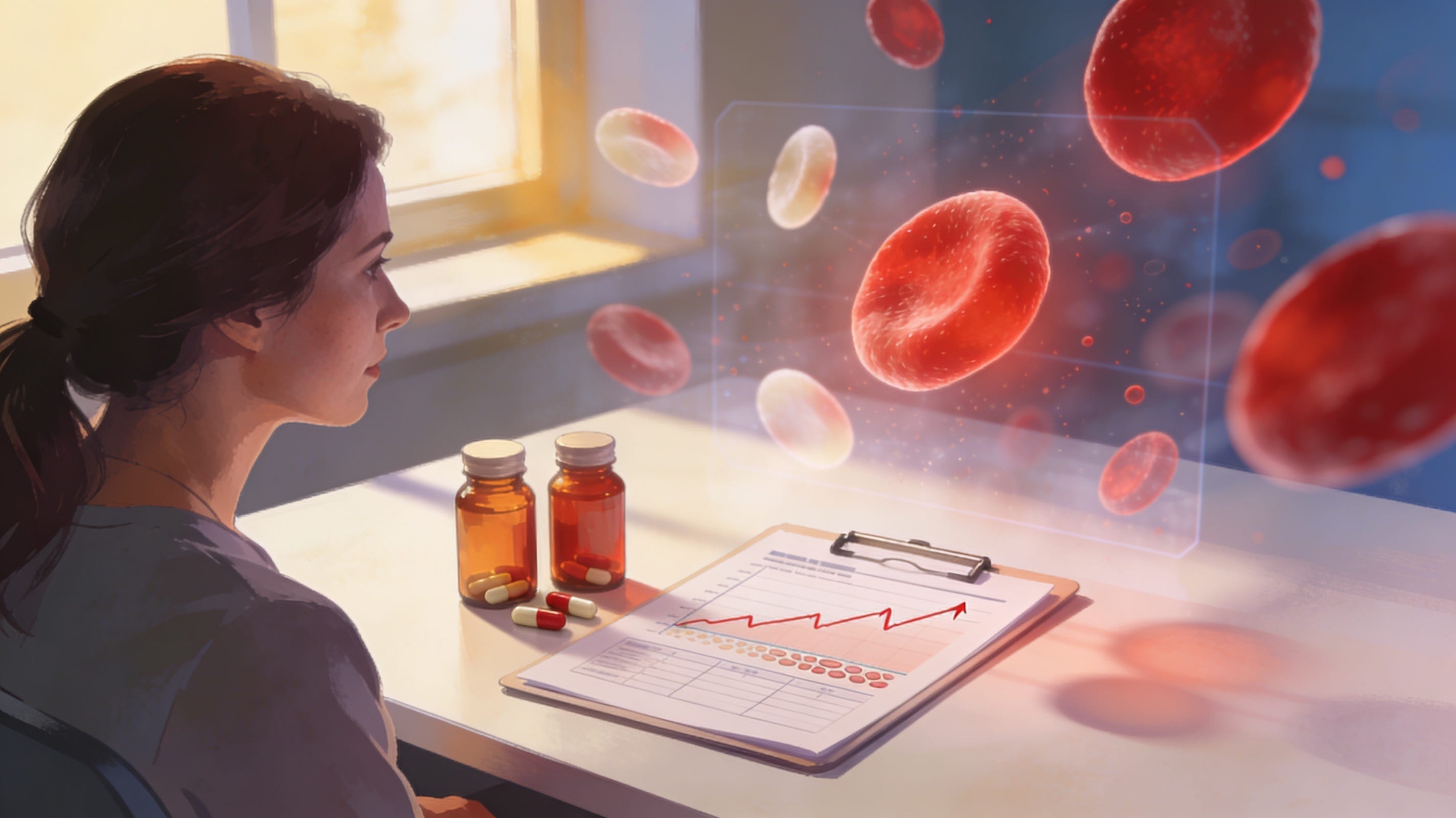
This case involves a woman in her 30s with prior vaccine-injury history, chronic fatigue, significant symptom burden, and laboratory-confirmed iron deficiency anemia with reactive thrombocytosis. All protected health information has been removed or generalized. Dates, identifying details, and nonessential specifics have been minimized to preserve privacy while retaining the clinical pattern.
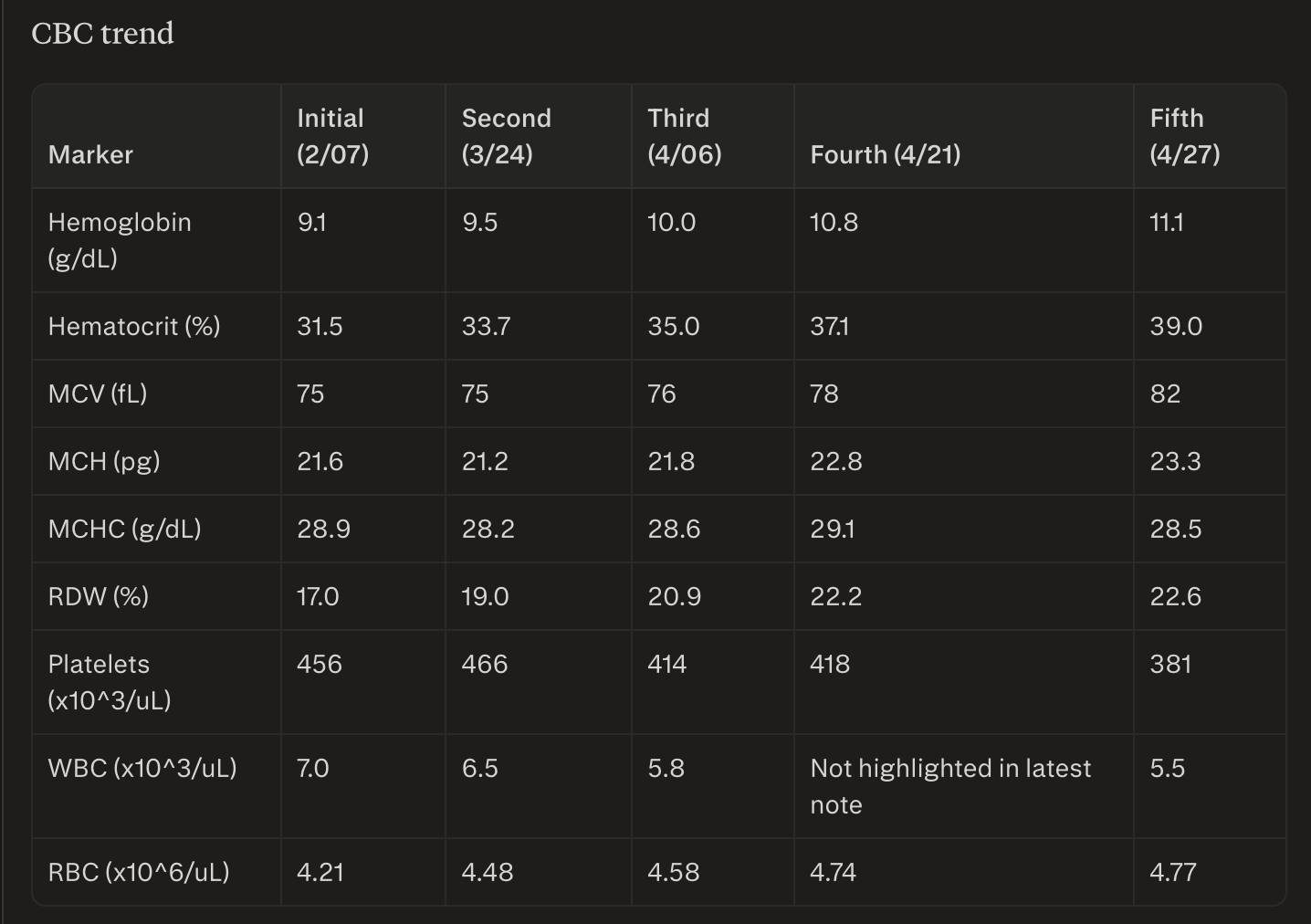
The patient initially presented with profound fatigue and a sense of feeling generally unwell. Her broader history included a baseline vaccine-injury syndrome with ongoing systemic symptoms, polypharmacy, dysautonomia/POTS physiology, and complex nutritional and inflammatory issues. Initial laboratory workup showed a classic iron-deficiency pattern: low hemoglobin, low hematocrit, low MCV, low MCH, low MCHC, elevated RDW, very low serum iron, very low iron saturation, and an elevated platelet count consistent with reactive thrombocytosis.
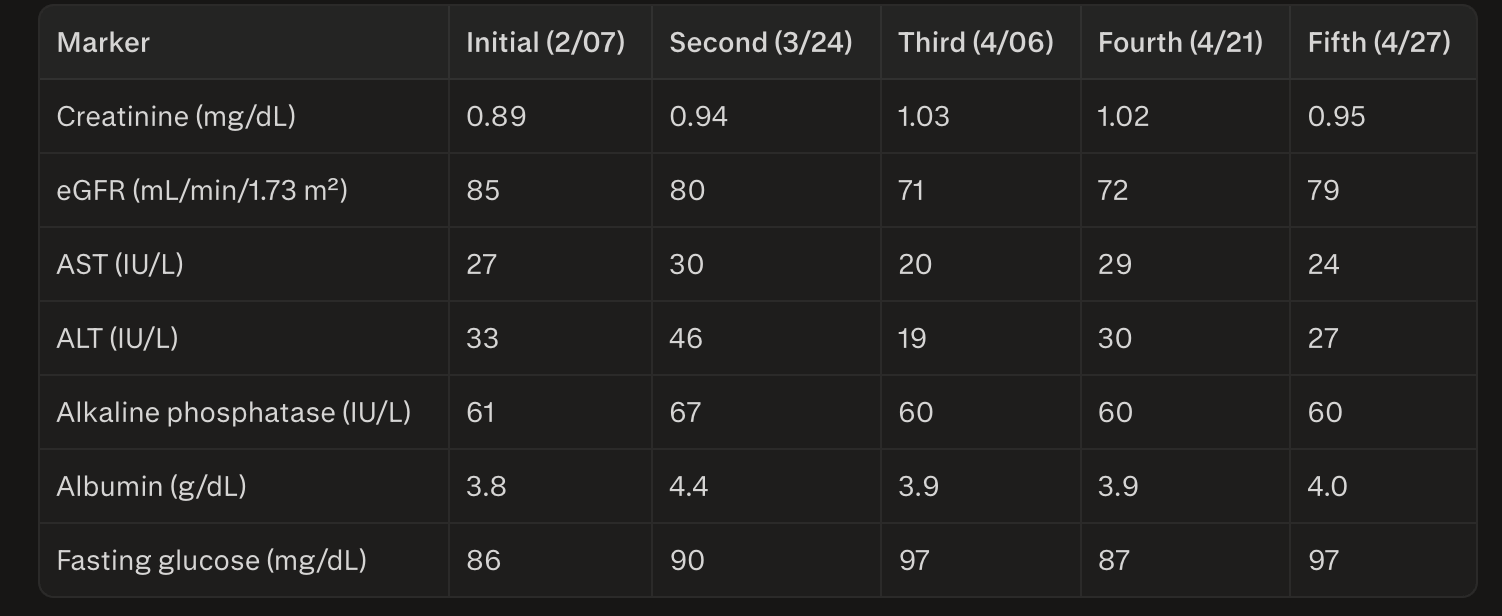
At one point in the course, there was also a mild ALT elevation. That raised concern for possible medication or supplement irritation, but the rest of the liver profile remained reassuring, and the abnormality later normalized.
This was not just a lab abnormality. The patient felt terrible. The degree of fatigue and systemic depletion was functionally significant, and the iron-deficiency pattern appeared to be contributing not only to poor stamina and exertional intolerance, but also to a reactive platelet elevation that could have added thrombotic concern in the context of her broader medical history.
The clinical question was straightforward: could a more targeted oral strategy improve marrow response, improve symptoms, and reduce the reactive thrombocytosis without creating gastrointestinal intolerance or hepatic stress?
The early laboratory pattern was strongly consistent with iron deficiency anemia:
- Low hemoglobin and hematocrit.
- Microcytosis and hypochromia.
- Elevated RDW.
- Markedly low serum iron.
- Markedly low iron saturation.
- Elevated platelet count consistent with reactive thrombocytosis.
A fecal occult blood test was negative, which was reassuring but did not fully exclude intermittent or occult gastrointestinal loss. Just as importantly, the patient menstruated during the study period, including a heavier-than-usual cycle during the later phase of treatment. That matters because it means the observed laboratory improvement occurred in spite of an expected source of ongoing monthly iron loss rather than in the absence of it.
A consulting pharmacist recommended two products as part of the next phase of care:
- Sideral, an Italian sucrosomal iron, one capsule daily.
- Heart and Soil Lifeblood, six capsules daily, a whole-blood bovine extract product intended to provide heme-based nutritional support.
As part of a broader, whole-body approach, the patient was also guided to use organic castor oil liver compresses during this phase. The intent was to support bile flow, facilitate liver function, and help calm low-grade liver inflammation while iron repletion was underway.
She also remained on elements of a broader recovery protocol, including Vedicinals 9 oral liquid and Aurmina baths, while other therapies were held in reserve until iron stabilization improved.
Before moving to Sideral and Lifeblood, the first therapeutic step was a gentler, food-based liquid iron strategy using Floradix layered on top of ongoing lactoferrin. That choice was deliberate. It offered a low, steady dose of iron with generally good tolerability and was a reasonable place to begin in a patient with significant symptom burden and concern for gastrointestinal side effects.
Over the first several weeks, however, the response looked limited. The pattern remained one of marked depletion, with ferritin at 6, iron saturation at 5%, serum iron remaining low, and platelets still running in a reactive range. In other words, Floradix may have been tolerated, but by itself it did not appear to be generating the strength of response needed for the degree of deficiency present in this case.
Sideral uses a sucrosomal form of iron in which the iron is wrapped in a phospholipid and sucrose-ester matrix. That structure helps the iron pass through the stomach with less breakdown and less direct contact with the gastric lining, then reach the intestine for absorption. In practical terms, that is one of the reasons sucrosomal iron is often better tolerated than traditional oral iron salts, especially in patients who are sensitive to nausea, bloating, constipation, or general GI irritation. (Although not relevant in this case, this is also a consideration in patients who have had gastric bypass.)
That characteristic mattered here. This patient was already burdened by systemic symptoms and multiple therapies. A formulation that could move through the stomach more gently, remain more intact through the upper GI tract, and still deliver clinically useful iron made sense as a strategic oral option before escalating to infusion therapy.
Heart and Soil Lifeblood is formulated from grass-fed whole blood extract, spleen, and liver. From a nutritional perspective, that means it is not just an iron product. It also provides heme-based iron along with cofactors and tissue-derived nutrients relevant to red blood cell production, oxygen delivery, and metabolic recovery.
The liver and spleen components are especially interesting in a case like this because they offer a broader package of naturally occurring nutrients associated with hematopoiesis, including compounds related to B-vitamin support, trace minerals, peptides, and iron-handling biology. In clinical terms, that may help explain why some depleted patients feel supported by organ-based formulations even before full normalization of standard iron indices occurs.
There is no financial relationship, sponsorship, affiliate relationship, paid endorsement, or conflict of interest with either Sideral or Heart and Soil Lifeblood in the care of this patient.
Tremendous thanks to David Restrepo, pharmacist and owner of Vitahealth Apothecary in New York City, for his thoughtful consultation and product guidance in this case.
Iron Studies Trend
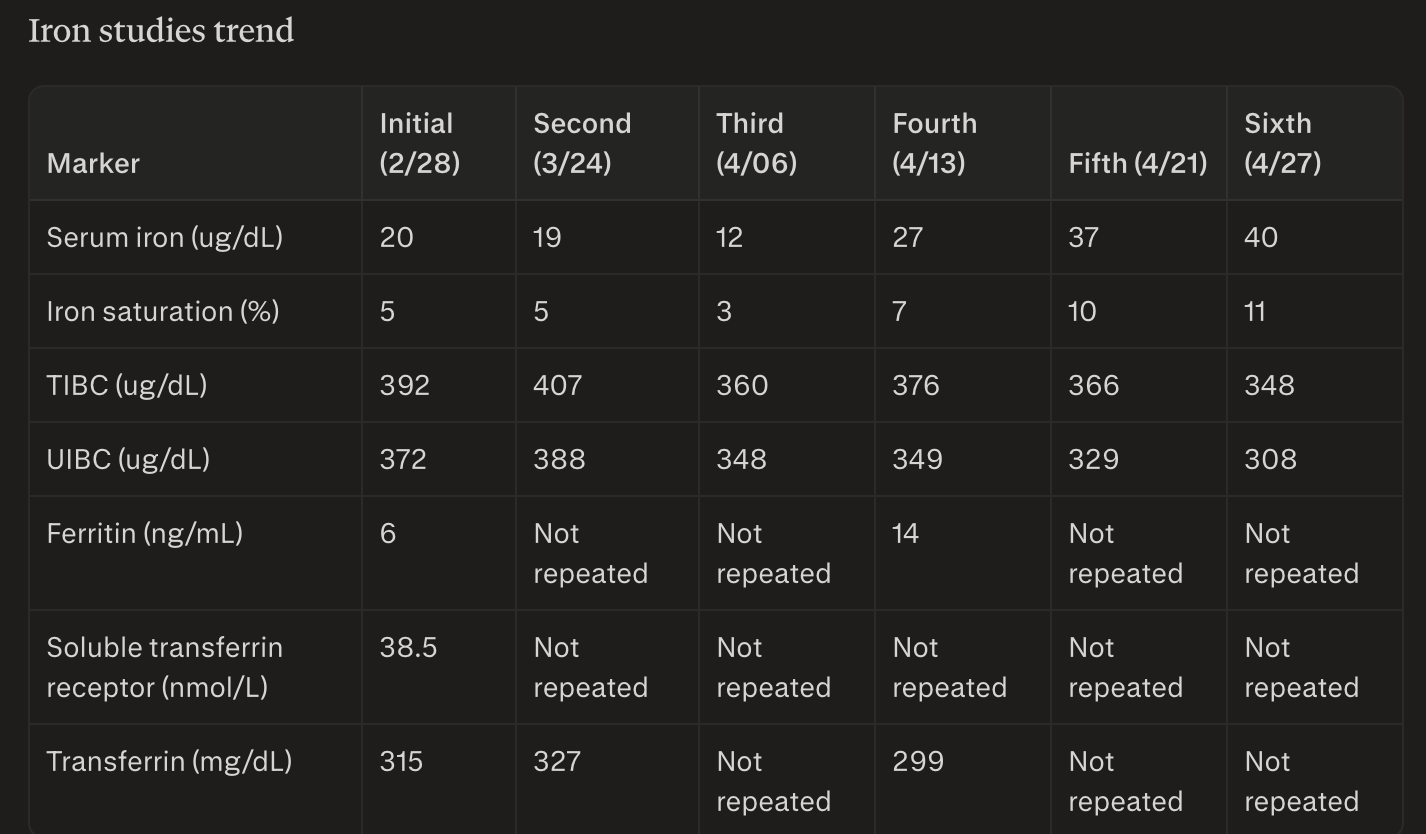
Ferritin crept from 6 to 14 ng/mL over this window and transferrin drifted down from 327 to 299 mg/dL, small but meaningful signs that true iron stores were beginning to replete as the Sideral + Lifeblood phase progressed, after only limited impact from the initial Floradix‑based approach.
Liver and CMP Trend
What makes this case more compelling is that the patient did not just improve on paper.
At follow-up, she reported significant improvement and described having real bursts of energy and more good days overall. She was still dealing with swings, sometimes feeling better one day and then very tired the next, but the pattern had clearly shifted away from unrelenting depletion.
That distinction matters. Early recovery from iron deficiency often does not feel smooth or linear. Patients may feel enough better to overdo it on a good day, only to crash the next. In a patient with overlapping POTS and vaccine-injury physiology, those oscillations are even easier to misread. But in context, the presence of genuine higher-energy windows is often a sign of improving physiologic reserve, not treatment failure.
She also reported that her most recent menstrual period was heavier than usual, yet the laboratory trajectory still improved. That makes the trend more impressive, not less.
At several points, referral for intravenous iron infusion was seriously considered. The patient felt profoundly unwell, the iron panel looked alarming, and the threshold for escalating to IV iron in that context is appropriately low.
What kept that from happening immediately were the early objective signals that the marrow was already responding to oral therapy. Hemoglobin and hematocrit were rising across sequential draws. Platelets, which had behaved in a clearly reactive pattern, began to fall. The transient ALT bump also normalized, suggesting the broader regimen was being tolerated rather than driving ongoing hepatic stress.
Just as importantly, these gains occurred even though the patient menstruated during the study period, including a heavier-than-usual cycle near the later phase of follow-up. That makes the response more impressive, because the therapy appeared to work in spite of an expected ongoing route of iron loss.
Those signals argued that the patient was demonstrating rapid replication under oral dosing; in practical terms, the marrow appeared to be taking the available iron and putting it to work. With creatinine, eGFR, and liver enzymes (AST/ALT/alkaline phosphatase) remaining stable in the normal range over six weeks, it was reasonable to hold intravenous iron in reserve rather than escalate, especially once the patient also began to report meaningful symptomatic improvement.
Several things stand out.
First, the platelet count fell from an originally elevated, reactive range into a clearly improved range and largely stayed there. Even with a slight week-to-week wobble, the overall pattern strongly supports reactive thrombocytosis rather than autonomous platelet overproduction.
Second, hemoglobin and hematocrit improved stepwise across serial testing. This was not a one-off fluctuation. It was a directional trend.
Third, the iron profile finally began to look better in a more obvious way on the latest draw. Serum iron rose from 12 to 37, and iron saturation rose from 3% to 10%. That remains suboptimal, but it is a meaningful directional improvement.
Fourth, the transient liver enzyme abnormality normalized and remained acceptable. ALT moved from mildly elevated back into a normal range, reducing concern about ongoing hepatic irritation from the broader treatment and supplement environment. The supportive use of organic castor oil liver compresses was part of that broader strategy aimed at helping calm low-grade hepatic irritation during the repletion phase.
This is an important teaching point.
Many clinicians expect serum iron and saturation to normalize in parallel with how a patient feels. That is often not what happens. In real-world care, especially in complex and inflamed patients, the body may use incoming iron immediately for red-cell production. That means hemoglobin can start to climb and platelet reactivity can begin to settle before serum iron indices look impressive.
That appears to be what happened here. Only later did the iron panel begin to visibly catch up with the clinical story and CBC trend.
- Severe iron deficiency can coexist with a high platelet count that is reactive rather than malignant.
- A falling platelet count during iron repletion is a reassuring sign.
- A temporary mild ALT elevation does not necessarily mean the treatment path is failing, especially when the rest of the liver panel is stable and the value normalizes.
- Iron saturation alone should not be overinterpreted in the early phase of response.
- In selected patients, a better-tolerated, more targeted oral strategy may begin to shift the trajectory even before full biochemical repletion is visible.
- Not every symptomatic iron-deficient patient needs immediate IV iron if serial data clearly show early marrow response and the patient is beginning to improve clinically.
- Improvement during an active menstrual window is a meaningful signal that the repletion strategy is overcoming ongoing physiologic iron loss.
The patient is now feeling significantly better. That improvement matters as much as the numbers.
The case is a reminder that recovery is often not linear and not all markers move at the same speed. In this patient, the combination of improved hemoglobin, improved hematocrit, a marked drop in platelets from baseline, normalization of liver enzymes, rising serum iron and iron saturation, and a meaningful clinical improvement suggests that the intervention helped move her out of a depleted, stressed physiologic state and into an early recovery phase.
There is still more ground to cover before full iron repletion can be claimed. But the direction is clear, the clinical response is real, and the lab pattern supports what the patient is already telling us: she is doing better.
A subsequent laboratory draw on 04/27/26 strengthened the overall conclusion of the case. Hemoglobin rose to 11.1 g/dL, hematocrit to 39.0%, MCV to 82 fL, and platelets normalized to 381. Serum iron increased further to 40 ug/dL and iron saturation to 11%, while kidney and liver markers remained stable. Taken together, these later data points support a continued recovery trajectory and further reduce concern that intravenous iron will be necessary if the present trend continues.
P.S. If you recognize the clinical acumen and patient-focused care in this case report, please recommend the Leading Edge Clinic to friends and family with PASC, injury from the Covid shots, cancer (for adjunctive care), and other complex medical conditions.
Comments
Nothing yet. Say the first thing.
Sign in to join the conversation.