
A few days ago this came across my feed:
In full (saved you a click!):
Woke: Deconstructive meditation is after a pretty specific and intense goal that typically requires a lot of work—stepping out of limited notions of identity, a process which creates radical shifts in perception, affect, and, often, one’s view of what life itself is. However, given that, in the moment, limited notions of identity are often constructed on a stance of “problem” or “solving,” a powerful practice is to temporarily adopt “nothing needs to be done” or “what if there were no problem to be solved” as experiential stances—this might, in fact, be the most powerful and central practice. Paradoxically, this “no problem” practice does, in fact, lead to progressive shifts leading towards a goal that can be achieved, a goal often adopted in response to practical problems, like, wow, my default psychology is super painful. It’s a mountain that you have to walk up backwards.
I am, in particular, a really big fan of “what if there were no problem to be solved” or (my preferred variant) “what if I simply didn’t have to solve this problem?” in response to really most forms of worry.
I think that’s for a few reasons:
The hypothetical framing lets me not have to immediately adjudicate whether this is true or not. It’s sort of an invitation: what would life feel like if I simply didn’t have to solve this problem?
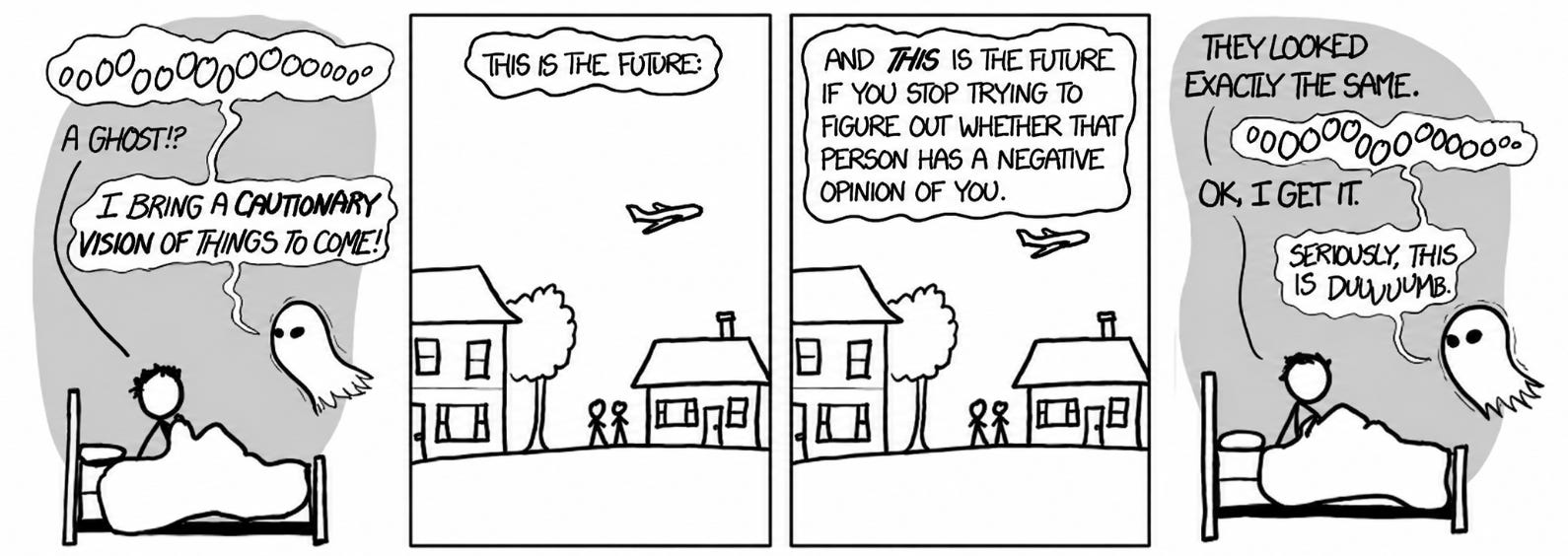
It invites me to feel into the contrast: this is me, working the problem. This is me, not working the problem. The second state is mostly a lot more pleasant.
It invites the question: is the experiential cost of working the problem worth the benefits, in expectation?
Are there benefits?
If I’m not sure: why do I feel like I need to work this problem? What underlying purpose is being served? What underlying, deeper problem is this instrumental to solving?
What would it be like if that, also wasn’t a problem I had to solve? What if I decided to neglect it entirely? What would happen?
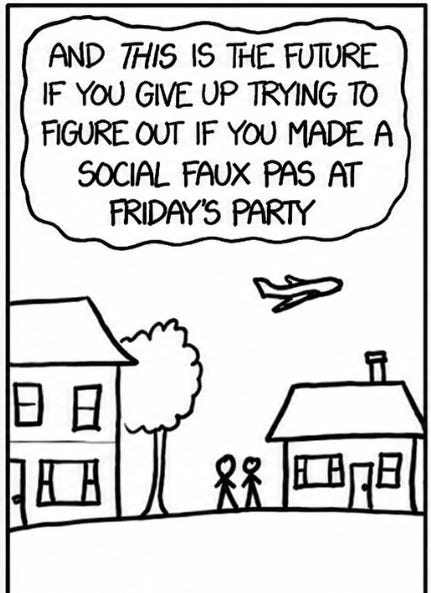
Some problems are somewhat obligatory (gotta make rent!) but I suspect the vast majority of unpleasant problems I spend my time noodling on, and most of the ugh-fields I develop around whatever topic, are basically just self-narrative-driven with no real payoff.
Oftentimes real problems that I am obligated to work (a coaching client has a problem I don’t know how to solve!) come secretly bundled with fake, impossible problems that can simply be declined (“I MUST PERFORM KNOWINGNESS AND HAVE ANSWERS TO ALL PROBLEMS AS THEY ARISE.”)

The true answer, as it frequently does, dissolves into: give precisely my model of the problem in precisely the way I am thinking of it, state exactly what I’m uncertain about and where my model does not provide actionable advice, and provide that mismatch as an open question which invites noodling on it together along with a tentative way forward.
Which if you push it a meta-layer up: it dissolves into process goals. Instead of trying to find the Good Future (or avoid the Bad Future) and furiously backchain from it, ask “what is the decision procedure one executes in response to this class of problem?” Then follow the procedure.
No posts
Comments
Nothing yet. Say the first thing.
Sign in to join the conversation.