

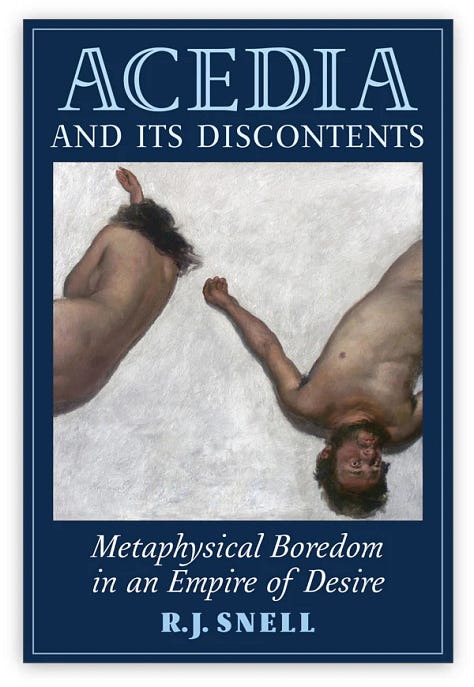
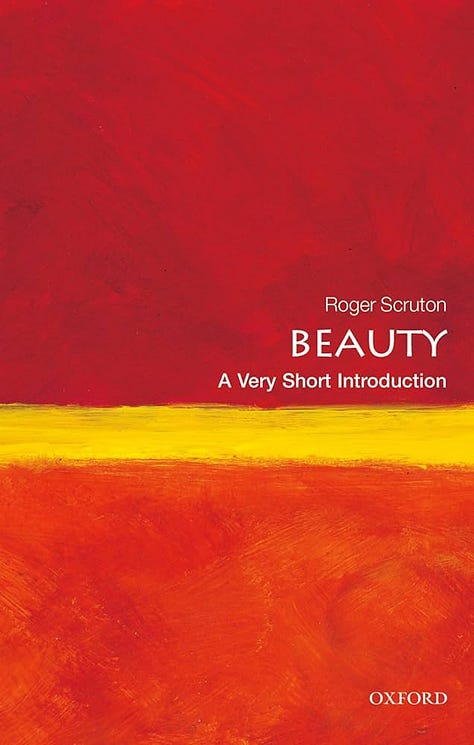
Recently, Gretchen Joanna shared what Father Stephen Freeman wrote in 2018 on The Inherent Violence of Modernity, and one passage in particular blazed with resonant truth:
“The philosophy that governs our culture is rooted in violence, the ability to make things happen and to control the outcome. It is a deeply factual belief. We can indeed make things happen, and, in a limited way, control their outcome. But we soon discover (and have proven it time and again) that our ability to control is quite limited. Many, many unforeseeable consequences flow from every action.”
It reminded me of Kingsnorth’s (sadly tiny) portion in Against the Machine dedicated to my wheelhouse, where he explains:
“The technologization of sex and sexuality—which involves everything from online hookups to birth control pills to IVF to mastectomies for teenagers born in the wrong body—is a huge shift in our relationship with human nature, and nature in general.”
The way we relate to human nature, and particularly to our sexual nature, is now violent. It is a soft and clinical kind of violence where our fertility is concerned. And it is another kind of violence, against multiple persons, where pornography is concerned.
I’ve been thinking a lot recently about how the effect of both - emotionally and spiritually - could feel similar. Not the same, but similar.
The reality of sexual disintegration is degrading. It feels that way because it is a rending apart of parts of ourselves that are meant to be whole. If something feels violent and unsettling, it’s likely because it is.
Both our procreative potential in fertility and our sexual desires and actions are part of a whole sexuality—one which the world, the flesh, and the devil are bent on disintegrating quite forcefully.
Degradation of the person comes in many forms.
Profanation comes through subtly violent means.
Desecration comes by way of clinical and digital settings alike.
Sexual and bodily integrity are not unrelated.
Wholeness requires integration of seemingly disparate parts.
In lieu of a polished essay—because this is substack and we can let our hair down a bit around here by sharing [checks notes] philosophy quotes—let me invite you into my thought process. More specifically, these are simply the books and quotes providing an anchor to this concept in my mind.
If you read them with the Life Considered Spirit™, you’ll likely see what I mean. Will be pondering them myself for a while.
Specialization especially seems to understand reality as disintegrated and manipulable, just as the specialists of fertility and pornography understand sexuality. Rejecting the delight of the whole of goodness, all reality is open to our exploitation…
[To be clear, the “specialists of fertility” he has in mind are those who specialize in its disintegration and manipulation as a matter of course. Clunky term for the job, I know.]
By health, says Wendell Berry [in The Art of the Commonplace], “we mean merely the absence of disease,” whereas health is best understood as “wholeness.”
Specializing in the body without consideration for the soul, or, for that matter, specializing in the soul without including the body in the health of the person, devalues the body, our own as well as the bodies of others.
For us, the world becomes mere resource, raw material, what Martin Heidegger called “standing reserve,” a stocking or storehouse of energy for us to use when and how we wish, waiting at attention for us. Its interiority is denied, its splendor formae dimmed, there is no kābôd or “freshness deep down”; the Holy Ghost does not brood, Christ’s play has stilled, and only we father forth. There are no gods anywhere, and the world has been stripped of its intrinsic value, serving at our beck and call. It is no longer gift, merely a stark given, mute.
Left unchecked by creation and governed by will, this terrible covenant of sloth, in all its bored nihilism, refuses to willingly approve or love reality—heedless of God’s instruction to Adam, the empire of desire looks at the assembly of being, the session of onion and persons and tackle and trim, and chooses not to say “At last,” seeing nothing of value… There has been a “bleaching out of the density of things, of their depth and internal constitution,” and a “lifting [of] the weight attributed to them.”
The impulse to live, heightened to the utmost and affirmed, approaches the impulse to die. Eros is the medium for intensifying life to the point of death. Indeed, although erotic activity is, in the first place, an exuberance of life, the object of this psychological quest—independent of any concern to reproduce life—is not alien to death.
The crisis of love does not derive from too many others, so much as from the erosion of the other.
The pornification of the world is unfolding as the profanation of the world. Porn profanes the erotic.
Profanation... involves practicing a special form of negligence with respect to what has been set apart in this manner.
In distinguishing the erotic and the pornographic we are really distinguishing two kinds of interest: interest in the embodied person and interest in the body—and, in the sense that I intend, these interests are incompatible… Normal desire is an inter-personal emotion. Its aim is a free and mutual surrender, which is also a uniting of two individuals, of you and me—through our bodies, certainly, but not merely as our bodies. Normal desire is a person to person response, one that seeks the selfhood that it gives. Objects can be substituted for each other, subjects not. Subjects, as Kant persuasively argued, are free individuals; their non-substitutability belongs to what they essentially are. Pornography, like slavery, is a denial of the human subject, a way of negating the moral demand that free beings must treat each other as ends in themselves.
The old morality, which told us that selling the body is incompatible with giving the self, touched on a truth. Sexual feeling is not a sensation that can be turned on and off at will: it is a tribute from one self to another and—at its height— an incandescent revelation of what you are. To treat it as a commodity, that can be bought and sold like any other, is to damage both present self and future other. The condemnation of prostitution was not just puritan bigotry; it was a recognition of a profound truth, which is that you and your body are not two things but one, and by selling the body you harden the soul. And that which is true of prostitution is true of pornography too. It is not a tribute to human beauty but a desecration of it.
Art, as we have known it, stands on the threshold of the transcendental. It points beyond this world of accidental and disconnected things to another realm, in which human life is endowed with an emotional logic that makes suffering noble and love worthwhile. Nobody who is alert to beauty, therefore, is without the concept of redemption – of a final transcendence of mortal disorder into a ‘kingdom of ends.’
One cure for the pain of desecration is the move towards total profanation: in other words, to wipe out all vestiges of sanctity from the once worshipped object, to make it merely a thing OF the world, and not just a thing IN the world, something that is nothing over and above the substitutes that can at any time replace it. That is what we see in the spreading addiction to pornography - a profanation that removes the sexual bond entirely from the realm of intrinsic values. It involves wiping out one area in which the idea of the beautiful had taken root, so as to protect ourselves from the possibility of loving it and therefore losing it.
Beauty is vanishing from our world because we live as though it did not matter; and we live that way because we have lost the habit of sacrifice and are striving always to avoid it. The false art of our time, mired in kitsch and desecration, is one sign of this.
Do not quench the Spirit. Do not despise prophecies, but test everything; hold fast what is good. Abstain from every form of evil.
Now may the God of peace himself sanctify you completely, and may your whole spirit and soul and body be kept blameless at the coming of our Lord Jesus Christ.
He who calls you is faithful; he will surely do it.
Thanks for reading Life Considered! This post is public so feel free to share it.
Comments
Nothing yet. Say the first thing.
Sign in to join the conversation.