
I am not quite sure how I came across Caitlin’s work. In all honesty, it may have been the substack algorithms a couple years ago. Interesting as the topic addressed in the article was, I soon discovered the rest of her work. Readers may have noticed I have been going, slowly and sequentially, through those podcast episodes for a while now. Her wise, practical, and pastoral approach to such interrelated topics have proved to be a real gift. I’m happy to have seen her reach grow over these last years.

Life Considered has trained for this: our first feature collaboration, this time an interview.
And boy howdy does this one cut to the heart of what I’ve learned, lived, and felt my way toward with this compilation. What begins with a physiological investigation can often lead to a richer way of seeing, indeed, of being in the world. At least, that’s what happened with me. (Heck, this is often how Christ works in the gospels when he attends to the body first, inviting a change in devotion.)
There is no arriving at, say, Christian bioethical conclusions apart from a good, honest look at the flesh-and-bones reality of the human person. We have to see the picture. We have to hear the music. We have to (get to) confront the sexual body as God designed it.
Christians are those for whom the created order is good—for whom our bodies, sexuality, and procreative potential are not meaningless, superfluous bits of flesh and biology.
The created order in our own sexual selves, made in the image of God, holds a weight we ought to recognize—for our trellised flourishing and for a way of life we are invited to live, always before the face of God. His face is that of Creator, Healer, and Shepherd of (clumsy, stubborn, fearful) sheep.
Thank you to Caitlin for generously answering these questions for us all. Thanks also to Hannah Lang and Leah | Blessed Endurance for collaboratively peer reviewing them. This corner of the internet is nothing if not a group effort.
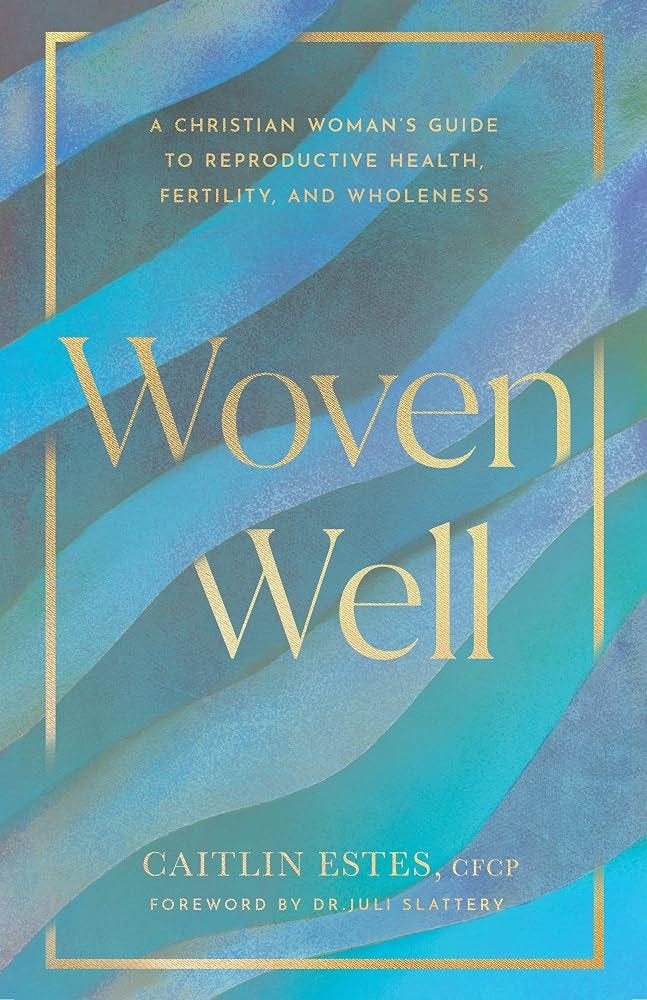
You may find it interesting to know that I never anticipated working in a field where I’d be talking with women about sex and reproductive health on a daily basis. I felt drawn to full time ministry since I was in high school, but I always assumed that work would be within a church. Upon graduating from divinity school, I *still* thought it would be in a church. But during my last semester, I was also getting married and navigating family planning for the first time. It stirred up a lot of questions for me and, as I talked with my friends about it, I realized just how many questions they had too.
Women were thinking about—and struggling with—these issues, but it wasn’t just the physical concerns like whether their periods were painful or irregular, or even why they couldn’t get pregnant, that were important, but the deeper, more personal questions that were underneath all of them: Why does being a woman have to be so hard? Why did God make us this way just to suffer? Is this really the way it’s supposed to be?
Over and over again, fruitful spiritual conversations sprang from very practical women’s health needs and I got a glimpse of how God was inviting women into deeper relationship with Him through His good design of their body. It was both incredible and encouraging, and I was eager to be a part of it.
So, almost 10 years ago, I completed a 13-month education program in South Carolina to become a FertilityCare Practitioner. As an FCP, I teach women how to observe and interpret their primary reproductive biomarker so they can know exactly where they are in their cycle, whether or not they could conceive a pregnancy that day, how to spot signs of infection or inflammation before things worsen, when their next period will start, ways to advocate for better health care answers, and more. It’s extremely practical education that empowers women in daily life, the doctor’s office, and as they plan their families—but it’s also deeply meaningful, spiritual work as well. I continue to see women experience greater intimacy with God as they discover more about His intentional creation.
It started out as something I offered to any friend who said they wanted to learn more but it very quickly blossomed beyond what I could have imagined. I was passionate about the work and the ministry aspect of it and I was continuing to pursue more and more education. I was so busy that I was seeing clients on my lunch breaks, after work, and on the weekends. Eventually, I left my position at a non-profit to open Woven Natural Fertility Care and see clients full time. Now, 5 years later, we have three other FertilityCare Practitioners on our team and we’re adding a few more in the fall. It’s incredibly rewarding to see women feel knowledgeable, confident, and peaceful about their cycle health and fertility when many assumed that wouldn’t be possible for them.
When given the chance, women are so eager and ready to embrace the design of their body and make truly empowered, informed decisions and it’s an honor to get to be a part.
There are so many joys in this work. I love to get a text with a picture of a positive pregnancy test from a couple who’s been struggling to conceive for years. I love when a newlywed couple enters marriage feeling comfortable talking about sex and family planning (because not all couples do!). I love hearing that a client felt informed and prepared for her doctor’s appointment so that she finally got the treatment she deserved and not just another prescription for birth control to hide her symptoms. But my hands down favorite part of the job is getting to explore God’s presence in this aspect of women’s lives.
For one reason or another, women have become painfully disconnected from their bodies. We don’t know how they work. We don’t know what they can do. We don’t trust them. We don’t respect them. This most certainly impacts how we treat our bodies and how we expect others to treat them (and just to be clear: it’s not good), but it also has a major impact on how we think about God.
When you think your body is a curse, it’s hard to fully trust its Creator.
So when women start to see the beauty in their design and start to realize the kind of excellent, compassionate, dignified health care that they deserve. . . it not only changes how they see themselves, but how they see God. Their design is sacred and purposeful! Beautiful and intentional! Praise God—who loves and cares for them!
As Christians, we know that God is working to restore our broken relationships with Him, but it’s extra amazing for me to get to see Him do it through the design He established at creation. Our bodies are not burdens; they are actively drawing us back to God.
The greatest challenge would probably be misinformation. We all think we know a good deal about reproductive realities, but most of us don’t actually know much. My gym coach taught our class that women could get pregnant on any day of the month (false). Many assume that there aren’t fertility awareness methods more effective than the pill (false). Almost everyone assumes that periods should be painful (false again).
For the women who are willing to research and explore and try something new, this isn’t a problem. But for the women who accept the misinformation and never venture beyond it, they miss out on getting to experience the alternatives—and all their benefits!
Being able to effectively avoid pregnancy without the side effects of the pill. . .
Getting the proper treatment to address the root cause of painful periods. . .
Finally explaining “unexplained infertility” after getting truly thorough investigation and care. . .
Every woman deserves the opportunity to experience these.
This is one of the reasons I include so many women’s stories in the book and why I interview a Woven client each month on the Woven Well podcast. I want women to hear from others just like them who once felt equally excluded or hopeless, but found another way and a beautiful transformation in the process. I want women to know that they aren’t stuck and that they have options.
Yes, I have and I love those opportunities. Something I’ve noticed in those situations is that both moms and daughters seem to be far more open with one another around reproductive topics. It’s normalized in a really healthy way that fosters communication and openness. For example, the daughter knows she can go to her mom if her cycle changes and she thinks something isn’t right, whereas many teenage girls otherwise assume that “it is what it is.” Teaching our daughters through example that our bodies have dignity and deserve respect has far more impact than anything else we could do.
A few years back, I was meeting with a mom and her college-aged daughter. We used to meet together but as the daughter got older, they began having separate sessions. During one of those sessions with the daughter, she mentioned that the guy she was dating was ready to have sex.
I am always honored when a woman trusts me enough to have an honest conversation about a consideration like this. She wasn’t sure how she felt and what she wanted to do and we were able to openly talk about boundaries and respect and covenant commitment together. Because I knew her relationship with her mom, though, I also felt comfortable asking, “What does your mom think?”
In any other situation, I don’t think I would’ve considered asking that question. But these two had put in the work of talking about serious and hard things related to their bodies and cycles and fertility. This college student knew she had the potential to conceive. She knew her body was designed with dignity and deserving of respect. And she knew all of that because her mom lived it out and talked openly about it. So when I asked what her mom thought, she didn’t bat an eye at the question but agreed that she should get her take.
As a mom, I imagine you’d love for your daughter to come to you as she’s discerning that kind of decision. I’ve seen cycle education be a helpful foundation for making that possible.
Here’s the thing: As humans, we are not just souls. We are not just bodies. We are not just minds. We are a beautifully interwoven design of all three. So how we understand our own bodies and how we treat them and what we do with them are not only physical decisions with physical consequences, but spiritual and mental and emotional and relational ones too.
If you hate your body or blame it when things go wrong, that’s going to show up in how you care for it and how you expect others to care for it. If you can’t see the imago Dei in your own reflection, it will be harder to see it in the reflection of a refugee, an embryo, or the single mom with a screaming kid in the grocery store. How we understand the body matters—not just physically, but spiritually.
So when we take the time to explore our embodied design and we invite God into that process, it’s going to reap spiritual fruit like gentleness, joy, kindness, and peace. This is just as true for a single woman as it is for a married one, although the circumstances can be different.
The large majority of couples I work with who are avoiding pregnancy choose to abstain during their joint window of fertility. Thankfully, that’s only a few days each cycle, but even a few days can feel tough—especially as newlyweds or after having spent years on contraception not thinking about your potential to conceive. Learning to honor God’s reproductive design and prioritize the good of your spouse or your family above your own desire in that moment is always a challenge, but it’s also exceptionally good at developing spiritual fruit like self-control, love, patience, kindness, and faithfulness.
For those open to the work of the Holy Spirit, there is an incredible amount of spiritual fruit to be found.
There are several great Christian resources out there about how the sexual design of our body is a part of bearing the image of God, but the reproductive aspect of it often gets left out of the conversation.
Yes, marriage and sex (designed for marriage) can point to God as we’re told in Ephesians 5, but what about our fertility? What about the natural potential to conceive that comes with sex?
Christians have dealt with the biological and theological reality of procreation for centuries, but things have changed over the last 100 years. We’ve found ways to sever that connection between sex and the potential for babies. Now, we can have sex without pregnancy and we can get pregnant without sex.
Because we can bypass the biological reality, it’s far more challenging to remember the theological one. But it never goes away.
What I’ve found through my years of work in this field is that we’re better off when we recognize it too.
For one, it helps us to acknowledge that we do not have ultimate control. (None of us truly have ultimate control in any area of our lives, but it seems harder to remember that when it comes to whether or not we get pregnant, doesn’t it?) When it’s merely a biological potential, we make biological decisions. Considering the theological element invites us to prayerfully discern what we do and why, as well as to lean on God when we don’t get pregnant when we’d like or when we get pregnant before we feel ready.
Family planning is designed to be a collaboration between couple and Creator. It’s meant to be a spiritually fruitful endeavor as much as a physically fruitful one.
For women who are single or young and not thinking about pregnancy, their bodies are proclaiming something just as holy and profound. As one of my clients recently shared, even our cycles can demonstrate for us that the old must pass away for new life to take root or that covenant love is designed to produce new life. These are spiritual realities as much as they are physical ones—when we have the eyes to see it.
In an effort to keep things succinct, I’ll stop here but I do want to point curious readers to the book, where we have more space to explore some of the natural questions that may spring from this topic, like
What does this mean for those struggling to conceive? Should we just accept it?
Does this mean we should never use a form of contraception?
What about those of us without regular cycles? What does this say about us?
My biggest piece of advice is also the simplest: Don’t ignore these topics.
It’s so easy to simply never say anything about them. Very few parishioners will knock down their pastor’s door to ask about birth control or sexual intimacy or vasectomies. They just make the decision on their own with the advice of their doctor—and they don’t even realize there’s a theological component to be considered. It’s so easy for us to believe our bodies are more medical than meaningful.
But our bodies declare God’s glory. How they are used or honored or cared for matters.
Most pastors I’ve talked to feel like they’re on shaky ground. They don’t want to make a black and white stance on something, especially if their denomination hasn’t, but women and couples aren’t looking for you to make a big stance—they’re looking for you to create a safe space.
Open up dialogue around these issues so that your congregants know they can talk to you about them. Explore what Scripture says so that, as they discern their own decisions, they know to explore Scripture.
You’re not trying to determine their steps, but direct them toward God—even in these areas that are so often overlooked or forgotten. God wants to meet people through their bodily issues and family planning and you can help open their eyes and hearts to that.
In my experience, Anglican priests are especially good at this. Many of the Anglican clients I have at Woven come to us after having first discussed family planning options with their priest during pre-marital counseling, which is not something I can say for most other Protestant denominations. I’ve also been invited to speak with Anglican groups as they explore these topics as a community.
I’ve never had the impression that the Anglican stance is prescriptive—it’s actually fairly open—but it is intentional. They want their church members to be actively thinking about their faith as they make decisions about their body and fertility.
The book is very intentionally written to address women and to acknowledge and honor women’s unique experiences, so I wouldn’t be surprised if male readers struggled to resonate. (They do have totally different bodies and bodily experiences after all!) Here’s what I would suggest instead: Be an active conversation partner with the woman you love who’s reading it.
Are you married? A dad of a college aged daughter? A close brother to a sister? An invested boyfriend? Buy her a copy of the book and then talk with her after she reads each chapter.
Ask what surprised or interested her about what she read. How was it different than what she thought before? How is it different than what you thought?
Invite her to share what she found to be the most meaningful or validating. Why was it so? What has her own experience been like? How did she feel? How is this helpful?
Explore what was thought-provoking and then talk through those thoughts together. You are bound to have your own—and that conversation is sure to be fruitful and worthwhile.
At the end of the book, not only will you have learned something new, but you’ll have learned more about someone you love.

Congratulations to Caitlin on the release of such a wise, practical, and pastoral book! Her gifts and hard work are sure to benefit many women, marriages, and church communities.
Bookshop.org — Online retailer who supports indie bookstores (and has it on sale!)
Christianbook.com — Christian online retailer (with an even bigger sale!)
Amazon — The behemoth and super easy for most
Barnes & Noble — Ditto
Target, Walmart, etc (check their online sales)
Thanks for reading! This post is public so feel free to share it.
Comments
Nothing yet. Say the first thing.
Sign in to join the conversation.