
Hello friends
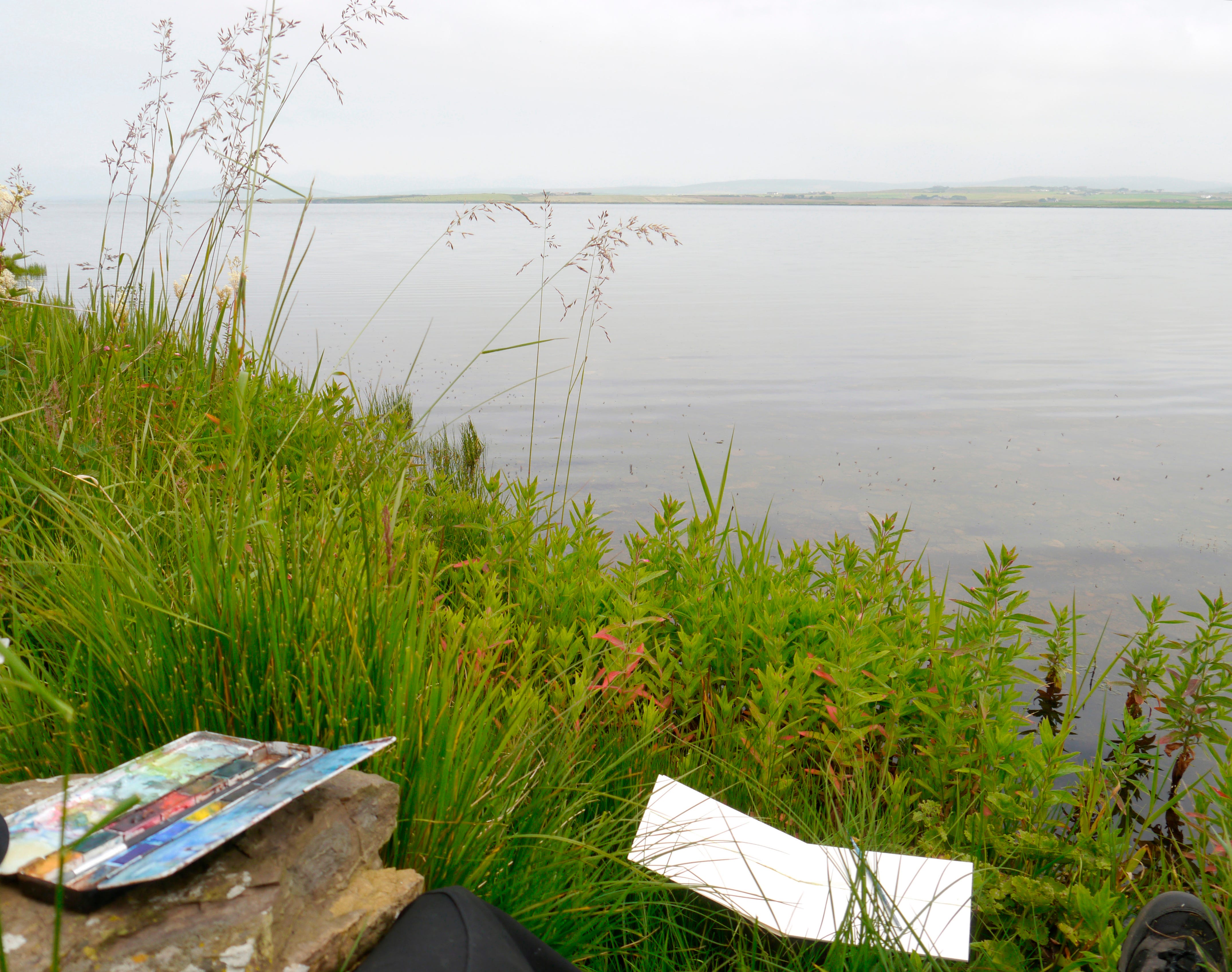
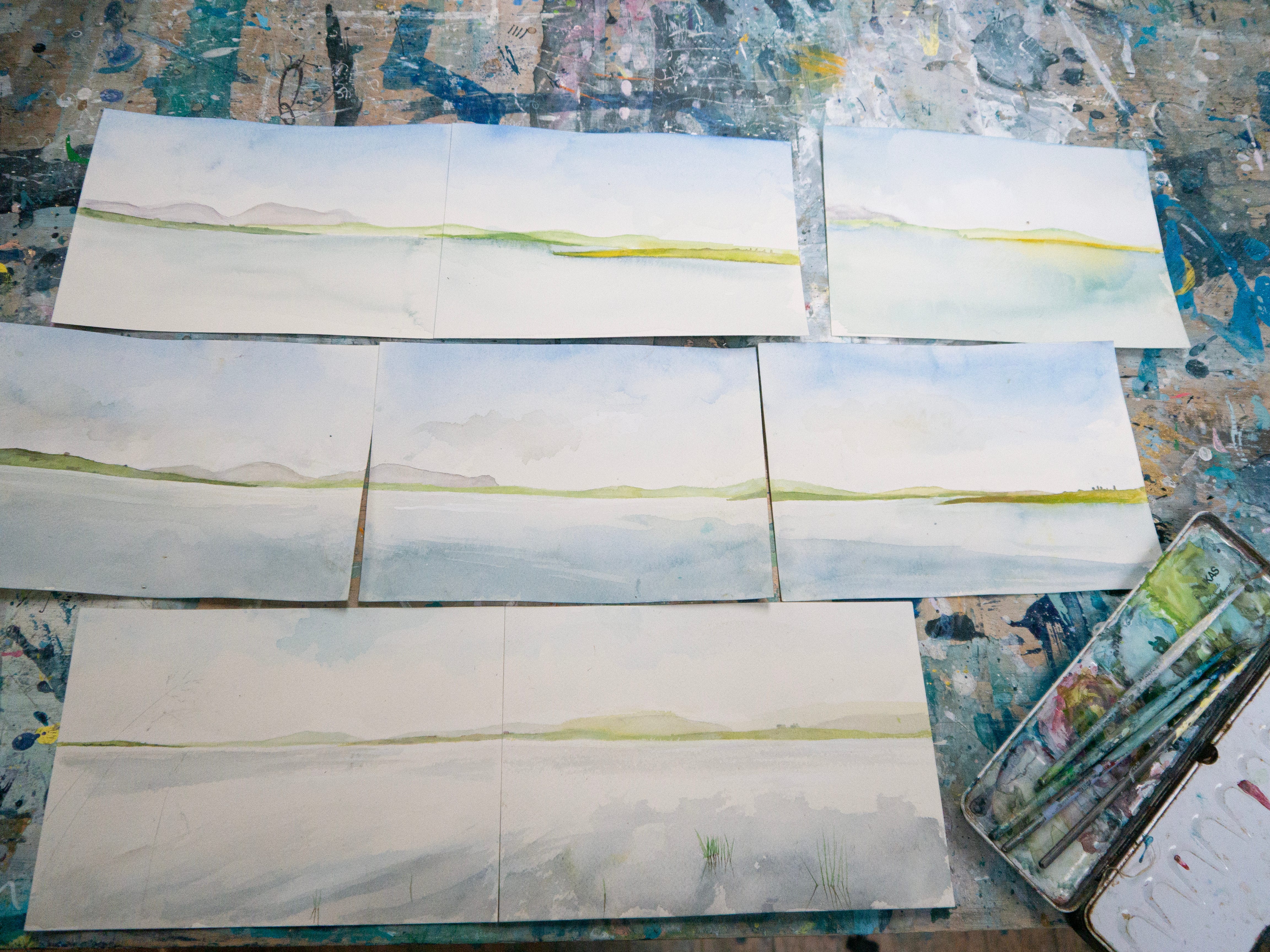
It’s a pale day, warm and still. The air is soft, the light diffuse and shadowless. I am sitting on a rock close by the water’s edge, just below the single-track road, down among the flowering meadowsweet and tall sedges. Caddis flies and day-flying moths flit over the pale water and a few fish rise here and there to take them, landing with a plop that sends lazy rings rolling slowly outwards.
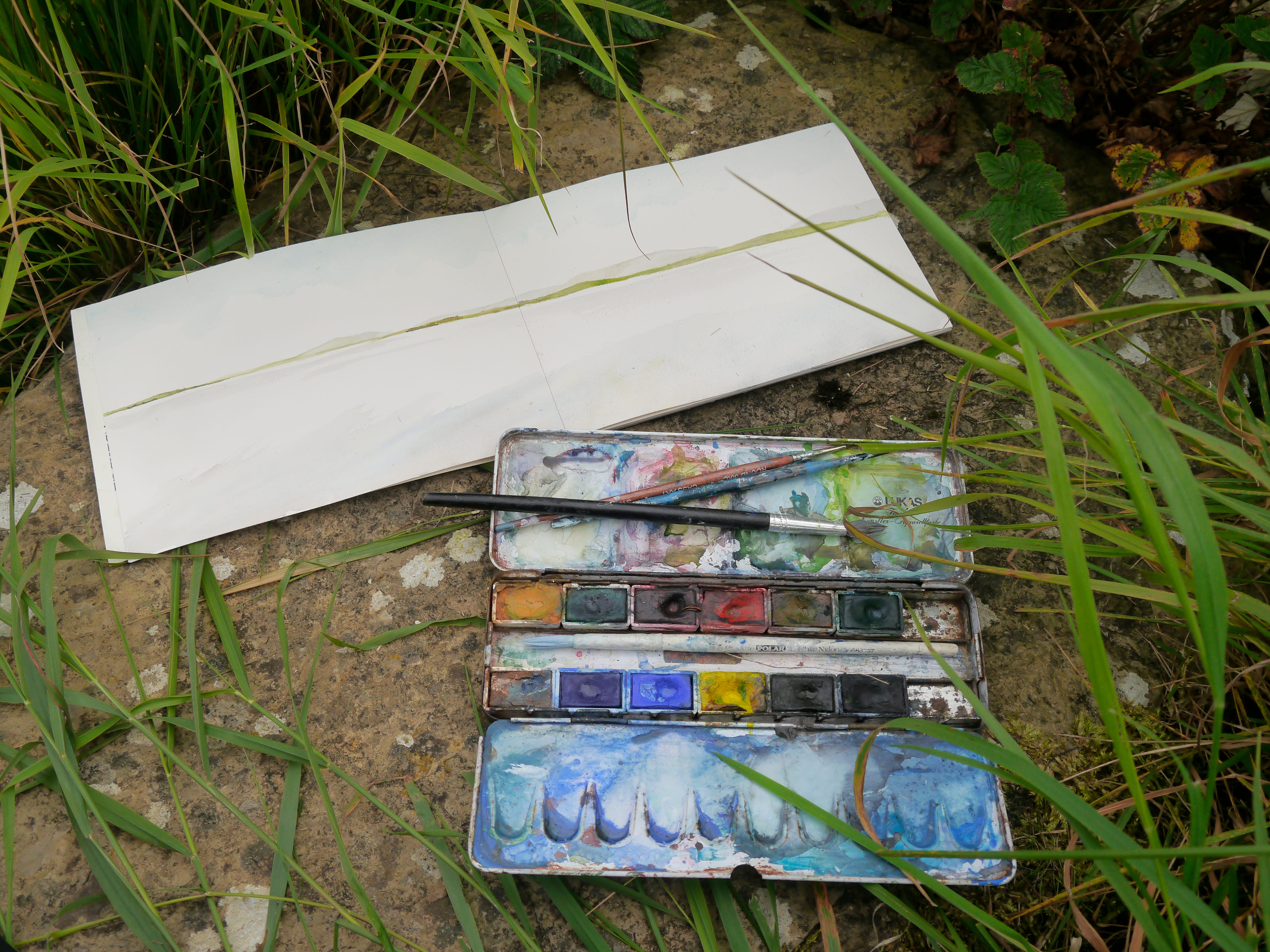
I have my camera, a block of watercolour paper, my tin of paints and a little jar of water beside me. Looking, thinking, drawing, I am completely absorbed. The troubles of the wider world fall away. Drawing brings me into attentive presence. To put it simply, drawing makes me happy. Today, I decide to drop all expectations and let that be enough.
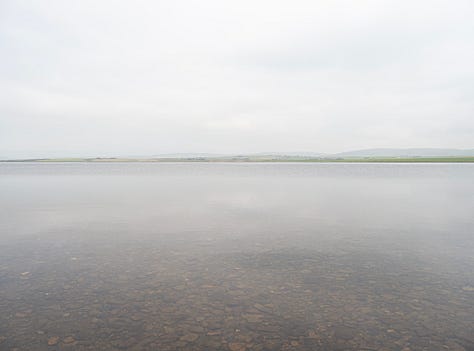
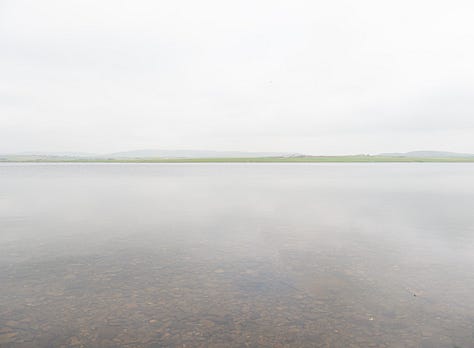
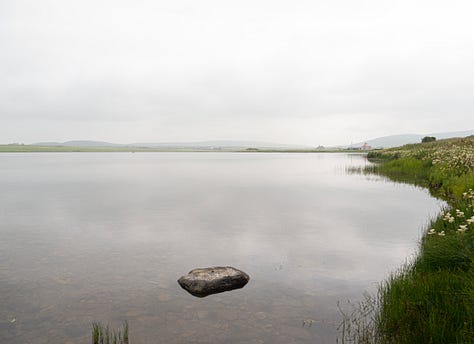
When you look out from this slender finger of land called the Ness of Brodgar, with your back to the Neolithic standing stones and the coachloads of visitors that come to see them, you look into a timeless world of sky and water that has not much changed since the stones were raised, bar an upward shift of the shoreline and fewer trees around. Five thousand years ago those ancient farmers and stone-builders would have seen the same gently undulating skyline, the same rounded hills of Hoy, the same rippling water, the same wide, open sky, and heard, perhaps the same chittering of terns and splash of trout.
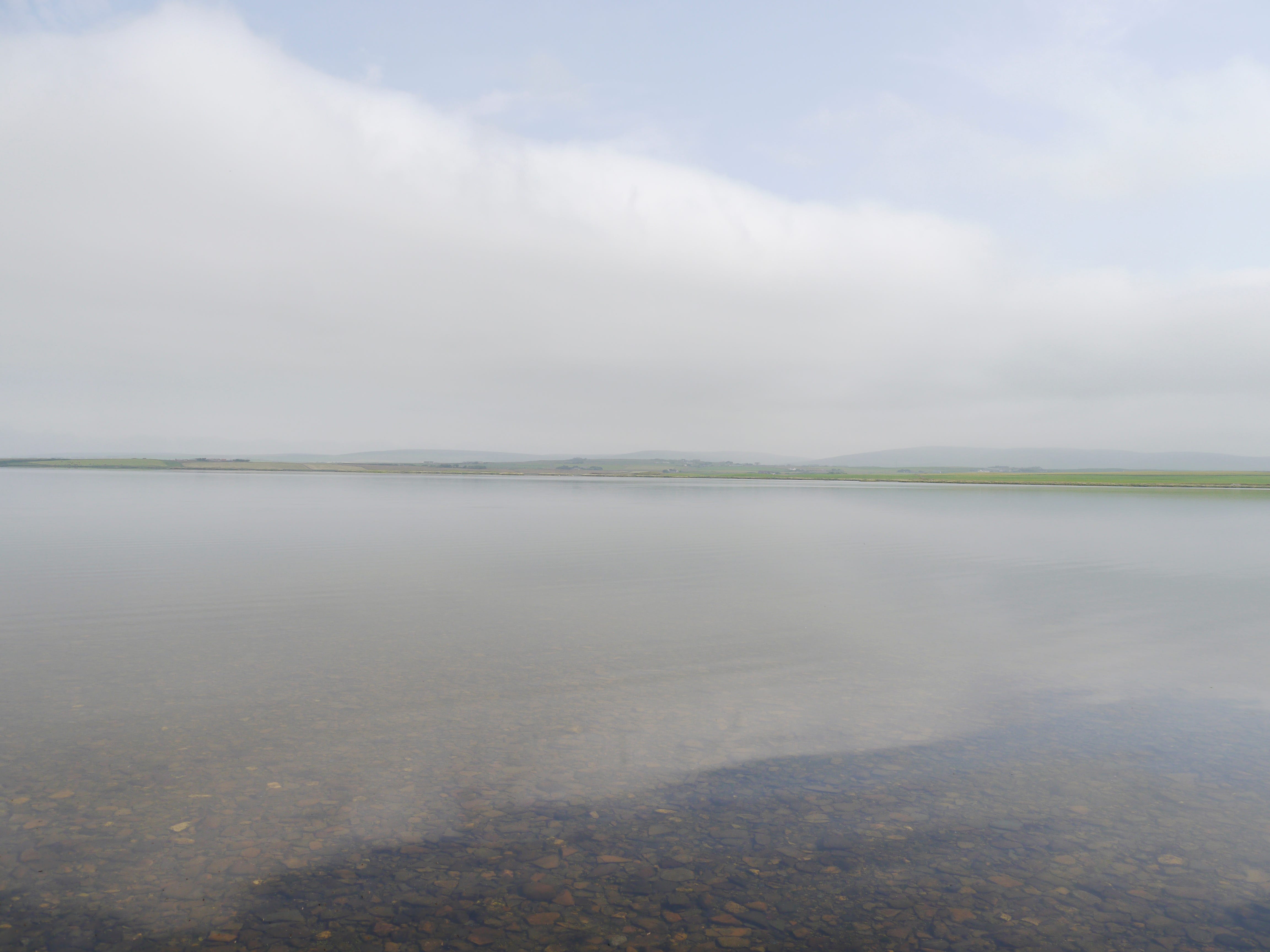
Seen from my low-slung rock seat, the land across the water is like a vague dream, just a thin strand of soft greens and browns strung between two mirrored worlds of light and space and movement. Here, the world above and the world below appear to meet and converse. The wide sky drenches the water in light. The water throws the light back. In this world of soft horizontals, the standing stones of Stenness at one end of the isthmus, and the Ring of Brodgar at the other, form striking verticals like stitches joining two worlds of light.
You can sense here that space does not just expand outwards, but upwards and downwards too, that our awareness doesn’t just expand in a circle, but a sphere. No wonder our Neolithic forbears felt this narrow isthmus, twice ringed, first by water then by land, was a place of special magic. They watched the skies from here, tracing the movement of Sun, Moon and stars, marking the seasons of light and dark. In their midden they left such a huge deposit of ash that their fires, it is thought, must have burned continuously.
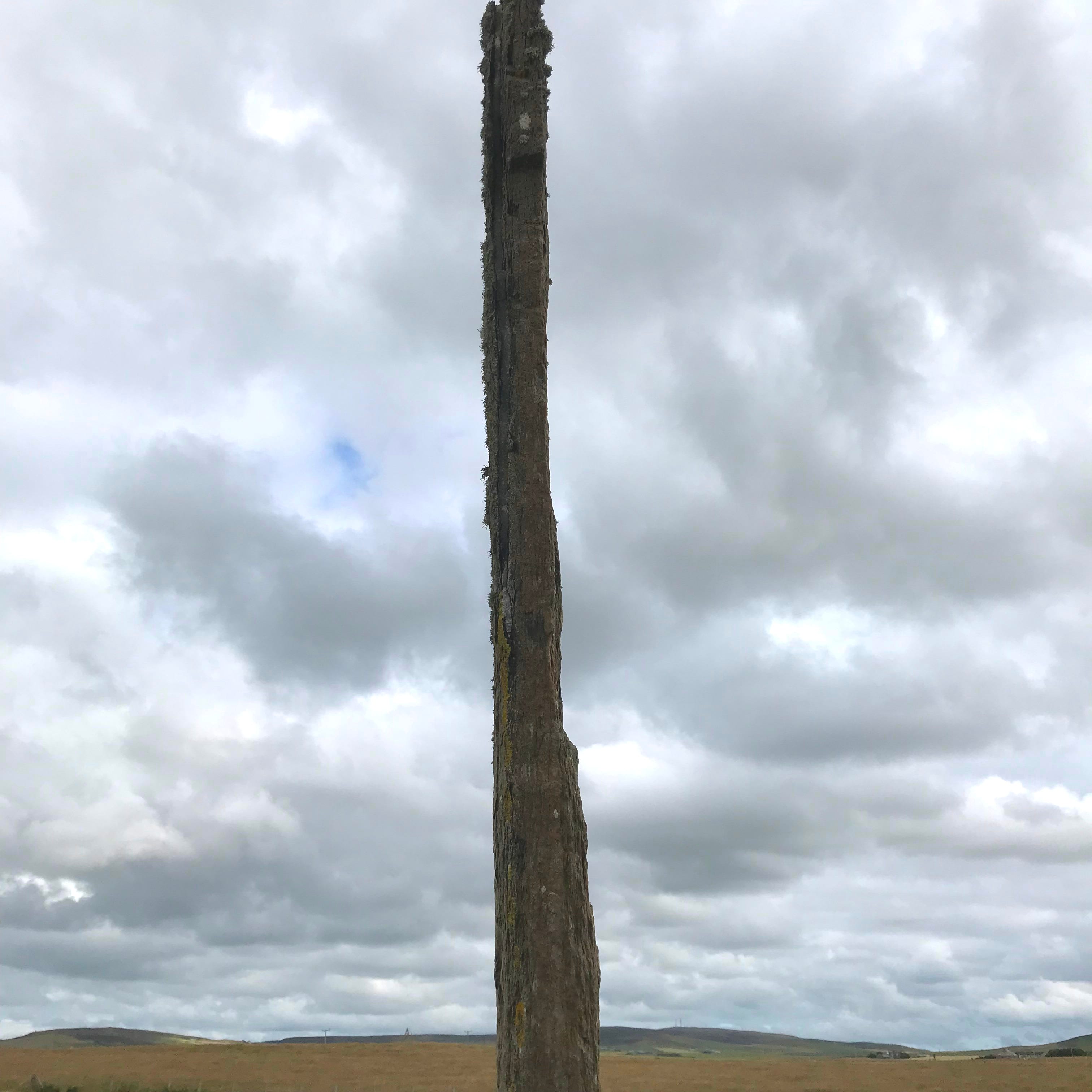
At the far end of the isthmus, a long skein of visitors steps down from a coach. Their dark silhouettes echo the tall, slender stones they walk among. They pause, look, photograph and ponder for a few moments, then climb back into their waiting bus and rumble on down the little road behind me, on to the next stop on their one-day itinerary, even as the next bus pulls up in turn and another line of visitors steps out. All through the day they come and go. There must be a big cruise liner docked in Kirkwall.
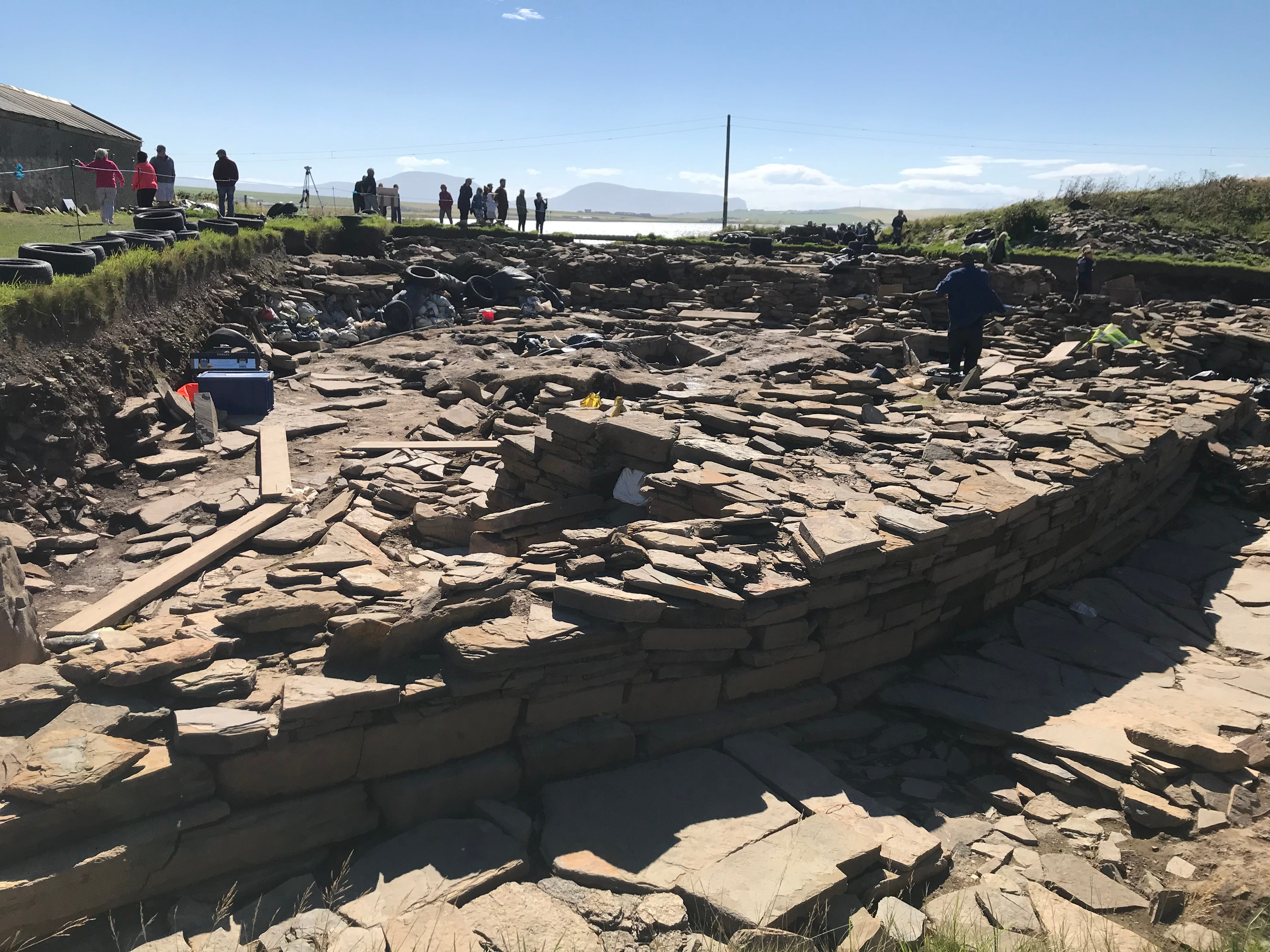
I am here at the Ness of Brodgar archaeological site, set between the two famous stone circles, where, starting in 2004, 20 years of excavations revealed a vast complex of monumental buildings from the centuries around 3000BC. At its height the dig extended over much of the isthmus and its discoveries profoundly changed our understanding of Neolithic Orkney and the prehistory of Northern Europe. The excavations are finished now, the buildings reburied and grassed over to protect them from Orkney’s harsh weather. There’s not much to see now, just some humpy, weedy grassland. But work is still ongoing to understand and analyse the thousands upon thousands of stone, pottery and bone artefacts that were excavated.
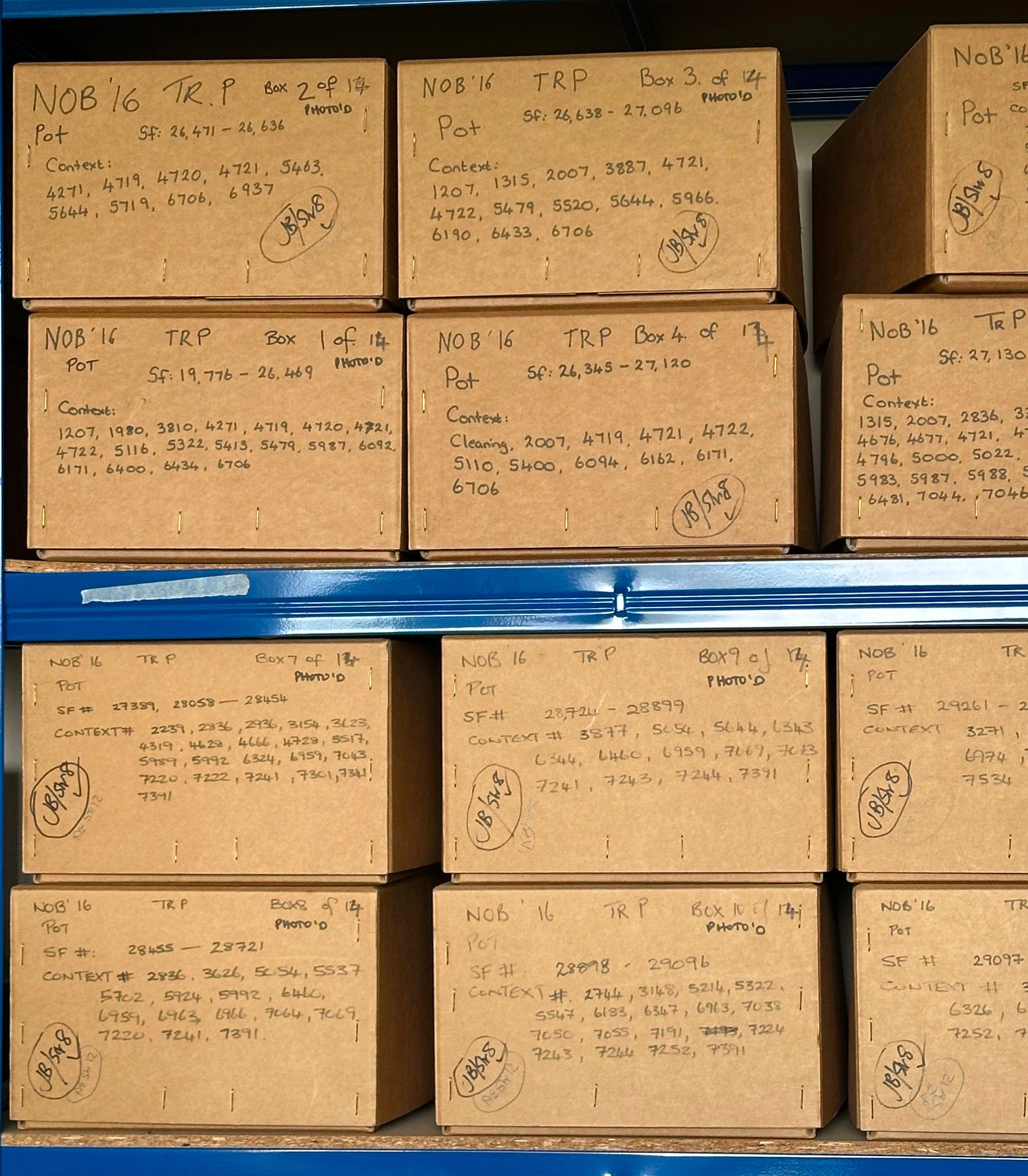
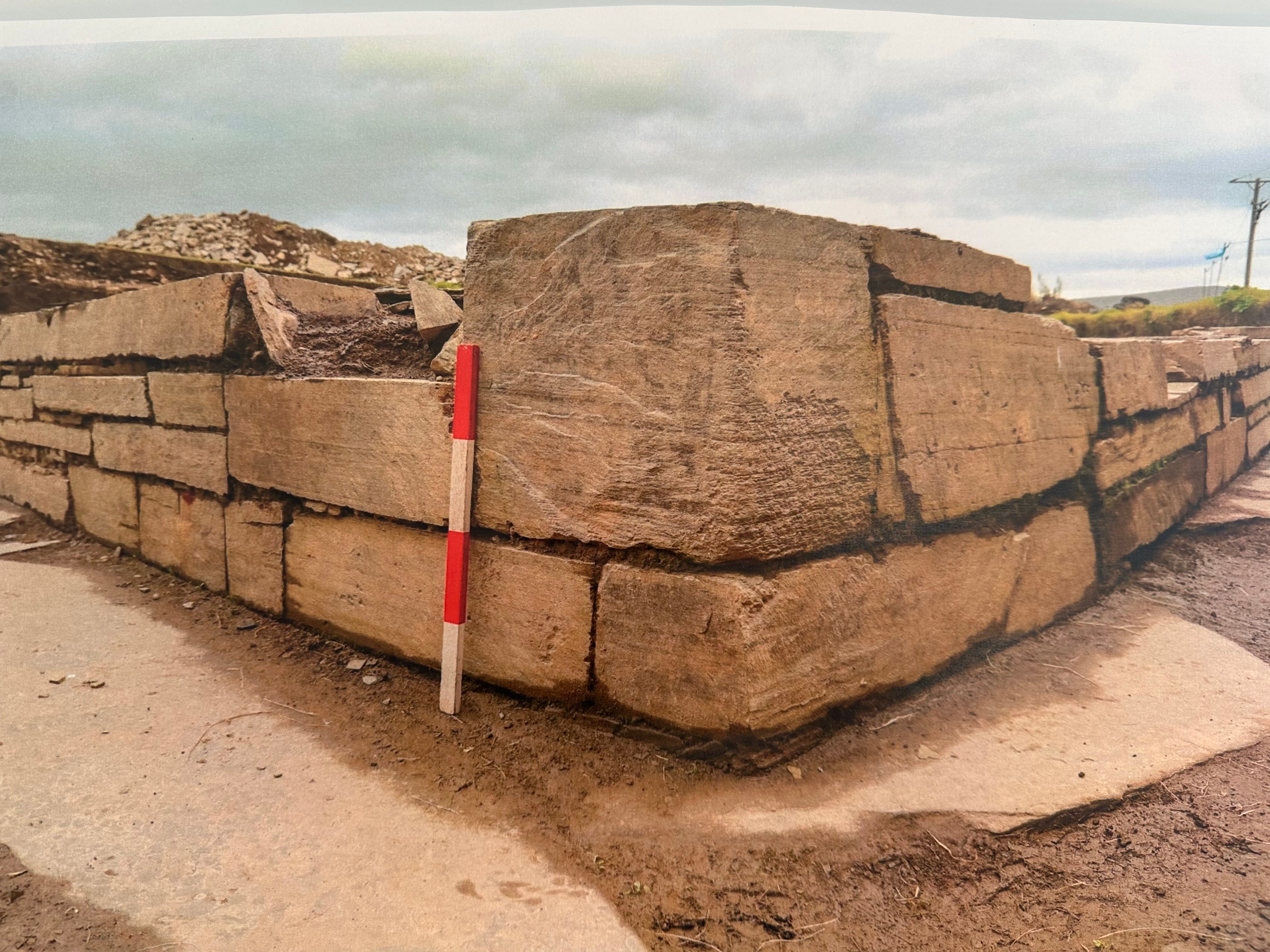
I’ve been here many times before, visiting each summer while the excavations were ongoing. I can bring to memory where the trenches were dug and the monumental walls, giant slabs and cracked paving they revealed. I’m told that so much stone and fuel was brought here in the Neolithic that the level of the land was raised enough to form the distinct mound you can see now.
I can feel the presence of the buildings still here, just under the quiet turf. Ground penetrating radar has shown that although the dig uncovered three hectares, this is only a small fraction of the monumental structures that were raised all over the surrounding landscape. I’ve heard it said that you’d need to peel the whole of Orkney’s topsoil back to find it all, so thickly does the past lie in the ground. It makes you feel that time is less a single unspooling line we’re right at end of, than a dense web we live and move within.
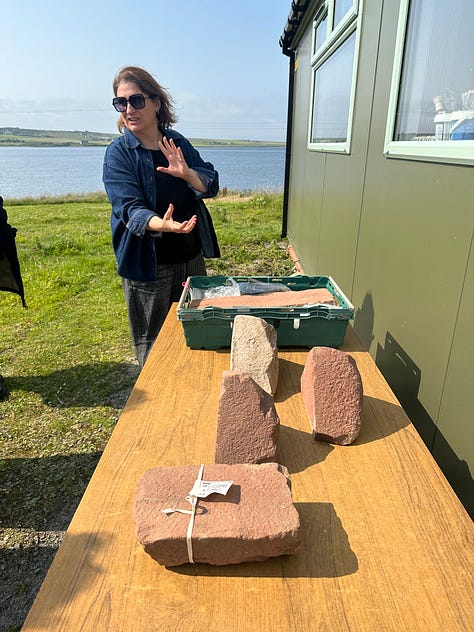
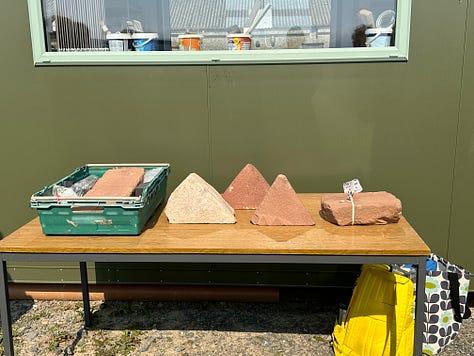
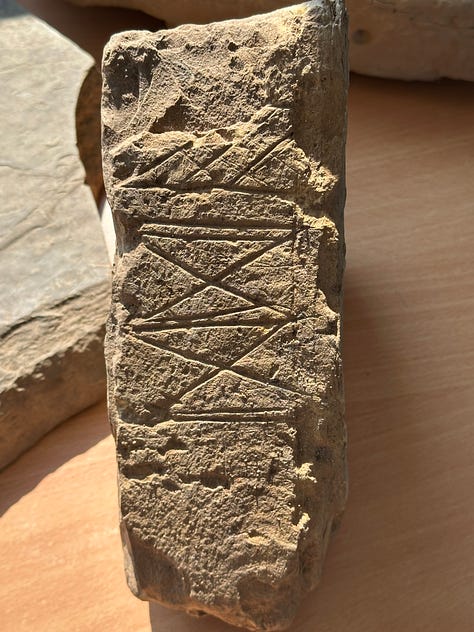
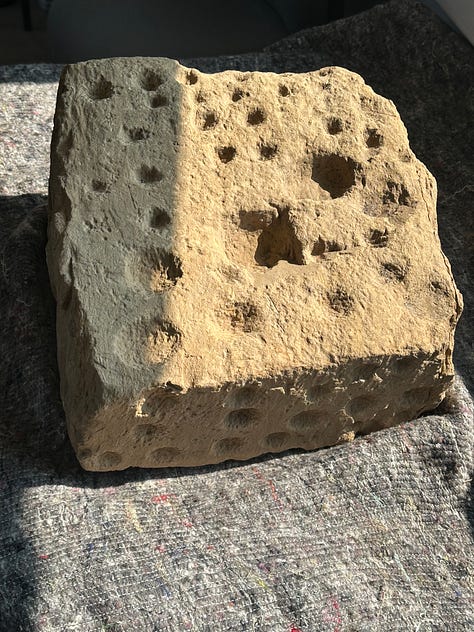
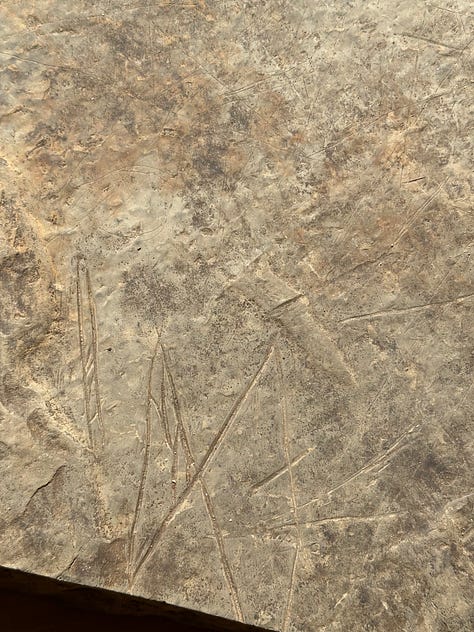
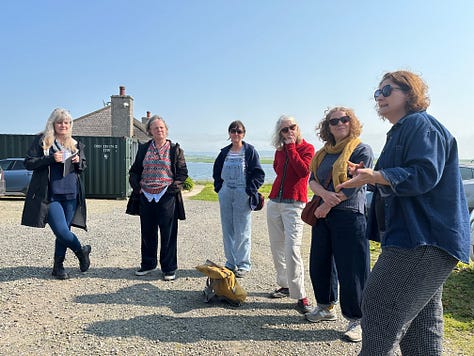
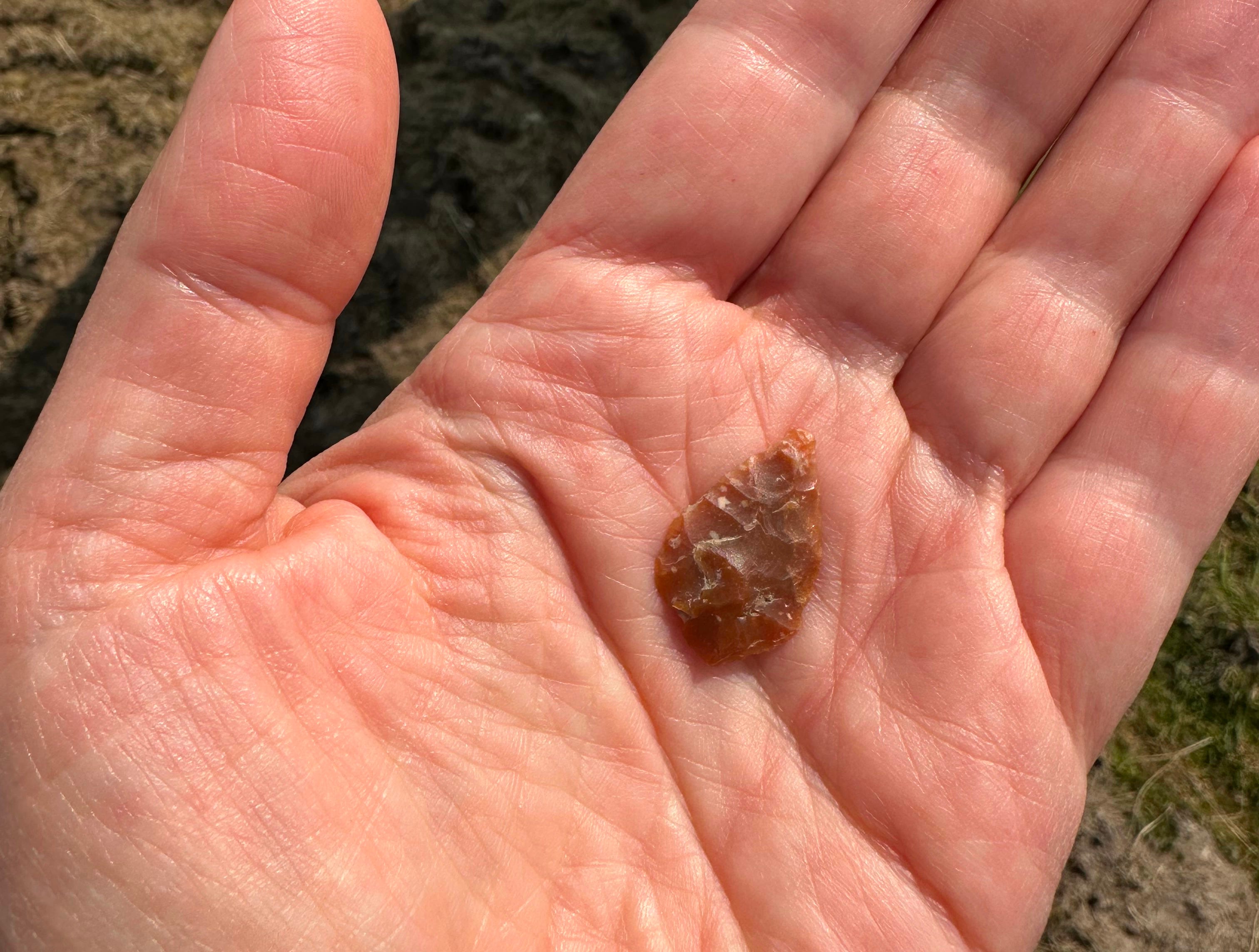
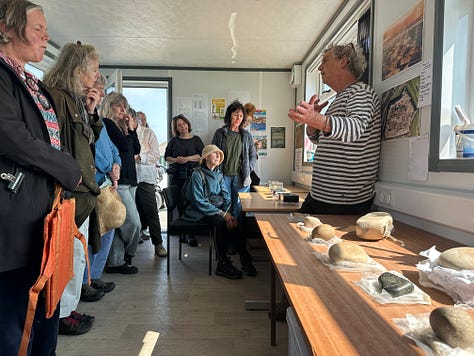
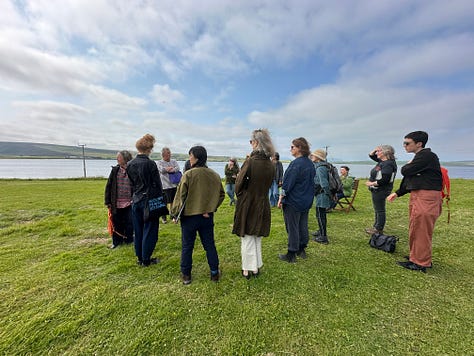
I’m here at the invitation of archaeologist Prof Mark Edmonds and fellow artist Anne Bevan, as part of a three-day workshop bringing Orkney-based artists, writers, composers together to see and handle some of the artefacts found here, to spend time together here, and to be part of a rolling conversation about what this place might mean. We lean on the knowledge, analysis and interpretation of the archaeologists who have studied this place intensively, grateful for the deep and patient work they have done here.
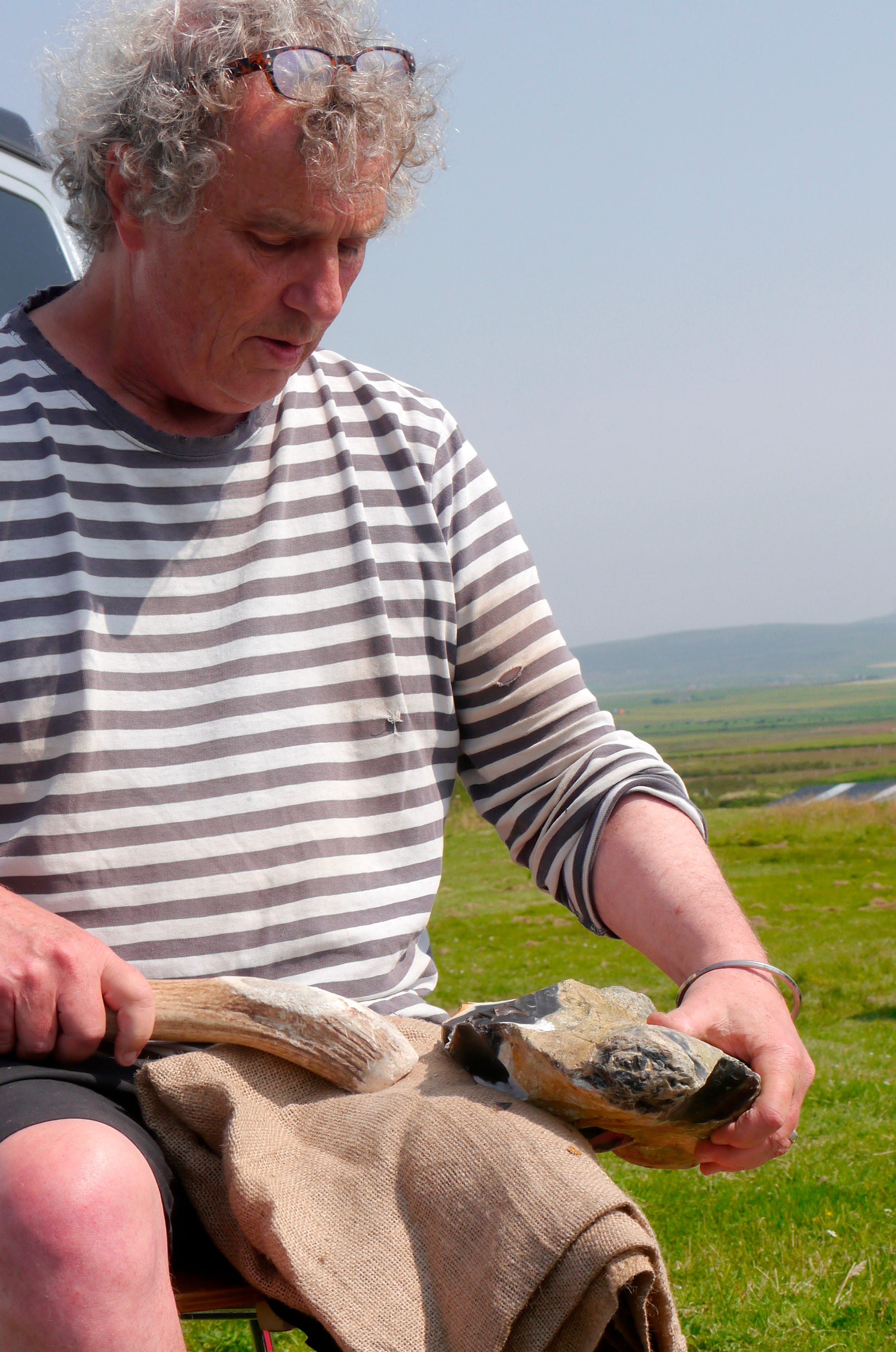
We’re grateful, especially for the time and access to allow this place and the objects found here to seep into our understanding without rush, without striving. We can hold them as open, generative questions, feeling their heft and significance without rushing to an outcome or conclusion.
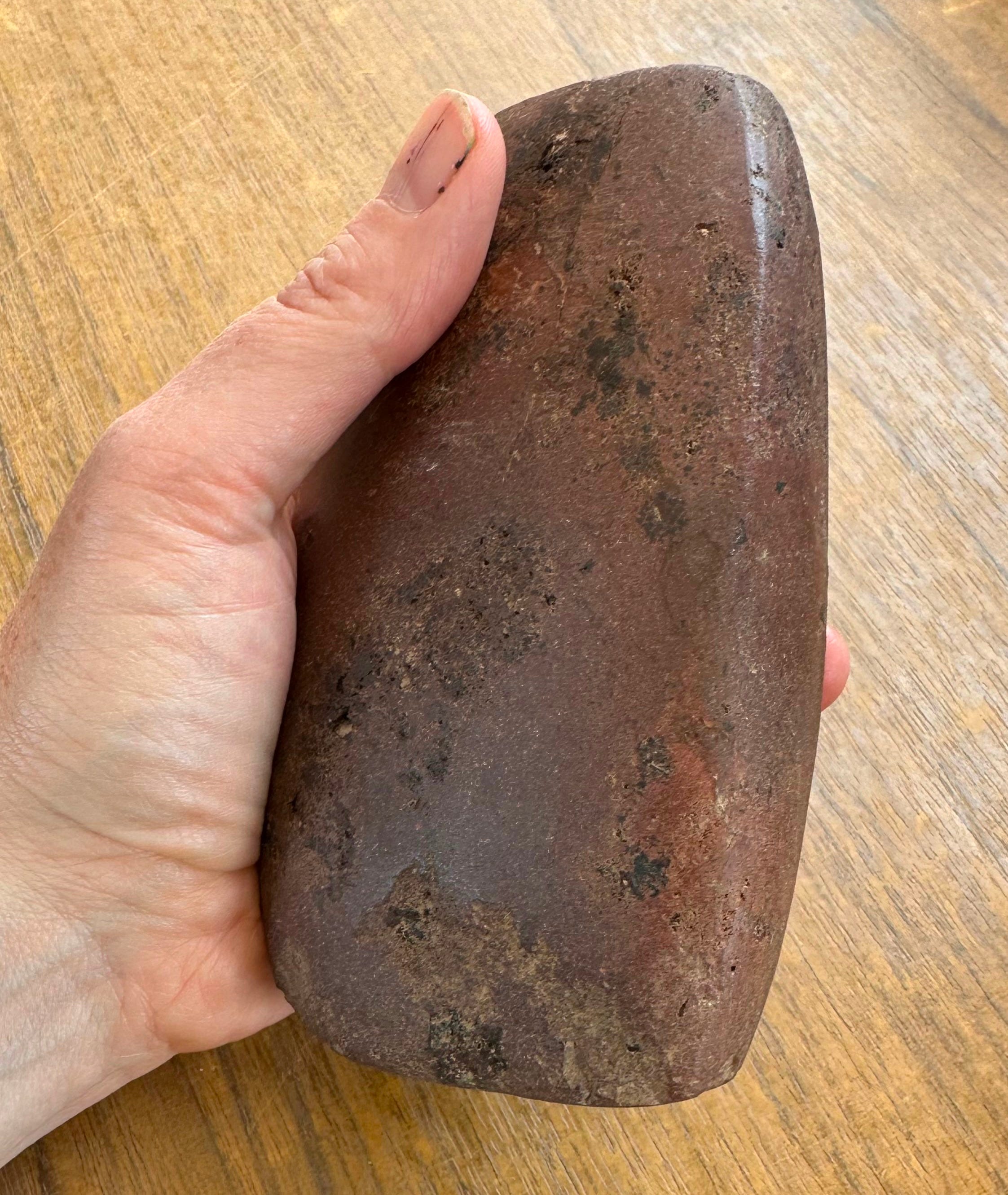
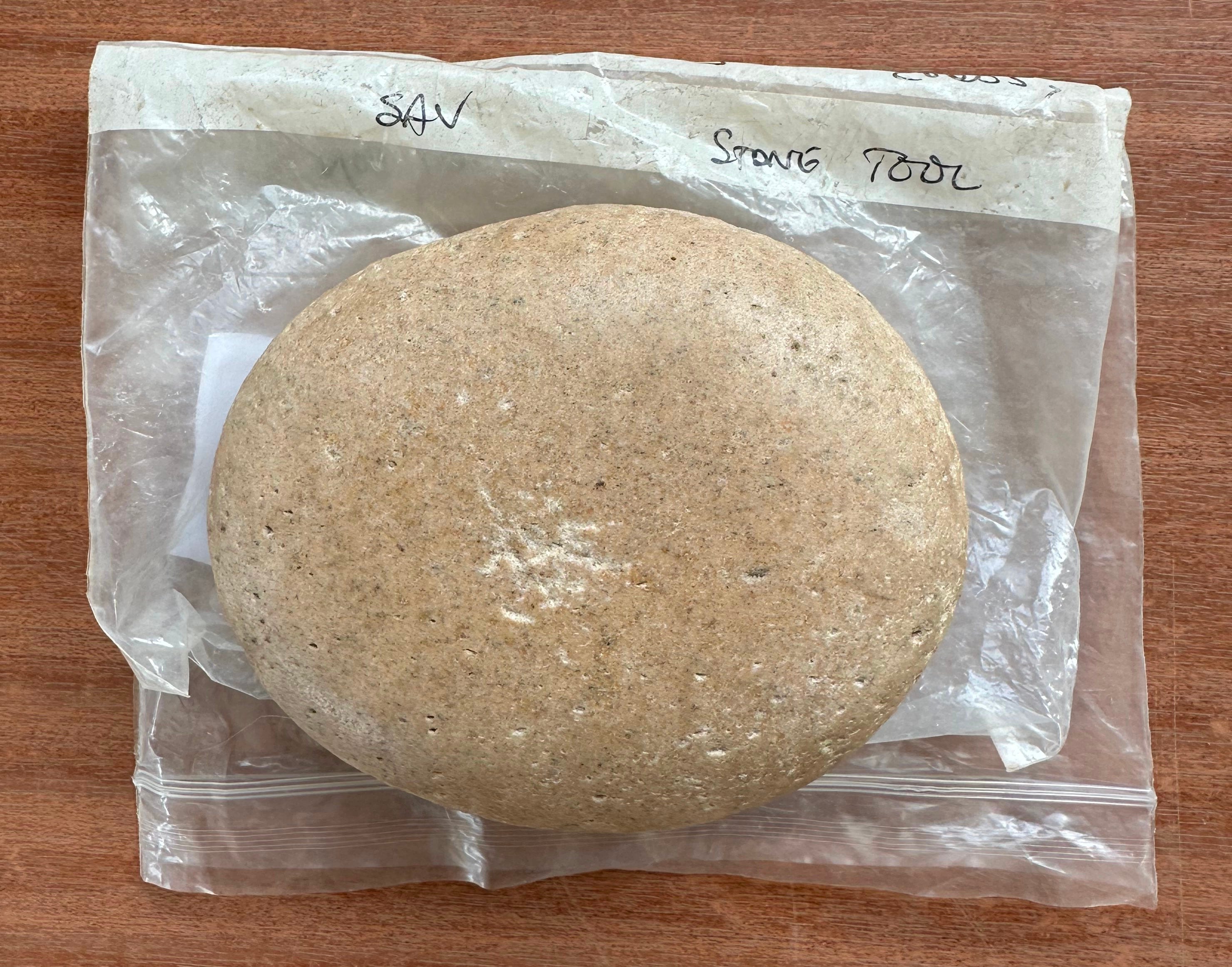
To hold in the hand a stone tool that bears the pockmarks of a hammer blow from 3000BC, or to be in the presence of a line made by a single score of a freshly knapped flint is to feel almost close enough to touch the hand of a human who lived and died 200 generations ago. We are connected through making, through touch, through gesture and breath, through the scale of the human hand, through our clever fingers and nimble wrists, and our shared delight in the work we can do with them.
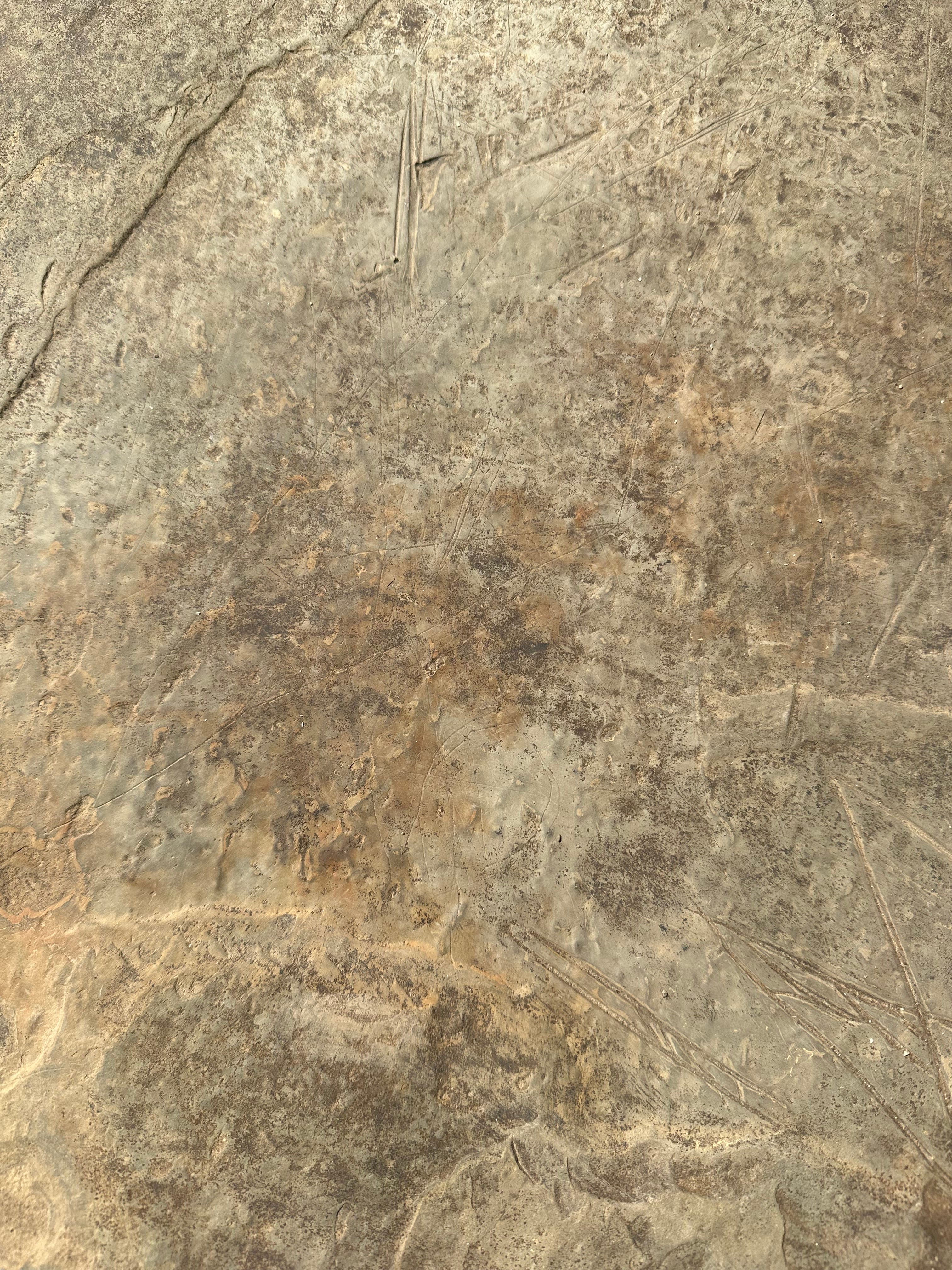
Looking at the fine web of lines drawn across the surface of a slab of mudstone by someone who lived 5000 years ago, I see how swift, how contingent, even casual, many of the marks are. While some are deeply cut by a repeated, careful sawing action, others are fine as a hair, the work of a moment, invisible until the light rakes the surface at just the right angle and intensity. In these delicate, barely seeable marks, I feel the presence of someone who loved drawing too, so close it’s as if I am looking over their shoulder as they grip the flint and draw it over the stone in the space of a single breath.
For now, I’ll let that be enough.
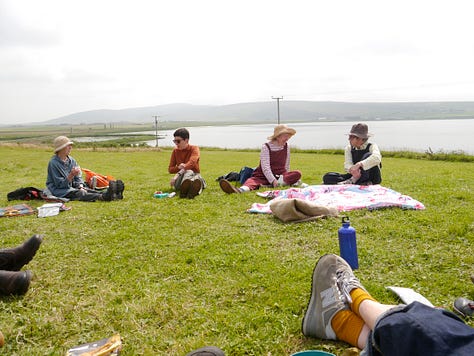
You are welcome our creative co-working session every Wednesday from 3 pm to 4.30 pm UK time. It’s very simple. We say hello, share what we’ll be working on, then leave our cameras on and work together in quiet companionship for an hour, then sign off with a quick check-in chat. That’s it! If you miss a session or can’t make it live, a recording is usually made available to paid subscribers (though not this week as I was away.) You can find them in the subscriber chat HERE.

until next week!
Sam
No posts
Comments
Nothing yet. Say the first thing.
Sign in to join the conversation.