
Since the turn of the twenty-first century, the life expectancy gap between rich and poor in the US and Europe has been growing. Between 2001 and 2014, the rich made gains of about two years in longevity, while the lifespans of the poor remained steady. In 2014, the divide between the lifespans of the richest and poorest one percent of American men was about 14 years. In the past decade, as a result of COVID and the ongoing ravages of the opioid epidemic, lifespans have declined in America, especially among the poor, making the gap still wider; racial differences have also grown. Even in Europe, less sharply striated by economic and racial divides than the US, the lifespans of the top and bottom earners are pulling apart: in Germany as of 2020, seven years separate the top and bottom deciles; for prior generations, it was a mere four.
I’ve been thinking about the divergence between the lifespans of the rich and poor in the modern world as I research a chapter on writers’ deaths and their impact on literature. I take it as axiomatic that how people lived, and how long they lived, matters to culture, which is a way of making meaning of life in the most literal as well as the most subtle sense.
There’s a special reason for thinking about the life expectancy gap in early modern England. Like so much else, it can be traced to Northwest Europe in the seventeenth century. For much of the Renaissance, as for all prior eras, there was little difference between the longevity of dukes and beggars. Both died at close to the same terrifying rates. Death was the great leveler, working its dark magic more or less evenly across the population. It was only toward the end of the seventeenth century that the life expectancy gap between rich and poor really began to open up.
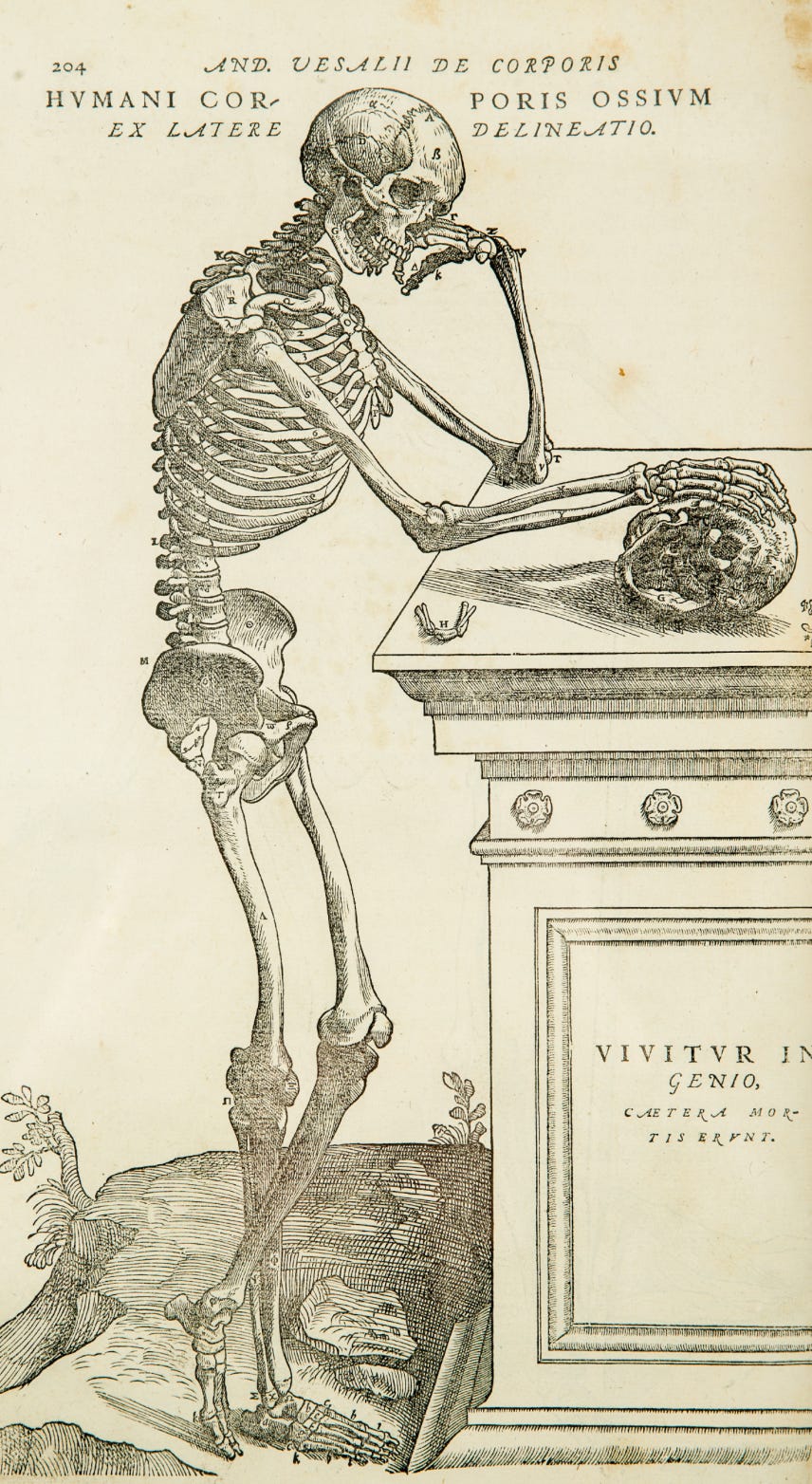
That might seem counterintuitive. Most people, when they think of the deep past, tend to imagine a world of destitute peasants and well-fed nobles, where grinding scarcity among the common people stood in sharp contrast to the lives of kings and princes. There’s something to that picture, of course: food, clothing, and shelter were always desperately uncertain for the vast majority. Harvests could fail; the necessities of life were at the mercy of the weather. The rich, whatever else they suffered, weren’t likely to starve.
But starvation, though a terrifying prospect, wasn’t a major cause of death. Even in medieval famines, only a small proportion of people actually died of hunger. The vast majority of deaths were from infectious disease. That held for the lavishly feasted rich as well as the malnourished poor.
The rich also had two disadvantages, which partially offset their better access to food and shelter. They were more likely to live in cities or population centers, where disease hit first and hardest. When urban elites outlived their poorer neighbors within the city walls, they were themselves outlived by the vast masses of the rural poor. In England, even after three centuries of plague, there were still a handful of villages so isolated that the disease never once reached them.
Aristocratic men were also most likely to die in battle. In especially violent eras, they tended to die younger than their poorer contemporaries. Many of them could have said with Homer’s Achilles,
I am son to a noble father… but the hands of doom and death overshadow me as surely. The day will come, either at dawn or dark, or at the noontide, when one shall take my life also in battle, either with his spear, or with an arrow sped from his bow.
And many would have been just pitiless as Achilles. If they had to die, why shouldn’t others? It was only with the military revolution in the sixteenth century, with the rise of massive infantries fueled by gunpowder, that warfare ceased to be a major factor in elite male mortality.
In spite of these differences, which can be teased out only with ingenuity, the overarching story is one of rough equality between the rich and poor. That’s more or less also what I’ve seen in the case of literary authors. In the group of 615 literary writers born between 1480 and 1680 that I’m looking at, the median lifespan is 57. Compare that with the population at large: for England in the same period, men and women who made it to 30 could expect an additional 27 years on average—that is, 57.1 Which is to say that writers, despite being comparatively well off, were pretty average when it came to lifespan.2
Breaking apart the numbers, differences begin to appear. The small group of noble writers do have a slight edge: they lived to about 59 on average. And, of course, there were outliers on both sides. The highborn Killigrew brothers, William, Henry, and Thomas, made it to 89, 87, and 71—not too bad for the seventeenth century.
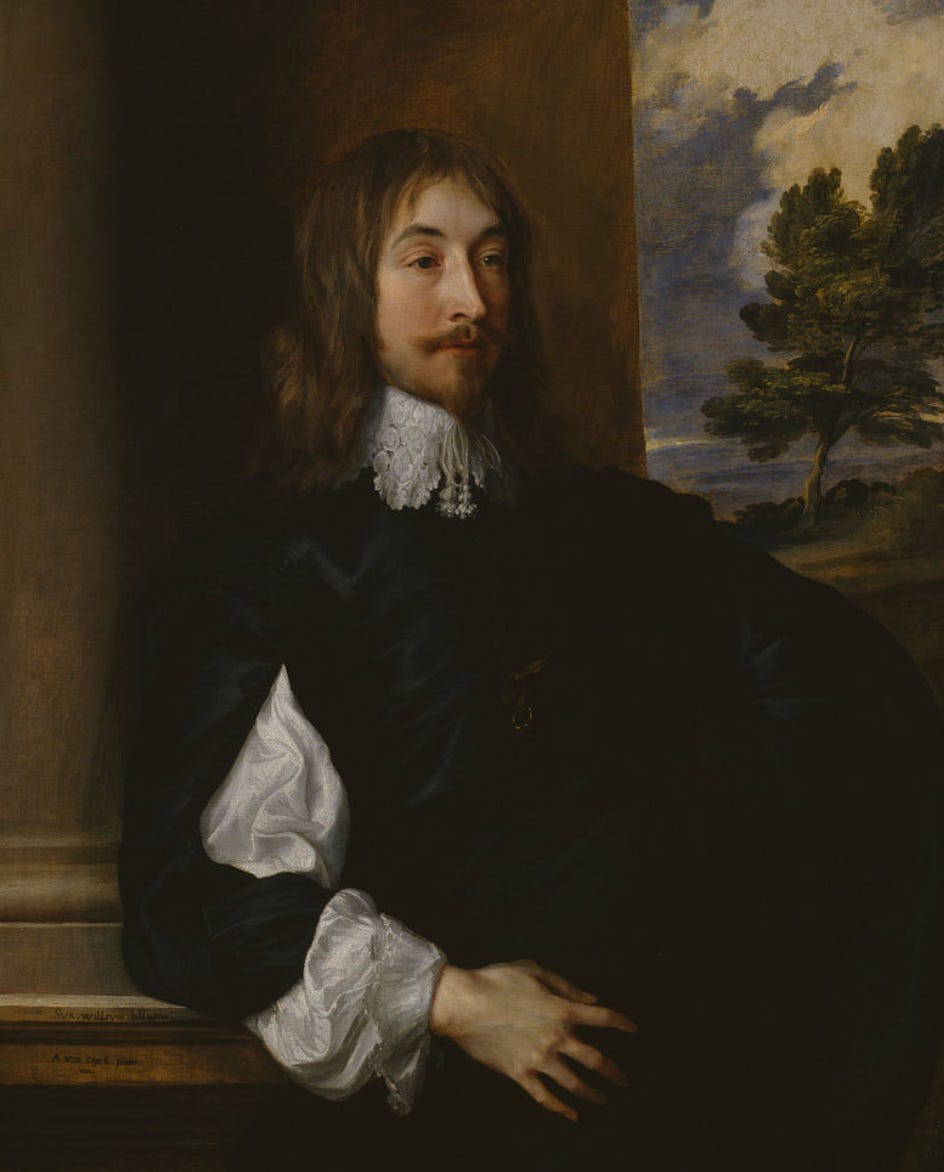
By the end of the seventeenth century, the vast epoch of equally abysmal mortality was coming to an end. The rich were beginning to live longer. Royalty, aristocrats, and even artistic celebrities heralded the beginning of the new demographic regime that would eventually come to encompass us all.
Recent studies by David de la Croix and Omar Licandro on the lifespans of famous people, and by Neil Cummins on the lifespans of the aristocracy pinpoint exactly when the key change took place: with the cohort born around 1650, especially in Northwest Europe.3 These were the men and women who made the culture of the late seventeenth and early eighteenth century. They were the active players in the Glorious Revolution; the men who read and patronized Pope and Addison and Swift.
It’s still a little bit mysterious why, precisely, the rich should have started to live longer at this point. Older explanations of the rise of longevity tied it to the decline of famines, which also happened in the seventeenth century in Western Europe. The problem with this explanation was that it was the rich, who had always had access to food, rather than the poor, who began to live longer first. That meant that the decline in infectious disease, not superior access to food, was the factor that shifted elite mortality. In response to these findings, some demographers have argued that medical knowledge was the key to longer lives among the elite.
New medical advice was part of the increasing distance between how, and where, the rich and poor lived. The most important medical advantage the rich had was in avoiding disease-ridden areas. They vacated cities when disease struck, and even in their daily lives, they began to steer clear of poorer, more crowded areas and their humble residents. “The plagues of 1563, 1603, 1625, and 1665 appear of roughly equal magnitude,” one paper remarks, “but the impact on wealthier central parishes falls markedly through time.” Beginning in the seventeenth century, richer London neighborhoods had lower death rates. The fashionable inner core of London was safer than the suburban slums.
Epidemiologically, then, the rich and poor were leading increasingly separate lives. It’s a finding that dovetails with what cultural historians such as Peter Burke have long argued: intellectually and culturally, the rich and poor were also drifting apart. The seventeenth century saw widespread elite withdrawal from the culture of the masses. By the end of the era, the gentry no longer attended village festivals and rituals as a matter of course. They gravitated instead to the London season, where they mingled with other members of their own classes and participated in an increasingly national marriage market. They built manor houses with corridors and back stairs, a new fashion in contrast to prior models with attached rooms leading into one another, which for the first time physically separated servants from the life of the family.
These two dimensions, the epidemiological and cultural, can’t be fully teased apart. The deepest forms of culture require us to inhabit shared spaces and to interact with one another as we do so. By the eighteenth century, the intellectual, cultural, and social gap between the richest and poorest had grown; it would continue to widen throughout the nineteenth century.
You can see the consequences of the increasing separation between rich and poor, and their life expectancy gap, in literature. In the Renaissance, death was still the terrifyingly indiscriminate monster that devours all alike. “A king may go a progress through the guts of a beggar,” as Hamlet says. Renaissance writers were forever imagining heaps of bodies mouldering together, all forms of physical and social distinction erased in the grave.
By the eighteenth century, however, a new attitude was beginning to emerge: sentimentality toward the deaths of the poor. Gray’s Elegy in a Country Churchyard, the best-selling poem of the eighteenth century, sees its author rewriting Milton’s elegy Lycidas as he considers the quest for glory and the untimeliness of death. But while Milton contemplated the early death of a classmate, Gray took the anonymous, unlettered poor as his memento mori. Reflecting on his own death, he imagines an elegy for a poor youth in a humble village churchyard, rather than the Cambridge classicist he was.
Text within this block will maintain its original spacing when published
Here rests his head upon the lap of earth
A youth to fortune and to fame unknown.
Fair Science frowned not on his humble birth,
And Melancholy marked him for her own.
Gray had his reasons: coming from a London trade background, he was the only surviving child of 12. But the poem resonated across the reading public because a new mood was developing. Early death was becoming associated with poverty, as was in fact the case. Instead of horror at death’s indiscriminate power, a new feeling of pity was beginning to take form. Melodrama dates from this period. And it’s only a short step to masterpieces of sentimentality and pathos such as Dickens’s dying urchins—Little Nell, Jo in Bleak House—written, not coincidentally, as the mortality gap was approaching its widest point, in the second half of the nineteenth century.
In the twentieth century, the gap decreased as longevity rose across the board. Everyone lived longer, healthier lives, though still not quite equally long and equally healthy. Needless to say, we still live amazingly long lives when compared to the vast swathes of human history before the demographic transition. Being freed from the relentless toll of death that marked the past is a true miracle.4 But the decline in life expectancy for the bottom deciles is an ominous development. We should expect to see it reflected in our own art, our own stories and film and plays. Perhaps we already are.
Since child mortality lowers the numbers, and anyone who died in childhood wouldn’t be recorded as a writer, you have to compare writers’ lifespans to additional lifespan at about the age most people became writers. Elsewhere, I calculated the average age at first print publication as 29—not perfect, but then, print publication is itself not a perfect proxy for becoming a writer! It’s estimates all the way down.
That’s not quite true, since writers were much more urban than the average person.
Cummins argues that there were two different shifts: the rich first separated from the poor around 1450; then, around 1650, they began to pull away more sharply.
I haven’t talked about the relationship between death and birth rates, but that’s obviously part of the story.
Comments
Nothing yet. Say the first thing.
Sign in to join the conversation.