
TIP: This post may be too long to be viewed in your email. Read it on the website or in the Substack app so you don’t miss a thing.
I saw a fuchsia flower from a bougainvillea blowing across a busy highway, tumbling end over end on its petals. It looked like it had set itself free from the vine and was somersaulting away, unfortunately through traffic. It seemed like a metaphor for my own life at the time.
As my car approached, I shifted a little to the side hoping I wouldn’t squash it, but I knew that most likely, myself or another driver would run it over. As I looked in the rearview mirror, there it was, continuing on its journey- and making really good time- before the next batch of cars came through. (I wonder if anyone else sees the world in this way.)
At the time, I was grieving a different kind of death, living every day in limbo. Though divorce is a transition, that word didn’t seem to fit my circumstances. I thought transition meant forward momentum, but I was running on a treadmill. In hindsight, I’m grateful I was moving at all.
I felt like I was going through life in a medicated haze, though I was completely sober. I now recognize that haze as grief, but I wasn’t given special treatment at the time. It wasn’t my person that died; it was my dreams, my sense of self, and the future I thought I would have.
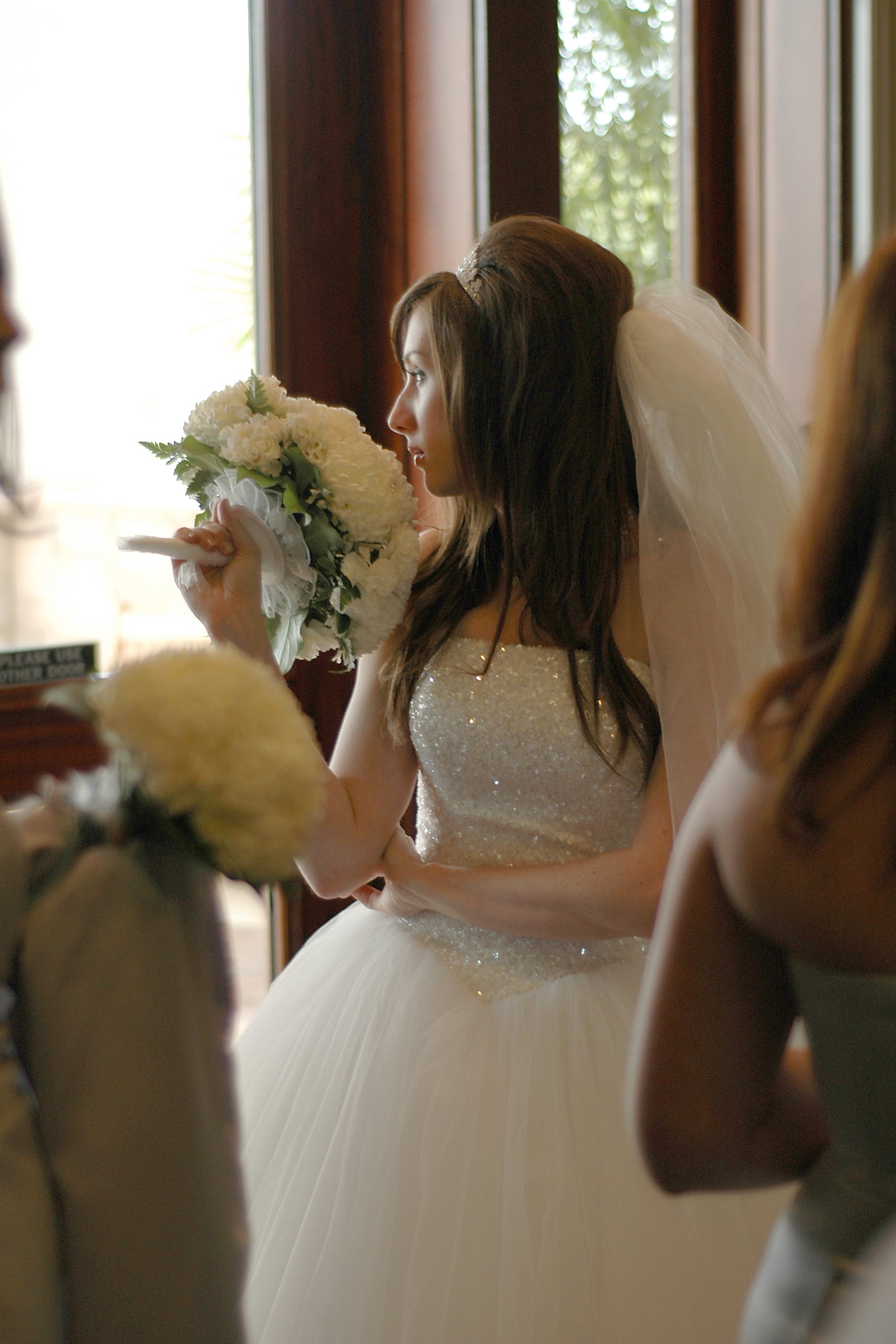
Though divorce is common, suddenly everyone who had been through it before me had amnesia. Many didn’t understand my choice to leave my husband. They hadn’t been paying enough attention before, and they weren’t interested in the justifications after.
“Nothing you go through in your marriage could ever compare to the sacrifice Jesus made when he hung on the cross for you.” This was the response from the church secretary when I told her I needed to speak with the priest about getting an annulment. Compassion was hard to come by and my sanity was hanging on by a thread.
At the time, I worked long, stressful hours on a loop, like the movie Groundhog Day. My job was in TV news, so the environment was fast-paced (and felt like high stakes). After my long commute home, I would eat dinner and collapse into bed. I would either slip into a dreamless sleep, waking only to do it all over again, like a character from the series Severence, or I would struggle with anxiety-induced insomnia. I didn’t even have a smartphone at the time to blame and the wifi was so bad at my parents’ (where I was staying) that my ancient laptop couldn’t stream TV shows. I was alone with my thoughts and they were grim. While my work was one big, heart-racing distraction, my life otherwise felt stagnant and I was impatient.
Every other weekend, I had visitation with my daughter, a hormonal preteen whose parents were going through a divorce. And on the other weekends, I would escape three hours, one way, across the state to spend time with my boyfriend and live a completely different life, one that was full of fun and possibility until his partying got old seven months into the relationship, but you probably saw that coming. And that meta tale is one for another time.
All of this is how I became the villain in my own story, but let’s go back to the moment my marriage actually ended.
“I don’t think I’m the type of person who should be married,” my ex-husband said, and I wasn’t exactly surprised. In fact, I agreed. He wasn’t cut out for marriage.
This admission was the validation I needed. It had felt like I was the only one trying for years, and now I didn’t have to wonder. This meant I could move on and be free. It meant that there was still a chance at happiness, even though it hurt that I couldn’t have that happiness with him.

We were sitting at our dining room table, one that was far too formal for the life we were living. We only had it because a friend’s dad worked at Rooms-To-Go and gave us a deal on the floor sample. It was an espresso brown 6-seater with a leaf in the middle for entertaining. Every other chair was a different color, signaling that we were still edgy despite the matching lighted cabinet full of Wedgwood china and Shannon crystal. I thought we were building something, but he was just trying it all on for size.
Through the course of our conversation, he explained that he really had meant all of the promises he had made, but that he didn’t feel capable of fulfilling them now. He really had wanted our shared dream of an artistic life that was all at once stable and spontaneous. What revealed itself though, was that he wanted my family, my traditions, and my life.
He wanted to fill a void and heal old wounds…and I was the medicine, but I guess I was just a placebo. He told me that he ultimately felt like he was faking it.
Relief quickly gave way to fury. Couldn’t he have come to this realization before the long process of converting to Catholicism? Before our lavish Catholic wedding and reception? Before I legally adopted his daughter? There were so many players entangled in this mess, and we had wasted so much time.
I was only 27 years old, but I had been with him, raising a child with him, for seven years. In that time, I had turned down opportunities to move to Los Angeles and New York. I’m not blaming him for my choices. I had agency, though it didn’t feel like it. I was so young when I started that adventure with him. Hell, I was 20 when I met him and ordered a Sprite at the bar on our first date because I wasn’t old enough to drink. I fell in love with him and had made my world small in order to be with him. It’s a classic story.
I slowly lost myself and replaced her with a bitter, resentful, deeply hurt woman, a common archetype in my small town. The one that settles for less than she deserves. The one I swore I would never become.

We had planned this sit-down conversation because aside from our marriage being in shambles, we were about to be at crossroads in terms of where we would live. He hadn’t been making the mortgage payments on our house because work had dried up in the recession. Neither of us thought to sit with a financial advisor and create a plan; we just figured we would attempt a short sale ahead of a foreclosure, like the rest of the world was doing. Just another item to add to the list of Things I Would Do Differently.
I had just graduated college and wanted to start over in a city south of us or possibly move across the state where I had once lived, but he wanted to move north. In this conversation, we mutually decided to get a divorce, and the plan was to literally go in separate directions. We figured we would go through the motions of daily life for the sake of our daughter, until we had housing solidified. There was no rush, now that we were on the same page.
Two months later, he found out that I had been quietly developing a romantic relationship with someone else, and that mutual decision to get a divorce vanished into thin air. It was as if that conversation never happened.
Suddenly, the narrative became he was the marrying type and I, the person he expected to be his wife forever and ever, had ruthlessly cheated on him. He kicked me out of the house in a violent fit of rage late one summer night.

In the time that had passed since our discussion at the dining room table, I had taken on some freelance writing for the local paper, and then got a job at a TV station an hour away from home. My best friend gave birth to a baby with a serious health condition, and I was a bridesmaid in another friend’s wedding. Between professional and personal commitments, I was rarely home. When I was, I was packing my belongings. The part that I had omitted from my legal husband was that I had started having daily conversations with a man he had met before. I suspect that, even though they weren’t friends, knowing him made it worse.
I fully admit that I should have waited to have those flirtatious conversations, that led to more meaningful conversations, that eventually led to a long-term relationship…until after we were legally divorced or at least living apart. That’s where I was absolutely in the wrong, but word quickly spread that I had been cavalierly unfaithful to my blindsided husband.

It wasn’t that he wanted me; it’s that he didn’t want anyone else to have me. He couldn’t have honestly thought that we would divorce and I would never date again, especially since I had made it clear that I wanted to be married and to have biological children, which was the very dream he admitted to not wanting back at our dining room table. I had gotten an unfair head start, however, by not letting the ink dry first.
He was mostly embarrassed, thinking it was a bad look for him. Suddenly the thought of me leaving him “for another man,” became a challenge to him. He continued to encourage me to come to my senses, as if I were having a midlife crisis, in a “You’ve had your fun and made your point. It’s time to come home,” sort of way. His best man from our wedding even called me, then dropped by to ask me to stop seeing the other guy. He guilt-tripped me saying that if our marriage failed, he had also failed at his job as best man…
The story of our separation went from conscious uncoupling to soap opera and I was the antagonist.
I, the one who had given up everything for a single father with baby mama drama (the stories of which I couldn’t make up if I tried), was now being expected to stay in the relationship that he admitted to no longer wanting. I’m not saying I was without sin, but two things can be true at the same time. It was my choice to dedicate my life to him and I did it under false pretenses. I chose to give up on my dreams because I believed the life we were going to have would be so worth it.
Divorce often leads to disenfranchised grief (sorrow experienced from losses that are deemed less significant, or losses that aren’t publicly supported or openly acknowledged), and when everyone around us thinks we’ve brought this on ourselves, it can be especially isolating.
“I hope she’s not writing publicly about this…” one friend said to another.
“I’ve never been through a divorce before, so I don’t know what it’s like,” one family member said in a dismissive response to my suicidal ideations.
I don’t have to experience things firsthand to have compassion for others going through a hard time, but I hadn’t realized that was a rare quality.
It didn’t matter what shocking details I revealed to family and friends that I had previously kept to myself, many of my allies quietly listened while staying in touch with my ex. Some openly chose his side. This was a sad reality I had to face: that sides would be taken and that few would take mine.

More than 15 years later, I can see that this thinning of the herd was a good thing. The people who didn’t have my back aren’t exactly thriving in life today. Divorce doesn’t just alter one relationship, but so many more than I ever expected. And at the time, it was excruciating. It was enough to make me feel riddled with guilt and doubt (not in my decision to leave, but in my ability to ever build a better life than the one I had been living), but something told me to keep moving forward, that there would be light at the end of the tunnel.
After dragging my feet for months, I finally hired an attorney and paid for the divorce. Despite the fact that we had both moved on, my ex had no intention of ever filing the paperwork. I wrote the check with a clenched jaw. I saw it as yet another unfair aspect of the entire ordeal. I am the marrying type, I want to be married, I want children, and yet I am paying thousands of dollars for a divorce from a man who admits he does not want any of these things? Underneath the anger, however, I also felt proud of myself for being my own rescuer.
On the day the divorce was finalized, a friend asked, “How happy are you right now?!” And the answer, of course, was…not very. Relief? Sure. Happiness. Not yet.
Very few people get married thinking divorce is in their future. Though my relationship with my ex was fraught with red flags from the beginning, the hopeless romantic in me really thought it would last forever. I still have a lot of sadness for my younger self, for what she missed out on and for what she endured.

If any of this sounds familiar, I need you to know that it won’t always feel exactly how it does right now. Sometimes the right choice is also the hardest choice to make and comes with grief strong enough to break a person.
People think that when we “get what we wanted” we should be happy, but divorce, or leaving a job, or ending a friendship is usually a long game. Eventually, our lives will be better for making the difficult decision, but initially everything will hurt like hell, which is exactly why so many people stay in situations that are wrong for them.
Familiarity, no matter how painful, seems less painful than the scary possibility of what could be waiting on the other side.
Many times, the pain of expansion is brief while the pain of staying is indefinite. In my case, the pain happened to include a damaged reputation that I hadn’t anticipated, which only made me feel more alone. Time has a way of revealing the truth, though.
At the risk of sounding like a bad writer, I have some points I want you to takeaway from this, in no particular order:
What you’re feeling is heavy and all-encompassing in this moment, but it won’t last your whole life.
The best laid plans will fail in the process of uncoupling. Your own behavior may surprise you. You’ll be disappointed and you’ll disappoint yourself.
As unfair as it may be, you will be misunderstood and judged, which will only make this harder. You’ll lose people and gain others.
You may not feel supported in the way you deserve right now, but keep putting one foot in front of the other. No, you shouldn’t have to, but you can get through this on your own.
Stay alive long enough to see what will unfold. That 20-something living her own personal Groundhog Day Hell could not have predicted where I am today.
By witnessing my grief in reading this, you might have felt seen yourself. Need more? Let’s talk.
Comments
Nothing yet. Say the first thing.
Sign in to join the conversation.