
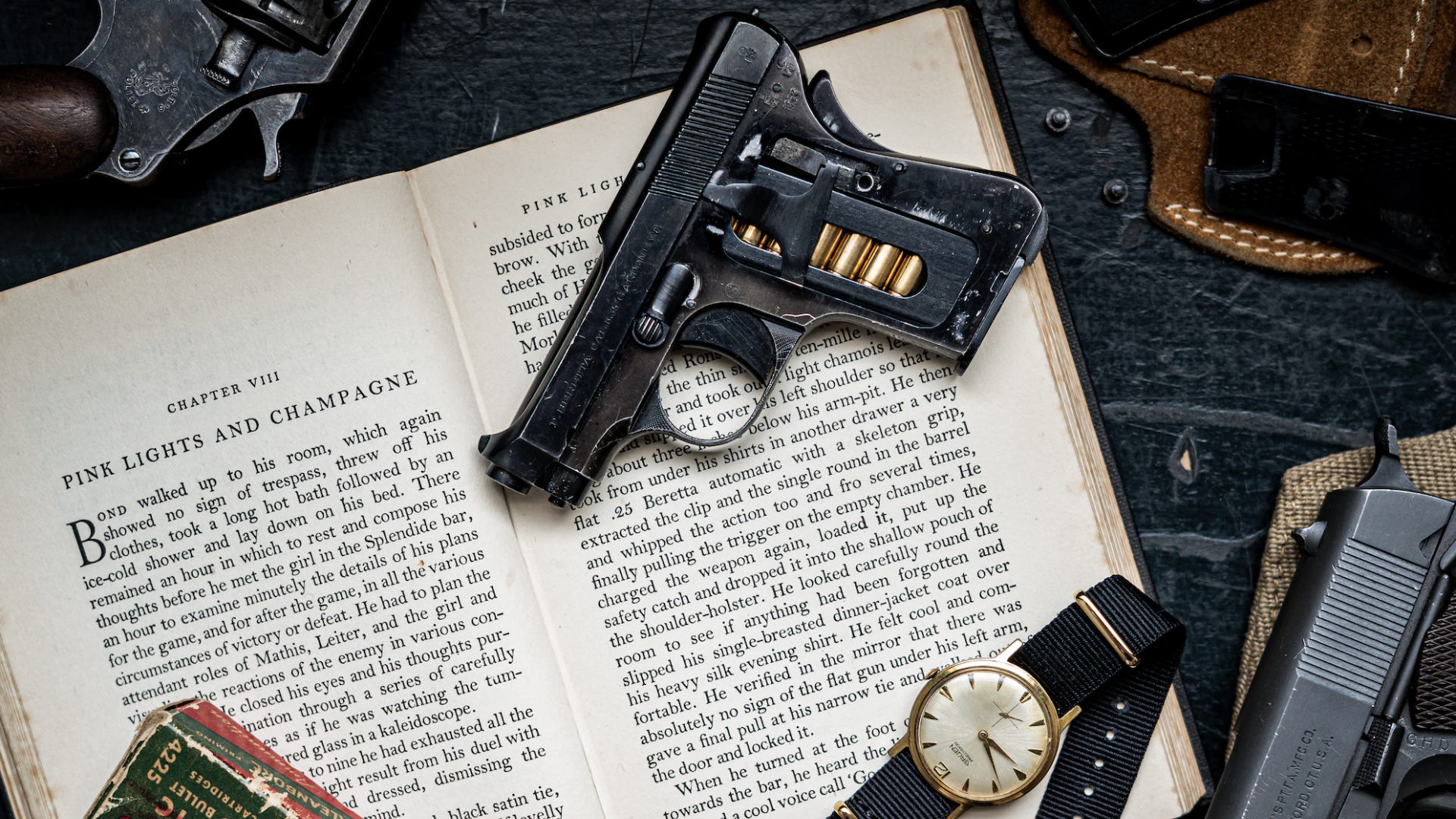
In the beginning, there was a Beretta. Not a “Walther PPK, 7,65mm…” but a small, unassuming Beretta, chambered in .25 Auto. Sporting eight rounds in the magazine, and some unique customizations, this handgun was the sidearm of choice for 007 when we first meet him in the pages of 1953’s Casino Royale. It’s a preferred weapon that is carried throughout much of the Fleming canon, until its retirement in Dr. No’s second chapter “Choice of Weapons.”
It’s in the eighth chapter of Casino Royale that the compact automatic is first described. Fleming’s prose here is so engaging, as 007 literally dresses to kill.
“After pocketing the thin sheaf of ten-mille notes, he opened a drawer and took out a light chamois leather holster and slipped it over his left shoulder so that it hung about three inches below his arm-pit. He then took from under his shirts in another drawer a very flat .25 Beretta automatic with a skeleton grip, extracted the clip and the single round in the barrel and whipped the action to and fro several times, finally pulling the trigger on the empty chamber. He charged the weapon again, loaded it, put up the safety catch and dropped it into the shallow pouch of the shoulder-holster. He looked carefully round the room to see if anything had been forgotten and slipped his single-breasted dinner-jacket coat over his heavy silk evening shirt. He felt cool and comfortable. He verified in the mirror that there was absolutely no sign of the flat gun under his left arm, gave a final pull at his narrow tie and walked out of the door and locked it.”
- Ian Fleming’s Casino Royale, Chapter 8 - Pink Lights and Champagne
THE HISTORY OF THE BERETTA
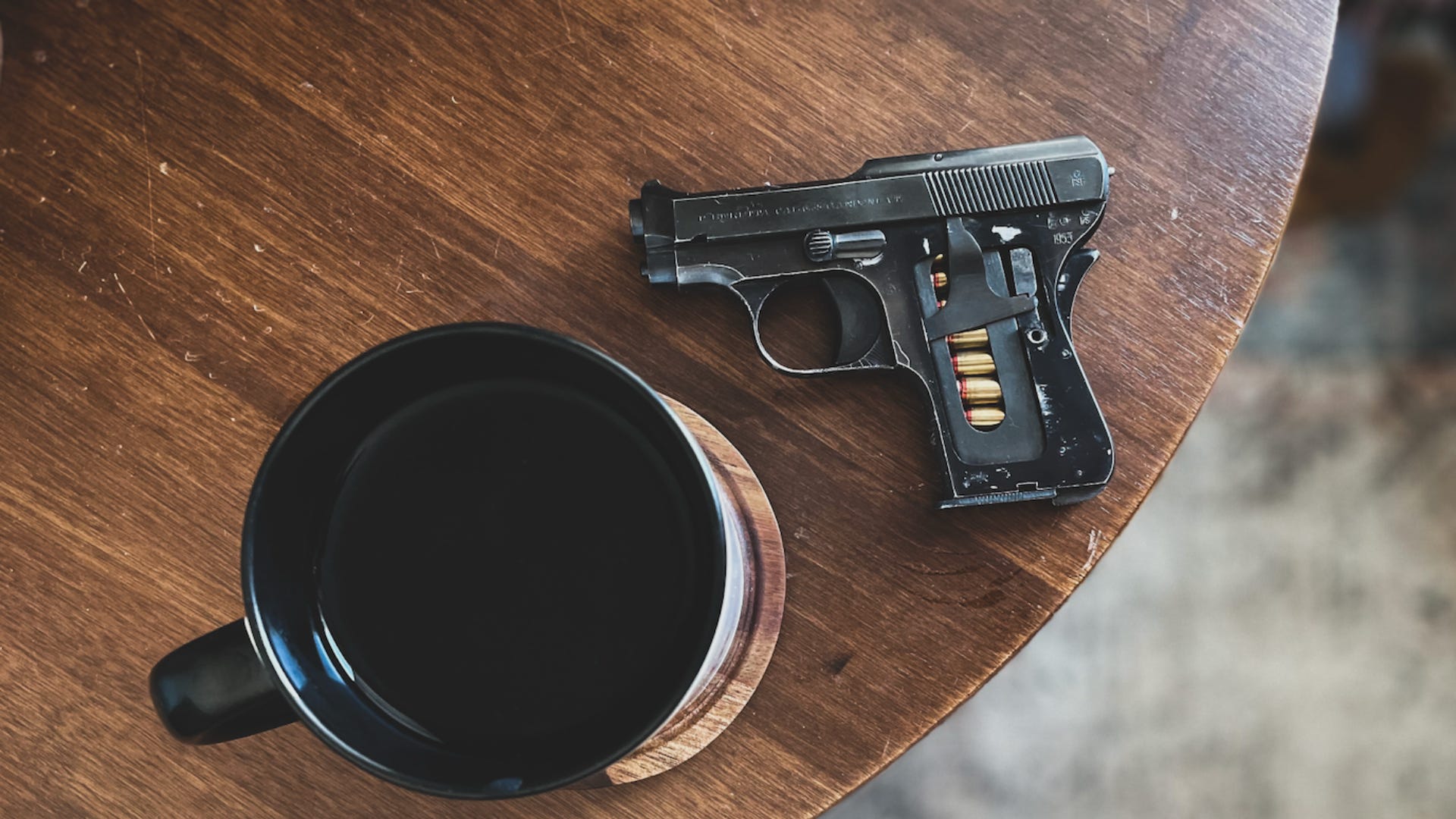
Beretta fits the literary Bond for due to their incredible history and heritage. Fleming’s Bond very clearly preferred things that were almost from another lifetime. If we look to his original car for instance, that gorgeous 4,5 Litre Bentley, sporting an Amherst Villiers Supercharger, we find another example of something that almost doesn’t fit anymore. He’s driving a car, one of the last of its kind, from 1930, in 1953. But, Bond simply adores it regardless of its age. And, regardless of its age, this car is all business, working just as well as anything from that era. Bond’s preference for dated items isn’t limited to his vehicles. And what better manufacturer than the oldest recorded gunmaker in history to arm such a man with? This year, 2026, marks 500 years of Beretta’s legacy. In 1526, Mastro Bartolomeo Beretta was paid for the production of 185 barrels for the Republic of Venice’s arsenal. 15 generations later, the Beretta name is still one of the most prominent in the firearm’s industry.
Even in 1953, a Beretta chambered in .25 Auto wouldn’t be the first choice of many for personal defense. However, due to Bond’s history with it (we learn that he carried it for 15 years in Dr. No), there is a certain amount of respect, loyalty and love given to the firearm. Fleming truly shaped Bond in his image, and this firearm is no exception. During his time in Naval Intelligence, Fleming himself reportedly carried a FN Model 1905, likely serial number #257024 (This gun from his personal collection would be sold and imported into the United States after his death). While it is unclear why Fleming elected to use a Beretta rather than his own Browning, the selection of the .25 ACP “mouse gun” brilliantly connect readers directly to Fleming himself. It’s little wonder why, when in Dr. No, Bond’s farewell to the Beretta is so beautifully written. Fleming is bidding farewell to the character as he was originally conceived, a spy, a detective, and a man well modeled after his maker. While the selection of the PPK was entirely Fleming’s own choice (Boothroyd encouraged change but Fleming’s choice was wholly his own - a tale for another time), the Beretta was, undoubtedly, the “Fleming Era” Bond sidearm.
BOND’S BERETTA
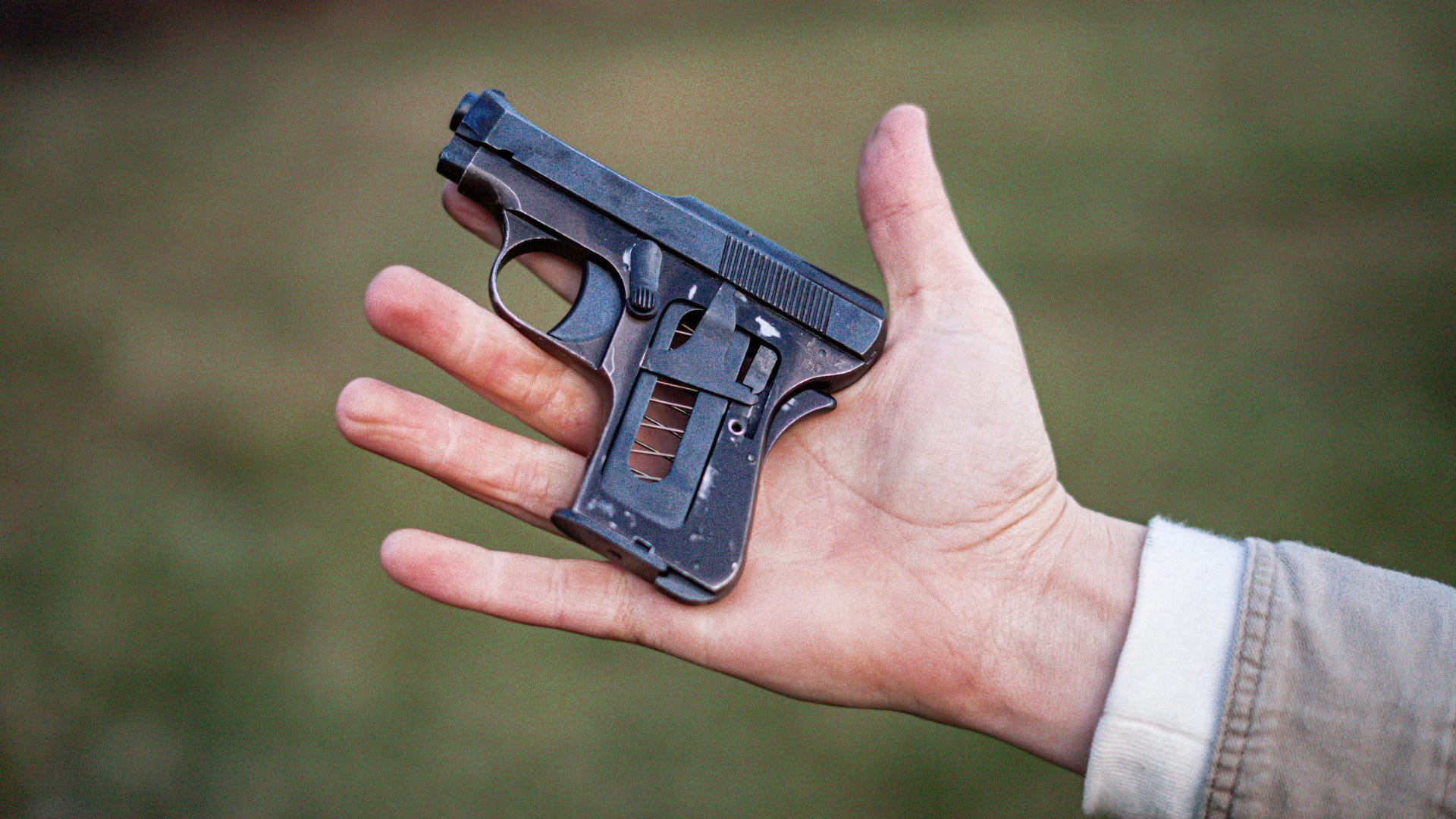
It should be said here that we don’t formally know which version of the diminutive .25 automatic Beretta 007 carries during the novels. Despite Fleming’s panache for granular naming of everything down to the soaps Bond uses - even just once - he refuses to ever definitively name the model of Beretta (or Colt for that matter) he issues to 007. So, a little bit of liberty has been taken over the years in making that decision, with the common consensus landing on the Beretta 418. The problem is, which one? The 418 is one of many in a long line of pocket .25’s of that design from Beretta, beginning with the 1919, which later evolved into the 318, and then, the 418. It’s a lot. I cover the differences and history in great detail in my book. Here, let’s just accept that the 418 is correct, and get to the brass tacks of the design and philosophy of Bond’s carry gun.
On the whole, the 418 is a quintessential pocket auto. Simple, striker fired, with minimal controls and a micro-gun size, though thankfully it is larger than the Colt 1908 Vest Pocket, and is much easier to shoot as a result.
With snags in mind, the sights are fixed, and are a part of the slide, which allows them to be incredibly small, preventing any sort of snags on the blade of the front sight - something to consider if one was to be carrying this in the pocket as I often do.
Other notable design choices include the manual safety, which also operates as the slide release/catch. Having one lever fulfill multiple functions also helps limit the snag points, and makes field stripping/cleaning the firearm all the more efficient. Additionally, the pistol features a European style magazine release, found on the base of the grip, further limiting the width of the firearm that would be created by a side-based button release.
As stated, the Beretta 418 went through a variety of cosmetic changes throughout its production history, from minor changes such as grip materials, to major ones, like the inclusion of a striker ready indicator, which is an extension from the firing pin outward, allowing the user to check the condition of the firearm without looking. If one had this pistol in the pocket, they could feel for the protrusion from the rear of the slide, and would immediately know if their gun was primed or not.
Through the novels, we are given glimpses into different modifications Bond has made to this pistol. The first description of the handgun we are given is in the pages of Casino Royale, where Fleming writes, “He then took from under his shirts in another drawer a very flat .25 Beretta automatic with a skeleton grip…” What’s most interesting here is the skeleton grip. The Beretta 418, with its grip panels, is an incredibly flat gun by any standard. Yet Fleming felt the need to remove the panels, exposing the magazine and limiting the control of the firearm.
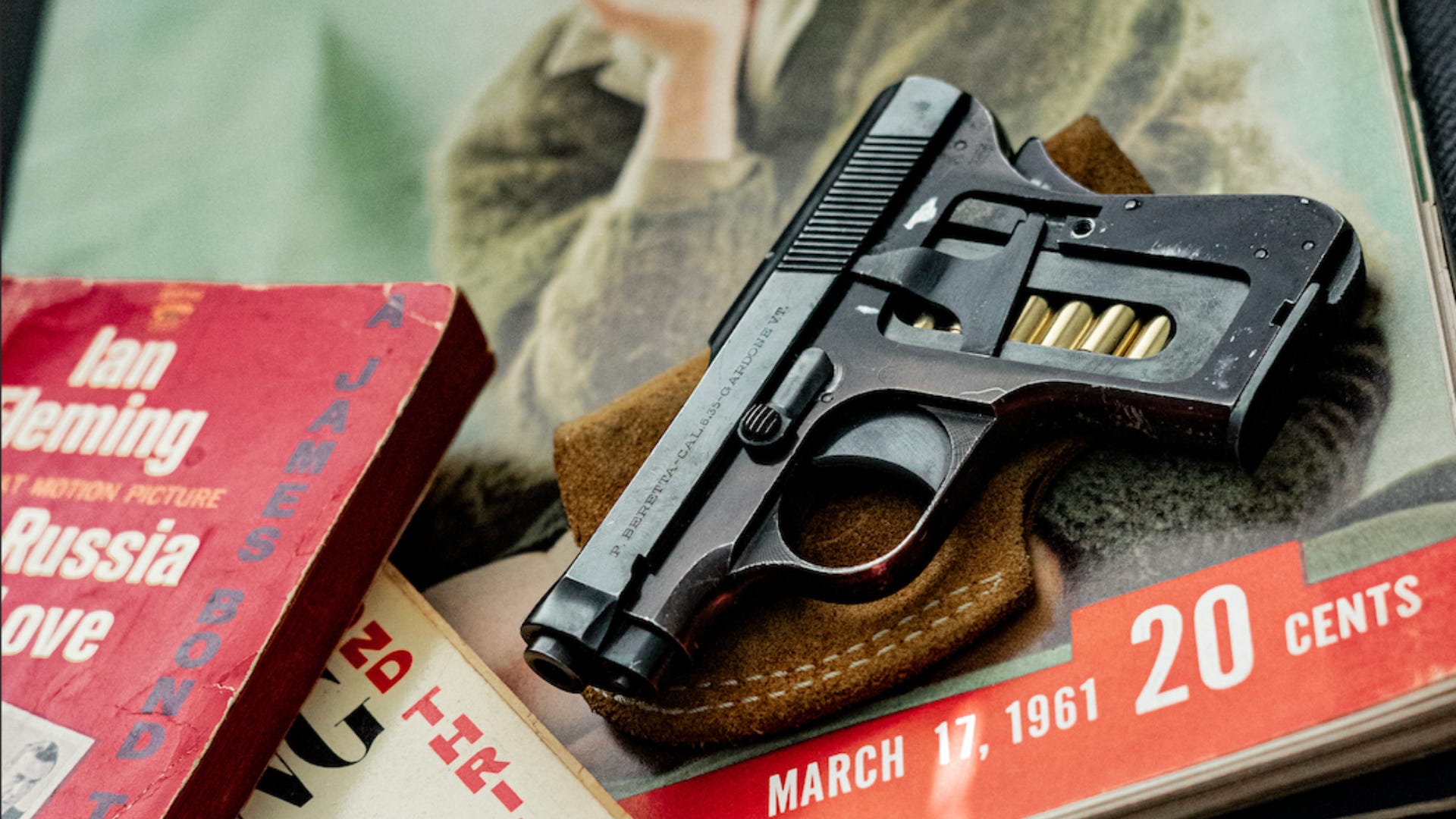
Later on, in Diamonds are Forever we find out that Bond uses tape on the skeletonized frame. This tape actually serves two purposes. First, it allows Bond to get a better purchase on the firearm. The small gun is difficult to manage without the grip panels, becoming a mess of sharp edges from the hollow frame, and smooth, flat metal otherwise. When firing without the grips, the shooter is confronted with these seemingly contradictory descriptions simultaneously, limiting the accuracy of the firearm greatly. The tape however, covers the blank space created by the missing grips, and creates something tactile to hold onto. Additionally, the tape disengages the rear grip safety.
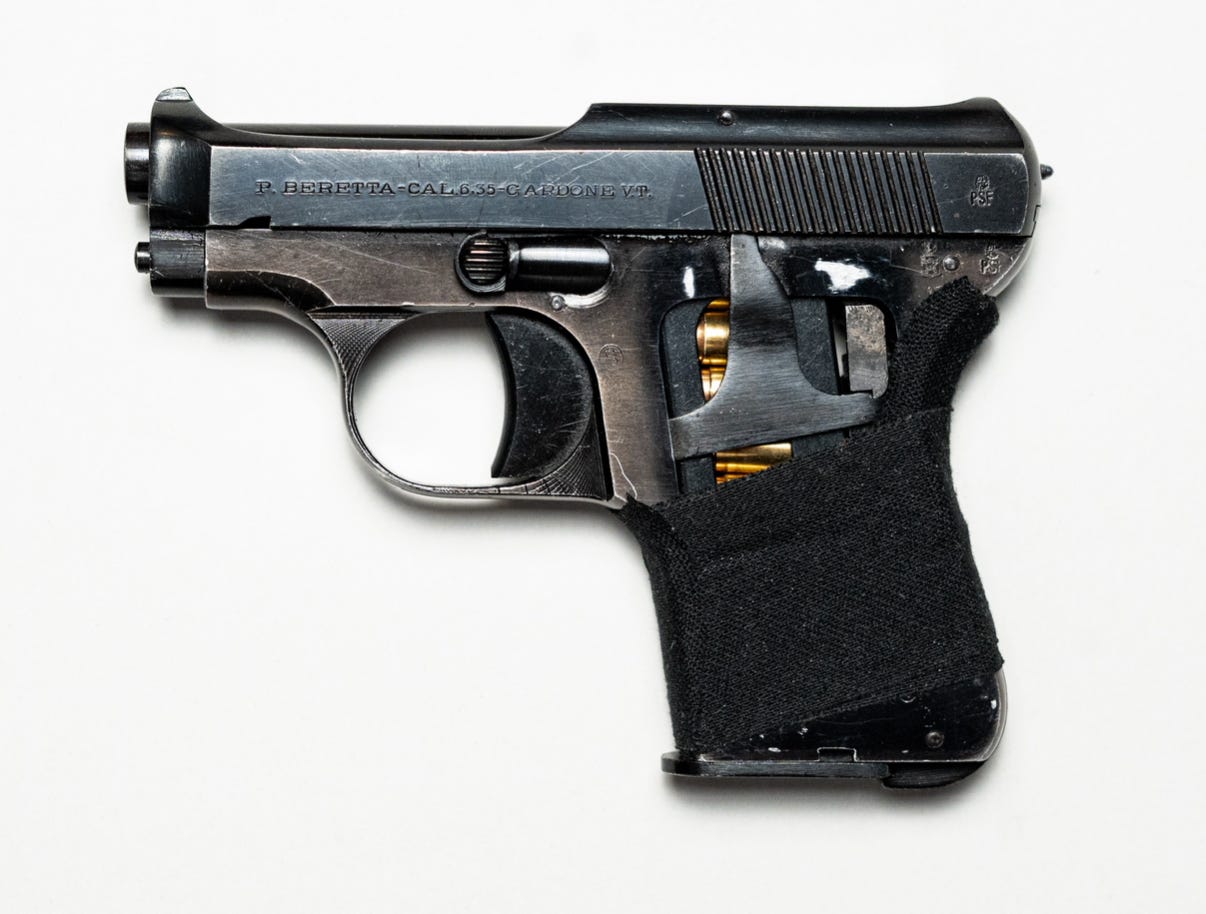
The grip safety is something that is found on a variety of guns from the early 20th Century, and some modern firearms as well. Essentially, unless a positive grip is present on the firearm, you will not be able to fire the pistol. These safeties are controversial, as some are incredibly picky on what a “good grip” is, rendering the firearm inert unless it is just right. In a firefight, where one may be handling a firearm in less than ideal circumstances, this could be the difference between life and death. On the other hand, many favor this passive safety, as it prevents accidental discharges. Considering that the Beretta 418 also has a manual safety lever, the disengaged grip safety really is a benefit to 007, as no matter what, Bond must disengage the lever prior to firing. Personally however, I have never had any issues with the 418’s grip safety, and find disabling it a moot point.
Another adjustment made to the 418 is the removal of the front sight blade by Bond. As mentioned previously, these sights are incredibly small to prevent any sort of snag, but 007 clearly isn’t one to take chances, and sacrifices his ability to aim for an uninhibited draw. In all fairness to Bond, with the sights being as small as they are, a clean sight picture is difficult to find, and could slow down the shooter if they look for it. This gun is meant for rapid deployment and aggressive shooting to escape whatever situation he may find himself in.
While the 418 certainly is well past its prime, it’s one of those guns that’s neat to have in the collection because of its history and connection with Bond. It’s stunning and surprisingly accurate as well. So, while it is disparaged for being best suited for a lady’s handbag, the Beretta 418 has a unique legacy in the Bond canon, and is core to Fleming’s 007 mythos.
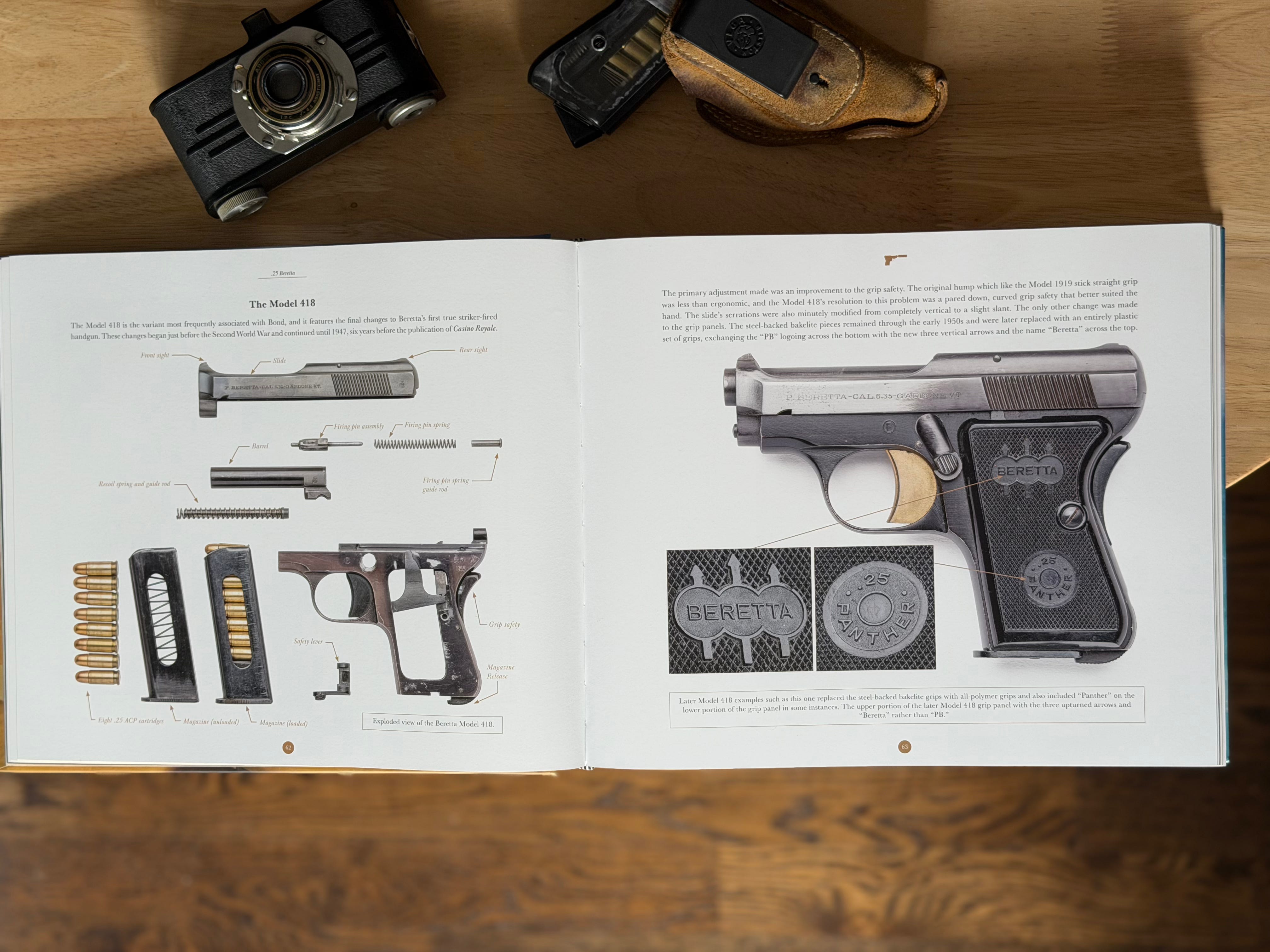
The 418 and its history spanning the 1919, 318, and 418 iterations - and a deep dive into the Bond connection, can be found in my book, LICENSED TROUBLESHOOTER: THE GUNS OF JAMES BOND, available now at Headstamp Publishing. This section is one of my favorite in the book, and includes original reference materials - manuals, illustrations, and advertisements of Bond’s first daily carry sidearm, Fleming’s original choice.
No posts
Comments
Nothing yet. Say the first thing.
Sign in to join the conversation.