
Note that this is mainly a bugfix release and most features currently in development will land in the LibrePCB 2.0 release which still takes some time. Nevertheless there are some noteworthy changes in this release.
Interactive HTML BOM (#1485)
Printing out the assembly plan and the BOM for manual PCB assembly and marking the assembled parts line by line is no longer required thanks to a new output job. Instead of a PDF, you’ll get the assembly plan as a HTML file which is interactive — you can sort, filter, search or mark parts as assembled using a web browser. Instead of a paper sheet, you could use your laptop or tablet on your desk while assembling the PCB step by step.
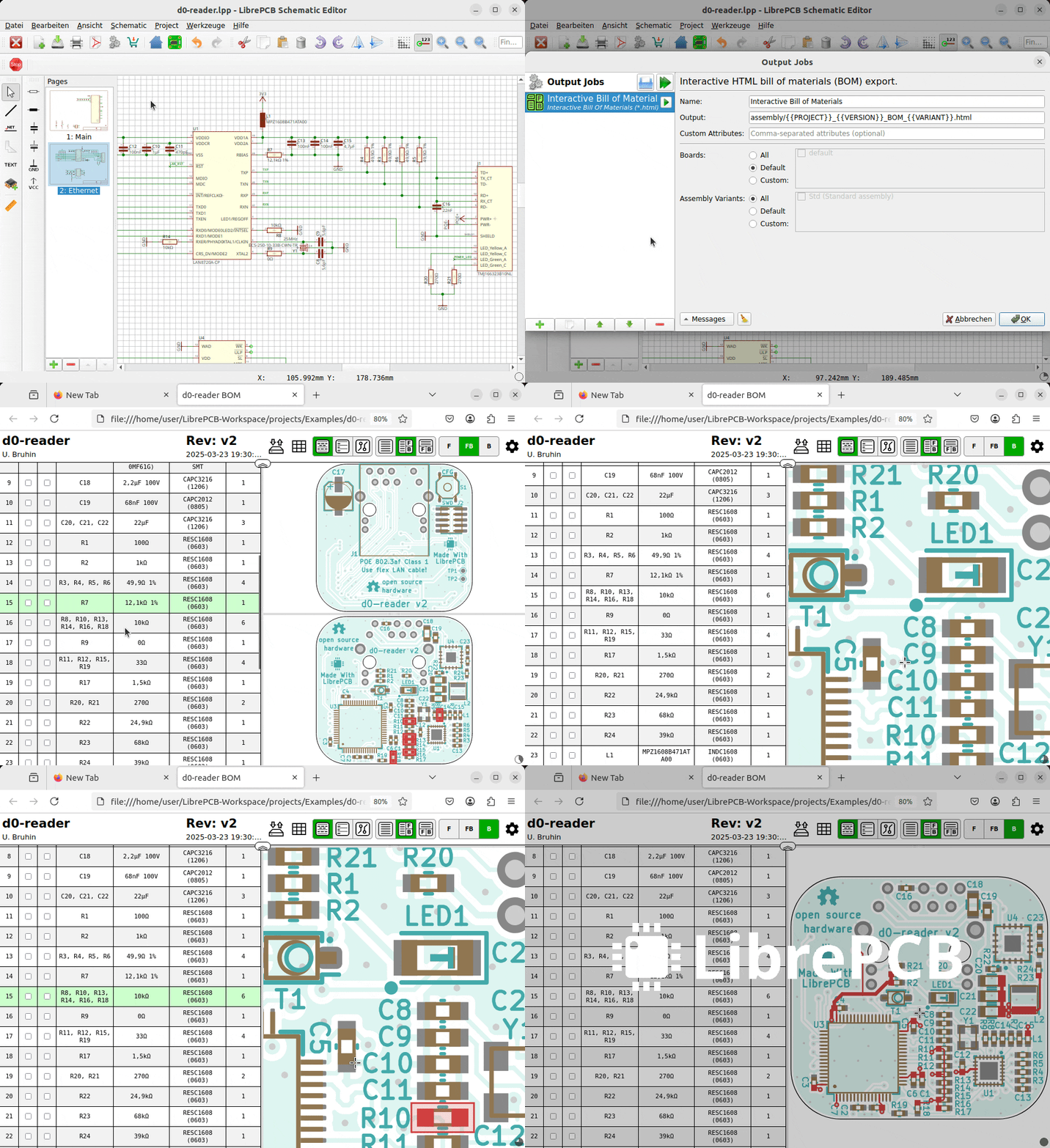
The HTML/CSS/JS core of this feature is from the existing Ineractive HTML BOM project, already well known as a KiCad plugin. In LibrePCB, this is now a built-in feature!
KiCad v9 Compatibility (#1492)
As KiCad v9 was released with some changes in its library file format, we updated our KiCad library importer to support that new file format. Of course older file formats are still supported, and actually their compatibility was even improved too in this release.
Initial Usage of Rust (#1477)
Though not directly relevant for our users, this change is still noteworthy as it highly affects the development of LibrePCB. After more than 10 years of implementing LibrePCB entirely in C++, this release contains the very first code written in the Rust programming language.
The reasoning behind this is explained in the blog post NGI0 Grant for LibrePCB 2.0. While this is not directly visible in the LibrePCB application, users still profit indirectly from potentially higher stability and faster development.
In this release, there are two software modules implemented in Rust: The interactive HTML BOM generator mentioned above, and the library for reading and writing ZIP files.
Comments
Nothing yet. Say the first thing.
Sign in to join the conversation.