
Has your reading of Tolkien and Lewis ever made you long for more of the same — for literature that breathes a similar air, that speaks a similar moral, intellectual, and imaginative language?
And has it ever seemed that one of the best avenues to pursue such literature would be to read the books that moved and inspired Tolkien and Lewis themselves?
That was exactly the case with me: one of my major impetuses for studying the classic literature of the past — be it Ancient Greek tragedy, Norse sagas, Celtic mythology, Shakespeare, or the Romantics — was, at the start, simply the desire to find more of what I had loved in Narnia and Middle-earth. I longed for the same atmosphere that made these stories so evocative; I yearned to learn from the same intellectual and moral traditions that imbibed Tolkien and Lewis’ stories with such wisdom, goodness, and grace.
It’s since been one of my chief passions to help introduce interested readers (both students as well as independent adult learners), to this great body of literature, to stand in the gap, as it were, in helping readers approach, enjoy, and be enriched by the marvelous literature that so attracted and influenced Tolkien and Lewis.
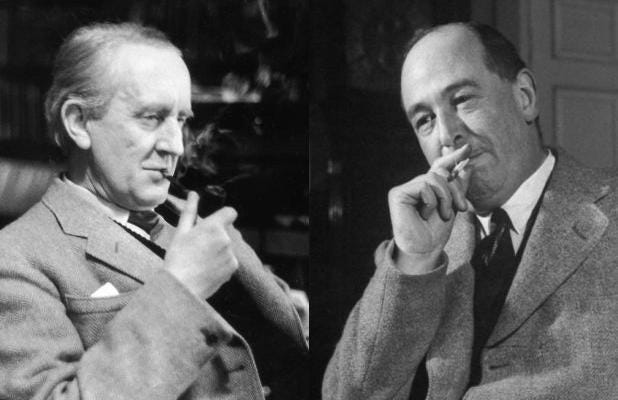
And that leads me to something new at The Library of Tolkien and Lewis — something which I’m immensely excited about!
Starting next month, I’ll be beginning a combination read-through / book discussion / podcast for paid subscribers. I’m calling it “Reading the Classics with Lewis and Tolkien”; it’s an opportunity for us to read, discuss, and dive deeply into some of the works formative to Lewis and Tolkien: books and stories that give you some of the same flavor and atmosphere, wisdom and beauty, that you find in Lewis and Tolkien’s own writings.
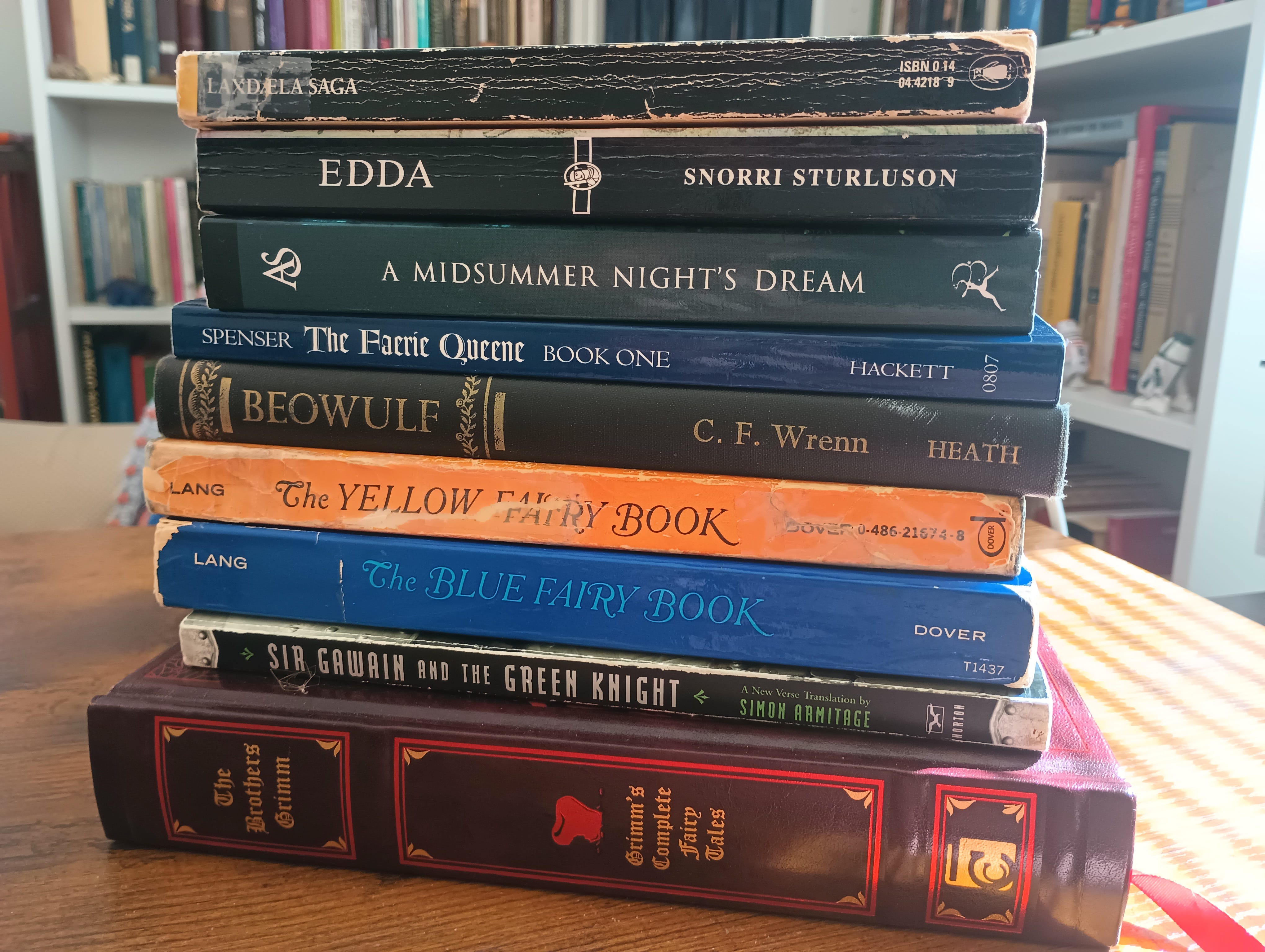
Here’s the books we’ll be reading and discussing:
July: Sir Gawain and the Green Knight. One of the all-time classics of Arthurian literature: the story of a deadly quest that tests the very moral foundations of the Christian knight.
August: Snorri Sturluson’s Prose Edda. We’ll explore the strange and wonderful world of Norse mythology: dwarves and dragons and valkyries, Thor’s adventures in Giantland, the death of Balder, and more.
September-October: The Laxdale Saga. One of the greatest of the Old Norse-Icelandic sagas: a sprawling multi-generational tale of feuds, families, unforgettable characters, and a tragic love-triangle.
November: Grimms’ Fairy Tales. The classic fairy tale collection! Not only will we read the pre-Disney versions of familiar classics like “Sleeping Beauty,” but also explore the wealth of less-well-known (but equally great) tales as well.
December: Andrew Lang’s Fairy Books. We’ll next turn to selections from this classic fairy tale collection, as we continue to look at the ways fairy tales teach us wonder, form our moral imaginations, and reflect profound truths about the human experience.
January: Anglo-Saxon Poetry. We’ll kick off the new year with works like The Wanderer, The Seafarer, and The Battle of Maldon, poems at once stoical, wistful, ruminative, and valiant: a heady (but moving) mix!
February-March: Beowulf. The crown jewel of Anglo-Saxon literature: a heroic, tragic, contemplative tale of dynastic struggle, monsters, and fate, all unfolding in the misty past of the old Northern world.
April-May: The Faerie Queene, Book I. Edmund Spenser’s brilliant and thrilling 16th-century blend of fantasy, knightly romance, and allegory — a work which makes heroism and villainy, virtue and vice, live, breathe, walk, and talk.
June: A Midsummer Night’s Dream. Just in time for — of course! — midsummer, Shakespeare’s exquisite tale of fairies and lovers in an enchanted wood, with all the frolicsome fun and profound human insights of the Bard.
Every month, paid subscribers will have access to the following:
Discussion threads: This is a place for us to all talk together, sharing our thoughts, reactions, or questions with one another. I’ll typically post some discussion questions, but you’re free to do so as well! Have a topic you want to see explored, questions you want to ask me or your fellow readers? Want to just share what you’ve thought about the story or characters? Go right ahead! This is a place for community and fellowship as we read together.
Podcast: I will be hosting a podcast series for every book we read, available only here on Substack; in these episodes I will discuss a variety of topics relevant to the reading — details on historical context, theme and meaning, questions of interpretation, and any other cool things there are to say about the book. This will be me in “teacher mode”: the ultimate purpose of the podcast will be to provide insight and context that enriches your own reading of the book.
Video: I will also be posting here on Substack bonus videos that walk you through selected passages in their original languages. I’ll show you things like poetic form or discuss the deeper meaning of certain words and phrases, and the way these enrich our understanding of the text itself. (Plus, what’s reading Beowulf, Sir Gawain and the Green Knight, or the Prose Edda without hearing what Old English, Middle English, and Old Norse sound like?)
All of this will be for paid subscribers only; if you’re not already a paid subscriber — and a very hearty “thank you” to those of you who already are! — then I hope you’ll consider joining us. There is so much great literature here to read and discuss together!
Now, you might be wondering:
Do I need to take out a paid subscription for the whole year, or can I drop in and out? You’re absolutely free to come and go as you wish, based on what books you want to read and be involved with. A year’s subscription is $40, but you can also subscribe for a single month for $5 — if you’d rather hop on for just those months whose readings appeal to you, that’s great: I’m happy to have you!
Will the readings be manageable? Yes, absolutely. I want these books to be something you can fit, without pressure or demands, into a busy or hectic schedule. My wish is that these books will be a source of respite and inspiration, as well as pleasure; the goal here is not to blast through as much reading as possible, but to read slowly, to savor and reflect. To that end, the schedule is structured to allow ample time to complete each reading.
The books we’ll be reading together are books to delight in. They are books to lose yourself in; that challenge you and grow you, certainly, but also that leave you refreshed and encouraged — and I mean “encouraged” in the literal, etymological sense: stories that en-courage you, that give you heart. Part of the great wisdom that Tolkien and Lewis both held about literature is this: reading is a place of repose, even of escape, escape from the noise and stress and bluntness of the world, as well as something that restores you and strengthens you. Like the Fellowship leaving Rivendell, or the Pevensies setting out from the Beavers’ lodge, you emerge from your rest fed, refreshed, and heartened for the next stage of the journey.
But unlike the Fellowship or the Pevensies, you get to return to your source of respite and encouragement a lot more frequently! I hope you’ll join me in this time of reading, discussing, and contemplating these wonderful books.
Early next week I’ll be sending out the schedule of readings for Sir Gawain and the Green Knight, our first book up. Until then, if you have any questions, feel free to message me directly!
No posts
Comments
Nothing yet. Say the first thing.
Sign in to join the conversation.