
C.S. Lewis was a remarkable reader. I don’t just mean that he was a brilliantly erudite reader, with a reading knowledge of several languages; or just that he was an intensely perceptive and subtle reader, with an acute sensitivity to details. He certainly was all of those things, as acknowledged (sometimes admiringly, sometimes begrudgingly) by many of his colleagues and contemporaries.
But what I find perhaps most striking — most exemplary — about Lewis’ reading habits is his generosity as a reader. One of his great desires and satisfactions was to be delighted or instructed (or both) by what he read, and he was consequently determined to find the good, however slight it might be, in whatever he read. He was also remarkably wide-ranging in his sympathies; rather than limiting himself to specific genres, or to particular authors or styles, he was receptive to the differing strengths — to use his own words, the “different excellences” — distinctive to each genre or style.
I believe Lewis’ ideas about reading have a great deal to teach us today. Matching Lewis’ erudition and subtlety would be a tall order; but happily the habits of reading he advocated and modeled are ones anyone can emulate.
I’ve summarized below what seem to me Lewis’ wisest and most valuable insights on reading. These are not “tips” or “tricks” on how to read better, or faster, or smarter; they are not tactical strategies for improving one’s reading or “getting more out of” it. I think following Lewis’ example does generally make one a better reader, and even does help one derive greater benefit from one’s reading; but there’s no “step-by-step plan” here, no “system” or blueprint. Instead, it’s a matter of reading charitably and with an open mind, and doing so chiefly for personal satisfaction, whether that’s the satisfaction of losing yourself in an enjoyable story, or the satisfaction of learning something new; or both.
For Lewis, it was less a matter of what you read than of how you read — in what spirit, and for what purposes. His example leaves us, not with a system or a blueprint, but an encouragement to read for the love of reading.
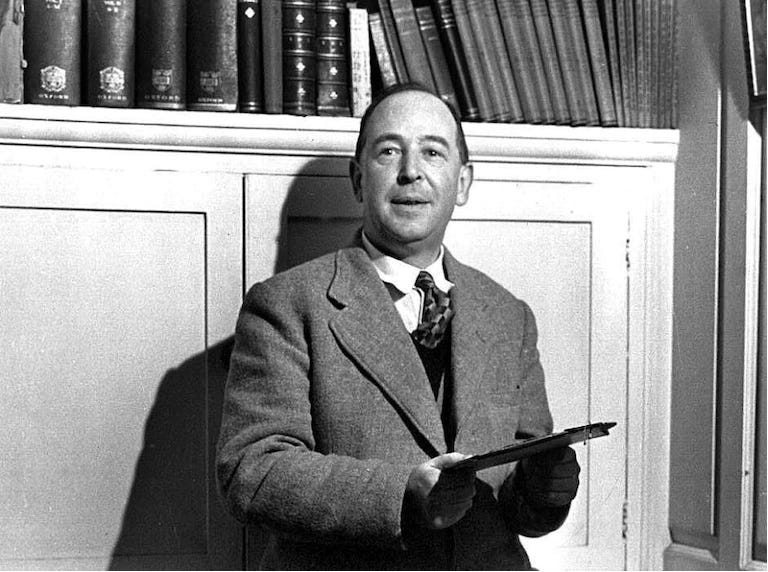
Lewis was an exemplary case of someone who read in order to see with new eyes. By contrast, we are accustomed, I think, to going to books in search of something that will resonate with us on an intimate and personal level — something that will speak to, or reflect, our own experiences (or even those of our own society or politics or history). This is a wonderful thing when it happens, and my point here isn’t to disparage it. But as Lewis pointed out, if this is the only or chief manner in which we read — making relatable characters or relatable experiences or familiar cultural values a summum bonum — then this will often necessitate stripping a work of literature of those cultural customs and world-views that made the literature — and the reading of it — so unique, and so valuable, to begin with.
Lewis recommends, as an alternative, that we embrace what is different and unfamiliar, seeing how those differences might edify or instruct — or even delight — us. As Lewis writes in his Preface to Paradise Lost:
“Instead of stripping the knight of his armour you can try to put his armour on yourself; instead of seeing how the courtier would look without his lace, you can try to see how you would feel with his lace; that is, with his honour, his wit, his royalism, and his gallantries…”
This attitude — gracious, magnanimous, broad-minded — is in marked contrast with the insistence that “relatability” or “lessons” be the primary measuring stick of a book’s worth. And this insistence is widespread. Over and over again, both from my students and in casual conversation with others, I’ve heard an entire book dismissed solely on the grounds that it was not “relatable.” But Lewis encourages us, not to shy away from differences in thought and custom and experience, but to embrace them. As he puts it in his book An Experiment in Criticism, the great value of literature is that “it admits us to experiences other than our own.”
Against the idea that a good book should necessarily be a mirror in which we see ourselves reflected, Lewis urges readers to cultivate curiosity in their reading. Perhaps Lewis’ most eloquent expression of this idea comes in the final pages of An Experiment in Criticism, one of the last books Lewis wrote and reflecting a lifetime of study and contemplation over the topic of reading:
“The man who is contented to be only himself, and therefore less a self, is in prison. My own eyes are not enough for me, I will see through those of others…[I]n reading great literature I become a thousand men and yet remain myself. Like the night sky in the Greek poem, I see with a myriad eyes, but it is still I who see. Here, as in worship, in love, in moral action, and in knowing, I transcend myself; and am never more myself than when I do.”
In order to — as Lewis puts it — “see through [the eyes] of others,” to “transcend [ourselves],” our first priority should be to open ourselves up to the story and let it speak on its own terms. This means, in practice, setting aside — to the best of our ability — whatever preconceived assumptions we might be holding. Sometimes we come to a story with prejudiced assumptions about a genre (“I don’t like science-fiction stories,” “Romantic comedies are always the same,” “these kinds of stories are just entertainment junk food”).
Other times we bring to bear our knowledge about an author’s politics or social beliefs, which in turn drives us to read the author’s fiction as a vehicle for espousing those beliefs — and if those happen to be beliefs we don’t share, or are firmly opposed to, we’re likely to regard the story as tainted in some way. And sometimes we come to a story with the conviction that we already know what the story is “about” and we are, therefore, quite certain that it won’t have anything to say to us.
But — in keeping with his readiness to embrace what is different or unfamiliar in a work of fiction — Lewis urges us to set ourselves aside and let the story take over while we read. As he writes:
“To enjoy our full humanity we ought, so far as is possible, to contain within us potentially at all times, and on occasion to actualize, all the modes of feeling and thinking through which man has passed. You must, so far as in you lies, become an Achaean chief while reading Homer, a medieval knight while reading Malory, and an Eighteenth-Century Londoner while reading Johnson.”
Lewis certainly isn’t the only author to have advocated letting the story speak first; for example, Vladimir Nabokov makes the point in his famous essay “Good Readers and Good Writers” (the famous opening chapter to his 1980 book Lectures on Literature). He puts the matter nicely:
“Nothing is more boring or more unfair to the author than starting to read, say, Madame Bovary, with the preconceived notion that it is a denunciation of the bourgeoisie. We should always remember that the work of art is invariably the creation of a new world, so that the first thing we should do is to study that new world as closely as possible, approaching it as something brand new, having no obvious connection with the worlds we already know. When this new world has been closely studied, then and only then let us examine its links with other worlds, other branches of knowledge.”
My favorite part of this is the way Nabokov calls it “boring” to come to a work of fiction with preconceived assumptions about its theme or worldview or politics: it is no way to read a story! (If you’ve ever thrilled to the excitement of a story, or been moved by its piercing beauty or delighted by its characters, and then tried to discuss that story with someone who could talk of nothing but its politics or its “message,” you know just how apt Nabokov’s descriptor “boring” is.)
Of course, neither Lewis nor Nabokov is saying that we should never discuss things like a story’s theme or an author’s worldview; but they should come later. First, we have to let the story speak on its own terms and listen to what it has to say — and in doing so, we will perhaps even conclude that the story is more, much more, than merely the sum of its various intellectual, thematic, or ideological parts.
Someone might object, “Should we listen to what just any book has to say? What about a book that has a depraved world-view?” — a book like, some would say, Madame Bovary! (And for that matter, Vladimir Nabokov’s fictional writings aren’t exactly, shall we say, clean-cut or wholesome.) Should we really keep an open mind about every book? Should we really listen patiently to what just any book has to say?
For starters, recall from the quotes above that Lewis spoke of “trying on” the medieval knight’s armor and the eighteenth-century courtier’s lace — not of shaping yourself into a medieval knight or eighteenth-century courtier — and spoke of “becoming” an Achaean chief “while reading” Homer. Lewis doesn’t suggest that your mind or your heart should be an empty mold, ready to be filled and formed by others’ ideas. You can remain yourself while you listen.
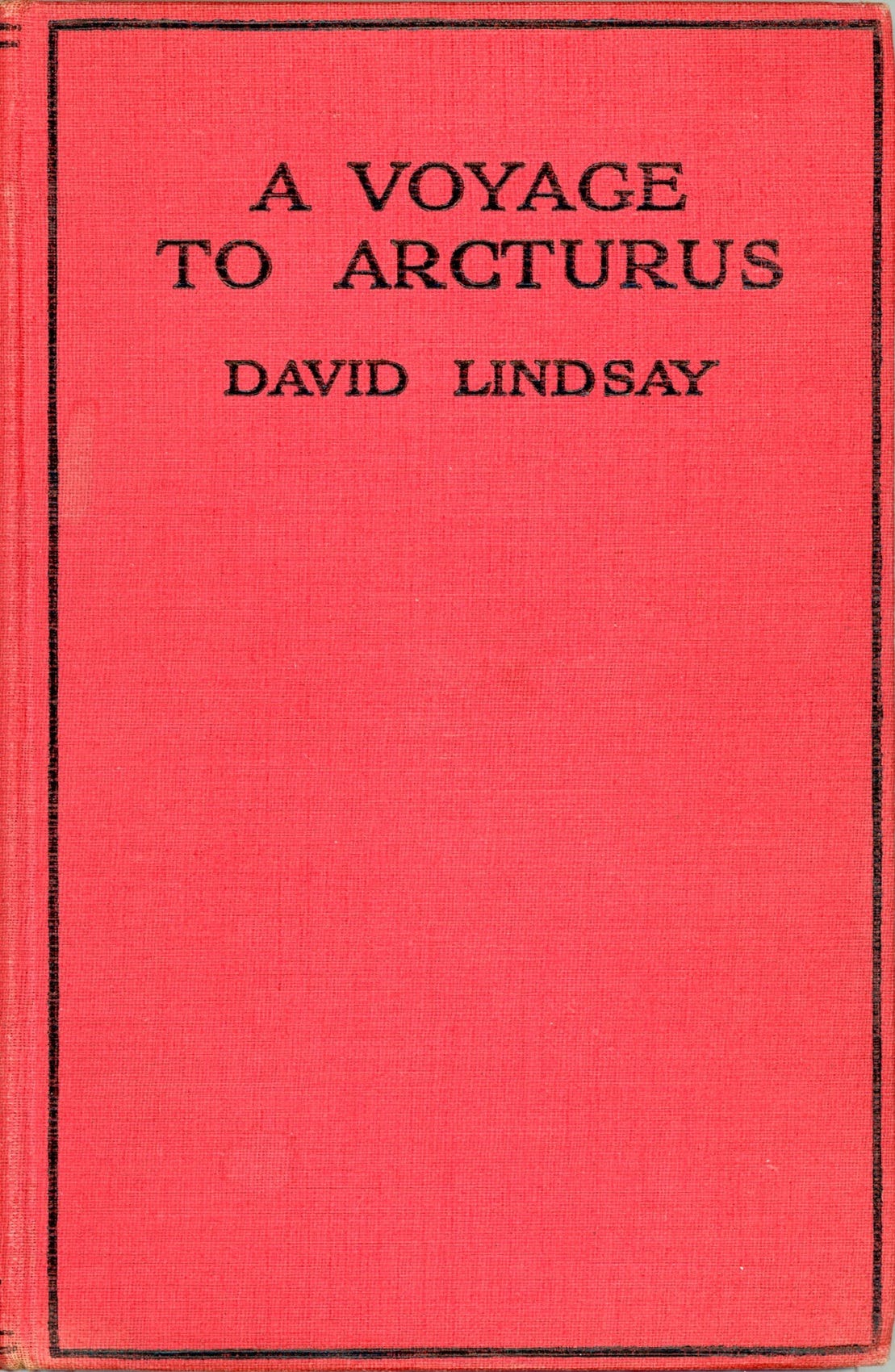
Still, the question remains: are all works of fiction worth listening to? What should we do with books whose ideas or content we find objectionable? This is, of course, a matter of self-judgment — something every reader has to decide for him or herself. But I think Lewis would say, in principle, that the effort is generally worth making — at times — for those who can. For example, Lewis repeatedly cited David Lindsay’s 1920 science-fiction/fantasy novel A Voyage to Arcturus as one of the major inspirations for his “space trilogy” (Out of the Silent Planet, Perelandra, and That Hideous Strength). Lewis was clearly thrilled by Arcturus, and he mentions it enthusiastically in several essays and letters.
It comes as something of a surprise, then, to learn that he characterized (in a 1944 letter) the book’s “spiritual outlook” as “detestable, almost diabolist” — while urging the letter’s recipient to read it, assuring him that he will “revel in” it! Lewis’ point was not that his correspondent would enjoy something detestable, whose spiritual philosophy approached something akin to devil-worship; but what’s remarkable is that he expects his correspondent will, like him, be willing to overlook these faults in exchange for the marvels and the depth of world-building present in the book.
In fact, almost all of Lewis’ references to A Voyage to Arcturus — both in published essays and in private letters — are glowingly positive ones. This is a remarkable testimony to how charitable a reader Lewis was. He was determined to find the good in what he read, whenever possible; what was excellent in a book could, for him, outweigh even those elements he regarded as “detestable.”
I mentioned above that we tend to read looking for one of two things: characterization, and theme. A good book will be one with strong characters, however we define those (relatable, realistic, engaging, and so forth); and/or a good book will be one with a powerful or revealing or compelling theme. We are taught in school to “think critically” about books, to interpret them, to analyze them and unpack them.
I’m not, of course, going to say that Lewis was against all of that. (After all, it was part of his vocation, as teacher and scholar, to do these things!) But he did have a finely-honed sensibility to another possible source of excellence in fiction, one that I think we tend to overlook or downplay. Lewis was alive to the “taste” or “flavor” of different kinds of stories; he knew how to revel in mood and atmosphere. In short, although he of course also appreciated strong characters and interesting themes, these weren’t for him the only qualities worth attending to. For Lewis, a really potent or stirring atmosphere or flavor could redeem even a book with poorly-developed characters or a flimsy, predictable plot.
The idea of “atmosphere” is, however, somewhat nebulous. What exactly — in practice — does enjoying a work of fiction’s “flavor,” reveling in its “mood,” entail?
I think what Lewis meant was, in part, that the use of details, imagery, and setting helped the reader feel transported into the world of the story — made the world of the story feel almost tangible. Thus he talks about his enjoyment as a child of stories featuring Native Americans (a youthful enjoyment he shared, as it happened, with Tolkien): “I wanted not the momentary suspense, but that whole world to which it belonged — the snow and the snow-shoes, beavers and canoes, warpaths and wigwams, and Hiawatha-names.”
Or we might consider his description of Hamlet, which he insisted was one of English literature’s finest stories not solely, or even primarily, because of the complexity of Hamlet’s character or the profundity of the play’s themes, but first and foremost because of the overwhelming mood evoked by its setting: “night, ghosts, a castle, a lobby where a man can walk four hours together, a willow-fringed brook and a sad lady drowned, a graveyard and a terrible cliff above the sea, and amidst all these a pale man in black clothes…”
Again, this doesn’t mean we shouldn’t read with an interest in characterization or theme — not at all; but what Lewis does for us is open up an additional avenue for enjoyment. We can relish the feeling or mood that a particular work of fiction gives us. If a book does no more than transport us into its world, then that was a book well worth picking up.
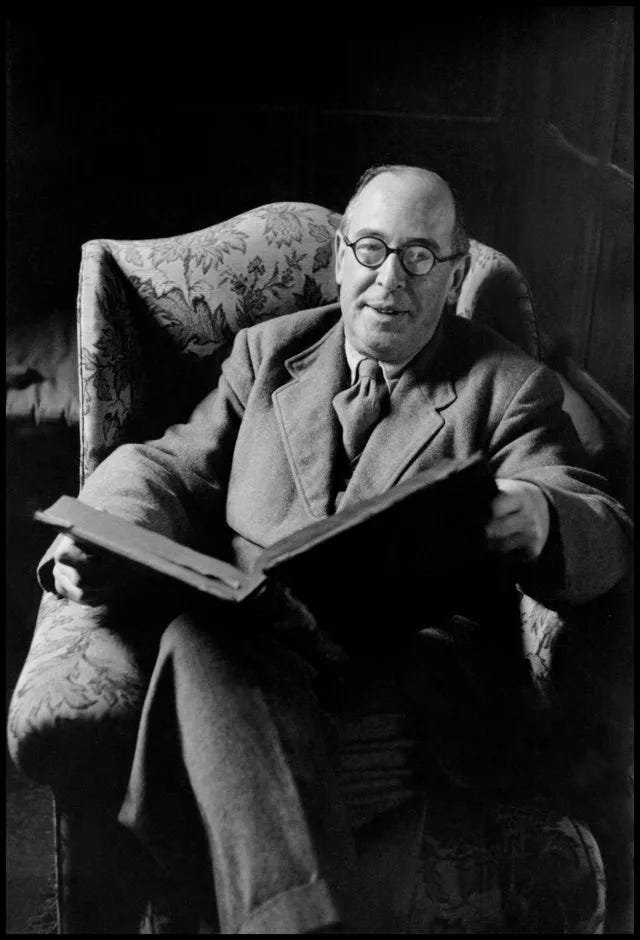
One of Lewis’ wisest insights about reading is that, whatever benefits reading may offer the individual, those benefits will only be attained if one reads for reasons other than attaining those benefits.
Many people have a strong sense that reading books is beneficial in some way, whether it’s that reading grants you inner peace, or develops your moral imagination, or aids in rediscovering a deeper sense of meaning or enchantment to the world. There’s a renewed interest in reclaiming the wisdom of the past through the “Great Books” in order to become wiser, more discerning individuals, to rediscover faith, or to restore traditional values and ideals. What all of these ideas have in common is the goal of reading in order to produce some positive personal and/or social good, of creating a more humane and thoughtful and intelligent culture.
And Lewis certainly did not deny that reading could be wonderfully efficacious in the life of the individual. But he insisted, with great wisdom and clear-sightedness, upon something that I don’t think is talked about nearly often enough, and that is this: that none of these positive, efficacious results will occur if one reads primarily in order to bring them about — or at the very least, that they are much less likely to occur. As Lewis puts it in his essay “Lilies that Fester,” “Those who read poetry to improve their minds will never improve their minds by reading poetry. For the true enjoyments must be spontaneous and look to no remoter end.” If you want your reading to develop your moral imagination, then you will need to read for reasons other than developing your moral imagination; if you want your reading to make you a more discerning person or to restore lost values and traditions, then your reading must not be primarily undertaken in order to accomplish those goals.
Lewis explains his reasoning by way of an analogy: reading for the purpose of personal (or even social) benefit is like someone who wants to fall in love so as to improve his character. Leave aside, says Lewis, the question of whether falling in love can or cannot actually improve one’s character; the point is that such a scheme could never work, because you won’t (under those conditions) fall in love at all: by its very nature, “falling in love” is spontaneous, and the state of “being in love” exists for its own sake. (If someone told you that they were in love with somebody primarily so that they could gain personal growth out of it, you would doubt whether they were actually “in love” at all, wouldn’t you?)
Of course, truly loving someone — whether romantically or otherwise — can call upon you to be kinder, more sacrificing, more thoughtful and giving, and so forth; but all of that comes secondarily. You don’t love the individual in the first place in order to become all of those things. So it is, says Lewis, with the benefits derived from reading. If we go to books primarily for some purpose of self-improvement, some plan of personal or cultural change, we will probably be disappointed. As Lewis puts it, “The Muses will submit to no marriage of convenience”; or as I might put it, the Muses are jealous goddesses. Whatever gifts or rewards books (and all the other arts) have to bestow on us, they will be bestowed only if the books themselves are our primary object of attention. According to Lewis, we must go to them, chiefly, for their own sake. That doesn’t mean we never discuss or contemplate the topic of how reading benefits us; but it needn’t be, shouldn’t be, our primary focus.
If all of this sounds rather combative and prescriptive, I should hasten to add that there’s a wonderful and uplifting freedom to what Lewis is advocating here. If you want your reading to benefit you, then all you have to do is — read. Read for pleasure, read for knowledge; read in order to lose yourself in a story, read in order to join in discussion with a friend or family member; sink yourself into a favorite author or genre, or challenge yourself with an author or genre you aren’t familiar with.
Enjoy yourself!
“Learning in War-Time” (1939), printed in The Weight of Glory, and Other Addresses
“Hamlet: The Prince or the Poem?” (1942), printed in Selected Literary Essays
“The Doctrine of the Unchanging Human Heart” (1942), chapter IX of A Preface to Paradise Lost
“On the Reading of Old Books” (1944), printed in God in the Dock: Essays on Theology and Ethics
“On Stories” (1947), printed in On Stories, and Other Essays on Literature
“Lilies that Fester” (1955), printed in The World’s Last Night, and Other Essays
An Experiment in Criticism (1961)
If you enjoyed what you read and would like to support my writing, feel free to buy me a coffee!
No posts
Comments
Nothing yet. Say the first thing.
Sign in to join the conversation.