
NatureBased.Inspiration is part of The NatureBased.Notes, sharing a Monthly mix of nature-inspired innovations relevant to the outdoor sports industry. Or just inspiring, period.
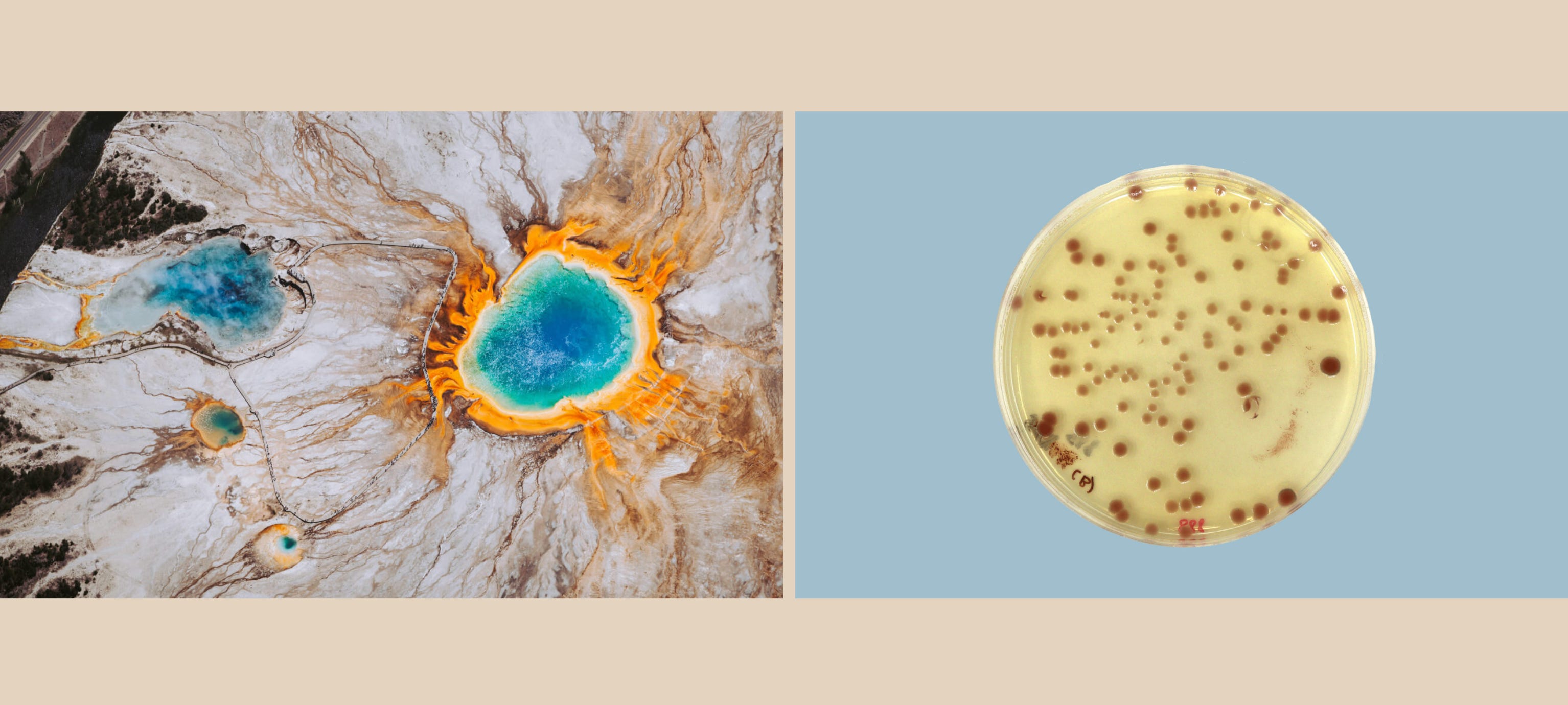
Dye is an interesting one. Fact is that 99% of dyes currently come from fossil fuels and generate 200 million tons of CO₂ annually. But a lot of innovative alternatives are popping up, in particular in the textile and cosmetics industry. From dyes made out of food waste, algae, or even bacteria.
One of the coolest examples around right now is The UK brand Colorifix that grows colours from ancient microbes found in deep-sea sediments, geysers, animals and plants. Their solution lowers the carbon emissions and energy consumption of the dyeing process, and eradicates toxic chemicals with the DNA codes of colours that are found in nature.
Once the DNA is identified and tested, the colour is shipped to their customers as a freeze-dried sample of microbes which they can then literally grow into hundreds to thousands of litres of colour producing microbes, using precise fermentation. A bit like brewing beer, really. Fashion brands like Vollebak and Pangaia have already been using this technique.
The UK-based Amphico created a PFAS-free alternative to traditional waterproof breathable textiles that are also easier to recycle, inspired by the waterproofing strategy of springtails.
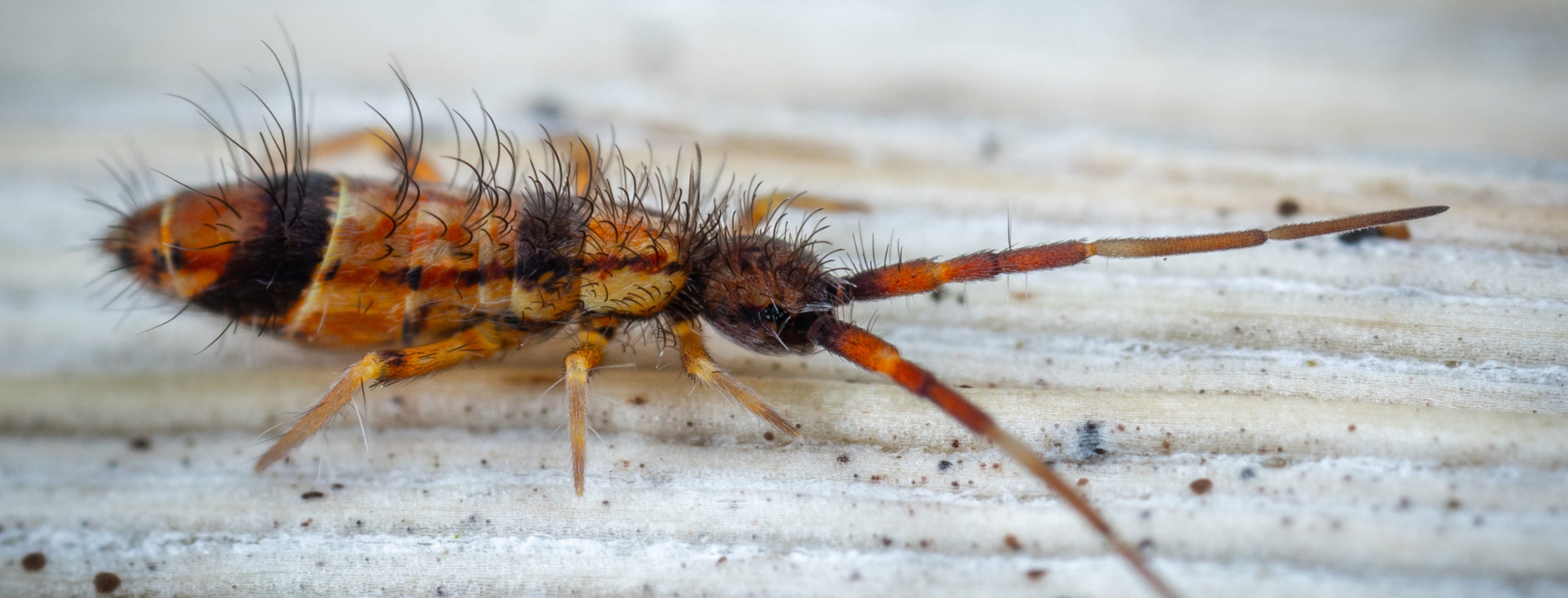
These microscopic arthropods protect themselves from drowning or being infected by harmful bacteria through tiny protrusions on their body that are covered with a waxy, non-polar substance. Amphico copied these strategies by creating a mono-material that uses simple substances in a complex layered structure, making it both waterproof and breathable.
This mono-material approach solves a new challenge that only recently occurred: "although the issues of PFAS in outdoor wear are now widely recognised and many brands and material suppliers have already moved away from PFAS-based chemistries, PFAS-free DWR coatings wear off much faster than alternatives which substitute one issue for another often falling short on durability and performance."
To make its textiles, Amphico starts with a single, non-polar substance which is drawn out into nano-textured filaments, then bundled into yarn and woven into fabric with multi-scale texturing. Instead of using many dyes, they create various colours by twisting and weaving just four coloured yarns in different combinations, reducing water consumption by over 80 percent. The coloured woven fabric is then combined with the waterproof, breathable membrane, and since the textile and membrane are made out of the same material, the final product is much easier to recycle.
The company is currently also exploring zero-waste and waterless manufacturing processes.
The French company LuminoKrom has developed photo luminescent paint technology to enhance nighttime cycling safety in rural areas and cities with limited street lighting. The glow-in-the dark technology mimics the natural phenomenon of photoluminescence: the paint contains pigments that absorb light during the day from sunlight or artificial sources and release it as visible light in the dark for over 10 hours without power or CO₂ emissions.
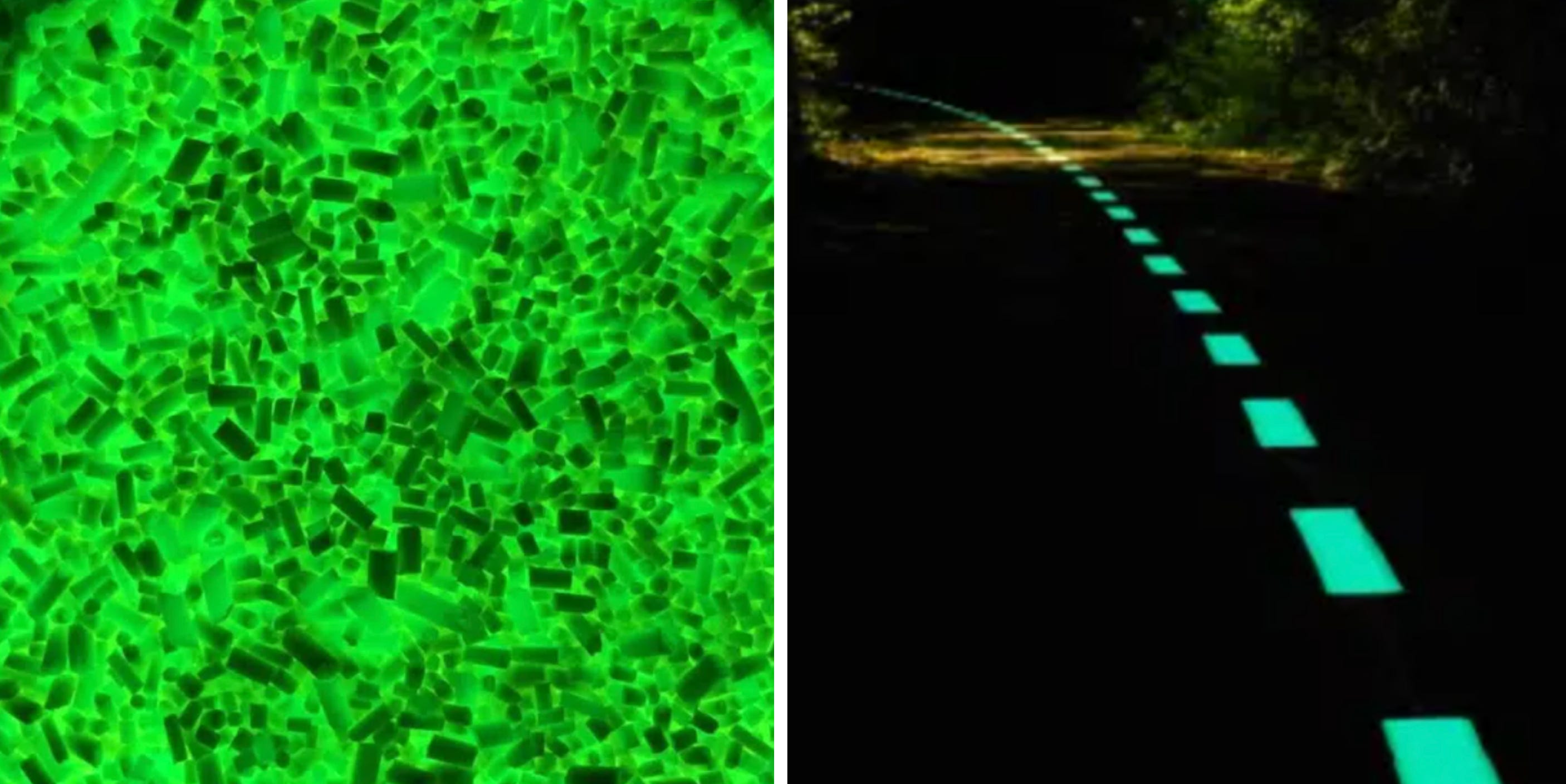
It can be applied on the road as bike lane markings, and provides visibility for over 80-100 meters compared to 30-40 meters for reflective paint. It also claims to be 50 times less expensive than street lighting and emits 10,000 times less light pollution.
In nature, everything is built from the ground up. No cutting away 'waste' to create something new. All life is like that. All non-life objects should be like that too.
But 3D printing is opening up a lot of new opportunities for additive manufacturing.
Lots to do at the moment in the world of 3D printed shoes. Designing for circularity is complex, especially considering the multi-material nature of most shoes: rubber, textiles, foam and glue are all bonded together. But companies like Vivo Barefoot, adidas and Zellerfeld have more recently released mono-material, 3D printed shoes, as next step towards a scan-to-print circular footwear system.
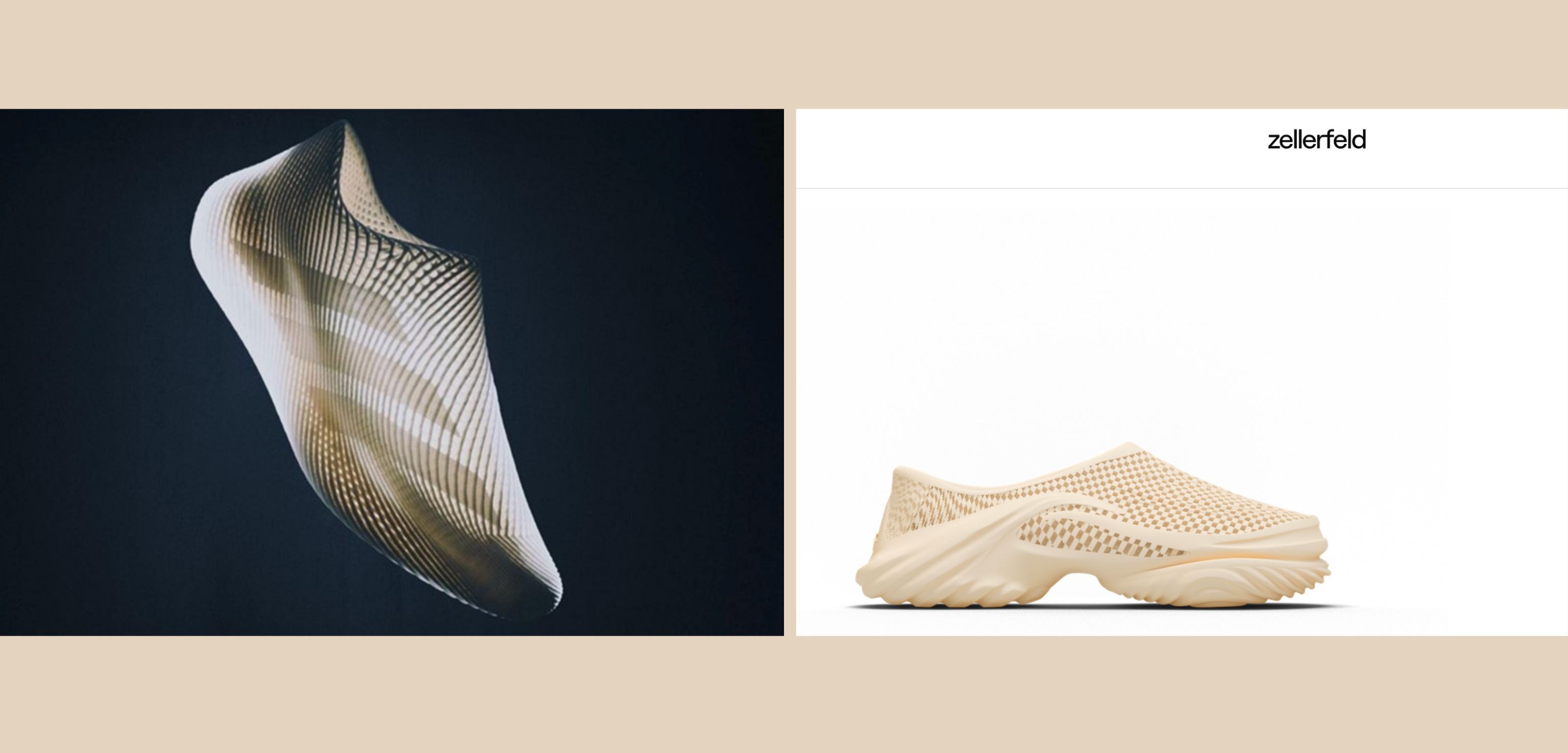
A project that really challenges the footwear industry to think beyond products and toward systems is the Footloop project that was presented at the Milan Design Week 2025: a fully modular, compostable mono-material shoe system, rooted in biomimicry and systems thinking.
It draws inspiration from natural structures, leaves, shells, and branches, and uses computational tools to create geometries that were lightweight, flexible, and strong. The prototype materials are 3D printed with a flexible, compostable, and bio-based material designed for circularity, and instead of gluing or fusing components, they were designed to lock together mechanically. This mechanical interlocking system not only supports disassembly and repair but also enhances circularity by eliminating composite waste.
NatureBased. is driving nature-inspired innovation in the outdoor sports industry. Sign up for infrequently dispatched reflections on nature-based innovation and strategy, or check our website naturebased.cc. The NatureBased.Notes are also published on LinkedIn.
Nature is our playground; we need to make it our model too.
Comments
Nothing yet. Say the first thing.
Sign in to join the conversation.