
The NatureBased.Notes is a publication on nature as a blueprint for innovation and a lens to view the world. With a focus on the outdoor industry, but with enough to keep you entertained beyond that.
Here’s what got me thinking this week:
The Product-as-a-Service business model is often taken as an example of a successful circular economy model, and for good reason:
Providing access instead of ownership flips the business ROI on its head. All of sudden it’s in the interest of a company to make their products last as long as possible. Lifetime value becomes the main driver, instead of one-time sales. And this in turn reduces dependence on new resources.
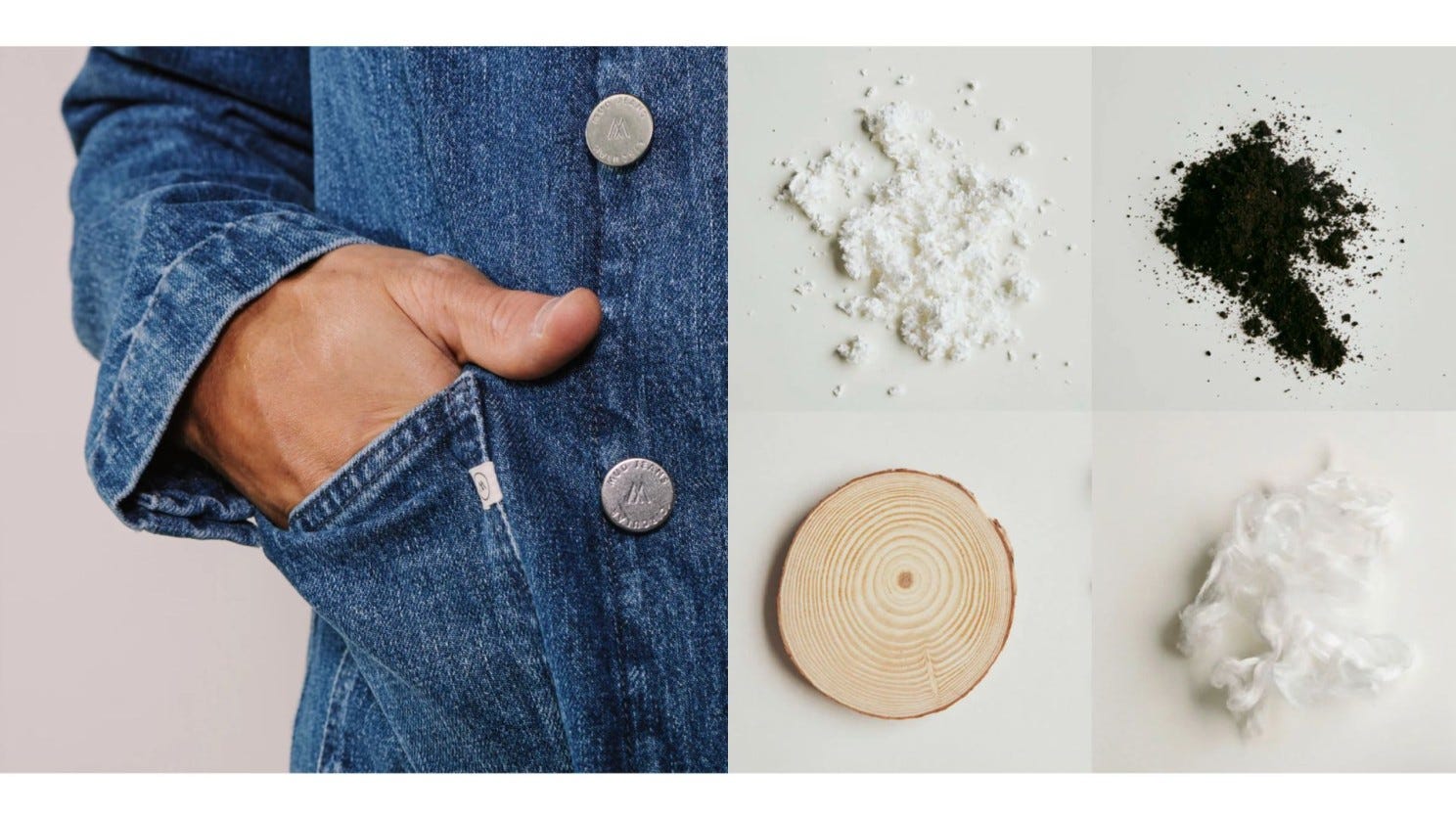
For example: the Dutch MUD Jeans (founded in 2012!) offers a “Lease a Jeans“-concept, where you rent your jeans for a period of 12 months, after which you can swap, keep, or return them for recycling.
There’s also Swapfiets, providing you with a subscription that lets you swap your city bike with a functioning replacement when it’s is no longer bringing you from A to B.
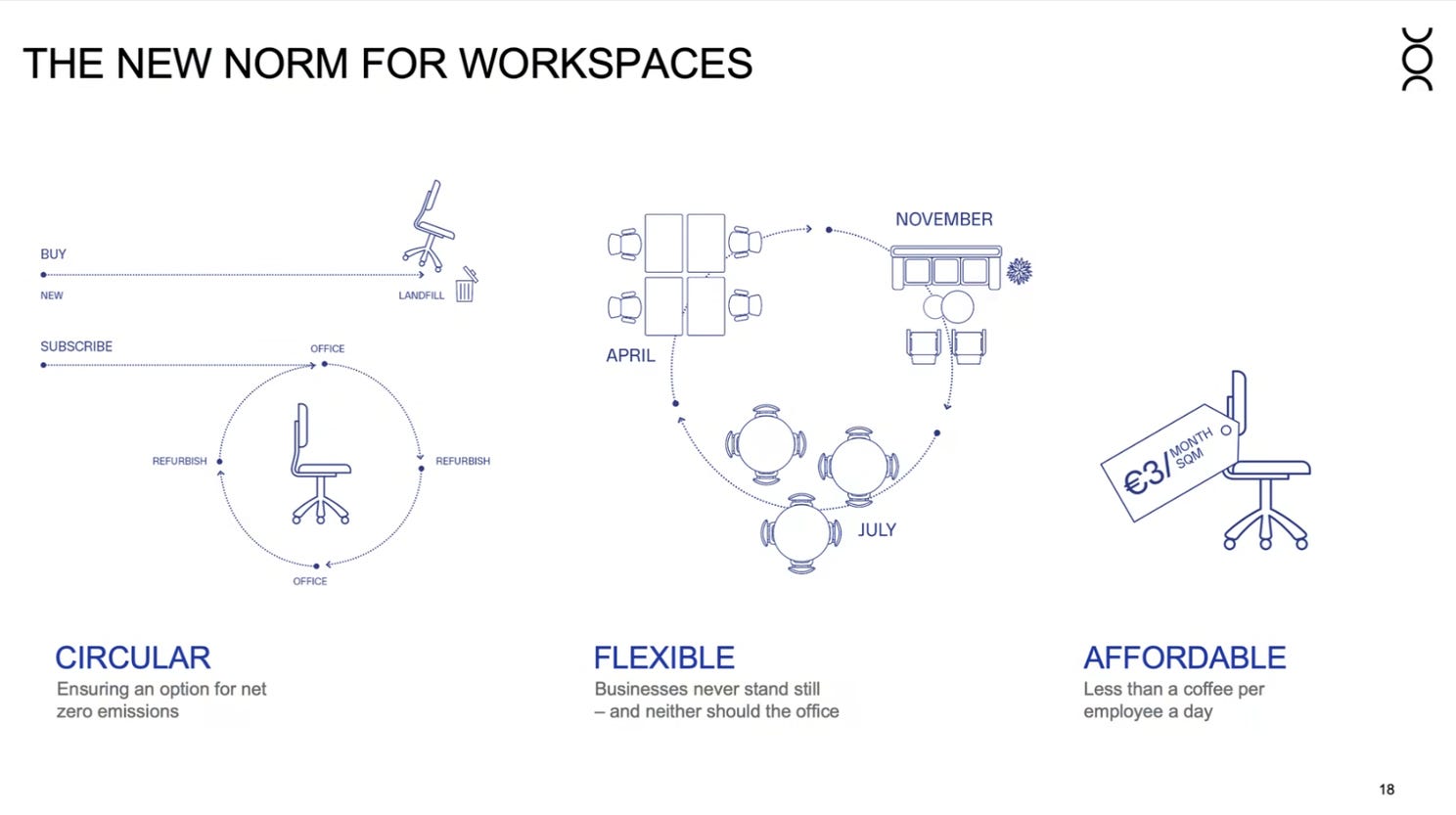
And earlier this week I learned about the Danish-founded NORNORM, a circular subscription service for office furniture (backed by Inter IKEA and Verdane) that is operating in the B2B space. As NORNORM calls it: streaming furniture.
But what really makes this business model work, is not just keeping products and materials in the loop for longer. It’s the mutual relationships it builds.
Ownership is a human invention. Nature doesn’t sell you things; it provides ongoing conditions for the whole ecosystem to thrive. No organism owns the sunlight, water, or soil it depends on, it just has access to it as long as it remains part of the system, for instance by providing nutrients.
That symbiotic relationship is how nature (read: life) functions.
And it has its perks.
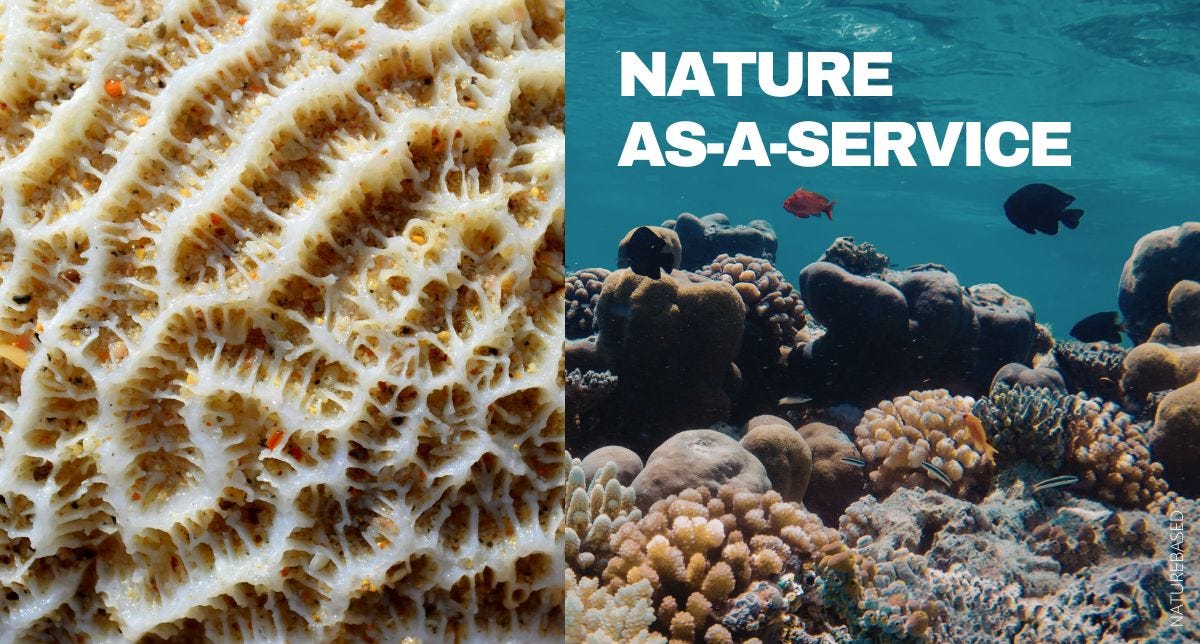
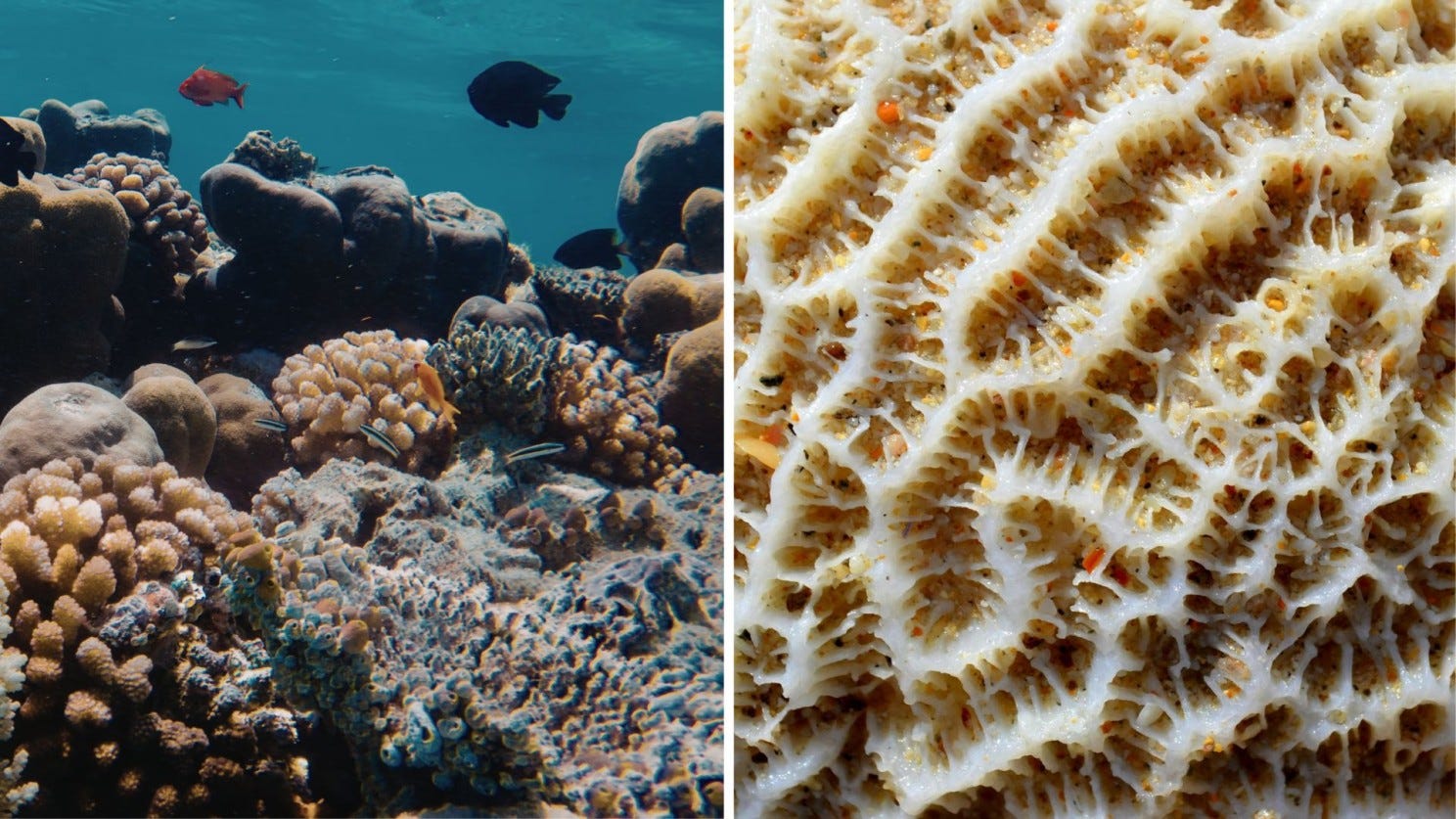
Take coral and photosynthetic algae, or zooxanthellae. Corals provide shelter and waste products (nitrogen) to the algae. While in return, algae provide oxygen and nutrients (glucose) to the coral via photosynthesis.
What makes this reciprocal relationship work is that both organisms benefit from it while making the whole system work better through providing feedback: when the algae create more glucose than is needed, the coral reduces the available nitrogen for the algae to limit their growth. And vice versa. A balance that also benefits all the organisms living within the coral/algae system.
Translate that to the NORNORM model and you get why offering flexibility based on needs (like the glucose-nitrogen balance) is one of their important USPs compared to one-time office furniture sales:
Companies grow, reduce their work force, or transition to work-from-home, as happened during the pandemic. And as a service provider, NORNORM can help their customers move with that ebb and flow without the usual hassle of having to discard the old furniture, making layout plans and finding new products.
The same goes for MUD jeans customers: if fashion dictates flares instead of, a product does not have to find its way to the incinerator, but can be swapped for the right fit, without having to buy a whole new pair.
No need to say that this prolonged and mutual customer relationship is immensely valuable. Nature-as-a-Service wouldn’t have been out there for 3.8 billion years if it wasn’t.
NatureBased. is driving nature-inspired innovation in the outdoor sports industry and beyond. Sign up for infrequently dispatched reflections on nature-based innovation and strategy, or check our website naturebased.cc.
Nature is our playground; we need to make it our model too.
Comments
Nothing yet. Say the first thing.
Sign in to join the conversation.