
TW: infanticide, postpartum depression, postpartum anxiety, psychosis, family annihilation. Please read with care 🫶🏻 If you or someone you know is struggling postpartum, please visit this site or call 1-800-944-4773.
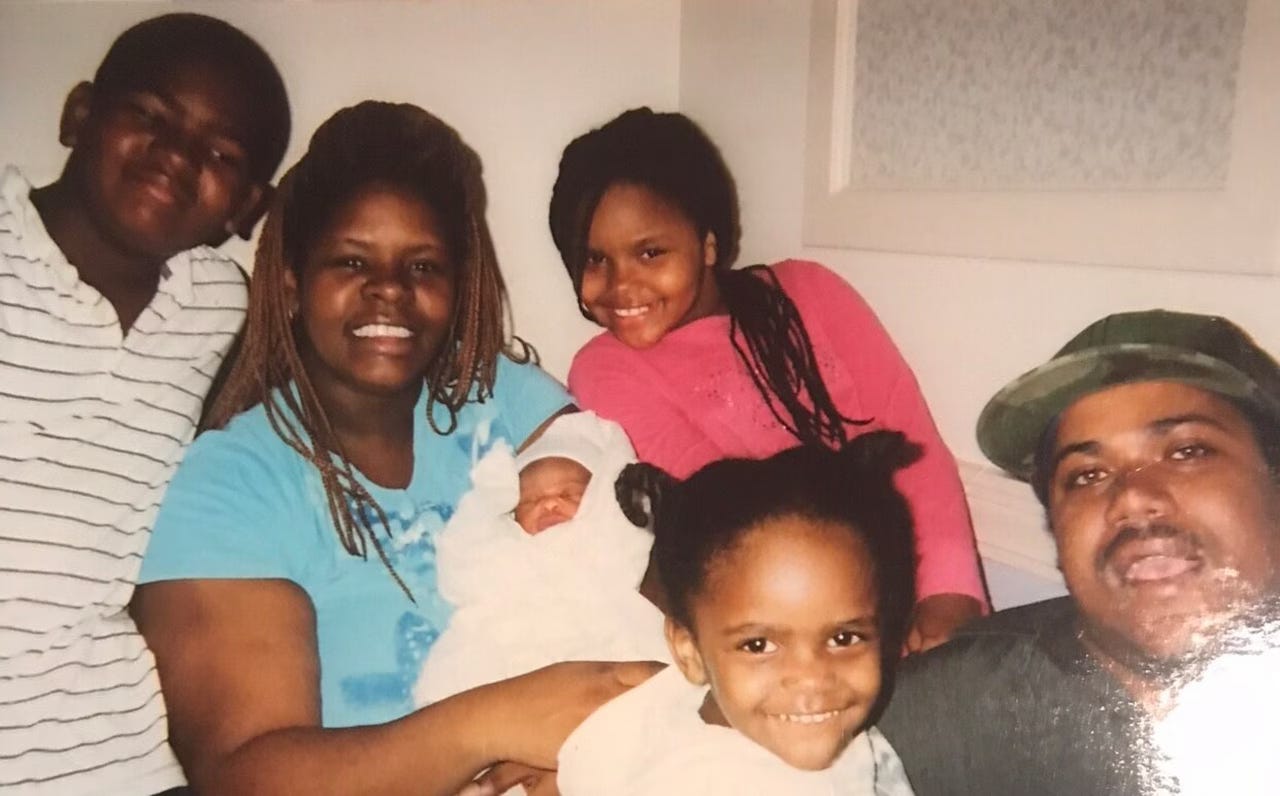
Unlike Lindsay Clancy, Latarsha Sanders did not seek help prior to killing her children. Because of this her mental health records from her time awaiting trial weren’t allowed to be used in her defense. These records include diagnoses of paranoia and schizophrenia among other illnesses and deemed her psychotic at the time of the incident.
While even the wealthiest and whitest moms (see: Hayden Panettierre and Lindsay herself) face risks when seeking mental healthcare, Black moms face significantly higher stakes. The system punished Latarsha for its own failings.
Black Americans are more likely to be misdiagnosed, and they are three to five times more likely to be diagnosed with schizophrenia or a psychotic disorder than white Americans, even when exhibiting the same symptoms. Clinicians are more likely to perceive Black patients as dishonest, and Black patients are more likely to report poor clinical relationships.
Now combine this with the data that show child welfare systems are more likely to intervene with Black families, Black children get placed in foster homes at higher rates than white children even with identical risk of maltreatment at home, Black parents are more likely to have their parental rights terminated— imagine what would happen if a Black mom said she was hearing voices telling her to kill her children. There’s a high chance that an entire family generation would be completely dissolved.
Experts often cite the “cultural stigma” around mental healthcare in the Black community, which puts the onus on the wrong people. Calling it a stigma makes it sound like there’s a lack of education or an ignorance, when in reality the history of our healthcare system and psychiatry point to this being less of a stigma and more of an appropriate reaction.
In the 1800s, medical professionals claimed Black people were biologically inferior to white to justify slavery. They invented a psychiatric diagnosis to explain why enslaved people attempted to escape, and another to explain why they resisted forced labor. American psychiatry believed Black people weren’t capable of complex emotions, and often relegated Black mental health patients to labor instead of treatment.
Many of these diagnoses and ideals weren’t challenged until the 1960s. The 1960s!!! That was not that long ago! My dad was alive!
During desegregation (throughout the ‘70s even) investigators reported that Black mental hospitals had extreme crowding, forced labor, unsanitary conditions, and unlicensed practitioners among other things.
What reasons have the system given to trust it?
This is one among many reasons that diversity is so incredibly important in healthcare and mental health. We need culturally competent practitioners, and patients need to be able to see themselves in their clinicians. Although there is such a need for diversity, our federal government is slashing DEI programs, capping borrower limits for MSW and nursing degrees (pathways to licensure in therapy and healthcare), and eliminating the public loans that many rely on to practice in these fields. It’s almost like they’re actively working against the people who need support the most…
Conversations about access and affordability and insurance are all crucial steps on the road to better maternal mental health, but we can’t have these conversations until we dismantle the systems that make it unsafe for people to even attempt to access. We can’t stop until ALL moms are cared for.
Hi! I’m Lindsay, mom of 2 with an MBA who has worked almost 2 decades in education including ed policy, based in Washington, D.C. I research everything to a fault and share it here because my group texts are exhausted by me. I write about education policy (because when we’re informed we’re empowered) and the realities of modern parenting (because we’re all in this together). Pull up a seat and join the community!
Subscribe for a free Guide to School Tours— a research based guide I created based on my time working in school quality evaluation. It includes how to decide the best school for your family and the questions to ask on a school tour. Once you subscribe you’ll get an email with the link, if you don’t see it check spam and promotions tab!
Comments
Nothing yet. Say the first thing.
Sign in to join the conversation.