
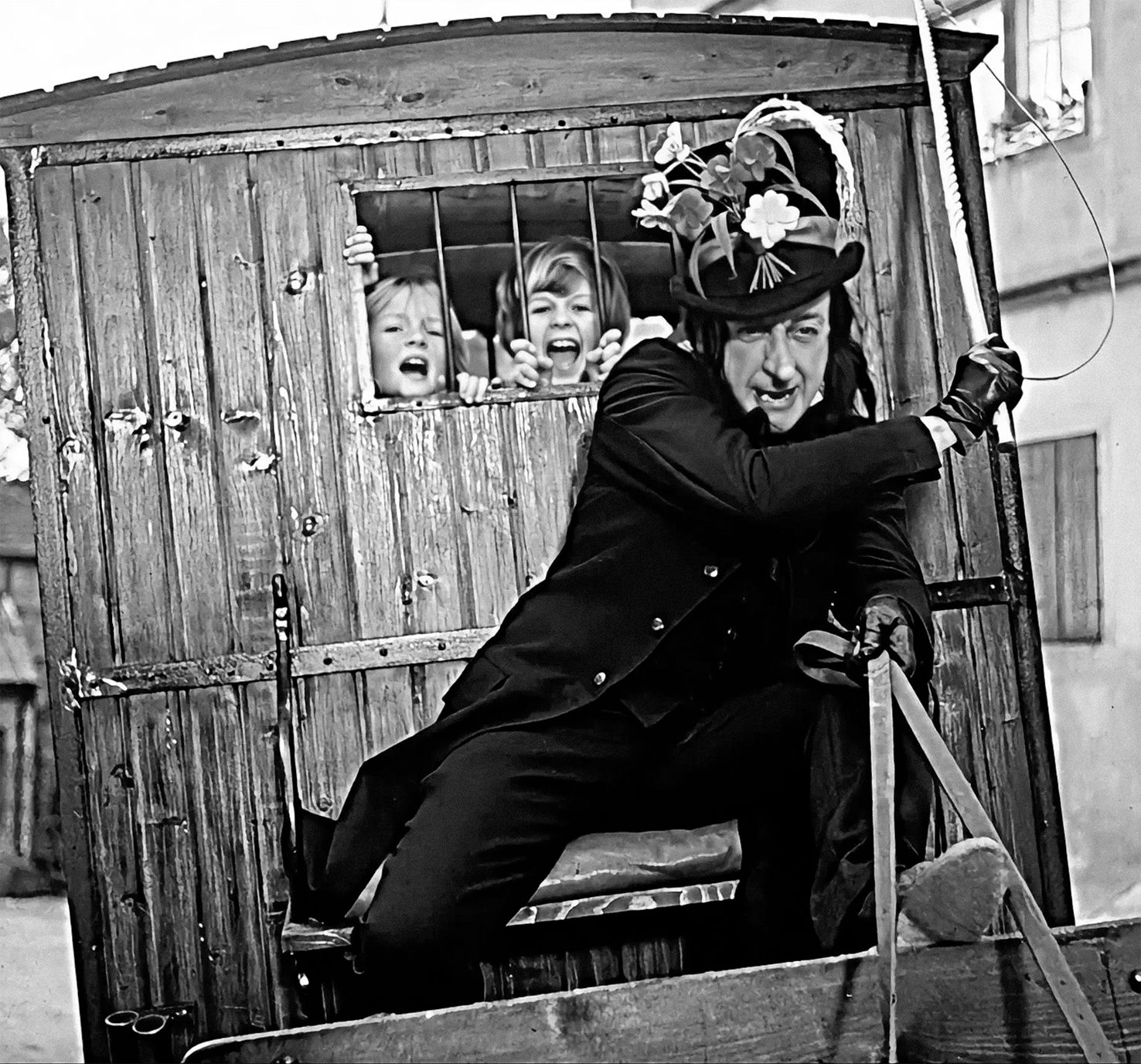
For some months I’ve been posting videos of villains on TikTok. I’m working on a book about baddies called Evil Genius and my TikTok channel showcases the best of the worst. It’s been trundling along, attracting a modest following - until last week, when it exploded. The cause of the eruption was a villain with less than ten minutes of screentime from a U-rated family movie of dubious quality – but in those few minutes he traumatised a generation. I speak, of course, about the Child Catcher in Chitty Chitty Bang Bang, a character whose name alone should come with a trigger warning.
For those unfamiliar with Chitty Chitty, allow me to transport you to Vulgaria, a strange and fearful land ruled by Baron Bomburst, an irascible man-child (played by Gert Fröbe, of Goldfinger fame) and his wife, the wicked Baroness. Possessed by a pathological hatred of children, the Baroness has banned the little tykes from the kingdom, and employed the odious Child Catcher to keep the land child-free. Into Vulgaria arrives the zany inventor, Caractapus Potts (Dick van Dyke), his lady friend, Truly Scrumptious, and his two forgettably-named children, travelling on board a magic flying car, Chitty Chitty Bang Bang. Long story short: the car crashes, the kids are caught by the Child Catcher, the kids are rescued and the baddies get their comeuppance. Okay, I’ve skipped a lot – but truth be told, it’s not a very good film. Nevertheless, it’s a family favourite, regularly wheeled out to traumatise a new generation of children.
The film was adapted from a novel by Ian Fleming, but his tale contained no Vulgaria, no child-hating Baroness and no mention of a Child Catcher. It was the film’s director and co-writer, Ken Hughes, who conjured him (or so he claimed). Looking to give the film a Grimm’s fairy-tale touch, Hughes said,
“I got to thinking what sinister thing can we have to frighten the shit out of all the kids, and it was a Childcatcher.”
And frighten the shit out of them he did.
(Hughes’s claim is not uncontested. Roald Dahl, the film’s co-writer, had built a career on grotesque child-hating adults (think: the Twits, Agatha Trunchbull, the Grand High Witch etc). He also wrote some foul descriptions of ratcatchers that bear more than a passing resemblance to the Child Catcher. So although Dahl never claimed the character as his own – in fact, he distanced himself from the film almost immediately – many can’t imagine that he didn’t have had a hand in the Child Catcher’s creation.)
Robert Helpmann, the actor who played the role, was the least Child Catchery man you could imagine. He was an accomplished ballet dancer, choreographer and actor, not to mention Artistic Director of the Australian National Ballet. He was appointed a CBE in 1964 and was Australian of the Year in 1965. He was also, by all accounts, a delightful man. But dressed in black, or wielding his child-catching hook, the lithe Helpmann, with his grotesque prosthetic nose, swivelling eyes and sing-song voice, was perfectly horrible. It’s said that he was dismayed by how his role traumatised so many children, but the only clip I’ve found of him discussing the character was before the film’s release, where he was quite cheerful about it. More telling, perhaps, is a long interview with Michael Parkinson in 1973 where Chitty Chitty isn’t mentioned once, suggesting it was maybe ‘off limits’, but that’s only speculation.
But the Child Catcher was about more than a performance, unforgettable though it was - he was a bogeyman representing our deepest childhood fears. Let’s not beat around the bush: the Child Catcher was abducting and abusing children – capturing them with his fearsome hook and confining them to cages. It doesn’t get more terrifying to a six-year-old, and six-year-olds tend to remember things like that. That’s why the hundreds of comments on my video read like a self-help group: “He haunted my childhood”, “I’m 58 and still scared of this man”, “This was my nightmare when I was a kid”, etc. When people say they were traumatised by the Child Catcher, it’s no exaggeration, and that’s why the memory of him is so triggering among adults.
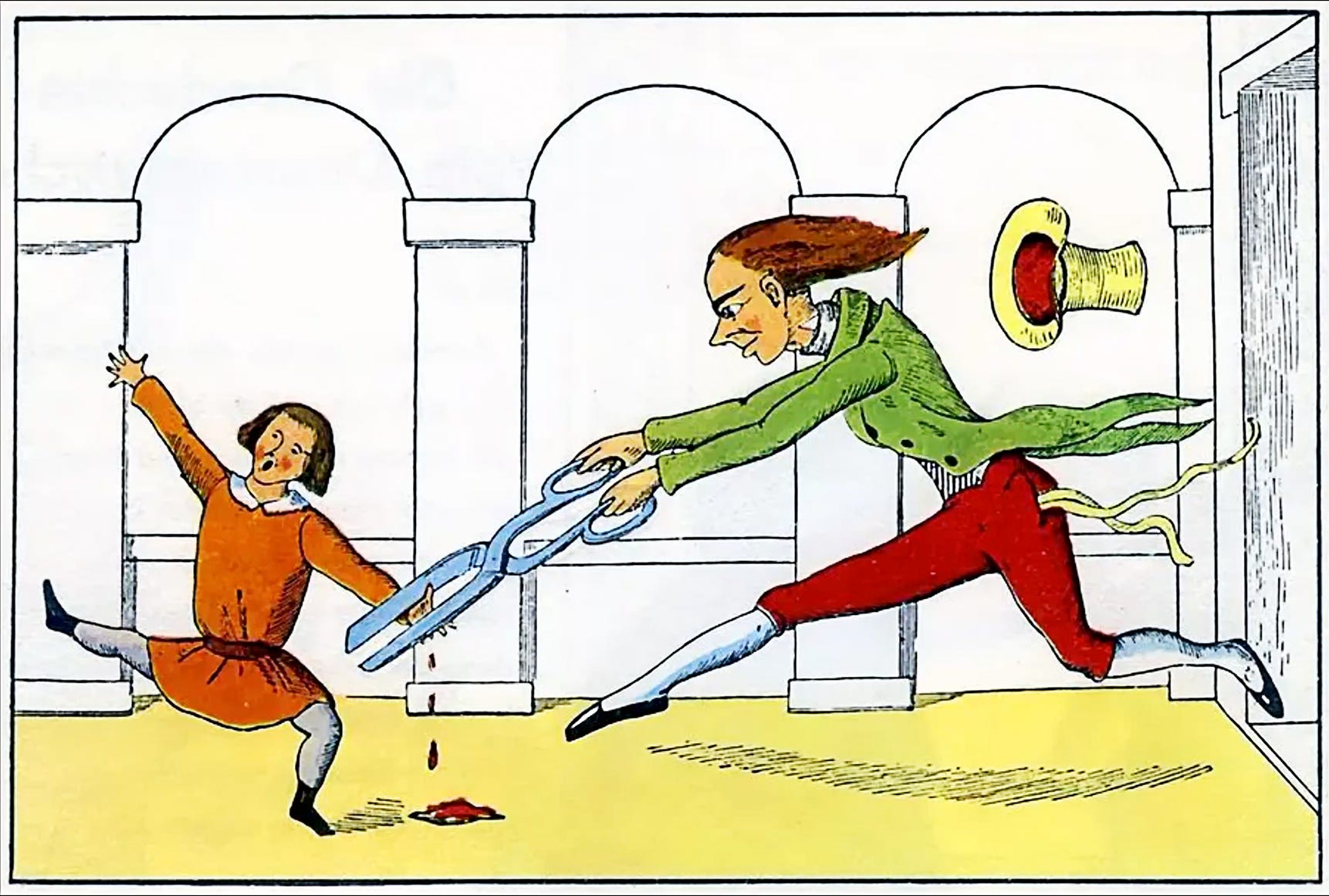
Of course, in the weird world of fairy tales, child abduction is a recognised trope, along with slavery, murder, child abuse, and even cannibalism. The Brothers Grimm and Hans Christian Anderson had witches, stepmothers and ogres do unspeakable things to young children. Indeed, both the Child Catcher and the witch in Hansel and Gretel use sugary treats to snare their prey, and at least the former didn’t plan on eating anyone. Then there’s the Pied Piper of Hamlin – a ratcatcher, no less – who was so outraged by the townfolk’s unpaid debt that he lured away all their children, never to be seen again. Many of these tales, written in the 19th century and derived from folk stories far older, are increasingly regarded as too dark for young minds today, certainly in their original form - but this is the world of the Child Catcher. The difference is that he was so much more real, brought to life in vivid Technicolour.
The historical context of Chitty Chitty makes the Child Catcher even more terrifying. The film was released in 1968, the decade in which ‘Stranger Danger’ was being drilled into kids by parents and teachers. Indeed, it was just two years after the Moors Murderers, Ian Brady and Myra Hindley, were sentenced for the abduction and murder of young children, with Hindley admitting it was her who enticed their victims into the car. This means the screenplay was being written almost as the trial was concluding. Of all the villains that could have been chosen for a family movie, a man who lures kids into cages, and sends them to God-knows-where, seems particularly raw.
Incidentally, there’s a bonus layer of Nazi subtext to take account of too, although young viewers wouldn’t recognise it. According to Adrian Noble, who directed productions of Chitty Chitty in both the West End and Broadway, Dahl was clear about the allegory at the heart of the film, saying,
“Vulgaria, they’re the Nazis. The Child Catcher, he’s the Gestapo. And the children are the Jews.”
Whether Dahl said these exact words or not we’ll never know, but they certainly sound plausible, which means we’ve now got children being hunted like Jews in the holocaust. Mince pie, anyone?
It’s hard to imagine the Child Catcher being created today - arguably, he shouldn’t have been made then either. But in a peversely masochistic way, I’m glad he’s there. Great movie villains are memorable, and really great villains are unforgettable - but the greatest of all are those that leave you ever so slightly traumatised, ideally at a young, impressionable age. So let’s hear it for the Child Catcher; may we never see his like again.
*******
Joshua Blackburn’s latest book, Evil Genius, is an encyclopaedic collection of quotations devoted to the greatest villains of screen, stage and literature. It will be published by Offbeat Press and launches exclusively on Kickstarter in October. Find out more here.
No posts
Comments
Nothing yet. Say the first thing.
Sign in to join the conversation.