

In Part 4, we listened to music about unrealized dreams, about family and youth, about the passage of time and how we can’t stop it. Hopefully, we used that time to make memories.
In this section, we’ll look at love found, love cherished, love strained and love lost.
We begin in the hills of North Carolina, where Roberta Cleopatra Flack was born. Before she reached 5 years old, her family moved to Virginia, settling in Arlington. As with so many stars, she got her musical start in church, learning to play piano while sitting on her mother’s lap. In 1968, she landed a contract with Atlantic Records and in 1969, recorded her first album, First Take, in 10 hours. It included “The First Time Ever I Saw Your Face.” Flack released other hits, but “The First Time …” remained popular for more than 3 years, benefitting from being featured in the film “Play Misty for Me.“ She continued working until ALS, diagnosed in 2022, made singing impossible. She died of heart failure in 2025. Several of her songs are on my playlist.
We travel cross-country to Tulsa, Oklahoma, where David Gates was born in 1940 to parents who were both musicians. While still in high school he formed a band with classmates, including Claude Bridges, who would later change his name to Leon Russell. Gates’ band released a single in 1959 written for his girlfriend whom he married for life. In 1961, Gates and family moved to Los Angeles, where he worked as a songwriter and session musician. Eventually, he met Robb Royer and Jimmy Griffin, and they formed the band, Bread, and signed with Elektra Records in 1969. Bread cranked out hits and albums, experienced the usual interpersonal conflicts, coming to a head in 1973 when the band broke up. Elektra brokered a reunion in 1976 and the band toured for a year to support their album, but they fell apart again. Gates continued as a solo artist until the band was reunited in 1996 for a brief period. Gates retired to his ranch, but now lives near San Diego.
Back in Part 1, I mentioned taking my parents to see the Royal Scots Dragoon at University Hall in Charlottesville, Virginia, but it was not my first arena concert. That distinction belongs to a band called Pablo Cruise, a band formed in 1973 in San Francisco, consisting of 4 members, Cory Lerios (keyboards, vocals), David Jenkins (guitar, vocals), Bud Cockrell (bass, vocals) and Steve Price (drums). When asked who Pablo Cruise was, band members would reply, “He’s the guy in the middle.” (ha ha) They signed with A&M Records in 1975, but this was another band fraught with creative conflict and personnel turnover. They broke up when their contract expired in 1984. The original members resurrected the group and tried to get a record deal in 1985, but failed. The band was reconstituted in 2004 (sort of) and still tours, mainly in California.
To fully introduce the next artist would take pages and pages, when in fact, she needs no introduction. In 1944, Diane Ernestine Ross was born in Detroit. Her mother named her Diane, but hospital staff incorrectly listed her name as “Diana” on her birth certificate. Her family still calls her Diane because that’s her name. At age 15, Ross joined a girl group called The Primettes, a sister group to the all-male Primes. Berry Gordy heard Ross singing on the radio and wanted to sign them to his Motown label – until he learned she and the girls were just kids. Instead, he advised them to finish high school first. Gordy later agreed to sign the group on the condition that they change their name. Member singer Florence Ballard chose “Supremes” from the list she was offered because it was the only name that didn’t end in “-ettes.” Ross was nominated for thirteen Grammy awards and amazingly, never won one, until she was given her first lifetime achievement Grammy in 2012. She received a second lifetime achievement Grammy in 2023 as a member of The Supremes.
Moving due south to Tuskegee, Alabama, finds us in the city where Lionel Brockman Richie, Jr. was born. Richie grew up in a home on the campus of Tuskegee Institute given to his grandparents by Booker T. Washington, the school’s first president. Richie was admitted to the school on a tennis scholarship, intending to be an Episcopal priest. Instead, he formed several bands, eventually becoming a saxophonist and singer for a band called The Commodores. They eventually signed with Motown Records as the warmup act for The Jackson 5. Before long Richie’s songwriting and singing talents propelled him beyond the Commodores. In 1981, he sang “Endless Love” in a duet with Diana Ross, which became one of Motown’s biggest hits. It also launched his solo career. He’s won four Grammies.
Traveling northeast to Philadelphia, we remember The Stylistics, formed in 1968 by blending of two high school groups, the Monarchs and the Percussions. Their distinctive sound was provided by Russell Tompkins, Jr., whose vocal specialty was falsetto. In fact, all their Top Ten hits featured Tompkins singing falsetto lead, thanks to Avco Records producer Thom Bell, who was initially unimpressed with the group, but thought Tompkins gave the group a commercially viable distinction, so he signed them in 1971. In 1974, Bell stopped working with the group, which caused them to lose their momentum. The group eventually split into two bands still performing, each claiming the original Sylistics legacy.
Having ignored the British Isles for too long, it’s time to travel to Dublin, Ireland, where Sinéad Marie Bernadette O’Connor was born. She may have been more activist than singer, but was successful at both efforts. During her education, she gigged with local bands, but was not invited to join because she was too young. She shared a manager with U2 and eventually signed with Chrysalis Records, which released her first album, The Lion and The Cobra that she co-produced. Her second album was released in 1990 and included the Prince song, “Nothing Compares 2 U.” It’s hard to day where O’Connor’s career might have gone if she weren’t so angry about nearly everything. She died in 2023 of complications from pulmonary disease.
After that quick trip, we are back in the U.S.A., at St. George, Utah, home of a piano and sheet music store called The Piano Guys, owned by Paul Anderson. He had the idea to promote his business by creating social media buzz. Being in the retail music business, he was acquainted with all the musicians in the area. He invited pianist Jon Schmidt to the project, who invited his friend, cellist Steven Sharp Nelson, who in turn invited his neighbor, music producer Al van der Beek onto the team. Their intent was to create videos promoting the piano store. The videos went viral and Sony Masterworks signed them. The group has over 7 million YouTube subscribers and their channel has accumulated more than 2.5 billion views. All eight of their albums have reached Number One on Billboard’s Classical or New Age charts. Several of their albums are on my playlist. This video is my favorite. Who knew a piano could be a whole band?
In 1940, Marie Dionne Warrick was born in East Orange, New Jersey, where my paternal grandparents lived for a couple decades. The Warricks were a musical family and Marie got her start in her grandfather’s church in nearby Newark. Her mother managed her family’s gospel singing group, which sang on TV Gospel Time where Marie had her television debut. She sang with a group called The Gospelaires which did session backup work. While singing backup for a Drifters recording, the song’s composer, Burt Bacharach noticed her. It’s unclear when she began going by her middle name and changed the spelling of her last name, but she became Dionne Warwick. Bacharach hired her to sing demos which brought her to the notice of Sceptre Records which signed her in 1962. That was the beginning of a long career of familiar hits. In 1971, she signed a $5 million contract with Warner Bros., the most lucrative for any female vocalist up to that time. She has remained active until now, having signed with various labels along the way. She has received numerous awards, including 6 Grammies, plus a lifetime achievement Grammy.
Up in Detroit, Berry Gordy was assembling a vocal group for his Motown label in 1961. He’d put together several accomplished singers, including Eddie Kendricks, Otis Williams and Paul Williams. At first, he named the group The Elgins, only to find out that there was already another group by that name. He renamed them The Temptations. The released some singles with little public response. In 1963, they began working with Smokey Robinson as producer/writer. Thanks to a personnel shakeup, David Ruffin joined the group. In 1964, Ruffin sang lead on the Temps new single, “My Girl,” which went to Number One. The group continued to release hits and undergo personnel changes for the next decade. In 1971, the Temps changed their sound to Funk and kept going, releasing “Papa Was a Rolling Stone” in 1972. The group won 3 Grammies plus a lifetime achievement Grammy.
In Philadelphia, an R&B group known as the Charlemagnes had been performing since 1950, changing their name to The Blue Notes in 1954. They made records with minor labels and little success all through the 1960s. The group recruited Teddy Pendergrass as a drummer, who apparently helped them turn the corner. In 1972, they released “If You Don’t Know Me By Now,” which hit Number One. The group continued to have personnel turnover and Pendergrass quit in 1976, going on to a successful solo career. The group never really hit their stride again. After several false starts, they called it quits in 2017.
Back in Detroit, another R&B quintet called The Domingoes formed in 1954. All the members lived in the same public housing project. After a personnel shakeup, they renamed themselves The Spinners in 1961. In 1963, Berry Gordy signed them to his Motown label, but the group was not very productive. Gordy reassigned them to road crew for other bands. In 1970, he gave them another chance with a couple Stevie Wonder songs that charted. Aretha Franklin encouraged them to sign with Atlantic Records when their Motown contract expired, which they did. The change was good for them and they started producing hits with Thom Bell songs. But in 1977, the group hit a rough patch when egos got in the way. They eked out a couple more hits in the early 1980s. A group operating under the Spinners name still tours, but doesn’t include any of the original members.
It’s 1973 in San Francisco, and Herbie Herbert had been managing the Santana Blues Band until it imploded, so he was looking to put together a new band to manage. He assembled a band with a couple Santana members as well as artists from other regional bands and called them The Golden Gate Rhythm Section. He intended them to be a warm-up band for other acts, and not a recording band. The band members had other ideas, and took the name suggested by one of their roadies, Journey. In 1974, the band signed with Columbia Records. They released an album each in 1974, ‘75 and ‘76, with modest sales. Columbia told them to make some changes or be dropped, including hiring a “front man.” In 1977, they hired Robert Fleischman, who didn’t get along with manager Herbert and left after only a few months, just after the band had been introduced to Steve Perry during a performance in Chicago. Perry was hired, and soon after, the band became a headliner, commanding huge arena and stadium crowds. They rode the wave, which crested in 1984. The band entered an on-again-off-again existence until 1987, then disappeared. In 1995, Perry tried to bring the band back, but had health problems and couldn’t continue. A band named Journey still tours, but Neal Schon is the only original member.
Up in Halifax, Nova Scotia, Sarah MacLachlan was born in 1968, when most of my other favorites were hitting their stride, but she made up for lost time. At age 4, she started playing ukulele, then studied classical guitar, piano, voice and opera at the Maritime Conservatory of Performing Arts. She was still in high school when she sang lead for a local band and was offered a recording contract before she graduated. Instead, she spent a year in college studying jewelry design before moving to Vancouver and signing with the Nettwerk label. She released her first album in 1987 and her second album was her “breakthrough” album, released in 1991. In 1997, she released Surfacing, which won two Grammies. It includes “Angel,” which brought her international acclaim. She’s continued to release albums and tour.
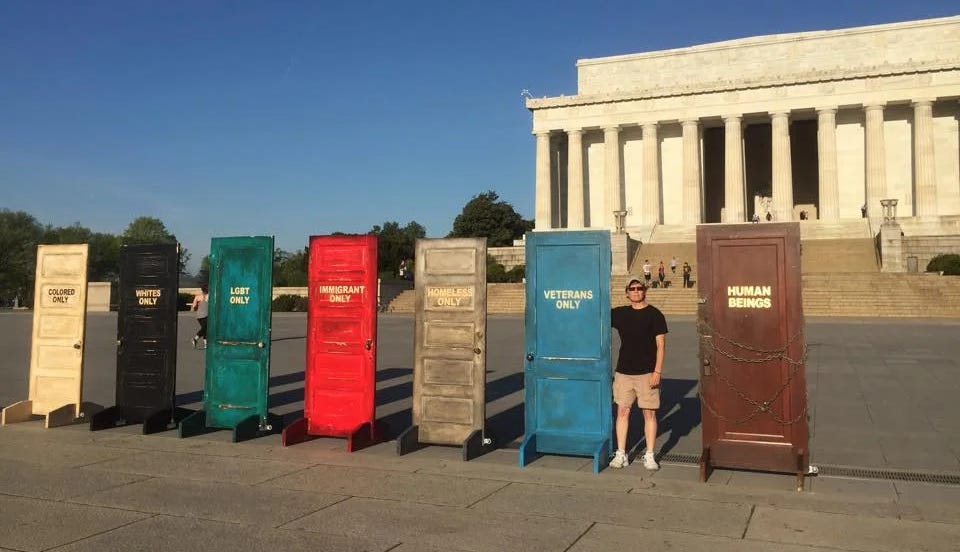
As long as we’re in Canada, let’s head over to Edmonton, Alberta, to the birthplace of Kathryn Dawn Lang, who prefers to go by her first initials (not capitalized, thank you). This reminds me of my good friend whom I met before she became semi-famous and ditched her first names, activist artist, VL Cox, whose End Hate work has been installed on the steps of the Arkansas Capitol, the Lincoln Memorial in Washington, DC, the Rosa Parks Museum in Montgomery, AL, and other locations around the nation.
Back in Edmonton, k.d. lang was born in 1961. After her father moved the family to Consort, AB, he left the family when k.d. was twelve. In college, she became fascinated with Patsy Cline and decided to be a professional singer. In 1983, she joined a Patsy Cline tribute band called The Reclines. They released a few singles culminating with a 1989 album that won a Grammy. After going solo, her career got a boost from collaboration with Roy Orbison. She got international recognition when she sang at the closing ceremonies of the 1988 Winter Olympics. In 1991, she sang “Calling All Angels” with Jane Siberry. (It almost beat “Hallelujah” on this list. It’s on YouTube.) During the 2000s, she achieved mainstream success. In 2010, she sang “Hallelujah” at the opening ceremonies of the Winter Olympics in Vancouver, BC. She has received official honors from the Canadian Government, 4 Grammies and numerous other awards. She announced her “semi-retirement” in 2019. Leonard Cohen may have written and first performed this song, but k.d. lang owns it.
We’re headed back to the UK, the Islington district of London, where secondary school students, Gary Kemp and Steve Norman went to a Sex Pistols concert in 1976 and were inspired to start a band. They recruited other schoolmates and practiced in the school lunchroom, calling themselves The Roots, playing covers of other bands’ songs. Over the next two years, they changed names as often as they changed members and their sound, finally settling on Spandau Ballet. Unlike typical music acts’ path to a record deal, they played gigs at “secret” and underground venues, building a fan-base that created a bidding war among labels. Chrysalis Records was the winning label and released their first album, Journeys to Glory, in 1981. Their third album, True, was released in 1983. The band broke up in 1990 when members wanted to pursue other interests. They reunited in 2009 and toured off-and-on until 2019.
We’re headed back to the USA, to Everett, Washington … My sister married an Everett boy … I’m sure the other folks are more interesting than he is. Robert Loggins, for example, promised his son, Bobby, that he could name his baby brother who happened to arrive on his own birthday. Bobby decided his baby brother should have the super name of Clark Kent Loggins. Later, the parents pulled the old switcheroo and named their youngest son Kenneth Clark Loggins. The family relocated a couple times, settling in Alhambra, California. Kenny got an early start with music in high school, as lead singer and rhythm guitarist with a local band. In 1970, he was introduced to independent record producer, Jim Messina, who was going to produce Loggins’ first album for Columbia Records. But he contributed so much, the project became a duo. They performed as Loggins and Messina until 1976, when both parted ways amicably to pursue solo careers. Loggins released his first solo album in 1977. He collaborated with Michael McDonald on songwriting on several projects. The 1979 release of “This Is It” was a product of that collaboration. Loggins career became that of “soundtrack singer,” with his voice on many movie soundtracks of the 1980s and 90s. He is still active in the music business.
In the nearby Valley Glen neighborhood of Los Angeles, David Paich and Jeff Porcaro met in high school and formed a garage band. They both went on to become session musicians, playing with Sonny & Cher, Seals & Crofts, Steely Dan and others. Years later, they decided to form their own band, bringing in other session musicians they knew. They signed with Columbia Records and worked on their first album, still having no name. Band member David Hungate remarked that their album had everything. The Latin word for that is “in toto,” so they adopted the name Toto for the band. Their first album was released in 1978, resulting in almost overnight success. Their 1982 album, Toto IV, containing “I Won’t Hold You Back,” was their best seller. They toured and produced albums until 1988, then went on hiatus. As tends to happen with bands, it fell apart and never really reconstituted. The name lives on and tours, but it’s not really the same band.
Over in New Haven, Connecticut, Michael Bolotin was born 7 months before I was. While I was learning to play the piano, he was learning to play the saxophone. At age 9, he was writing songs and I was haunting the Carnegie Public Library across the street from home. At age 14, he formed a group called the Nomads while I built a “clubhouse” in the woods with my neighbor, Chuck. At age 16, his band had a contract with Epic Records and his parents allowed him to drop out of high school to pursue his music career. I would probably have gotten the belt for even proposing such nonsense. He recorded his first self-titled Hard Rock album in 1975, then toured with his band, Blackjack, for several years. During this time, he anglicized his name to Bolton. In 1982, he co-wrote “How Am I Supposed To Live Without You” for Laura Branigan, who took the song to Number One in 1983. I heard it first from her. In 1988, he “covered” his song and it went to Number One again. He was wildly popular until the late 1990s. Since then, he’s kept busy with guest appearances and philanthropy.
We haven’t been to Scotland for a while, so let’s go to Belshill in Lanarkshire, where Shirley Sheena Orr was born in 1959. She was a good student, which netted her a scholarship to the Royal Scottish Academy of Music and Drama. She studied during the day and sang in pubs at night. In 1979, she married husband number one of four, named Sandi Easton. The marriage didn’t last a year, but she kept his surname and dropped her first, to become Sheena Easton. She rose to fame as a contestant on a television singing competition and released her first single in 1981. Her third album, Madness, Money & Music, featured several of my favorite Easton songs, including “I Wouldn’t Beg For Water.” She duetted with several artists, including Prince, which coincided with her shift to the R&B genre. In the mid-1990s, she adopted two children, which prompted her to curtail her music career. She still appears occasionally.
We drop down to Belgium, where Lara Sophie Katy Crokaert was born in 1970. Her Flemish father had earlier collaborated with Petula Clark (coming up) and Italian mother recognized her musical talent early and enrolled her in the Royal Conservatory of Brussels when she was 8 where she studied for 10 years. She became known in 1988 when she was invited to compete in the famous Eurovision Song Contest, losing to Celine Dion. By then, she had changed her name to Lara Fabian. In 1990, she moved to Montreal with her collaborator and they established their own label with considerable success. In 1997, she signed with Polydor. In 2000, her single, “Adagio,” was a huge hit in Europe. Fabian is a “Swiss army knife” of music, singing around the world in multiple languages for a variety of projects, from movie soundtracks to live concerts, alone or with other performers.
Back in the USA, Burbank, California, specifically, pianist Marge Goddard and singer/actor John Raitt welcomed a daughter in 1949. They named her Bonnie Lynn. Bonnie’s experience with learning piano from her mother must’ve similar to mine with my mom. It didn’t go well. So at age 8, Bonnie took up guitar. In 1967, she went to Radcliffe College where she met Blues promoter Dick Waterman. He invited her and others to travel to Philadelphia, and that changed everything. There, she got noticed, and Warner Records offered her a contract. Her self-titled album was released in 1971. She continued to release albums with only moderate sales through 1983, when Warner dropped her. It didn’t help that she was struggling with substance abuse. She continued to tour on her own dime until 1988, when Capitol Records signed her, clean and sober. The next year, Capitol released her tenth album, Nick of Time, which was a great success. She followed up with more successful albums, including Luck of the Draw, featuring “I Can’t Make You Love Me.” Bonnie Raitt has continued to be active in music and other entertainment.
We go back across the country to the Eastwick neighborhood of Philadelphia, where in 1944, Patricia Louise Holte was born. Not unusually, her musical career started in the church, for her at age 10. She won a high school singing competition, which let to her joining a musical group at age 16. The group signed with a small, local label who named them The Blue Belles. After an appearance on American Bandstand, their manager renamed them Patti Labelle and the Blue Belles. After personnel changes and under a new manager, the group’s name was shortened to simply Labelle. In 1971, they opened for the U.S. tour of The Who. That same year, they signed with Warner Records. When the Warner albums didn’t hit, they signed with Epic Records in 1974. Resulting from conflict, the group broke up in 1976, but Epic signed Patti as a solo act. She had much better success, and in 1986 released her biggest hit, “On My Own,” from Winner In You, her only Number One album. Labelle continues to work on a variety of projects and tour, at age 82.
I’m breaking my rule and sharing a song from an artist we already heard from, but it’s my list and I can break the rules if I want to. Michael Hanley McDonald was born in Ferguson, Missouri, in 1952. He played in local bands and was discovered in an Illinois club by an RCA producer, who signed him and brought him to Los Angeles. There, he joined Steely Dan in 1974, touring with them until 1975, when the band was retired as a live act. He would still join them occasionally for recording sessions. He was recruited by The Doobie Brothers, and he toured and recorded with them until they dissolved in 1982. Even during this busy period, his unique voice was much in demand for session work with a Who’s Who of other artists. His first solo album was released in 1982, but he continued to collaborate with others. On his 2003 album, Motown, he covered the Stevie Wonder song, “All In Love Is Fair.”
In the unlikely city of Boston, a group formed at the New England Conservatory of Music in 2004. Rachel Price (lead vocals) is an Australian who grew up in Hendersonville, TN. Bridget Kearney (acoustic bass) hails from Iowa City. Mike Calabrese (drums, organ, vocals) is from Philadelphia. Mike “McDuck” Olson played trumpet, guitar and whatever else the band needed to fill in the gaps, and has left the band, replaced by others. The called themselves Lake Street Dive, inspired by a favorite hangout on Lake Street in Minneapolis. They got their start on a shoestring, touring and spending their earnings on making CDs to sell at their concerts. They are still very active.
I had a few more songs to share in this section, but Substack says I’ve reached my email length limit. This takes us to #107 of my Top 100 131 songs. Stay tuned for the final part.
Comments
Nothing yet. Say the first thing.
Sign in to join the conversation.