

So here’s the third installment of my Top 100 131 favorite songs. We’ll start with a group I’m calling “Show Tunes.” Typically, this designation refers to songs from Broadway musicals. But considering that many live stage musicals have been made into movies, and vice versa, I’m including both.
Who better to lead this list than Barbra Streisand, almost synonymous with Broadway? My playlist is packed with her performances, but the standout is her rendition of “Somewhere,” a song from West Side Story, which has been reinterpreted over and over on the stage and on film. Premiering in 1957, the musical boasts an all-star pedigree, conceived by Jerome Robbins with music by Leonard Bernstein, lyrics by Stephen Sondheim, and a book by Arthur Laurents.
No matter how many shows one might have seen at various theaters across the country, nothing compares to the spectacle of seeing a show performed in a historic Broadway theater (see below). The first of the shows I’ve been fortunate to see was A Chorus Line with the original cast at the Shubert Theater in 1975. The experience left a permanent impression on me. I like all the songs, but none have found their way into my favorites playlist. I think it’s because they don’t stand alone without the context of the show, itself. “What I Did For Love” is well known, but isn’t a favorite for me.
Likewise with They’re Playing Our Song, starring Robert Klein and Lucie Arnaz in her Broadway debut, which I saw at the Imperial Theatre in 1979. If you’ve heard it, the title song is memorable with its catchy tune, but it’s not one I want to listen to over and over.
Then in 1988, I had the opportunity to see The Phantom of the Opera with the original cast starring Michael Crawford and Sarah Brightman at the Majestic Theatre. My experienced friends arranged our tickets and seats and got us the best seats in the house on the front row of the mezzanine, actually better than the orchestra section because we got a full view of the set. When entranced Christine and the Angel of Music crossed the sewer lake and thousands of burning candles magically appeared on the “water’s” surface, our higher seats mattered.
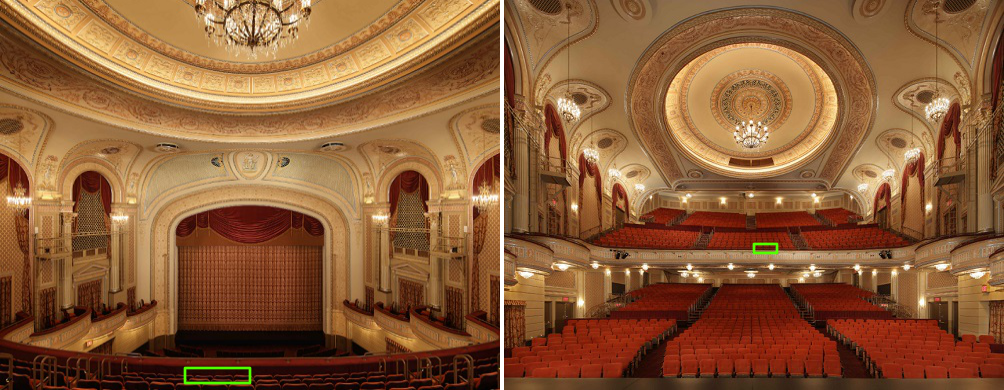
To sit as a witness to the convergence of such creative and performative talent was a transcendent experience that left me emotionally drained. The memories of that evening will follow me to the end of my life. All the songs are on my playlist, but here I’ll share “The Music of the Night.”
In 1989, my next-door neighbor (yes, I once lived among theatre people) starred as Desiree Armfeldt in a local production of A Little Night Music. In that role, she sang “Send In The Clowns,” the musical’s best-known song which almost never happened. When Stephen Sondheim discovered that Glynis Johns, the original Desiree could sing, he wrote the song for her. So many actresses and singers have made their mark with this song, but I’m sharing the one I heard first.
Growing up in the home of old-school evangelicals, I was not allowed to go to movie theaters. So when I moved out on my own, I did what many young adults who were repressed evangelical youths do … everything (well, not illegal drugs), and a lot of it! The first movie in a theater I went to see was Oliver Stone’s Midnight Express starring Brad Davis as Billy Hayes. That was an intense introduction to movie-going! The second movie I saw was The Rose, starring Bette Midler in the title role. Dozens of Midler songs are in my playlist, but “The Rose” is my favorite.
Some years later, I went to see Purple Rain starring Prince, of whom I was already a fan. It’s difficult for me to choose my most favorite of all my Prince favorites, but the movie’s title track is definitely a contender.
The 1992 release of The Bodyguard starred Kevin Costner and Whitney Houston in her film debut. Lawrence Kasdan wrote the screenplay in the 1970s, but after several false starts with stars like Steve McQueen and Diana Ross, Costner finally took an interest in it. After its premiere, critics hated it and audiences loved it. The soundtrack featuring “I Will Always Love You,” written by Dolly Parton as interpreted by Linda Ronstadt, is the best selling soundtrack of all time.
In 1993, the scourge of HIV/AIDS was about a decade old. A movie titled Philadelphia starring Tom Hanks and Denzel Washington was released. It follows the legal challenges faced by a gay lawyer who was fired by his firm when they discovered he had contracted the disease. The soundtrack included “Streets of Philadelphia” by Bruce Springsteen, which won him an Academy Award.
Les Misérables was a novel written by Victor Hugo in 1862. French librettist Alain Boublil adapted the novel to a musical in the late 1970s and it was converted to an English version premiered by the Royal Shakespeare Company in 1985. Several songs from Les Miz have become widely popular, but “Bring Him Home” sung by Colm Wilkinson, the original Jean Valjean, is my favorite.
Dreamgirls was a 1982 musical that followed the story of an R&B girl-trio named “The Dreams,” which coincidentally rhymes with “The Supremes.” Jennifer Holiday was the first Effie White. In the 2006 film adaptation, Effie was played by another Jennifer … Hudson. Here, JHUD sings “And I Am Telling You …” the song that tests every female vocalist’s chops.
When I started this project, I intended not to pull two favorites from one source, but I guess rules are made to be broken. The next favorite is from the same musical, but rendered by Dutch powerhouse, Glenda Hulita Elisabeth Batta, who goes by Glennis Grace. I first heard her sing on America’s Got Talent in 2018 and was immediately a fan. She occupies several spots on my playlist.
Loren Allred is another of my competition show finds, in her case, Britain’s Got Talent. In that show, she revealed that she actually sang “Never Enough” and it was lip-synced by actress Rebecca Ferguson in the 2017 movie, The Greatest Showman. That brought her out of the shadows of demo and backup singing, into the spotlight of her own stardom.
Now, let’s step back in time to the 1950s, when a singer from Cardiff (yay, Wales!) named Shirley Bassey (Dame Shirley Veronica Bassey to you peasants) got her start in the music business. She had a number of hits in the UK throughout the ‘50s, then made her debut across the pond on The Ed Sullivan Show in 1960, the first of a flurry of record releases and appearances in the U.S. With release of the title song from the James Bond movie, Goldfinger, it appeared that her U.S. career had peaked. She had a bit of a comeback in the UK. Then in 1971, she recorded the theme song for another James Bond movie, Diamonds Are Forever. From then on, she has continued to record albums of standards and torch songs, still making guest appearances at age 89.
I started buying albums from The Nylons when they were still on vinyl. The Canadian a cappella group was founded in 1978 in Toronto. The original members were Claude Morrison (tenor), Paul Cooper (baritone), Marc Connors (tenor), and Denis Simpson (bass). The group underwent numerous personnel changes until they retired in 2017. “The Lion Sleeps Tonight,” originally “Mbube,” dates all the way back to 1939, written by Solomon Linda, a Zulu migrant worker who also sang in a South African a cappella group. Ignorant of music rights legalities, he sold the rights to the song and never made a penny in royalties. The song was recorded by several U.S. groups and eventually was included in the 1994 Disney film, The Lion King.
Spring forward to 2015, when the blockbuster, Hamilton: An American Musical, the wildly popular show by Lin-Manuel Miranda premiered at the Public Theatre in Lower Manhattan, then transferred to the Richard Rodgers Theatre on Broadway. The list of awards the show has won is too long to even summarize. In 2025, Disney Pictures released the film adaptation. The entire Broadway soundtrack is on my playlist, but I’ll let you sample it with Jonathan Groff’s irreverent portrayal of bonkers King George III in “You’ll Be Back.” Resemblance to any current head of state is purely coincidental.
Strap back into your time machine. We’re headed back to the 1960s, when The Who’s guitarist and lead singer, Pete Townshend, wrote a rock opera titled Tommy about a “deaf dumb and blind kid” who was a master of pinball machines. The work was released as a double album only in 1969. Townshend thought it wasn’t his best work, but it was a wild success. The piece was developed as a film released in 1975, then as a Broadway musical premiered in 1992. In the film, Elton John was tapped to sing “Pinball Wizard,” which became a popular number in his concert tours.
I wanted to end the Show Tune collection of my favorites with a song from the Bee Gees because it’s the perfect segue to the next genre. In 1977, one of the first films I saw in a theater was a movie phenomenon titled Saturday Night Fever, starring John Travolta as Tony Manero. To declare it as “culturally, historically, or aesthetically significant” is an understatement, but that’s how the U.S. Library of Congress described it when the film was selected for preservation in the National Film Registry. The movie marked the beginning of the Disco craze in the U.S. and with it, a new phase of my own life. The entire movie soundtrack is on my playlist, but I’m sharing “Night Fever,” the track from opening sequence. This video is not from the movie, but it captures the mood.
The Disco era came along just at the time I wanted to be everything I hadn’t been. I’d been “chunky” (polite term for overweight) since I was in elementary school, which added to the difficulties of growing up. Moreover, my body image was inappropriate for the fashion industry I worked in. So I went on a strict diet and lost 50 pounds over a one-year period, which allowed me to wear the latest styles: Nik Nik shirts, body-hugging suits, and sleek European shoes with paper-thin soles. This was the attire I wore for going out clubbing, where Disco music bumped and thumped all night. It was the period when I was making almost-weekly business trips to New York City – disco heaven – and I made the most of it after hours.
I walked past (in)famous Studio 54 many times, but never tried to get in. The illegal activities going on inside were well known and I didn’t want to get caught up in that scene. I always ended up at The Library, a disco on the street level of the former Barbizon Plaza Hotel on Central Park South. It was a convenient last stop of the night since my room was upstairs.
I’ve gotten clubbing out of my system entirely, but I still like Disco music. However, for this project, I’ll limit my sharing because Disco is an acquired taste. First up, a version of “House of the Rising Sun” that’s a lot different from the ballad popularized by Eric Burdon and the Animals. The Disco version was released by French-American band Santa Esmeralda, cranked up to Disco speed.
No conversation about Disco music is complete without paying homage to “The Queen of Disco,” Donna Summer (born Donna Adrian Gaines). She was a Boston girl who dropped out of high school to sing lead with a band and moved to New York City. From there, she moved to Germany and joined the cast of the musical, Hair. She met music producers Giorgio Moroder and Pete Bellotte, who were birthing the Disco movement in Europe. In 1974, they released her “Love to Love You, Baby” long-play single that took the world by storm. She kept releasing Disco hit after hit until 1980, when the music-listening public decided it hated Disco. Despite a setback, she kept recording until her death in 2012 from lung cancer at age 63. I think I bought all her albums on vinyl, and most of her songs are on my playlist. “MacArthur Park” is one of my favorites. Singer/songwriter Jimmy Webb has told of his being in the studio when Summer was recording his song. She kept singing “MacArthur’s Park,” and he kept insisting there was no “s” in MacArthur. The original recording included the mispronunciation. By the time of this live performance, she finally got it.
I’m a huge fan of Cheryl Sarkisian and had a difficult time deciding where to place her in this project. I settled on having her wrap up my short Disco section. Born in 1946, in El Centro, CA, Cher’s performing career started at age 9, when she led a school performance of the musical, Oklahoma. At age 16, she quit school and moved from home to a shared apartment, dancing at clubs on Hollywood’s Sunset Strip. There, she met Sonny Bono, who worked for producer Phil Spector. Sonny intended to launch Cher as a solo act, but she suffered from stage fright and asked him to sing with her. Over the course of her 60 years in music, she has reinvented her music style to keep up with the times and is recognized as “The Goddess of Pop.” At age 80, Cher is still touring, still performing and still rockin’ outrageous Bob Mackie costumes. Here’s “Take Me Home” from her Disco period.
That’s a wrap for Part 3. Stay tuned for Part 4 of 5 or 6.
Comments
Nothing yet. Say the first thing.
Sign in to join the conversation.