
Gm Fintech Architects —
Nobody asked me, but I marked up the Stripe Investor letter that explains why they are buying Open Router for $7B.
The full analysis is shared below, and is a preview of our premium writing.
Summary: We examine Stripe’s $7B OpenRouter acquisition as the centerpiece of a roughly $10B push to vertically integrate the infrastructure of the machine economy. We argue that Stripe is using its enormous Web2 distribution to commercialize technologies pioneered across crypto and AI, assembling stablecoins, wallets, usage billing, payments, blockchain settlement, and now inference routing into one stack. OpenRouter gives Stripe control over a critical commodity layer—AI inference—whose economics increasingly depend on routing workloads across models based on price, performance, compute, and availability. We conclude that Stripe is positioning itself as the economic operating system for AI companies and agents, but its expanding footprint also creates concentration risk and increasingly puts it in direct competition with Ramp.
Topics: Stripe, OpenRouter, Bridge, Metronome, Privy, Tempo, Ramp, OpenAI, Anthropic, Plaid, Persona, Robinhood, Nevermined, NVIDIA
Thanks as always for your time and attention,
Lex
To support this writing and access our full archive of newsletters, analyses, and guides to building in the Fintech & DeFi industries, see subscription options below.
Generative Ventures | AI Research | Robot Money | Linkedin & Twitter | Sponsors
🚀 Lex is actively meeting teams building machine-native financial companies. If that’s you, reach out here.
🤖 AI & Robotics Industry Encyclopedia: In this 100+ page report, we collate all the meaningful companies across public quities, private equity, and digital assets related to the machine economy. 👉Learn more here
🦄 In partnership with InterPrivate, we just launched a $200MM SPAC looking for targets in fintech, digital assets, and AI infrastructure. If you are a late-stage founder or have an idea to discuss, reply directly to this email.
It all depends on the definition of the Internet, doesn’t it?
At Consensys, we called Ethereum “Web3” and crypto “the Internet of Finance”. Turns out the original Internet may have been financial enough.
Stripe just announced the closing of the Open Router acquisition for $7B earlier in the week, and Axios reportedly its hands on the Stripe investor letter explaining their logic.
We find ourselves constantly aligned with how Stripe thinks — about AI, the machine economy, fintech and stablecoins, and value accrual. Today, I want to walk through this letter and provide additional industry color and experience as an operator and investor, and hopefully give you another view on their thesis. While I’ve got a venture fund and a network of early-stage companies behind the idea, Stripe has put about $200B of marketcap behind this thesis.
We excerpt it below in image and thereafter in text.
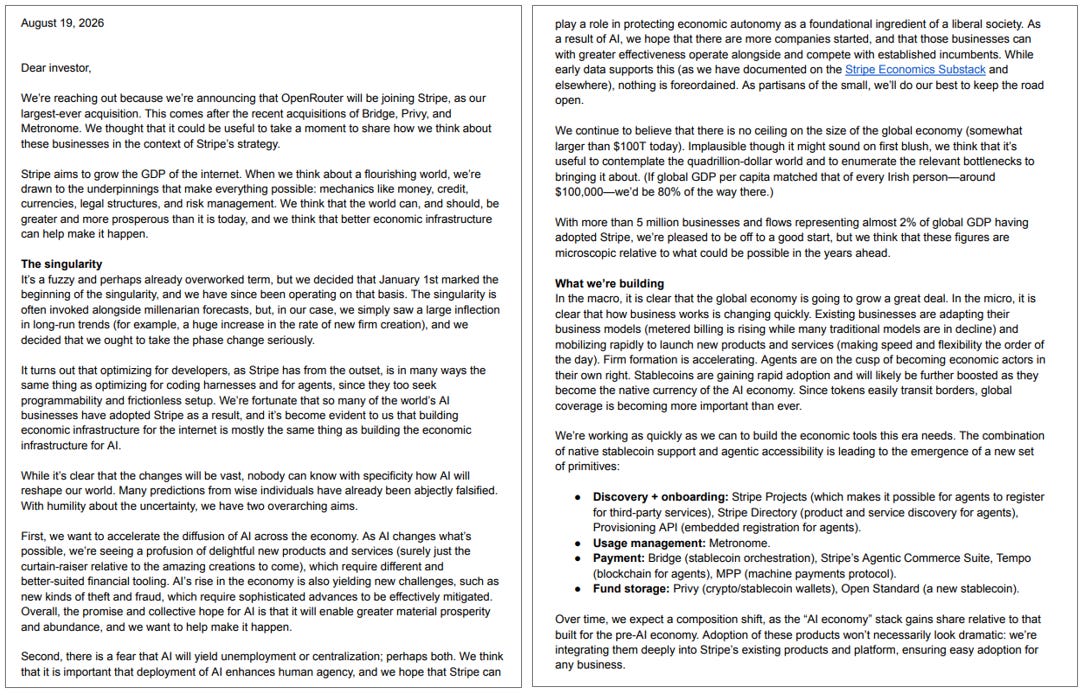
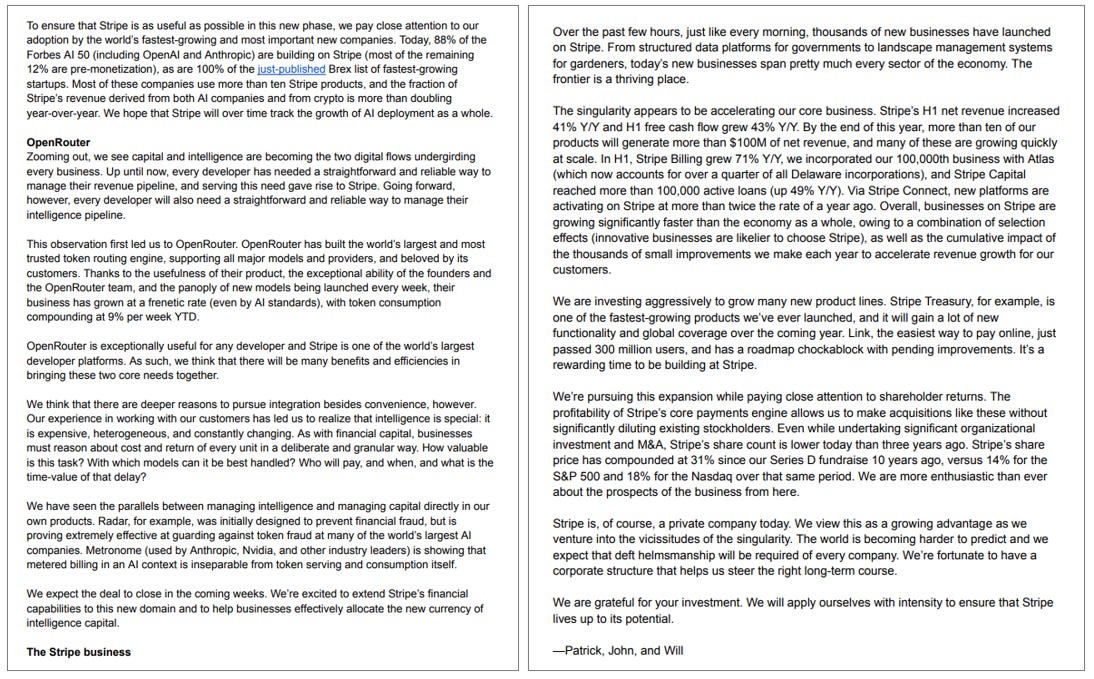
Dear investor,
We’re reaching out because we’re announcing that OpenRouter will be joining Stripe, as our largest-ever acquisition. This comes after the recent acquisitions of Bridge, Privy, and Metronome. We thought that it could be useful to take a moment to share how we think about these businesses in the context of Stripe’s strategy. Stripe aims to grow the GDP of the internet. When we think about a flourishing world, we’re drawn to the underpinnings that make everything possible: mechanics like money, credit, currencies, legal structures, and risk management. We think that the world can, and should, be greater and more prosperous than it is today, and we think that better economic infrastructure can help make it happen.
At the Blueprint, we have explored the meat of these acquisitions previously, and will get further into it down below. But let’s just take a pause around the sizing and the bet in context. Bridge ($2B), Privy (undisclosed), Metronome ($1B), Open Router ($7B), and Tempo ($500MM+) sum up to around $10B in M&A spend.
Stripe’s last official valuation is around $160B, and looking at the trajectory of the business, may now be floating ever higher. This suggests that the acquisitions have cost the company about 5-10% of its enterprise value — paid out in cash and stock — to purchase the absolute premier future-facing positioning and branding for the company.
You take a small haircut now to have exposure to the entire bet of the machine economy, and the Internet being transformed by software robots as economic actors. Facebook acquiring Instagram (1.5% of equity) and WhatsApp (11%) are the clear comps.
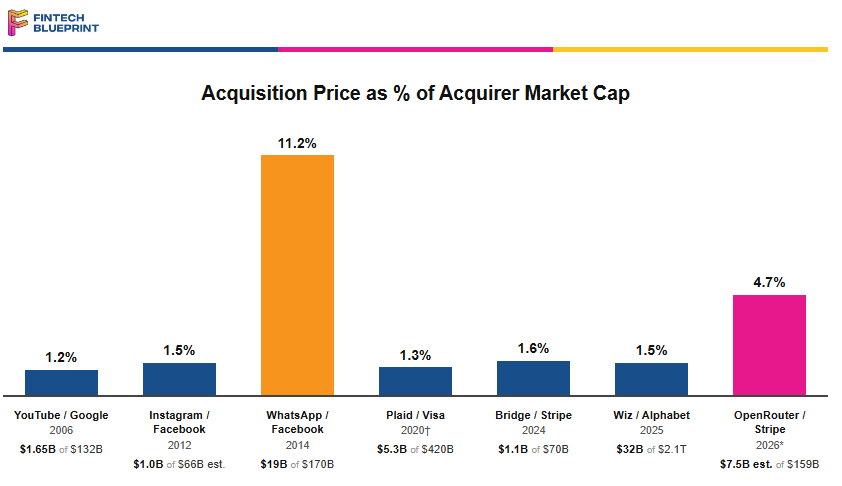
Outside of Tempo, each of Stripe’s acquisitions already had material traction and was the incumbent in its category — stablecoin to fiat, programmatic wallet, AI billing and payments, and now inference routing.
The singularity
It’s a fuzzy and perhaps already overworked term, but we decided that January 1st marked the beginning of the singularity, and we have since been operating on that basis. The singularity is often invoked alongside millenarian forecasts, but, in our case, we simply saw a large inflection in long-run trends (for example, a huge increase in the rate of new firm creation), and we decided that we ought to take the phase change seriously.
It turns out that optimizing for developers, as Stripe has from the outset, is in many ways the same thing as optimizing for coding harnesses and for agents, since they too seek programmability and frictionless setup. We’re fortunate that so many of the world’s AI businesses have adopted Stripe as a result, and it’s become evident to us that building economic infrastructure for the internet is mostly the same thing as building the economic infrastructure for AI.
People are embarrassed to use the term Singularity, but we shouldn’t be.
If you have the sense that everything is accelerating and getting more alien — more machine and unknowable — you would be putting a finger on the problem. The feeling of insanity, in the markets and in our hearts, is proof itself. It is merely reinforced by the billions spent on compute.
There’s a question of whether we are in a steep part of the S curve, or some exponential liftoff. Perhaps the robots have a ceiling of capability, now that they have covered sight, speech, and image. Or, perhaps code is the digital physics of reality itself, and will never stop improving until we are overrun.
While it’s clear that the changes will be vast, nobody can know with specificity how AI will reshape our world. Many predictions from wise individuals have already been abjectly falsified. With humility about the uncertainty, we have two overarching aims.
First, we want to accelerate the diffusion of AI across the economy. As AI changes what’s possible, we’re seeing a profusion of delightful new products and services (surely just the curtain-raiser relative to the amazing creations to come), which require different and better-suited financial tooling. AI’s rise in the economy is also yielding new challenges, such as new kinds of theft and fraud, which require sophisticated advances to be effectively mitigated. Overall, the promise and collective hope for AI is that it will enable greater material prosperity and abundance, and we want to help make it happen.
Second, there is a fear that AI will yield unemployment or centralization; perhaps both. We think that it is important that deployment of AI enhances human agency, and we hope that Stripe can play a role in protecting economic autonomy as a foundational ingredient of a liberal society. As a result of AI, we hope that there are more companies started, and that those businesses can with greater effectiveness operate alongside and compete with established incumbents. While early data supports this (as we have documented on the Stripe Economics Substack and elsewhere), nothing is foreordained. As partisans of the small, we’ll do our best to keep the road open.
A few things here.
The risk and fraud point is bounded and well-defined. Whether from Plaid or Persona, we have shown research on how industrial fraud farms can use AI to take a security tax from large-scale payments and banking systems. Stripe is in this business, so it gets mentioned, but note that they have not purchased any material vendors here — Sardine, Taktile, Oscilar, or the prior generation of compliance and anti-fraud software. This is a cost category, not a revenue generator.
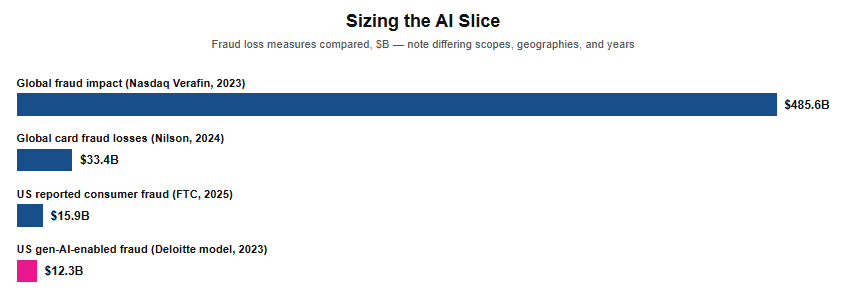
To build a new industry position, you take the revenue generator in a market that’s about to grow, rather than focus on stripping out costs by pre-funding your expenses.
The second point is a diplomatic way to talk about Web2 vs. Web3, and super interesting coming out of Stripe. Web2 works on the framework of networks, freemium, and aggregation theory — (1) all content pricing is reduced to zero, (2) therefore the only thing monetizable is the attention and its flow, (3) therefore economic capture goes to platforms that can be the venue for content / economic activity.
YouTube is this for (free) video.
Robinhood is this for (free) trading.
Stripe is this for (free) payments.
Of course we have to define free. You do pay, just not for the thing you think you are buying. For YouTube, we pay with attention for advertising. For Robinhood, we pay with bid-ask spread from market makers. For Stripe, we pay processing fees. No upfront sign-up required.
The outcome of aggregation theory is monopoly, or, at least, very high concentration.
Crypto is all about the opposite — decentralization and anarchy — but it does not cohere into good business logic, just high quality open-source technology resources. Stripe is a highly successful Web2 fintech that is a leader by a wide mile in a concentrated market; but its founders are idealists and believe in the original power of the Web1 Internet (i.e., open, free). You may remember Stellar, the early crypto network, as a Stripe investment. So they write about a mix of values in the same breadth.
We see the inherent tension of championing small business and power to the people, while accruing enormous economic power as a result. More businesses and solo-preneurs are great, but it does not imply decentralization of financial systems and infrastructure. It implies how much Stripe is getting better as a platform.
AI is the maximium steroid version of Web2. We are not just entering the attention economy, where content is free. Labor itself is behaving the way content did in 2001.
We are in the Napster moment — not for Metallica, but for the human animal.
Download and install your AI worker now, for free, backed by Google Cloud credits. Do you see it yet? Are you feeling the OpenClaw?
We continue to believe that there is no ceiling on the size of the global economy (somewhat larger than $100T today). Implausible though it might sound on first blush, we think that it’s useful to contemplate the quadrillion-dollar world and to enumerate the relevant bottlenecks to bringing it about. (If global GDP per capita matched that of every Irish person—around $100,000—we’d be 80% of the way there.)
With more than 5 million businesses and flows representing almost 2% of global GDP having adopted Stripe, we’re pleased to be off to a good start, but we think that these figures are microscopic relative to what could be possible in the years ahead.
Look, I agree that we don’t really know the direction of the machine economy and how it will impact humans. Likely, the overall GDP will indeed grow, but some human intermediation will shrink.
This is why one key anchor is the transition to the Zero Human Company world, where that productivity of AI agents moves tasks from individual actions, to workflows, to employee replacement, to entire companies. The goal is to own the robots in a world where they are material labor contributors, and potentially capitalists themselves.
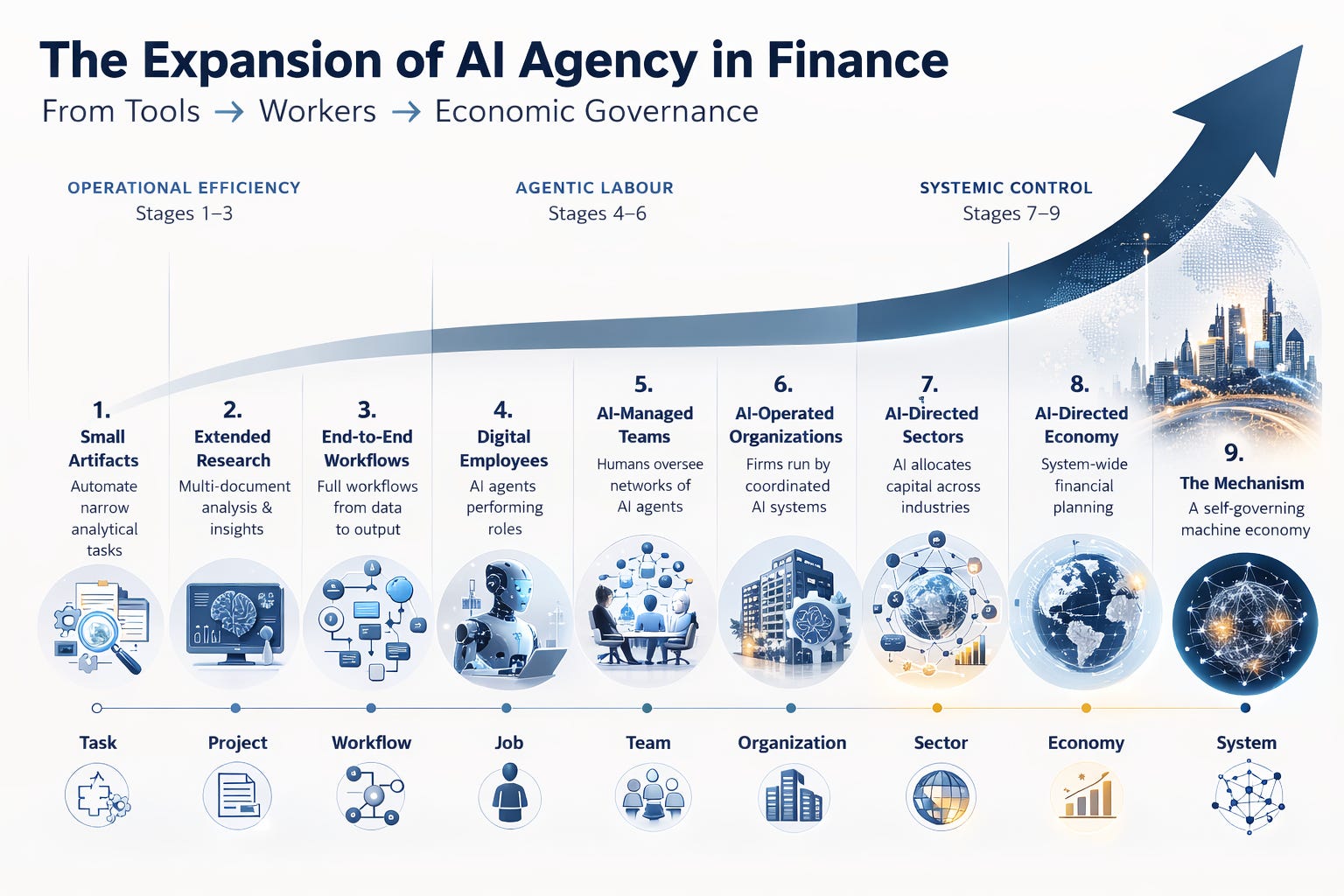
Now, I am probably off by 5-10 years before this happens.
But on the other hand, if we are in a singularity lift-off, then that 5-10 years may get crunched into a logarithmic curve and will be done in 1-3 years instead.
Already, look at the kind of behavioral change has been downstream of AI model adoption.
What we’re building
In the macro, it is clear that the global economy is going to grow a great deal. In the micro, it is clear that how business works is changing quickly. Existing businesses are adapting their business models (metered billing is rising while many traditional models are in decline) and mobilizing rapidly to launch new products and services (making speed and flexibility the order of the day). Firm formation is accelerating. Agents are on the cusp of becoming economic actors in their own right. Stablecoins are gaining rapid adoption and will likely be further boosted as they become the native currency of the AI economy. Since tokens easily transit borders, global coverage is becoming more important than ever.
We’re working as quickly as we can to build the economic tools this era needs. The combination of native stablecoin support and agentic accessibility is leading to the emergence of a new set of primitives:
Discovery + onboarding: Stripe Projects (which makes it possible for agents to register for third-party services), Stripe Directory (product and service discovery for agents), Provisioning API (embedded registration for agents).
Usage management: Metronome.
Payment: Bridge (stablecoin orchestration), Stripe’s Agentic Commerce Suite, Tempo (blockchain for agents), MPP (machine payments protocol).
Fund storage: Privy (crypto/stablecoin wallets), Open Standard (a new stablecoin).
Over time, we expect a composition shift, as the “AI economy” stack gains share relative to that built for the pre-AI economy. Adoption of these products won’t necessarily look dramatic: we’re integrating them deeply into Stripe’s existing products and platform, ensuring easy adoption for any business.
A few weeks ago, when the Open Router news first came out, we built out the following version of the above industry value chain. The Stripe approach to their value chain also follows closely the various areas of start-up activity in the machine economy. There were many Metronomes — usage-based billing systems — but this one in particular attached to OpenAI and measure their token consumption. We had backed Nevermined in this space, who initially grew on the decentralized Olas network.
But being on Stripe and plugged into large scale Web2 revenues is a different game than chasing Web3 early adopters on novel networks.
Bridge, Privvy, Open Standard, and Tempo are all attempts to internalize the best of Web3. I would by far prefer that Stripe truly supported and pushed the existing Web3 solutions rather than productizing them. Having Ethereum and its idealistic community absorb the R&D cost of inventing DeFi and popularizing stablecoins for a decade, only to have Stripe fork and polish those concepts inside a Web2 fintech consortia, is perhaps a necessary but unfortunate turn of events.
But reasonable people can disagree on how much the existing solutions could stretch to real payments use-cases.
OpenRouter was started by the CTO of OpenSea, the NFT trading marketplace. It leverages the technical capability of crypto matching algorithms learned in large scale trading to power the trading of inference. Just like NVIDIA levered off Bitcoin mining into AI data centers, so does OpenRouter sit on the shoulders of the now zombie Metaverse.
The technium extends outwards in its own recursive ways. Those at the frontier will hack at risk no matter the form.
To ensure that Stripe is as useful as possible in this new phase, we pay close attention to our adoption by the world’s fastest-growing and most important new companies. Today, 88% of the Forbes AI 50 (including OpenAI and Anthropic) are building on Stripe (most of the remaining 12% are pre-monetization), as are 100% of the just-published Brex list of fastest-growing startups. Most of these companies use more than ten Stripe products, and the fraction of Stripe’s revenue derived from both AI companies and from crypto is more than doubling year-over-year. We hope that Stripe will over time track the growth of AI deployment as a whole.
I think this is key, and a huge competitive advantage.
Whereas the ideas behind what Stripe is doing have been around for many years prior to its mega-pivot, those ideas were being executed on an onchain ledger with a small economic footprint. The Web3 economy has not yet come to the mainstream — it remains focused on underbanked economies with poor capital markets, or on high-risk speculators looking for regulatory arbitrage. You can lever up a prediction market bet about the SpaceX IPO, but we struggle to buy a sandwich or build a laundromat.
I thought DePIN would have fixed that — token financing for real businesses with a hardware or telecom component. Tokenomics, predatory exchange mechanics, market structure have largely eaten this category for the moment. Founders surely are also to blame for unsophisticated structuring, encouraged by overzealous venture investors.
But Stripe does not have this problem. It does not need to instantiate a new economic paradigm, because it already sits highly embedded into the existing one. And by focusing on developers, as they say, they are positioned exactly for the age of ever-more-software. As machines make machines that make disposable software, all this grows.
And whereas the Crypto AI category largely starved, the fiat fintech AI category could feed on the fiat hyperscalers and their customers.
OpenRouter
Zooming out, we see capital and intelligence are becoming the two digital flows undergirding every business. Up until now, every developer has needed a straightforward and reliable way to manage their revenue pipeline, and serving this need gave rise to Stripe. Going forward, however, every developer will also need a straightforward and reliable way to manage their intelligence pipeline.
This observation first led us to OpenRouter. OpenRouter has built the world’s largest and most trusted token routing engine, supporting all major models and providers, and beloved by its customers. Thanks to the usefulness of their product, the exceptional ability of the founders and the OpenRouter team, and the panoply of new models being launched every week, their business has grown at a frenetic rate (even by AI standards), with token consumption compounding at 9% per week YTD.
OpenRouter is exceptionally useful for any developer and Stripe is one of the world’s largest developer platforms. As such, we think that there will be many benefits and efficiencies in bringing these two core needs together.
We think that there are deeper reasons to pursue integration besides convenience, however. Our experience in working with our customers has led us to realize that intelligence is special: it is expensive, heterogeneous, and constantly changing. As with financial capital, businesses must reason about cost and return of every unit in a deliberate and granular way. How valuable is this task? With which models can it be best handled? Who will pay, and when, and what is the time-value of that delay?
We have seen the parallels between managing intelligence and managing capital directly in our own products. Radar, for example, was initially designed to prevent financial fraud, but is proving extremely effective at guarding against token fraud at many of the world’s largest AI companies. Metronome (used by Anthropic, Nvidia, and other industry leaders) is showing that metered billing in an AI context is inseparable from token serving and consumption itself.
We expect the deal to close in the coming weeks. We’re excited to extend Stripe’s financial capabilities to this new domain and to help businesses effectively allocate the new currency of intelligence capital.
What an interesting take.
Intelligence is a “currency”, and it is “capital”.
And tools used to quantify fraud work both on financial and intelligence fraud. Because if somebody is buying intelligence, it needs to be verified as being the thing that it is. We thought that the answer to this is ZK proofs and cryptography — and there was a whole category of investing into inference vertification companies.
A good primer on this topic is this podcast below.
But again, this is the technologist’s solution to the problem. It redesigns the entire system and puts it into a network. The operator’s solution is to bolt on a fraud engine on top of the existing transaction engine, and prevent the engine from working when there are warnings. The AI companies aren’t implementing ZK in their workflows. But a payments company can turn off money from going to AI companies it thinks are bluffing.
Anyway, we don’t really buy into the view that inference / intelligence are a currency, anymore than cloud storage or electricity are a currency. Intelligence is a commodity constructed from hardware that runs mathematical rules and power. It can be both a stock and a flow, and its price is subject to supply and demand. It resembles an asset class in this way; we do not expect other things to be priced in units of intelligence.
Though one thought experiment that would be very satisfying is to apply units of intelligence as a cost measure of various professions and labors. How many units is being a doctor? A lawyer? An accountant? An economist? An electrician?
The Stripe business
Over the past few hours, just like every morning, thousands of new businesses have launched on Stripe. From structured data platforms for governments to landscape management systems for gardeners, today’s new businesses span pretty much every sector of the economy. The frontier is a thriving place.
The singularity appears to be accelerating our core business. Stripe’s H1 net revenue increased 41% Y/Y and H1 free cash flow grew 43% Y/Y. By the end of this year, more than ten of our products will generate more than $100M of net revenue, and many of these are growing quickly at scale. In H1, Stripe Billing grew 71% Y/Y, we incorporated our 100,000th business with Atlas (which now accounts for over a quarter of all Delaware incorporations), and Stripe Capital reached more than 100,000 active loans (up 49% Y/Y). Via Stripe Connect, new platforms are activating on Stripe at more than twice the rate of a year ago. Overall, businesses on Stripe are growing significantly faster than the economy as a whole, owing to a combination of selection effects (innovative businesses are likelier to choose Stripe), as well as the cumulative impact of the thousands of small improvements we make each year to accelerate revenue growth for our customers.
Stripe is growing like an early stage start-up, putting up insane traction.
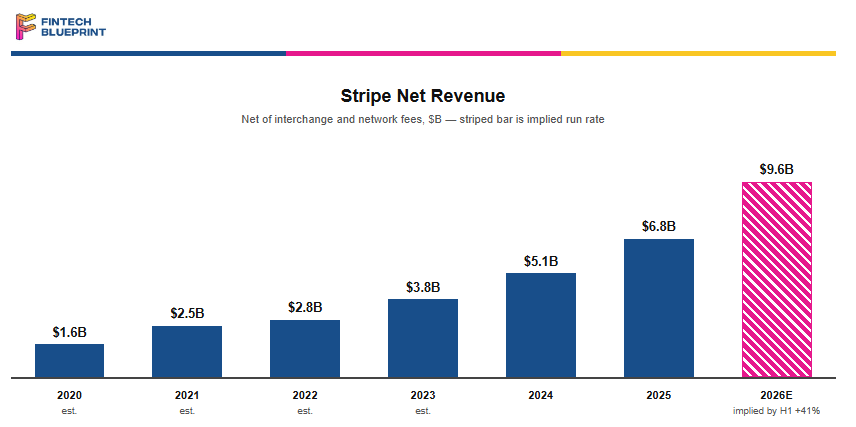
If these numbers are true, than it’s hard to justify in payments companies who are trying to take Stripe down.
Smallcaps are supposed to grow faster than largecaps. This is well-known researched and defended historic investment principle. Quant models often include a small-cap size factor to increase their performance. However, the rule of thumb has broken over the last decade in the opposite direction.
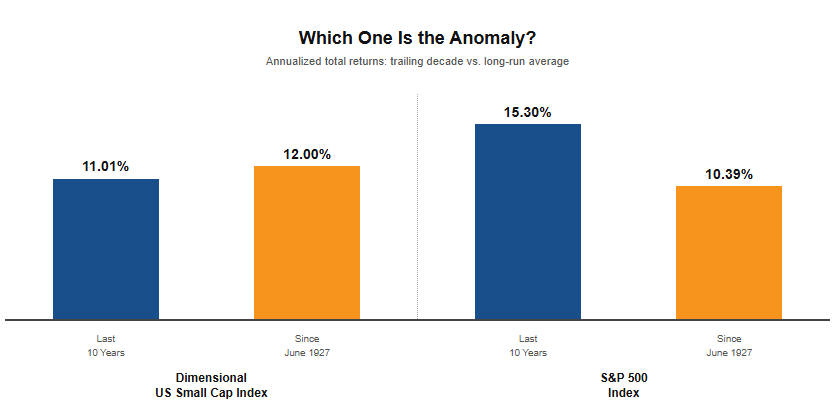
Traditional companies used to decay as they grow very large. Whether this happened due to poor management, politics, rent-seeking, or other reasons, the effects were consistent. However, the hyperscalers, i.e., the Mag7, have compounded network effects, innovation speed, and revenue much faster than their subscale competitors. The last 10 years are teaching us a lesson that is out of the ordinary.
And this points us back to aggregation theory and the natural monopolies of both attention and payments. AI only magnifies the effect, because it can mimic if not recreate the speed and quality of early stage employees, while being available only to very large companies with a high-cost enteprise AI budget. On the other hand, a small company has no way to recreate the competitive advantages of being an incumbent, other than by partnering with or selling to that incumbent.
And if that incumbent is not relatively slower than the startup, like prior fintech generations (e.g., Fiserv, Envestnet), then the partnership is suicide — a way to be absorbed either commercially or through vertical integration. The only immunity is a close personal relationship with the founders or investors of your mega-cap partner.
We are investing aggressively to grow many new product lines. Stripe Treasury, for example, is one of the fastest-growing products we’ve ever launched, and it will gain a lot of new functionality and global coverage over the coming year. Link, the easiest way to pay online, just passed 300 million users, and has a roadmap chockablock with pending improvements. It’s a rewarding time to be building at Stripe.
We’re pursuing this expansion while paying close attention to shareholder returns. The profitability of Stripe’s core payments engine allows us to make acquisitions like these without significantly diluting existing stockholders. Even while undertaking significant organizational investment and M&A, Stripe’s share count is lower today than three years ago. Stripe’s share price has compounded at 31% since our Series D fundraise 10 years ago, versus 14% for the S&P 500 and 18% for the Nasdaq over that same period. We are more enthusiastic than ever about the prospects of the business from here.
Stripe is, of course, a private company today. We view this as a growing advantage as we venture into the vicissitudes of the singularity. The world is becoming harder to predict and we expect that deft helmsmanship will be required of every company. We’re fortunate to have a corporate structure that helps us steer the right long-term course.
We are grateful for your investment. We will apply ourselves with intensity to ensure that Stripe lives up to its potential.
—Patrick, John, and Will
Stripe Treasury is a great point to meditate on. Consider this product:
Compare it to the other grand AI-native Fintech that has just repositioned itself as a financial lab, Ramp.
Sure, a business bank account with currency sending is different from a corporate card that intelligently organizes your business expenses. But not that different. The digital treasury pays, saves, and invests. It makes money through interchange and net interest income. The AI CFO, which is what Ramp is becoming via harness and narrative, pays, saves, and invests too. It may be deeper in accounting and expense categorization, but it is also far more profitable if it holds the actual money.
When both companies integrate vertically ahead of the machine economy singularity, as they say, their instances of Claude give them the same strategic advice. Consider the new product launch from Ramp:
This router isn’t called Open, but it is now sitting head to head against Stripe’s competitive position. What then happens to all the consortia and announcements of the two companies working together?
Or, perhaps, they become the singularity age version of Visa and Mastercard, always competing and cooperating. The card networks are on all sides of the transaction, working with and against the banks globally. And yet, everyone grows together and the card networks and the payments market beta against which everyone else is measured. Their duopoly incumbency is effectively unrivaled.
How does that change?
First, you lock down the Web2 Internet to be powered by card network rails. PayPal and Stripe are both beholden there. Next, you move decision making about payments from finance to developers. This happens naturally over time, as more and more of your clients are the masses of Internet users, and eventually, their mass-scale AI agents. Finally, you swap out the card rail fo the stablecoin rail, running on your own closed-loop network that now sits at sufficient scale.
This is a cartoon story, but we live in a cartoon world.
Carpe diem!
Sponsor the Fintech Blueprint and reach over 200,000 professionals.
👉 Reach out here.Check out our AI newsletter, the Future Blueprint, 👉 here.
Read our Disclaimer here — this newsletter does not provide investment advice
Comments
Nothing yet. Say the first thing.
Sign in to join the conversation.