
Hi Fintech Futurists —
Today’s agenda is below.
AI in FINANCE: Life insurers are funding the AI buildout with money set aside to pay pensions, against assets whose useful life nobody agrees on
ANALYSIS: The Age of the Disposable Company
PODCAST: How Perplexity’s Computer Is Replacing the Family Office, with Perplexity Finance’s Jeff Grimes
CURATED UPDATES: Machine Models, AI Applications in Finance & Investment Outlook
To support this writing and access our full archive of newsletters, analyses, and guides to building in Fintech & DeFi, subscribe below (if you haven’t yet).
Also, check out the announcement from our friends at zerohash below.

zerohash and Marqeta are bringing stablecoin balances into everyday card spending. The partnership connects zerohash’s regulated stablecoin infrastructure to Marqeta’s card issuing platform, so businesses can let customers hold and spend digital dollars through a standard payment card, anywhere cards are accepted. Stablecoin volume on zerohash jumped 690% year over year in 2025.
A life insurer that sells annuities takes money today and promises payments for thirty or forty years. To fund those promises, it holds a general account, and the job of that account is duration matching between assets with consistent cash flows and when the insurance payments fall due.
Long-duration liabilities need long-duration assets.
Government bonds traditionally have done that safely and cheaply. However, they also yield very little, so insurers have moved steadily into private credit, which pays more for the same maturity in exchange for illiquidity and risk.
We need to bring in depreciation at this point because of what they have been buying. Depreciation is how a company spreads the cost of an asset across the years it expects to use it. That period, the useful life, is an estimate made by management. Stretch it and reported profits rise. Shorten it, and they fall.
Today insurers are now funding data centres with pension money, and the value of what they are lending against depends on how long AI hardware stays useful. Nobody agrees on the answer, including the companies filing the accounts.
Hyperscaler capital expenditure has outrun hyperscaler cash flow, and the gap is being filled with debt. Morgan Stanley expects roughly $570B of AI-related issuance in 2026, with $236B priced by 31 May, four times the year-earlier pace. We have recently covered the pace of growth in this market when discussing the emerging GPU-focused capital markets.
Hyperscaler debt has pushed credit spreads in the US to close to 120 points. Given this market move, order books have fallen from nearly five times covered in February to under two times in July for hyperscaler debt financing, according to Apollo.
Barclays now describes Oracle’s credit default swap as a liquid hedge on AI capex generally rather than a view on Oracle as a whole company. The bank also counts data center asset-backed securities (ABS) and commercial mortgage-backed securities (CMBS) outstanding rising from $4B in 2020 to $61B by mid-2026.
Insurers are the ones purchasing large amounts of this debt, and this in turn goes into funding pensions.
The Chicago Fed found that life insurer private credit was at $849B, or 14% of balance sheets, in 2024. In 2025, 23.4% of US insurers’ total admitted bonds sat in private bonds.
In the UK, the liabilities flow through the bulk annuity market. A defined benefit scheme buys an insurance policy that transfers its obligation to pay members, either as a buy-in or a full buyout. Financial firm LCP sees a £350B to £550B pipeline for buy-in and buy-out over the next decade.
A buy-in completes, a member stops being a creditor of their former employer and becomes a creditor of an insurer. That insurer then has to find thirty years of matching yield.
Senior tranches of data centre financings have long time horizons, are investment grade, and illiquid. However, the investment is not without risk.
In October 2025, a bankruptcy-remote SPV issued $27.3B of notes to finance Hyperion, Meta’s data centre campus in Richland Parish, Louisiana. Blue Owl funds hold 80% of the joint venture and Meta 20%. Morgan Stanley was sole bookrunner, with PIMCO anchoring the debt alongside BlackRock. These were 6.581% senior secured bonds due May 2049, at 225 basis points over Treasuries. S&P assigned an A+ rating, one notch below Meta’s own AA−.
Meta’s own announcement sets out the terms that for the first 16 years of operations, Meta will make a capped cash payment to the joint venture based on the then-current value of the campus. A pretty safe deal on the face of it.
However, the lease itself only runs four years. A hyperscaler campus has an assumed economic life of 25 to 30 years. Meta therefore holds a 4-year commitment, an option to renew, and a sixteen-year backstop on the residual, while bondholders are on the hook until 2049.
Meta argues renewal is not reasonably certain beyond the initial term, which keeps the lease in the operating bucket and the debt off its balance sheet. The guarantee, worth up to $28B, sits in the footnotes to its annual report rather than as a recorded liability. Moody’s has warned that disclosures of this kind may not show the full picture of hyperscaler lease commitments.
A residual value guarantee is a bet on what an asset is worth later. Pricing that bet means pricing how long purpose-built AI infrastructure stays useful. That is something the industry cannot agree on in its own accounts.
During 2025, Meta extended the useful life of most servers and network equipment to 5.5 years, cutting depreciation expense by around $2.3B over nine months.
In the same window, Amazon moved the other way, shortening servers from six years to five and taking a $920M accelerated depreciation charge, citing the pace of AI development. Alphabet and Microsoft use six years for comparable assets.
Michael Burry estimated the gap at roughly $176B of understated depreciation across 2026 to 2028.
Nvidia unsurprisingly has rejected the short-life case, pointing to customer utilisation across four to six years, while moving to an annual product cadence and announcing the Vera Rubin platform in March 2026.
Whether a purpose-built AI campus in rural Louisiana has a buyer in the 2040s is the main speculation around this pricing.
Executive Life Insurance Company sold annuities guaranteeing high rates and funded them with what was then a new, high-yielding, respectably rated asset. By the late 1980s, 55% to 60% of its portfolio sat in junk bonds.
The investment bank Drexel Burnham Lambert failed in February 1990. Policyholders withdrew around $4B that year. California seized the company in April 1991 with reported assets of $8.8B. The US Government Accountability Office (GAO) recorded Executive Life annuitants being paid around 70% of what they were owed, and California’s attorney general later put policyholder losses at above $4.5B.
It ended up taking 21 years for structured settlement annuitants to receive their payments, which they did until the estate nearly ran out of assets in 2012.
A July 2026 analysis puts private credit at about 6% of life insurer general account assets, up from 3% in 2020. Estimates of the same figure range from $289B to $1.8T depending on definition, so agreement on the level of risk is difficult.
There is a case for better protections outside of the US as well. Legal & General describes its exposure as predominantly UK private placement debt, almost exclusively investment grade, with no defaults since 2009, and matching adjustment rules which constrain UK annuity books in ways US general accounts are not.
Finally, Goldman Sachs expects almost all US regional grids to lack meaningful spare capacity by 2030. A permitted campus with a firm grid connection behind it could be worth more in 2040 than it cost, whatever is running inside.
Maybe.
It is difficult to assess how this will play into the lives of investors and pension funds in the future. Data centres have proven to be a particularly difficult asset to align on lifetime value, and it’s a narrative that has a lot of investors wary.
The most concerning reasoning for me is that there is not a standard value that is being approved by auditors in the market. While hyperscalers can continue to adjust years of life based on the whims of their investor needs, individuals who rely on the security of their pension funds are exposed.
👑Related Coverage👑
I find myself these days starting a lot of new things.
It’s a way I cope with a lack of control over outcomes. It appears that the chaos and randomness in the world has increased, and perhaps this is due to the leverage that external forces have gathered through money, power, and intelligence.
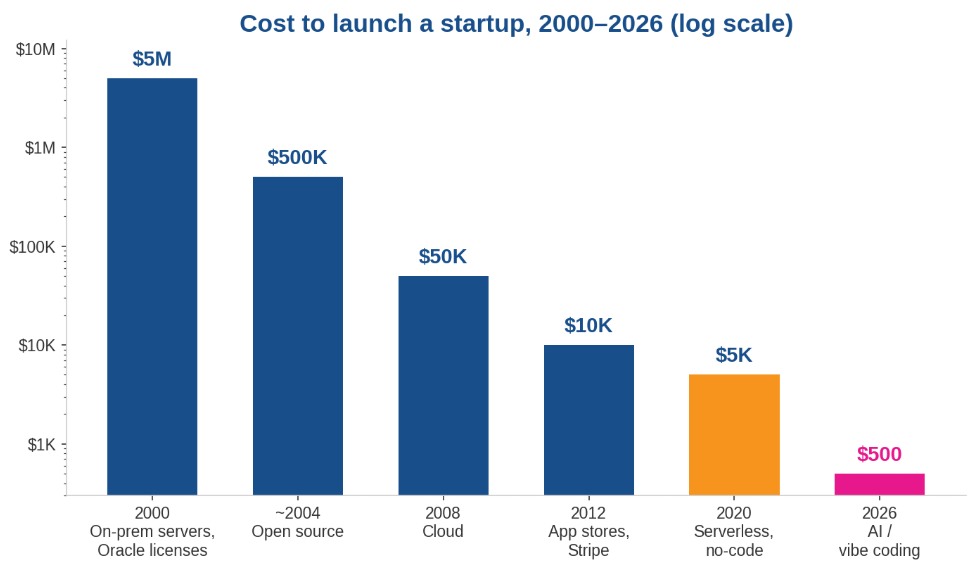
Your inbox has never been this overrun with pitches, as AI has made mass-spam easy and common. Your social feed has never been this algorithmic, consumed by the spiking dopamine graph mapped back from advertising. And our politics have become designed for the panopticon propaganda age, where even the propagandists can’t figure out the nature of ground reality.
But it has also become easier than ever to begin.
Hi Fintech Architects,
In this episode, Lex chats with Jeff Grimes — who is Head of Live Events Products at Perplexity, the AI company that has evolved from an “answer engine” into an “agent platform” built around Perplexity Computer, its multi-agent digital worker. They discuss how Perplexity has shifted financial research from the how to the what, letting a user describe an outcome in a single sentence while Computer orchestrates 20+ frontier models, direct tool calls to licensed live data, and finance-specific skills to produce the artifact.
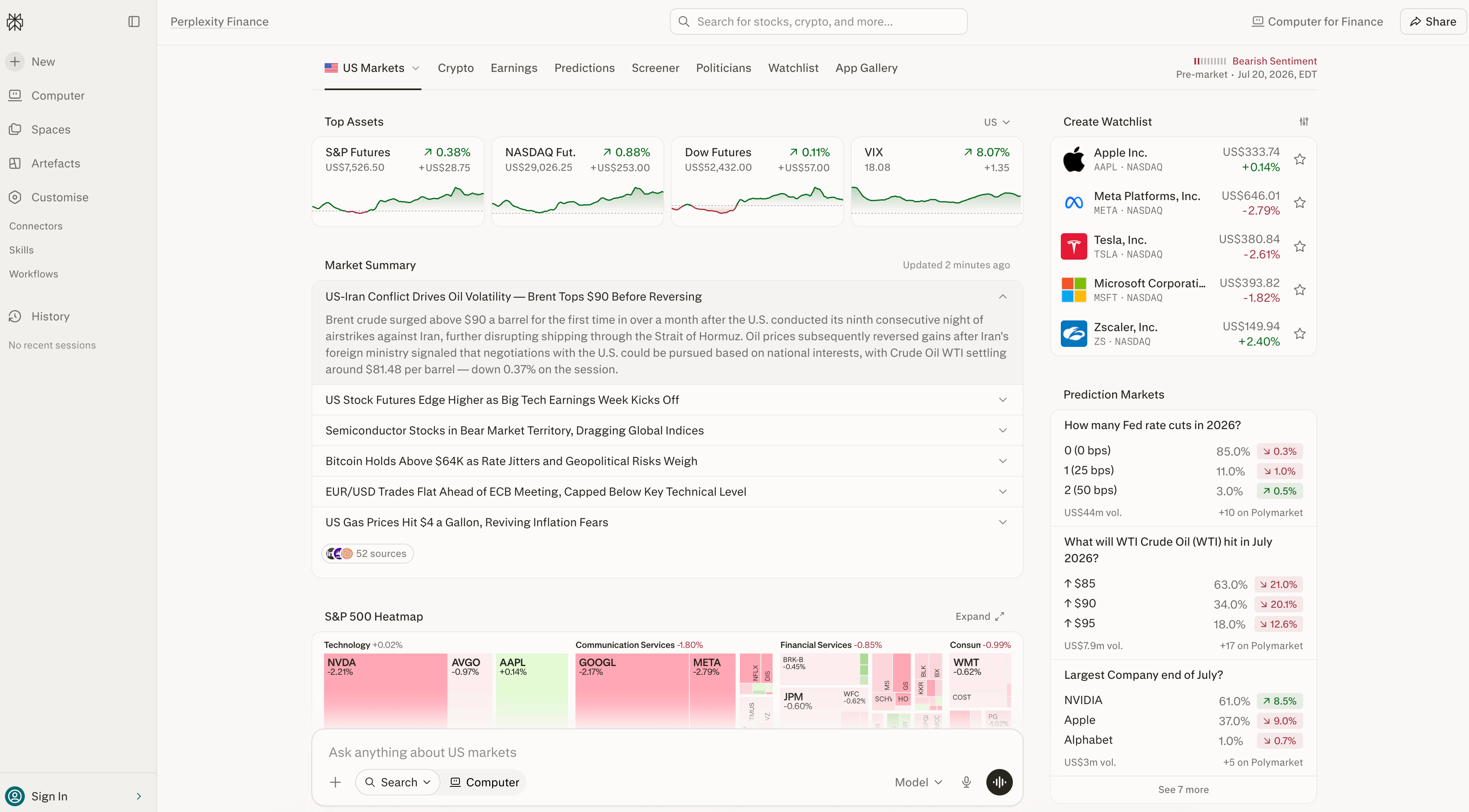
Jeff explains the enterprise strategy behind traceability - the north star that 100% of every quantitative figure traces back to its source filing - alongside bring-your-own-license connections via MCP and the consumer “personal CFO” vision powered by Plaid. They explore what 5x revenue growth on a 34% headcount increase signals for finance jobs, and why the future looks like a 24/7 family office that proactively surfaces and, with permission, executes financial actions for everyone.
Here are the rest of the updates hitting our radar.
Ethical and Bias Considerations in Artificial Intelligence/Machine Learning - Matthew G. Hanna & Liron Pantanowitz & Brian Jackson & Octavia Palmer & Shyam Visweswaran & Joshua Pantanowitz & Mustafa Deebajah & Hooman H. Rashidi
A Critical Field Guide for Working with Machine Learning Datasets - Sarah Ciston & Mike Ananny & Kate Crawford
⭐ AI-Driven Payment Systems: From Innovation To Market Success - Merve Ozkurt Bas
The Rise Of Generative Ai Agents In Finance: Operational Disruption And Strategic Evolution - Inesh Hettiarachchi
Financial Modeling in Corporate Strategy: A Review of AI Applications For Investment Optimization - Olufunmilayo Ogunwole & Ekene Cynthia Onukwulu & Micah Oghale Joel & Ejuma Martha Adaga & Augustine Ifeanyi Ibeh
⭐ Private Equity Outlook 2025: Is a Recovery Starting to Take Shape? - Bain & Company
⭐ Global Venture Capital Outlook: The Latest Trends - Bain & Company
⭐ Global Private Markets Report 2025: Braced for shifting weather - McKinsey & Company
Sponsor the Fintech Blueprint and reach over 200,000 professionals.
👉 Reach out here.Check out our new AI products newsletter, Future Blueprint. (Don’t tell anyone)
Read our Disclaimer here — this newsletter does not provide investment advice
Contributors: Lex, Laurence, Matt, Farhad, Daniel, Michiel, Luke
For access to all our premium content and archives, consider supporting us with a subscription. In addition to receiving our free newsletters, you will get access to all Long Takes with a deep, comprehensive analysis of Fintech, Web3, and AI topics, and our archive of in-depth write-ups covering the hottest fintech and DeFi companies.
Comments
Nothing yet. Say the first thing.
Sign in to join the conversation.