
Hi, it’s Ethan & Jason from Level Up: Make career breakthroughs with AI-proof leadership skills.
Upcoming talks and community events:
(August 29) How To Get Promoted to Executive. Your step by step guide on how to use the next reorg to break into a bigger role (live attendees get a bonus PDF).
(August 30) Virtual Level Up Networking Event. Meet and connect with other members in this casual event.
(September 12) Virtual Accountability Meetup. Turn your goals into action with a focused peer group that will keep you moving.
(September 28) The Shortlist NYC – Founder Showcase. Hear from 6 seed through Series B founders. Built for operators exploring their next role or simply wanting a closer look at what’s being built in NYC.
(September 29) The New Rules of Executive Visibility: Be Seen, Remembered, & Invited. Learn how to develop a POV people remember.
When I left Amazon at 50, my plan was to retire.
I had my nest egg put away and was prepared to live the rest of my life without really making any money. I wanted to spend my “working time” doing something I was passionate about: helping others create their own successes.
So, I started writing on LinkedIn.
Then people asked me to review their resumes.
Then, I started coaching people one-on-one.
Eventually, I had more coaching demand than I could personally handle, and many people were asking me versions of the same questions.
So I put them together and taught a class.
And today, we offer many classes based on what people want and need help with.
I did not leave Amazon with that business model written on a whiteboard. I discovered it by doing the work, seeing what people wanted, and adjusting along the way.
However, the opportunity to “wander” my way to a successful business model came from my unique situation.
Most people do not have that.
If you are thinking about leaving corporate America to start your own thing, you likely need income. You probably have some money saved if you are really thinking about leaving your job, but not enough to last you forever.
This means you need a real plan.
A good plan will help you understand the decision you are making and will guide you through the tough times, hopefully to the freedom and success that make leaving your job so attractive in the first place.
Level Up Members recently watched me coach Kristin Cruz live as we worked through this exact decision.
See our conversation below, then use these 11 questions to pressure-test your own decision.
First, a little about Kristin:
Kristin Cruz is a strategic advisor who helps leaders and teams navigate complexity with greater clarity, stronger alignment, and thoughtful action. Over more than a decade in product and people leadership, she's led successful cross-functional programs, guided teams through significant change, and built a reputation for facilitating honest conversations that help leaders and teams move forward together.
After years of leading inside organizations, Kristin is now building an advisory practice centered on helping leaders navigate meaningful transitions with clarity and purpose—whether through strategic partnership, leadership development, or collaborative work alongside executive coaches.
Connect with Kristin on LinkedIn.
To learn more and to collaborate with her, reach out here.
Watch on YouTube.
How Reversible Is This Decision?
What Are Your Actual Constraints?
Why Would Anyone Hire You?
What Problem Are You Promising to Solve?
Are You a Vitamin or a Painkiller?
Have You Done This Work on Yourself?
Where Will Your Customers Come From?
What’s Your Math?
Can You Handle the Lumpiness?
Who Is Going to Do the Work You Hate?
Where Is the Energy Going to Come From?
Presented in partnership with Hyperagent
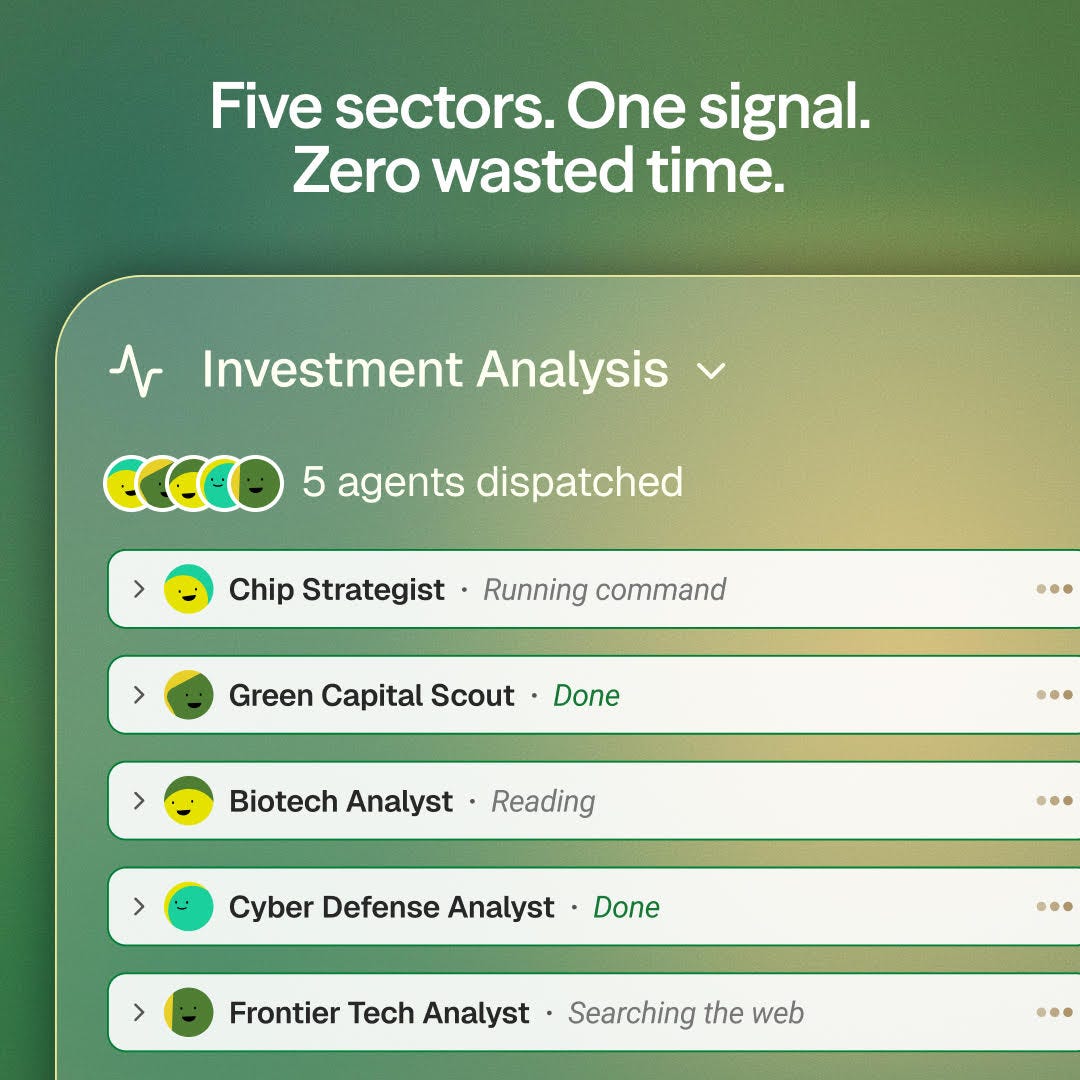
Your AI agents should have jobs. Not just answers.
One tracks your competitors every week. One pulls your numbers every Friday. One drops a briefing in Slack before your Monday standup. You set them up once. They haven’t stopped.
Hyperagent gives each agent its own cloud environment, real integrations, and a schedule that runs without you. No code. No hosting. No babysitting.
Built by the team at Airtable.
Level Up readers get $1,000 in credits.
Some decisions are easily reversible, while others are not. In Amazon terms, these are “one-way doors” and “two-way doors.” It is important to determine if your exit from corporate is a one-way or a two-way door.
The question to ask yourself:
If you leave, try something for six months or a year, and discover that you hate it or can’t make enough money, can you go back?
For many people, the answer is yes.
This is comforting.
It makes taking the risk easier because failure does not necessarily mean disaster; it just means going back to a regular job. However, the safety valve is not open forever. The longer you are away, the more questions employers may have about whether your skills are current and whether you can return at the same level.
One of the best ways to keep that “return door” open is to maintain your network. Stay in touch with former coworkers and especially former leaders, and do not disappear from the corporate world the day you decide you do not want to work in it anymore.
You may never need those relationships, but you will be glad to have them if you do.
Many people dream of leaving corporate and starting their own business so that their work can fit more snugly into their life.
This is achievable, but it is important to have a realistic sense of what your life actually looks like, and how that will affect your business:
Where can you physically work?
Do you live in a major business hub where potential clients are everywhere, or somewhere where essentially all of your business will need to happen remotely?
How much are you willing to travel?
Can you get on an airplane regularly, or do family obligations make that difficult?
Do you have a home office where you can focus, take meetings, and truly get things done?
What do your family commitments look like?
Then there’s the most common constraint: money.
If you are the primary provider for your family, you need to have a really good sense of how much money this business can make and how quickly.
What’s your runway?
How long until you are in real financial trouble?
This timeline can change based on how much money you have saved, whether you have another income in your household, how much you need and want to live your life, and other factors.
Regardless, you must know your timeline and your constraints.
One of the hardest questions for many new entrepreneurs is also one of the simplest:
Why you?
A lot of people have the same idea you do.
Coaching is a great example. Over the past several years, I’ve watched the number of people marketing their services as coaches, consultants, and advisors explode. It is an increasingly crowded space.
That means you need a unique selling proposition.
Mine became fairly straightforward: I had made the transition from middle management into the executive ranks, and I had helped many other people do the same. I could essentially say, “I’ve done it myself, I’ve done it for others, and I can help you do it.”
Your proposition will be different, but you need one, and it needs to be obvious.
If a customer searching for your services finds 10 people who appear to offer roughly the same service, why should they choose you?
This is where many people describe their businesses backward.
They start with themselves, their skills, and their qualifications.
“I’m an experienced operator.”
“I’ve led teams.”
“I can facilitate workshops.”
Those are all valuable capabilities, but to be frank, no one cares.
The customer is always thinking about their problem, that’s where you need to start.
What is the pain point you are solving?
What outcome are you promising?
Only once they are interested in that can you explain how your skills get them there.
For example, instead of saying: “I’m an experienced strategic advisor who asks insightful questions.”
Say something closer to: “I’ll help your leadership team make a difficult decision that’s been stuck for six months.”
There is an old business distinction between vitamins and painkillers.
Vitamins are good for us, and we take them because they are healthy. But if we skip them for a couple days, nothing terrible happens. We also tend to be price-sensitive about them.
Painkillers are different.
When something really hurts, we want it fixed now. We are willing to spend larger amounts of money to make the pain disappear.
Business works the same way.
If what you are selling is merely nice to have, you are a vitamin.
If you are solving an immediate and expensive problem, you are closer to a painkiller.
The money is closer to the pain. Of course, there are plenty of vitamins and supplements (both literal and metaphorical) that make lots of money, but not nearly as much as painkillers.
So ask yourself honestly: What hurts badly enough that someone will pay me to fix it?
If you are going into consulting, coaching, advising, or any business where your expertise is part of the product, there is an uncomfortable exercise worth doing.
Become your own first client.
Imagine someone with exactly your background, constraints, ambitions, and weaknesses came to you asking for strategic advice about starting this business.
What would you ask them?
What hard conversation would you have?
Where would you tell them their thinking is vague?
Where would you challenge their assumptions?
Then give yourself the same advice.
Follow it.
Use yourself as a success story for your product or service.
You need marketing.
Simply put, marketing means reaching a market.
How will enough people become aware that you exist and understand what you can do for them? This number will need to be much larger than the number of customers you need.
For me, LinkedIn became my main marketing platform. For someone else, it might be Instagram, video, podcasting, public speaking, or something else entirely.
There are many platforms.
Pick one you do not hate and start working on it.
In addition to that work, look for opportunities where marketing and paid work overlap. Speaking is a classic example. Someone may pay you to give a talk, and people in the audience may later hire you for consulting. You are being paid to demonstrate what you can do.
You will need to do some marketing if you want to get customers.
And, unless you are a marketer, it will probably be more marketing than you are initially comfortable with.
Prepare yourself.
Before you start the business, you should know what kind of business you are trying to build from a revenue standpoint.
Kevin Kelly famously wrote about “1,000 True Fans.”
If 1,000 people each pay you $100 per year, that’s $100,000. For a single-person business, that could be enough. For a larger business or someone wanting a higher income, that will not be enough.
But you should have a goal, know the arithmetic that gets you there, and have a plan to achieve it.
Ten clients paying $10,000 gets you to $100K. That price point is reasonable for consulting projects.
So does 10,000 customers paying $10. This could be reasonable for an application or product.
Those are radically different businesses.
If you are building a high-touch consulting practice, you may only want four or five clients. If you are selling a digital product, you may need thousands.
Neither is inherently better, but you need to know your math because your customer acquisition strategy, pricing, workload, and risk all flow from it.
If you decide that four clients are enough, there is an obvious advantage: you do not need a massive audience.
There is also a serious disadvantage: Lose one client and you just lost 25% of your business. Gain one and your workload just increased 25%.
Small businesses can be incredibly lumpy. You may have periods where nobody wants anything from you, followed by periods when you are wondering whether you can possibly take on another project.
Feast and famine is a nearly inevitable part of small or single-person high-touch businesses.
Plan for it financially.
Think about how much you pay yourself versus how much remains in the business. Build enough buffer that losing one client does not immediately become an emergency.
If this is your model, you need a plan for how you will make it through periods of slow business. Most entrepreneurs in this model pay themselves a salary while keeping extra income stored away to pay that salary during the slow periods.
When you work inside a large corporation, entire departments quietly make your life easier. Someone else handles payroll, another person handles taxes, a third person negotiates healthcare, etc.
When you start your own company, all of those jobs become yours.
I learned this personally.
I hate bookkeeping and taxes. I once discovered I had not been paying the right state taxes and ended up paying penalties on back taxes.
When there is work your business requires and you do not want to do it, you have three choices.
You can muscle through it and do it anyway.
You can pay or partner with someone else to do it.
Or you can ignore it and accept the consequences.
The important thing is recognizing that, in most cases, the work does not disappear just because you do not like doing it.
This may be the hardest question.
Running your own business can give you flexibility, but it can also require an enormous amount of hustle.
You have to deliver the actual service.
You also have to sell it.
And market it.
And manage the books.
And follow up with clients.
Meanwhile, you probably left corporate because you wanted something else from your life, like more time with your family, more autonomy, or more room for your health or passions.
So be realistic — where is the energy for all of this going to come from?
There is no free lunch.
If you are trying to build a business while simultaneously creating more time for everything else you care about, those two ambitions can collide.
That does not mean don’t do it.
It means understand the trade before you make it.
Leaving corporate America can be wonderful.
Since leaving Amazon, I love what we have built, and much of it did not exist in my imagination when I started.
But “starting your own thing” is not simply doing the part of your old job that you enjoyed without a boss.
It means deciding what you sell, why anyone should buy it, how they will find you, how the economics will work, how you will handle the inevitable ups and downs, and who will do every piece of work your old company quietly handled for you.
You do not need to know exactly what your business will become.
I certainly did not.
But you should understand the risks, constraints, economics, and work involved in the choice you are making.
If you can answer these 11 questions and the answer is still, “I want to do this!” then make the jump with your eyes open.
And if you’d like to talk with Kristin, reach out here.
If you know someone who keeps saying, “I want to leave corporate and do my own thing,” send them this.
Follow Ethan on LinkedIn.
Get our career advice on YouTube.
Connect with Jason (Ethan’s Co-Founder & COO) on LinkedIn.
Learn more about our live online courses and on-demand courses.
Contact us for corporate training, keynote speaking, guest writing, and more.
Reach out if you want to sponsor this newsletter trusted by leaders and builders scaling companies and careers across Fortune 500s, Big Tech / FAANG, and high-growth startups.
Comments
Nothing yet. Say the first thing.
Sign in to join the conversation.