
You have heard how the story goes. A massive vault of FBI documents containing over three and a half million pages was released to the public on a quiet Tuesday in the end of January.
It revealed one of the most anticipated files since 2019, displaying the abuses of power where women and children as young as 12 experienced rape, sexual abuse, and trafficking at the highest levels of society.
Since then, over two dozen people have resigned. We watched the global fallouts from a distance. Former prime ministers forced out of office, British royalty arrested under suspicion of misconduct, and top ambassadors facing criminal investigations in places like Norway and the UK.
But there have been no arrests or investigations here in the United States of America.
If you piled all those documents on top of one another, they would stand twice the height of the Eiffel Tower. A mountain of evidence mapping out a global playground of rape, trafficking, and unchecked institutional abuse.
The files remain buried under heavily redacted lines, out in the open where everyone can see them, but where no one in power is forced to be held accountable for.
Americans have flooded the streets before in waves and across state lines whether its to protest police brutality, stand together for women’s rights, against ICE, and even for the genocide in Palestine.
So, how can a scandal so enormous, so disturbing only produce this?
This time around, the outrage is systematically diffused and diluted. And I believe this is all by design.


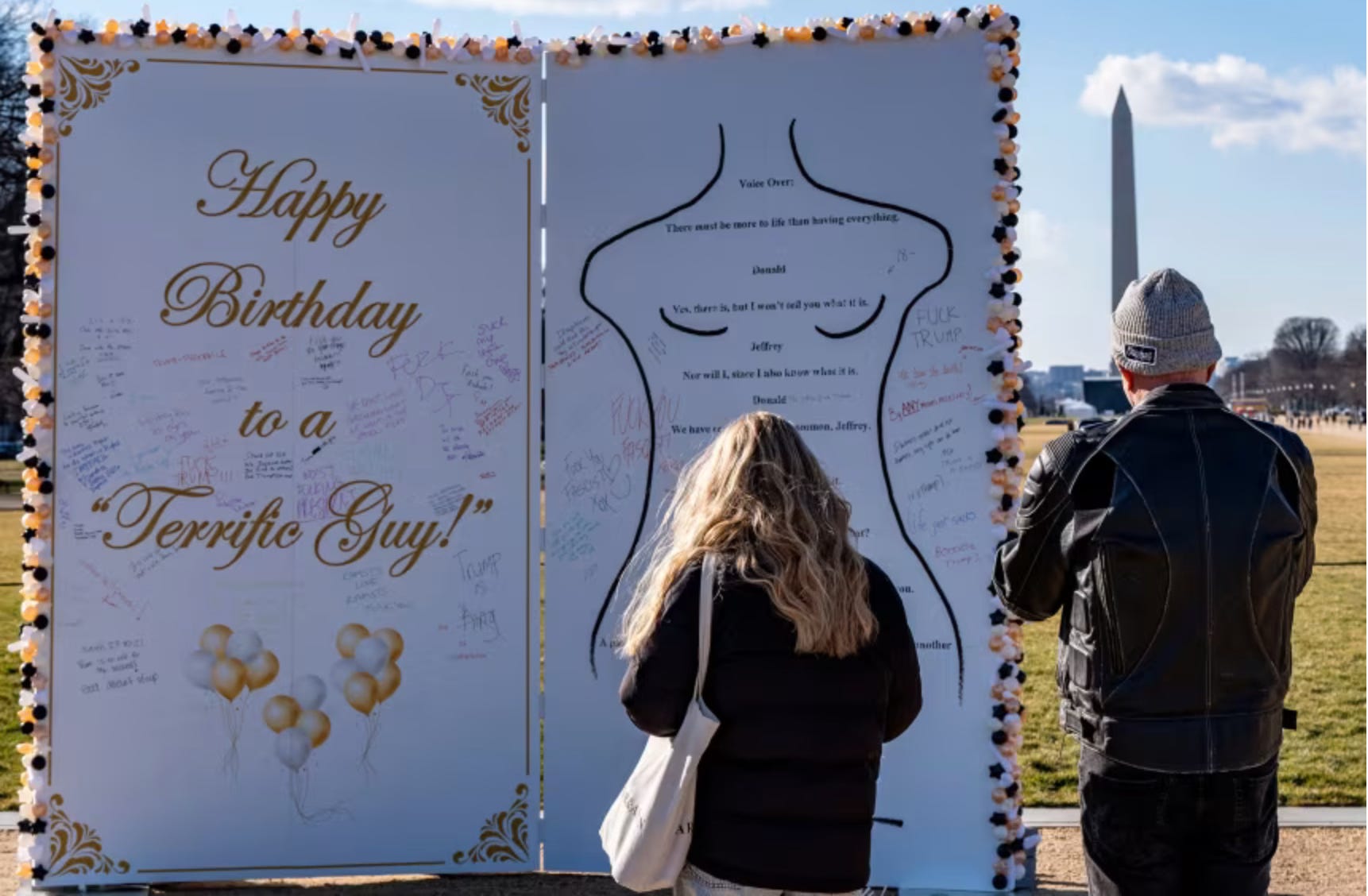
This one witness called into the FBI's National Threat Operations Center to report their account. No one at the Department of Justice interviewed this witness.
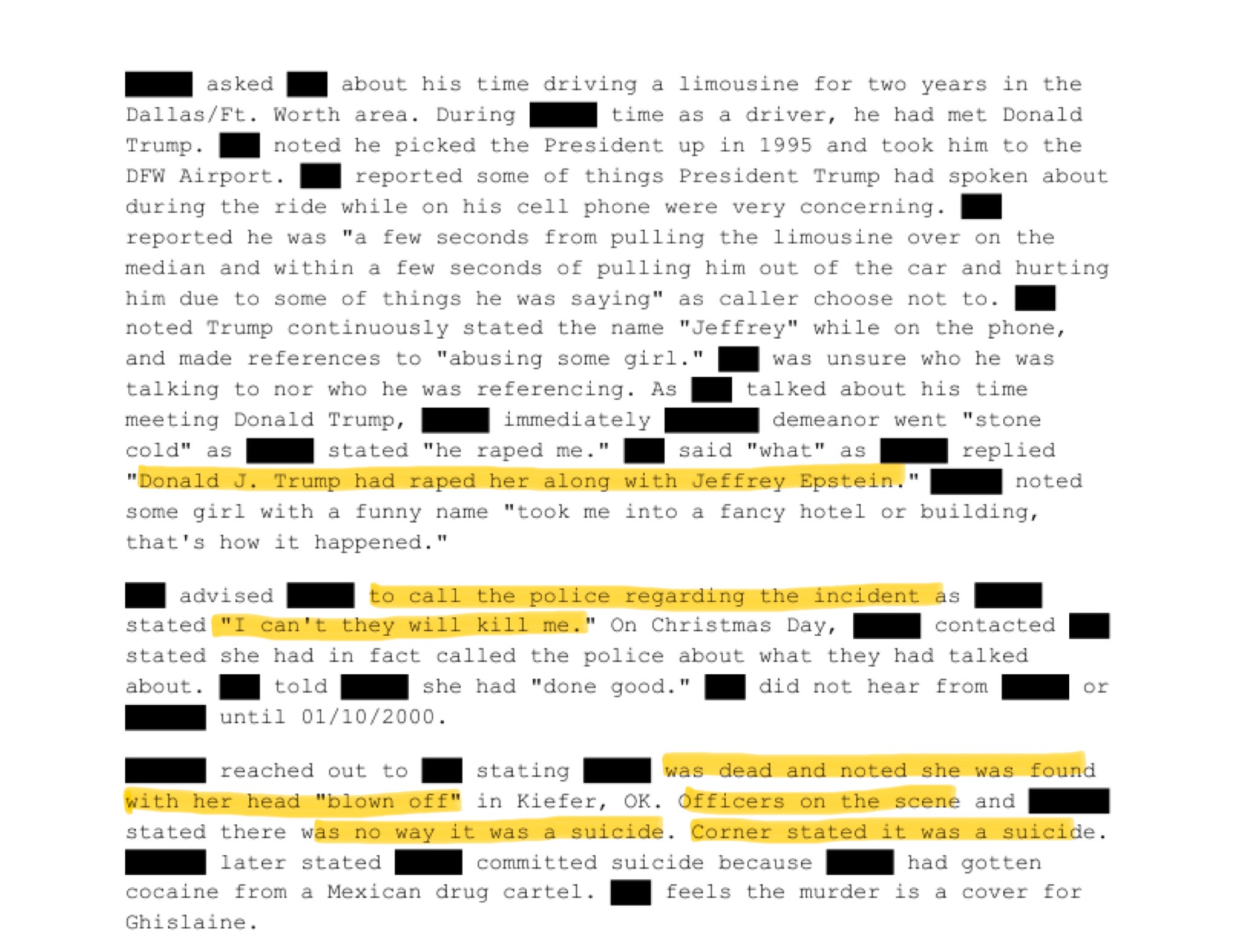
I read this witness statements again and again and tried to blink back the tears.
Maybe this was how you felt too. Nauseous. Sick to your stomach, while your sweaty palms and rising stress levels don’t help.
I wish I could say I was shocked to read the testimony of a victim whose head was blown off before she could testify, only for local officers to promptly declare it a suicide. But I wasn’t. After witnessing the atrocities committed by the Epstein class for almost 7 years, the lack of action from the establishments meant to protect us didn’t surprise me.
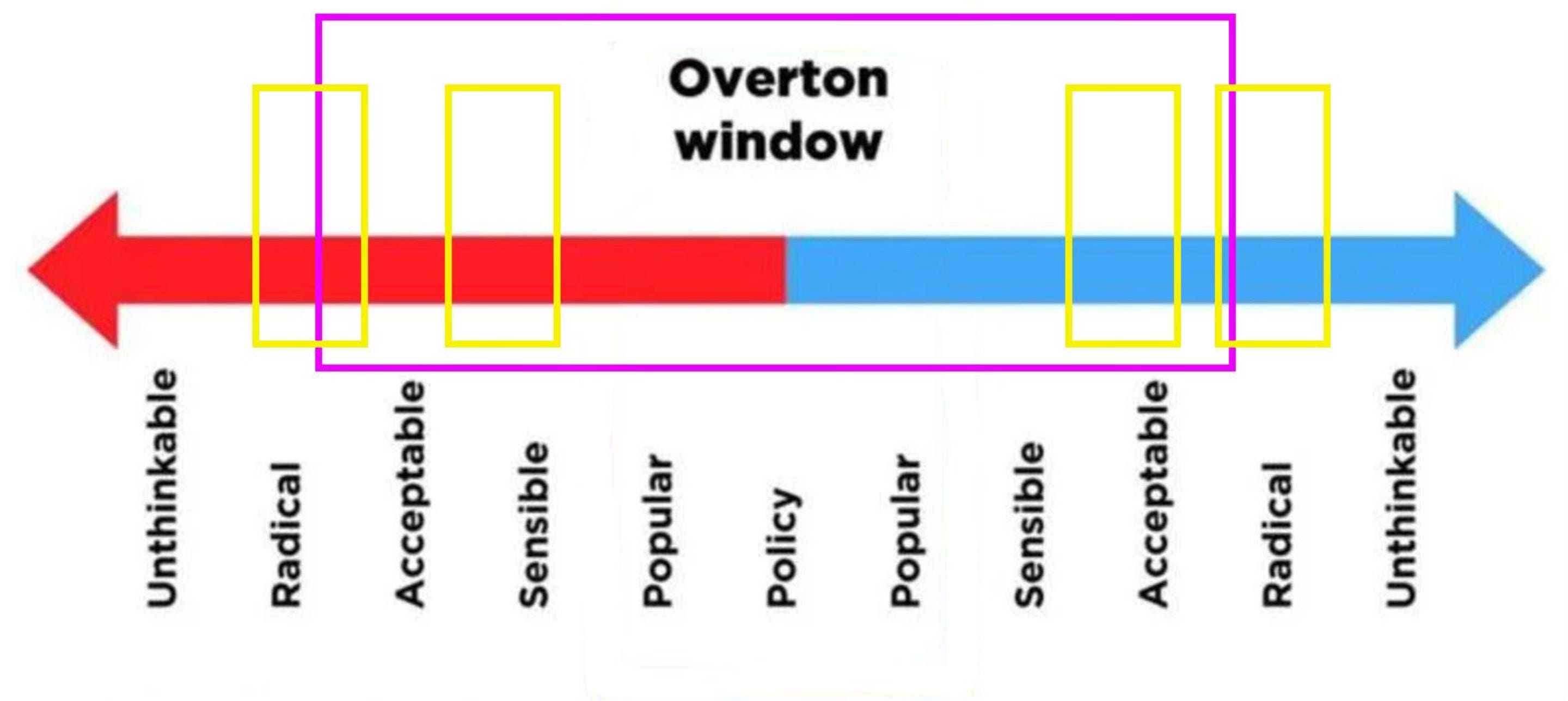
There is a concept that helps explain exactly what is happening to us: the Overton window. It is the range of ideas that a society considers acceptable, reasonable, and normal to talk about or believe.
Everything within the window is seen as reasonable, and what falls outside of it ranges from radical to unthinkable.
But that window isn’t fixed. It shifts over time. And one of the most effective ways it shifts is through repeated exposure to the extreme. In the process of being constantly exposed to absolute depravity, the extreme gradually becomes familiar.
Not due to its acceptance by the majority, but because it renders the less radical elements appear more tolerable. Throughcontinual exposure to the unimaginable, the unimaginable itself also becomes familiar.
There are four forces are driving the situation in the United States to a point where something such as the Epstein files doesn’t engage people, but rather overwhelms them.
The most apparent is the first. Desensitization.
Become a paid subscriber today for $5/a month. Or share if this moved you. Thank you. Z.
Years ago, political scandals triggered national crises. We can look back at the outrage sparked during the first Trump presidency—the release of the “grab them by the pussy” tape, or the executive order banning visas for citizens of six Muslim-majority countries. Those moments sent millions of Americans flooding into the streets across state lines. The crowds were massive, loud, and unyielding.
Compare that to the reality we live in today.
This is the psychological reality of desensitization.
These files are emerging into a society whose threshold for horror has been shattered.
It is no exaggeration to say that the live-streamed genocide of Palestine has fundamentally altered our global morality.
Before, the average person had never watched a man burn alive on their phone or seen a father carrying the pieces of his child in a plastic bag. But psychology tells us the human brain cannot survive a constant state of alarm.
Through a process called habituation, repeated exposure to severe trauma forces the brain to dampen its emotional response just to function. The unthinkable becomes the ordinary.
But desensitization alone does not explain our paralysis. People still possess the capacity to process and organize, but that very ability is under a sustained, systemic attack. We are living through an intentional war on the mind.
Consider the mechanics of the Epstein file release. After nearly seven years of a slow-dripping information vacuum and endless waiting, the establishment dumped 3.5 million documents onto the public all at once, overnight.
If you piled those files on top of one another, they would stand twice the height of the Eiffel Tower. This was not an act of transparency; it was an act of deliberate overwhelm.
The release was heavily redacted, entirely unorganized, and functionally impossible for the average citizen to navigate.
It requires weeks of sustained, meticulous attention—attention that is currently being starved by short-form content and fractured attention spans. In a digital environment dominated by a 24-hour algorithmic news cycle, maintaining the emotional momentum required to translate a scandal into political mobilization is impossible. The algorithm is perfectly tuned to our exact threshold of exhaustion, ensuring the outrage fades from the cultural zeitgeist before we ever have the chance to fully process what was done to us.
This information overload is just one layer of a broader war on truth. There was a time in the American media landscape when it was genuinely shocking for a sitting president to blatantly lie on camera. That era is dead. Today, the assumed baseline of American political life is deception.
This normalization has occurred alongside a mass public awakening to the sheer volume of historical lies fed to citizens by their own government, combined with the rapid emergence of AI deepfakes that spread fake photos to millions in hours. Somewhere along the way, the very function of truth broke down. There is no longer a shared reality or credible information.
So when the Epstein files are finally released into this fractured environment, they do not land as a singular, undeniable revelation. They are instantly swallowed by manufactured doubt. The public is told this is a “Democrat hoax,” while simultaneously realizing the government only released 300 gigabytes of an estimated 15 terabytes of seized data.
What is in the millions of files they kept hidden? Whose names remain redacted?
When the public cannot even distinguish what is real, the Overton window shifts without resistance. You cannot organize against an enemy you cannot truly understand.
Finally, there is the devastating political exhaustion of the masses—a phenomenon psychologists call learned helplessness. When repeated attempts to change an outcome end in failure, people begin to internalize the belief that their actions simply do not matter.
Over the past decade, Americans have mobilized at historic scales. From the massive nationwide protests following the killing of George Floyd in police custody, to the millions who flooded the streets of the nation’s capital in unprecedented pro-Palestine demonstrations. We marched, we screamed, and we demanded accountability. And despite it all, we saw little to no structural response. If anything, the establishment has only slid further toward brazen fascism, currently dragging the public into another deeply unpopular and horrific war with Iran.
We are living in an empire on a downward spiral, where no one in power even pretends that ethics laws apply to them. And then, we get the Epstein files. Unlike previous movements where the villain was clear—the police, ICE, a specific president, or a foreign state—the villain here is the entire bipartisan elite. Regardless of their politics on paper, they are inextricably bound by their participation in, or enabling of, this massive network of pedophilia and blackmail. The corruption is so vast, so all-powerful, that it is hard to even know where to aim the anger. When daily economic survival is utterly exhausting, outrage becomes an unaffordable luxury. And when everything feels corrupted, nothing feels actionable. What isn’t actionable, slowly but surely, becomes acceptable.
The reflex to these horrific accounts of systemic blackmail and state-level trafficking is predictably, exhaustingly: “It’s just a few rich perverts.”
But the private deviance of billionaires is not what is in dispute here. We are tracking how organized geopolitical infrastructure sustains and utilizes this behavior.
When the mainstream media rushes to frame this exclusively within the world of celebrity sex scandals like Harvey Weinstein or Me Too, they are centering our focus on individual bad actors instead of confronting the crisis staring us in the face. They are performing a specific type of social tax—a deflection that ensures the infrastructure of international intelligence operations remains unexamined.
They intentionally suppress the structural reality: the Mossad assets, the private planes wired for leverage, the cyber weapons procurement, and the strategic introductions to surveillance giants like Palantir. They switch the topic to safe, predictable foreign adversaries to protect a special ally, performing an intentional pivot that ensures the system remains undisturbed.
Abuse of power is not just committed; it is taught, normalized, and sustained by an institutional silence that allows it to feel ordinary. The culture of elite violence cannot survive without the rule of media compliance.
Being an active citizen means taking accountability for the world we live in, regardless of our personal power.
We are watching the moral fabric of our society tear under the weight of systemic complicity.
This pattern is visible in the news items we try to ignore: the deadly strikes on elementary schools, the decapitation of four-year-old children in Lebanon and Gaza, and the unprosecuted crimes hidden within the Epstein files.
We are treating human beings discarded without any human decency, in both our social media pages and our foreign policy, creating a world where the people of Iran, Lebanon, and Palestine experience levels of savagery that were once debilitating for us to even watch.
The solution is not for the victims of this empire to map more escape routes or carry more trauma. It is for us to do the work. To refuse the ignorance. To refuse the numbness. To refuse the distractions.
We must decide whether we will continue to watch the consequences of this collective failure, or whether we will finally choose to be better than the systems that protect them. The question is no longer “are you a good person?”
The question is: What do you refuse to normalize?
I do this feminism work with no paywalls, and no one telling me what I can and cannot publish. Your support is necessary and appreciated. Become a paid subscriber today for $5/a month. Thank you. Z.
No posts
Comments
Nothing yet. Say the first thing.
Sign in to join the conversation.