
Imagine this: You’re at a beautiful wedding reception.
The bride is absolutely gorgeous, draped in all white. She’s walking down the aisle with her father by her side. Then the groom and the bride are exchanging their vows while looking at each other lovingly.
You have probably seen this scene hundreds of times. In cheesy romcoms, Disney cartoon endings and the dozens of receptions you’ve attended.
The bride says to her husband “...to love, cherish, and to obey, till death us do part”.
Hang on. Obey? Wait, why is the bride the only one saying this? Why on Earth should the bride explicitly state her submission to her husband in front of all her loved ones? Publicly?
“I now pronounce you man and wife, you may kiss the bride”, the officiator smiles while addressing the groom.
Have you ever wondered why the officiant addresses the groom as “man” and not as husband and wife?
It’s like suggesting that a woman can only be legally and socially identified in relation to a man. But not the other way around. A quick look at history shows us that actually, marriage has always been a pretty big deal for women. As in, marriage determines your financial status, social class and your whole life, kind of big deal.
Western weddings between men and women typically play out like this: romantic, meaningful and heartwarming. Traditions that we continue from our grandparents 20th century weddings, classical romance novels and Disney- inspired happily ever afters.
But when you take a closer look at the history behind these passed-down wedding traditions, the misogyny is appalling. The patriarchy is practically baked in most of western weddings.
Today, we will look at countless sexist traditions, that you may not know of their dark history. Next part on the history of marriage and how it functions as an institute of the patriarchy will drop on wednesday 22nd!
Join a community of 43,000 anti-patriarchs and unapologetic feminists! Become a paid subscriber to support feminist media:
I want to make it clear that I’m mostly going to be covering mainstream Western heterosexual wedding traditions you come across in classic romantic movies and Disney fairytales. I consumed western (specifically American) media for the most of my life despite being a Central Asian living in the Middle East.
That said, I will be touching upon how marriages differ across religions and cultures in Asia in some examples on my next essay.
I know my audience is mostly Western based as well but if you’re reading this from other parts of the world, drop down examples of sexist wedding traditions in your country in the comments!
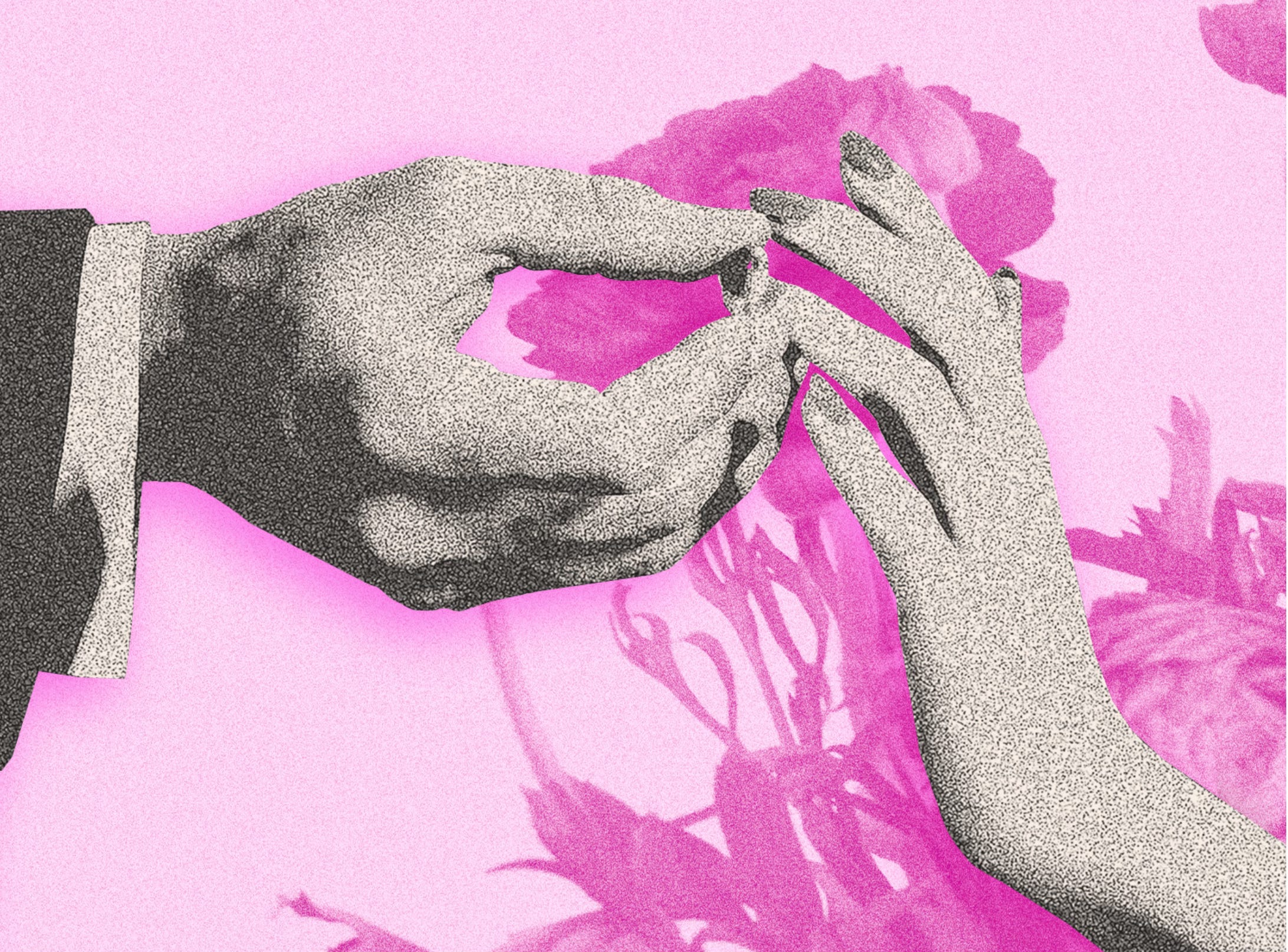
Before the wedding day comes the proposal. The man on his knees, presenting her with a diamond ring, and her tearfully saying yes (hopefully).
Let’s rewind back a bit. Before he pops the questions, he needs to get a certain someone’s permission. Namely the soon-to-be-fiance’s dad. Nowadays, this tradition is heartwarming and sweet. What is wrong with him promising to her father that he will do everything he can to keep her happy? It looks like he’s taking responsibility and being accountable for the major milestone of their lives, especially in a world where domestic violence rates climb higher and femicides are being committed by husbands.
But isn’t that odd? That he has to get the dad’s permission out of all the people to marry his daughter?
Why not her mother who has sacrificed arguably more than the dad like her body, personal space and possibly career? Both parents are vital to raising a child, so why leave out the mom who birthed her when asking for her daughter’s hand?
This tradition isn’t as innocent as we may think. Its dark origins have the patriarchy smeared all over it.
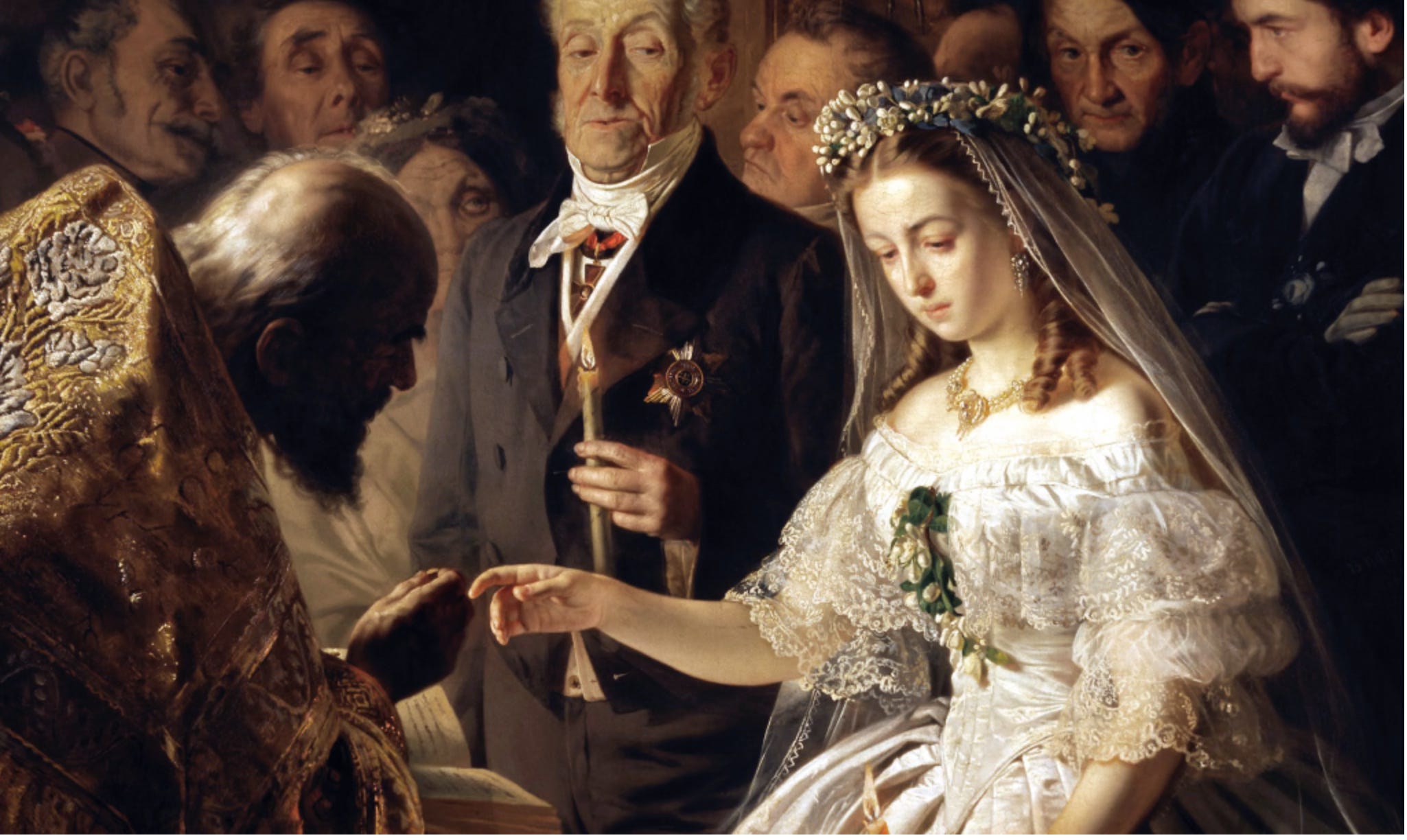
In the 21st century, getting a father’s “blessing” is a sign of respecting the in-laws. Today, it seems respectful as the term has actually been watered down from getting the father’s “permission” to “blessing”.
The genesis of this particular tradition traces back to ancient Rome. Under Roman law, the father (being the patriarch) meant that he owned his daughters like property. So, suitors would pay him a ‘bride price’ which looked like giving him symbolic coins in exchange for their daughters.
Yikes. Not to mention, that Roman law particularly mentioned that it’s necessary that the suitor must meet the father who should consent to the marriage in order for it to be legal.
And guess what, these Roman laws that were hundreds of centuries old- still existed in Europe and America and have only been recently broken down a couple generations ago. They were called coverture laws.
Back in the Middle Ages, women had a legal identity covered by her father’s from birth and when she was married, she was covered by her husband’s identity. These laws spread from France to England and America. So basically, the English colonizers said we will carry these laws over to the US where at marriage the husband and wife became one identity. That identity being the husband.
You heard that right. It also doesn’t help that the now married woman had to take her husband’s last name. They basically didn’t exist, in terms of law, as their own individual.
Women didn’t own anything of their own. Also had no rights to the child she birthed, which means that divorce meant the possibility of never seeing her own children again.
That also means they had no bodily rights– so there was constant sexual access within marriage because guess what? Her body legally belonged to her husband.
Rape? Consent? That didn’t technically exist within a marriage.
Your support is necessary to keep this work free.
To support feminist work, become a paid subscriber:
Yup, it’s getting ugly very fast because history clearly states that during the foundation of American democracy, British colonizers had the option to adapt that law straight from home or not. And they chose the latter.
They decided that actually, our democracy won’t include the fact that women had any identity from her father’s home to her husband’s. The worst part is these horrible laws have never been fully abolished. They just chipped away bit by bit. Marital rape only became recognized by all 50 states by late 1993. So yes, the wedded couple did technically become “one”, being the husband. Anyways- back to getting the “father’s blessing”. This shouldn’t be a man-to-man talk. The father and boyfriend aren’t the most important in her family.
The mother deserves to be there to make sure that hey, her daughter will be spending her life with someone the mom knows she can trust.
And let’s have both sides of parents and you know what? Why is the woman who’s about to get married excluded? Let it be a real heart to heart because this is a decision she’s actively making here too.
You will begin to see a thread connecting all these traditions together: she’s reacting to his decisions and being in the passive, receiving end.
Like hello? She’s a grown adult who makes choices too, not just reacting to his actions. More on that later, though.
Support this one woman run feminist publication by subscribing to Letters from a Feminist!
So he finally asked the biggest question in a woman’s life (please get the sarcasm), and she said yes!! She has a diamond on her finger. But that engagement ring didn’t come out of nowhere.
Engagement rings go back to Ancient Rome, and shocker, they weren’t originally about romance. Roman brides were given rings made of iron, or sometimes ivory, and were a way to ensure Roman women were obedient to their grooms. They were really used to ‘signify a business contract or to affirm mutual obedience’. So yes, the ring had a practical purpose: a public symbol of a couple’s legal contract. Nothing sounds more romantic than a contractual legal obligation.
Unsurprisingly, the legal implications are why only women wore engagement rings. It symbolized a woman moving from her father’s legal ownership to her husband’s.
Basically like a tiny collar. Maybe a little too much like a collar. And since Roman marriage contracts linked two families together, that ring showed which women were off the market – literally.
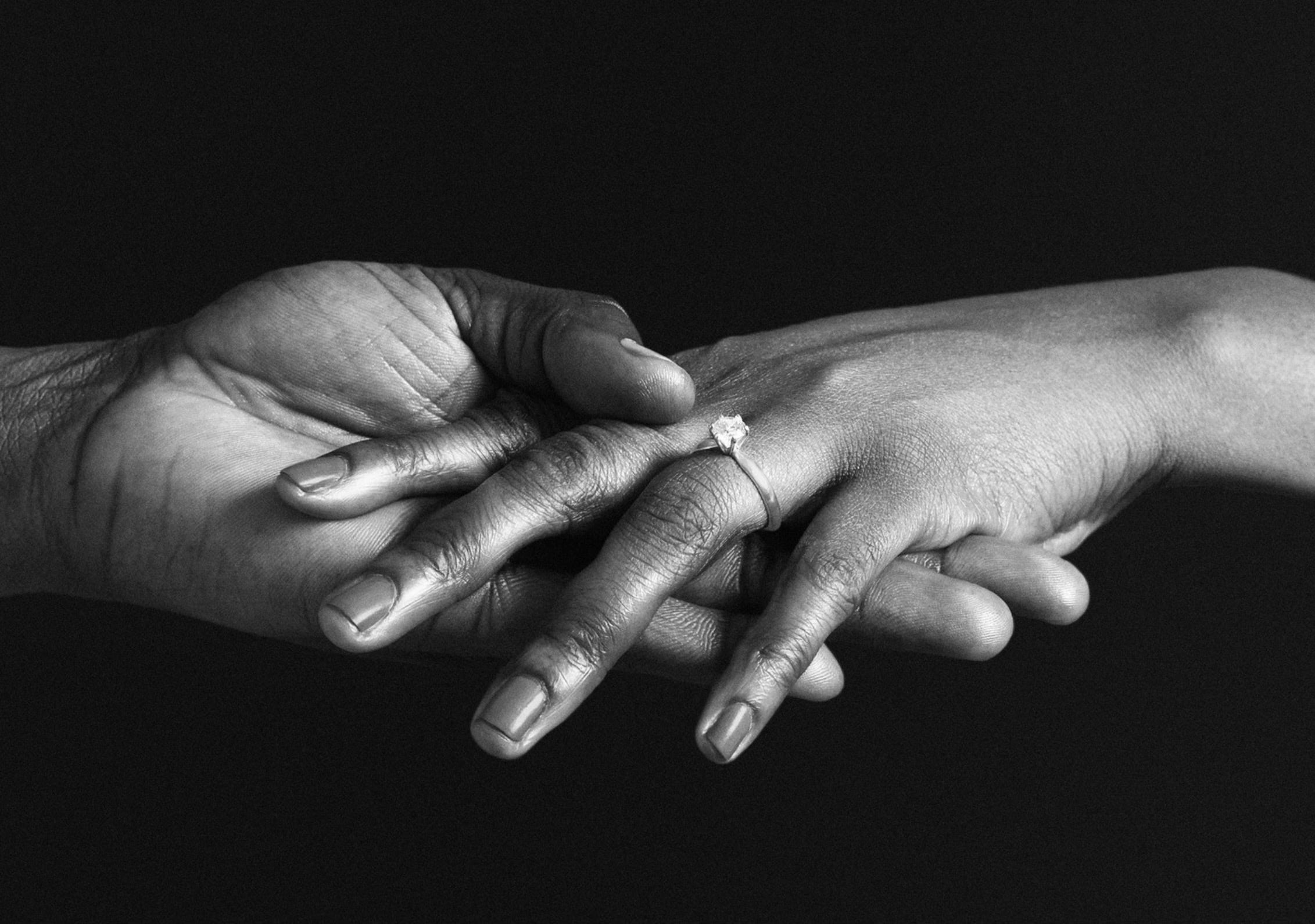
So yes, the fact that a woman wears a diamond on her ring broadcasts her dating status to everyone– to this day. She’s taken, spoken for, basically off-limits. And look, I’m not denying the fact that it’s not useful because it really is. It’s sad to admit it but that symbol can ensure a woman’s safety– if a man asks her out, we know that the ring on her finger means that she’s been taken by another man and so he’s more likely to back off and give her the basic respect every human deserves. And it’s proven by research too: Studies prove that if a woman wears a wedding ring, they experience significantly less sexual harassment from men.
We have to be ‘marked’ by another man to simply having the same type of respect a man gets from birth. A man’s claim on a woman has more value than a woman’s individual choices and words.
It’s ridiculous that only a woman has to wear a flashy diamond ‘sold’ sign on her fourth finger. We have obviously reworked the meaning behind a ring, because now it’s a symbol of love and plenty of women love their rings today. But it’s worth noticing that the custom of only one half of a couple wearing a public ‘taken’ marker didn’t start as an expression of love. So the groom, notably, never has to wear anything. Let’s change that, because really the groom belongs to the bride as equally as she belongs to him, so let’s cherish both of their love by both wearing an engagement ring. Because guess what? A man doesn’t have to only go on one knee, too!
Ah yes, the bachelor party. One last hurrah before he’s shackled forever, right?
That’s the entire premise, if you think about it for longer than five seconds. The tradition is built on the idea that marriage is something being done to the groom. That it’s an ending. A loss. His “last night of freedom,” as if his fiancée is a prison sentence he’s agreed to serve.
Nobody questions why an institution two people are choosing together somehow gets framed, for him specifically, as the death of fun. Meanwhile there’s no equivalent “last night before I become somebody’s ball and chain” send-off for the bride. Well. Actually, there kind of is now. We just call it a bachelorette party and pretend it’s a different thing.
To be honest, this tradition I suppose isn’t as popular or heard of outside of the West, so this was a bit of a cultural shock for my teenage self when I first watched the infamous 2009 ‘The Hangover’ movie.
And thankfully, this tradition is evolving from ‘a man’s last night of freedom’ from a multi-day destination vacation with less heavy drinking since most couples are getting married past their crazy party days.
mind blown at these sexist wedding traditions? share to anyone you know who’s married or engaged!
It’s finally happening! The wedding day has arrived and you get to smell your own flowers at your funeral. Kiddingggg.
Pessimistic opinions on marriage aside, it’s time for us to silently weep as the bride is walking down the aisle.
And now the bride’s dad is walking her down… basically giving his daughter away. Wait, go back a second. Seriously? The patriarchy is not even trying to hide itself behind a thousand-year-old tradition. Isn’t it strange that it’s still around today? Thankfully, it’s dying away.
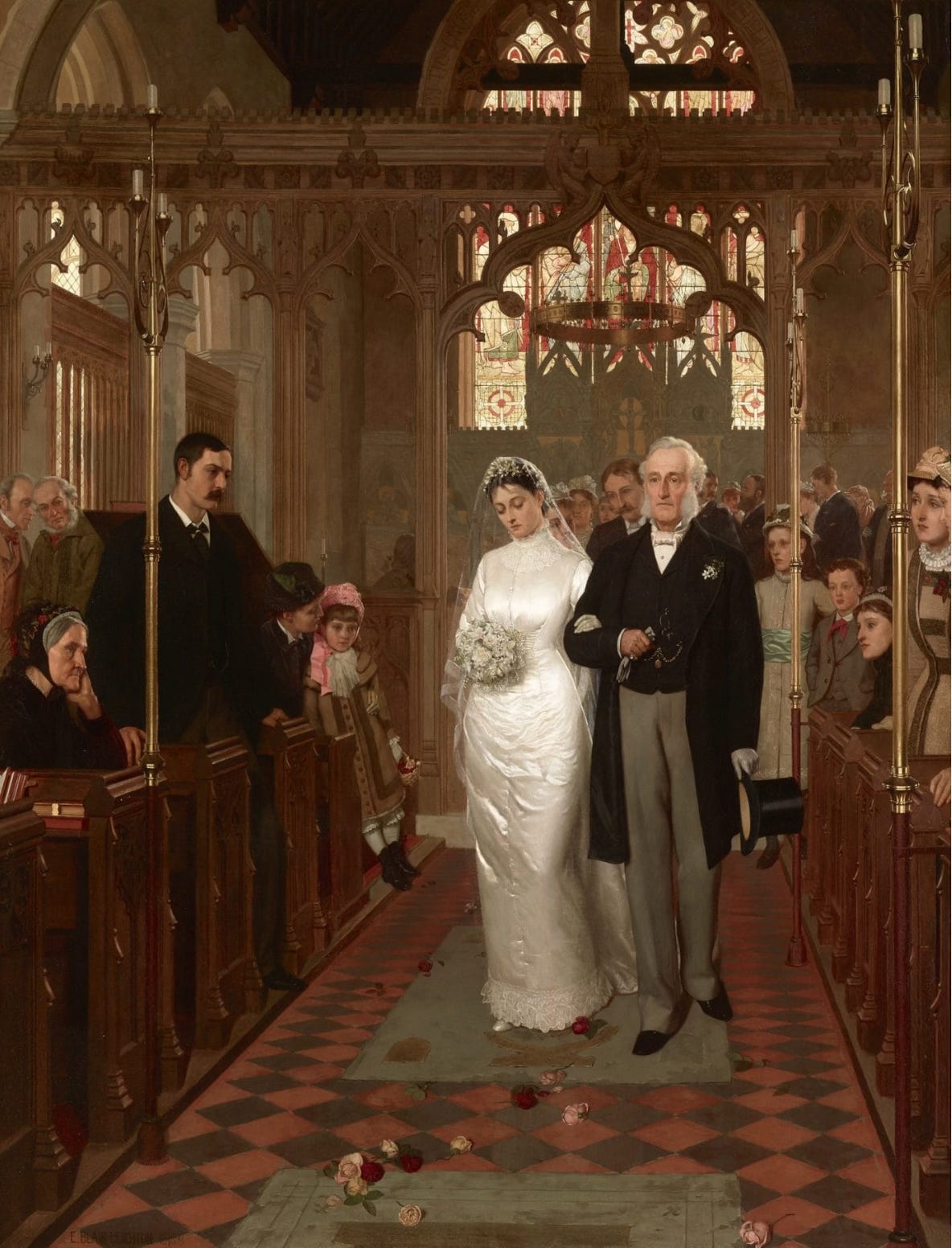
This one deserves its own moment, because the wording says the history of the tradition out loud. “Who gives this woman to be married?” Given, like property changing hands. Because for most of history, that’s exactly what was happening.
Worth noting: this exact “giving away” moment is specifically a Protestant custom. In Catholic and Jewish ceremonies, historically, the father more often simply escorts the bride, without the formal “who gives this woman” exchange baked into the liturgy. So even within Christianity, this isn’t one universal script, it’s a fairly specific inheritance.
In marriage’s earliest function as a contract between families, the patriarch of a household, a father, an uncle, an older brother, would hand a girl in his care over to another man. The new husband then took over “responsibility” for her, so long as she provided children and ran his household to his satisfaction. Nobody thought to ask the woman what she wanted, because in the legal imagination of the time, she wasn’t really the one being consulted.
Do you know any other patriarchal wedding traditions I might have missed? Drop it down!
We’ve obviously softened this considerably. For a lot of fathers and daughters today, it’s genuinely one of the most emotional, loving parts of the whole day, and I’m not here to take that away from anyone. If you have seen sweet moments like this at western weddings, the emotions from the proud father walking arm in arm with his daughter is obvious and heartwarming.
But it’s worth noticing the shape of the scene we’ve inherited. The father, who has already “approved the deal,” delivers his daughter, in “perfect condition,” to the man who’s agreed to take her on. She’s handed. Once again, she’s the object of the sentence, not the subject of it.
And where’s Mom, in all of this? She birthed her, raised her, probably co-planned half the wedding, and she’s standing at the front of the aisle watching only one parent walk her daughter toward the altar.
The good news: people are already rewriting this one and equality in marriages is already becoming more common. Couples walking down together. Brides walking with both parents, or with their mother alone, or completely solo, proud and unbothered by any of it. Same-sex couples very often just enter together, at the same time, as equals, because there’s no inherited script telling them who’s supposed to be given away, or to whom. Funny how naturally that works out when the tradition wasn’t written with you in mind to begin with.
Let’s zoom on what the bride is wearing for a moment: probably a big, breathtaking white dress with an equally beautiful veil. But here’s a quick myth to bust: white wedding dresses are not some ancient, sacred tradition. Actually, as a massive norm prevalent not just in the western world, they’re barely 200 years old.
Before 1840, brides across Europe typically just wore their best dress, whatever color that happened to be, sometimes even black or dark colors depending on region and era. Then Queen Victoria married Prince Albert in white satin trimmed with orange blossom, a flower long associated with fertility and virtue, instead of the traditional royal robes of crimson velvet. It was heavily publicized, and upper-class brides across Britain started copying it. She was sort of the OG celebrity in a way.
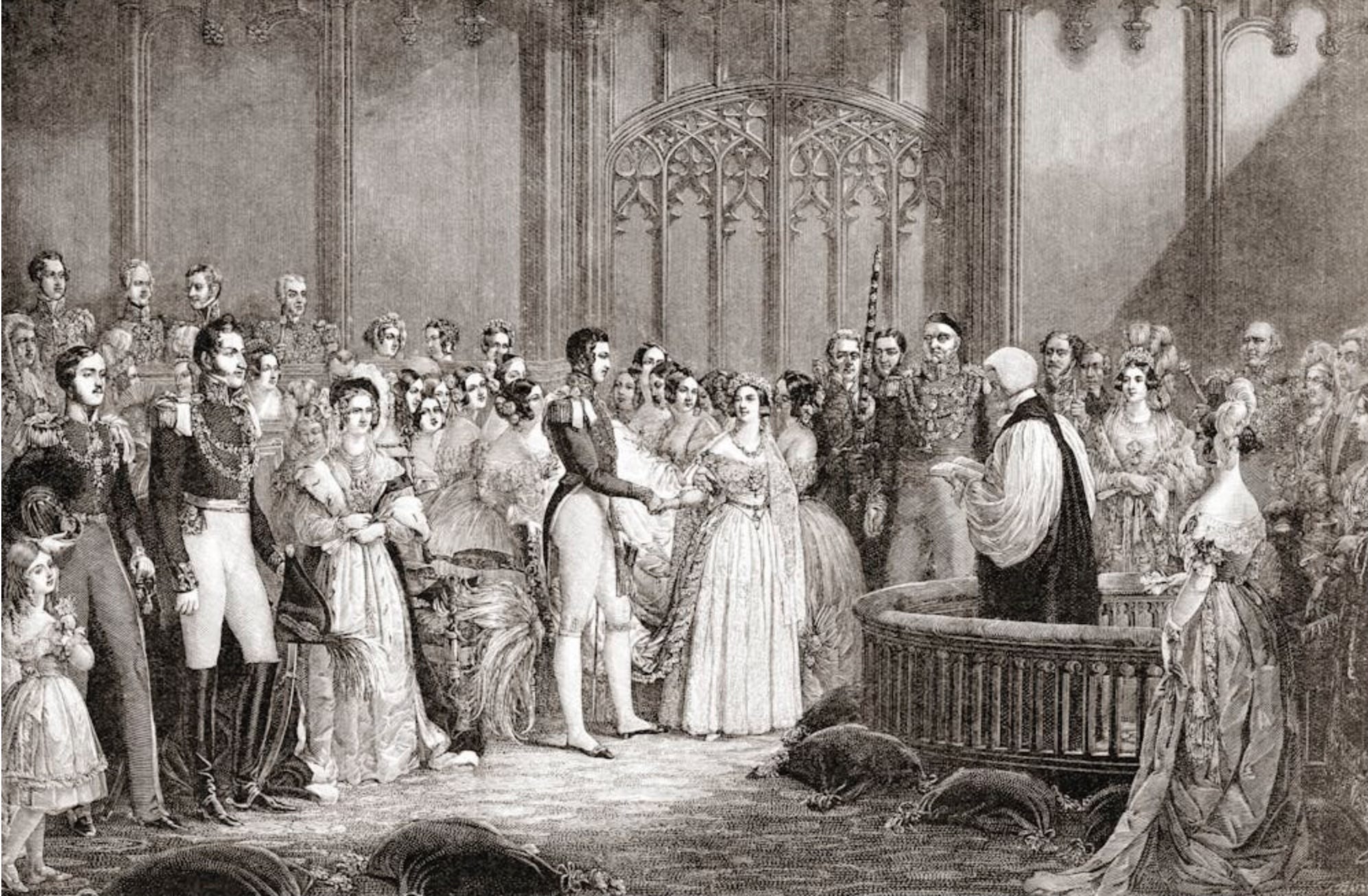
Here’s the twist most people don’t know: it stayed a mostly upper-class trend for over a century. It wasn’t until the postwar prosperity of the 1950s, alongside the boom in bridal magazines and Hollywood wedding scenes, that white became the default for ordinary American brides too. So when someone tells you a white dress is “classic” and “traditional,” what they usually mean is a specific 1950s consumer trend, dressed up in borrowed Victorian symbolism about female purity.
Now, the veil. This one actually has a longer and stranger history than the dress. The earliest Roman bridal veils, called the flammeum, weren’t white at all, they were a deep flame-red or orange, and their original purpose wasn’t modesty. It was apotropaic, meaning it was meant to ward off evil spirits believed to be drawn to brides on their wedding day. The historian Plutarch even records that brides in his time were carried over doorway thresholds because of a related superstition, more on that later.
Only later did the veil pick up its second, much more patriarchal job: in arranged marriages, where bride and groom often hadn’t met beforehand, the veil concealed her face so a groom couldn’t back out of the match the moment he got a look at her. Once the vows were locked in and it was too late to withdraw, he’d lift it, and get his first real look at the woman he’d just legally committed to.
Join 43,000 readers for a well-researched feminist lens on the patriarchy shaping our lives, delivered to your inbox every other weekday evening:
We’ve turned this into a sweet, romantic moment, the big reveal. And I’m not arguing that it isn’t now, it’s a very beautiful moment and it comes from a place of love.
But ask yourself: what part of a groom’s outfit is symbolically about his purity, his modesty, his approval-worthiness? When does the groom shield his handsomeness from his biggest day in his life too? There isn’t one, because this custom was never actually about purity in general. It was about controlling and verifying hers, unfortunately.
Let’s go back on the vows bit again. We’ve already touched on the “obey,” so let’s actually trace it.
The word enters English wedding vows through the Church of England’s Book of Common Prayer, first published in 1549. In that version, the groom promised to “love, cherish, and worship” his bride. The bride promised to “love, cherish, and obey” her husband. Two different verbs, for two very different roles, baked directly into the liturgy that shaped English-speaking weddings for the next four hundred years.
It took until the 20th century for that asymmetry to get formally challenged. The Episcopal Church in the US dropped “obey” from its official vows in 1928. The Church of England didn’t make the “obey”-free version its default option until the year 2000, though individual couples, famously including Princess Diana in 1981 (such an icon!), had been quietly opting out for decades before that.
Then there’s the pronouncement itself: “I now pronounce you man and wife.” Sit with that phrase for a second. Like, he will always be a man, right? A complete, standalone identity that won’t be affected with his love life. But she’s a ‘wife’, which isn’t an identity so much as a role, specifically one defined by her relationship to him, always.
Linguists will point out, fairly, that this is partly a fossil of Old English, where “wif” originally just meant “woman” in general (it’s why words like “midwife” and “fishwife” exist, nothing to do with marriage), and “man” could mean “person” broadly. So the phrase may not have started life as deliberately unequal wording.
But origins aside, what actually landed in the culture is not neutral. Somewhere along the way, “man” kept its full, generic personhood, while “wife” narrowed into a role that only makes sense in relation to a husband. It’s not “man and woman.” It’s not “husband and wife,” at least not traditionally. And whatever the phrase meant a thousand years ago, what it does today is echo exactly the coverture logic we already covered: her identity, understood through him.
There is an easy modern alternative that some couples are adopting already: simply just “I now pronounce you husband and wife”. That’s how easy it is to change a sexist tradition! Hopefully, your officiant will be willing to change how they normally say it.
And then, right on cue, she changes her name.
Not always, plenty of women keep their names now (woohoo!), but the overwhelming Western default is still that the woman absorbs the man’s surname. In America, about 8 in 10 women in opposite-sex marriages say that they took their husband’s surname.
And almost nobody blinks at it, because it’s just “what you do”, except, what exactly are we doing here? A woman spends her entire childhood, education, and early career building an identity under one name, and then, the moment she marries, she’s expected to fold that identity into her husband’s family line. He keeps his, unchanged, forever, no folding required.
It’s a small, quiet, extremely literal continuation of the “one identity, and that identity is the husband’s” logic baked into coverture law. We just don’t call it that anymore, obviously, we call it romantic.
There are modern alternatives without altering a woman’s identity just because she got married. A couple can change their surname by merging surnames, hyphenating or actually just adopting a brand-new shared family name.
Or just have the husband take the wife’s last name. I bet someone just got enraged reading that. See how ridiculous it sounds when the genders are swapped? Sexism is plain old ridiculous and it’s time we stop accepting the lies the patriarchy keeps shoving down our throats.
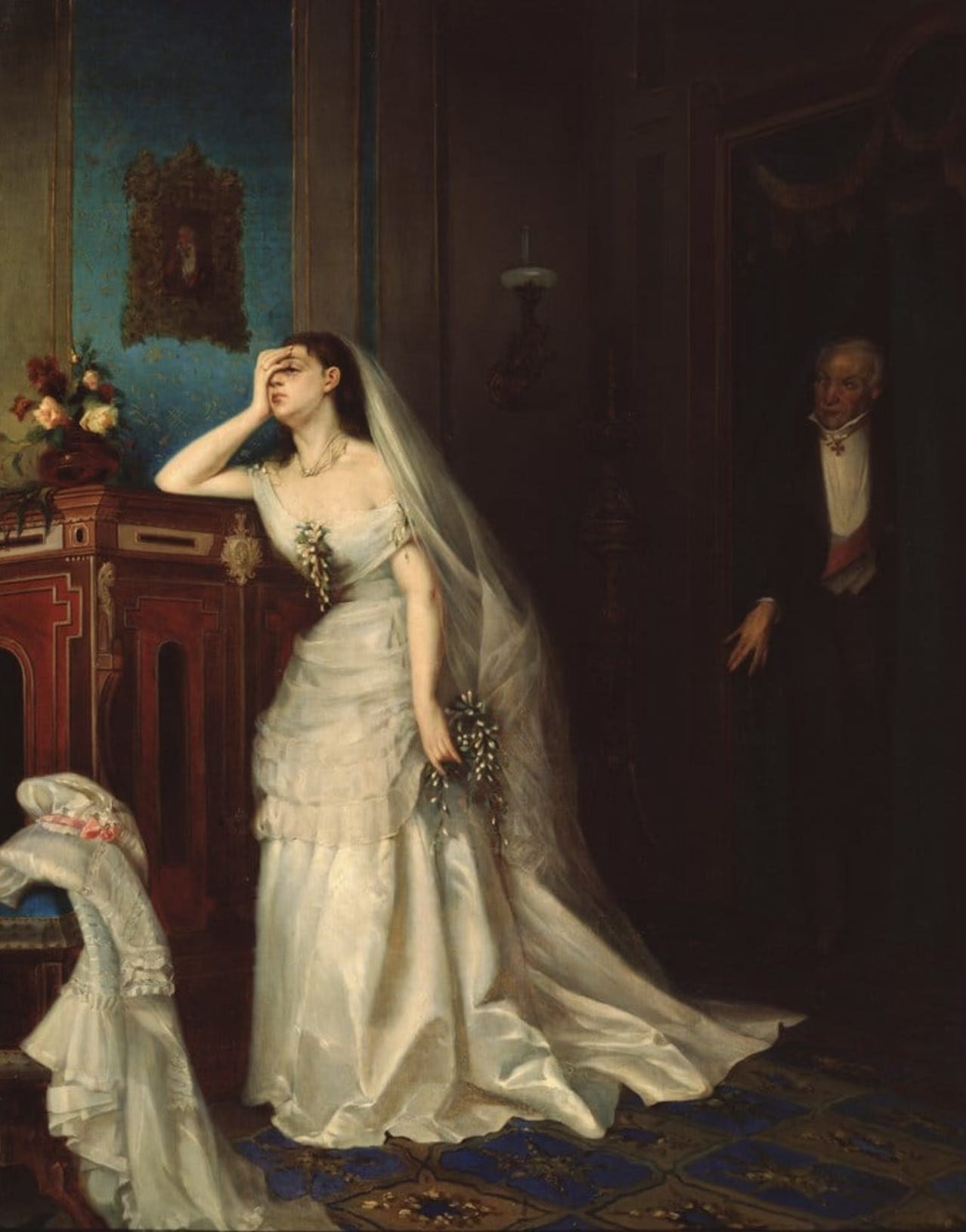
Here’s another bit of linguistic sexism hiding in plain sight. A man is “Mr.” at twenty years old, and he still remains a “Mr.” at ninety-five. Married, single, divorced, doesn’t matter at all to who he is as a person. His title tells you nothing about his relationship status, because apparently that’s considered irrelevant information about him.
A woman, however, goes from “Miss” to “Mrs.” the moment she marries.
Her title is a walking status update on who she’s with, at all times. Listen, it may not seem a big deal but really it’s three letters doing a lot of quiet work: keeping tabs on women’s availability, marking them for marriage, and yes, low-key shaming them for a divorce a man walks away from with his title fully, boringly intact.
It seems society needs to label women as ready for marriage or to shame them after a divorce, as if that’s the sole purpose of their existence. I propose we eliminate titles completely, as they exclude the LGBTQ+ communities and I find them to be quite outdated.
This moment can bring immense joy and laughter on a wedding day, as the unmarried women gather, dresses lifted, shoes removed, prepared to grab that bouquet as it soars above. Stress levels are elevated as each individual ready themselves to secure their future.
But wait a moment, let’s take a quick glance at this. As beautiful, strong, and intelligent women, is this the representation of ourselves that we wish to convey? Scrambling to grab a bouquet since tradition claims we will be the next to wed. As the bouquet is quickly grabbed, the losers return to their seats, feeling a bit ashamed of their overly eager but unsuccessful attempts and giving a “maybe next time” shrug; is this how we identify ourselves?
Is our wedding, when or if it occurs, the greatest achievement of our lives? Certainly it isn’t, but perhaps by featuring this small, all-female game show on our significant day, we imply that it is. Let’s remember that men do not experience this and lack any alternative challenges of their own.
Many individuals may view the bouquet toss as simply innocent enjoyment, and they are entitled to that perspective; however, regardless of anyone’s viewpoint, it’s beneficial to understand the broader significance and consequences of an act before putting your single friends through it!
You’re almost done reading Part 1 covering everything related to the marriage institution. Subscribe for an upcoming essay on the rise of teen tradwives!
Dating back thousands of years, this one still shows up in dozens of romcoms, cute, giggly, which I agree, I do think it’s romantic.
But there are two competing origin stories, and neither is exactly a fairy tale.
Originating thousands of years ago, the tradition of lifting the bride over a threshold after the wedding ceremony remains practiced. The academic encyclopedia Marriage Customs of the World states that this tradition originated in Ancient Rome, where Roman soldiers abducted women against their desires.
This became a typical Roman wedding custom, as the bride would flee to her mother, while the groom and his companions would catch her and drag her back. The bride would then be carried into the house by the groom and his friends, marking the start of the wedding ceremony.
In ancient Rome, men would ceremonially pull or forcibly bring their new brides into their homes after the wedding ceremony. Based on Roman mythology, the practice was embraced by Roman men upon returning home following a time of widespread abduction and assault of women from surrounding towns (an incident historians call The Rape of the Sabine Women).
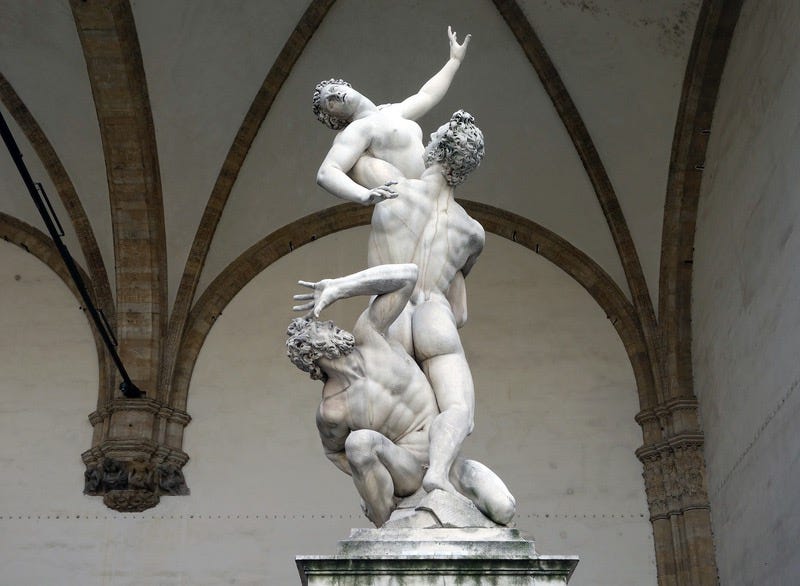
Occasionally, the whole community ‘assisted’ in bringing the distressed bride to her new residence. Frequently, brides resisted because they genuinely hesitated to marry, but they were also anticipated to display this conflict as a symbol of their innocence and defiance against relinquishing their virginity. Yuck!!!
The second theory, from medieval England, is about superstition rather than abduction: the belief that evil spirits lingered at doorways and could curse a new bride’s fertility if she touched the threshold herself, so the groom carried her over it to protect her.
Either way: we’ve turned this into something cute and romantic, and plenty of couples now take turns carrying each other through doorways, laughing about it. But it’s worth knowing that one of the two competing explanations for a mainstream wedding tradition is a Roman writer’s matter-of-fact account of a mass abduction.
And hey, it’s your choice to do whatever you want but you can just walk together, in and out of rooms, hand in hand, as equals.
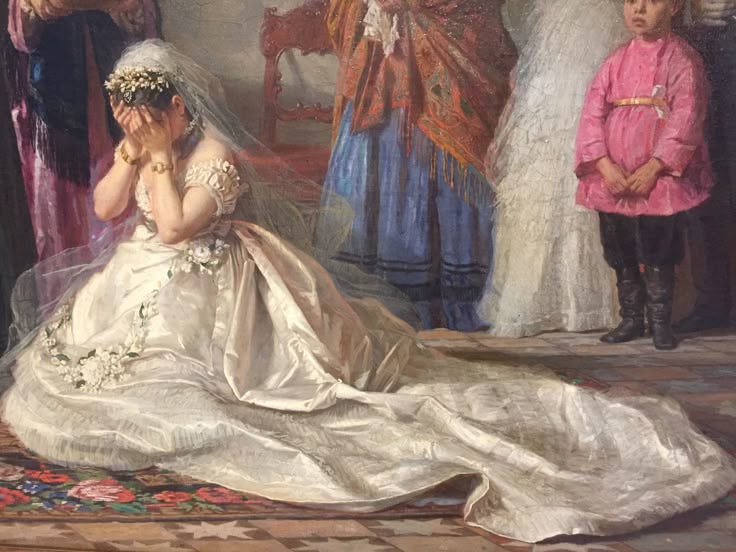
And here’s where it all lands, because it’s not just the big wedding day with it’s sexist traditions, it’s everything that comes after it too.
All of these traditions, individually, might feel small, right? The wedding dress color, the engagement ring worn by the bride only and a surname change. But strung together, they form a clear pattern. And the pattern doesn’t just stop when the reception ends.
The same logic that says she’s the one who reacts, who’s given, who’s covered, who’s carried, who changes her name and her title while he changes nothing, is the same logic that quietly assigns her the emotional and physical labor of the marriage that follows.
And if she shows signs of physical and emotional strain more than socially acceptable? Society will label her as a lot, not overworked or undersupported by the supposed ‘love of her life’. Conveniently, the patriarchy lands on her as the problem.
None of this means you can’t have a beautiful wedding, or wear white, or have your dad walk you down the aisle, or take your husband’s name if that genuinely feels right to you. This isn’t about really shaming what you have done in your wedding or planning to. It’s about knowing what you’re actually opting into when you say yes to a tradition, instead of doing it on autopilot because that’s just “what weddings look like.”
Because here’s the thing: every single one of these customs was invented by somebody, at some point, usually for a very specific and very unromantic reason. Which means we’re completely allowed to invent new ones. Traditions that keep the joy and the beautiful celebration, but leave the ownership contract and the patriarchy at the door.
Phew that was a lot of ground we covered! My series on everything about the marriage institution + the patriarchy is just getting started
You’ll get my next essay in your inbox ;)
No posts
Comments
Nothing yet. Say the first thing.
Sign in to join the conversation.