
The first goodbye happens long before anyone leaves. No one tells you that anxious attachment feels less like loving someone and more like mourning them while they’re still standing in front of you. Every relationship begins with an ending that only one person can see. The first unanswered text isn’t just a delayed reply; it’s evidence. A shorter “goodnight” isn’t fatigue; it’s emotional withdrawal. A cancelled plan isn’t scheduling conflict; it’s the beginning of abandonment. Before anything has actually happened, the nervous system has already written the obituary. This is the quiet cruelty of anxious attachment: it forces people to experience loss in advance. They don’t wait to be left. Their bodies feel it first.
People often describe anxious attachment as insecurity, clinginess, or fear of abandonment. Those words are technically correct. They’re also painfully insufficient. Because anxious attachment isn’t simply a thought. It is physiology. When attachment researchers describe the attachment system, they aren’t talking about personality. They’re describing one of the oldest survival circuits in the human brain. Infants cannot survive alone. Separation once meant death, so evolution built a system that protests distance with astonishing force. For someone with an anxious attachment style, that alarm system becomes exquisitely sensitive. This is why, for an anxious attacher, reassurance works beautifully—until it doesn’t. Because reassurance was never solving the problem. It was sedating the alarm.
What makes anxious attachment so devastating is that certainty is strangely unfamiliar. Consistency feels calming. Intermittency feels intoxicating. The unpredictability of affection—the days they’re affectionate followed by the days they’re distant—creates the same reinforcement schedule that makes gambling addictive. Love becomes a slot machine. One warm message can erase a week of silence. One hug justifies a hundred moments of doubt. The relationship begins revolving around tiny victories. They smiled today. They called first. They remembered. Maybe we’re okay. Every small gesture becomes evidence against the catastrophe constantly unfolding inside the mind. Not because they’re dramatic but, because their nervous system has confused relief with love.
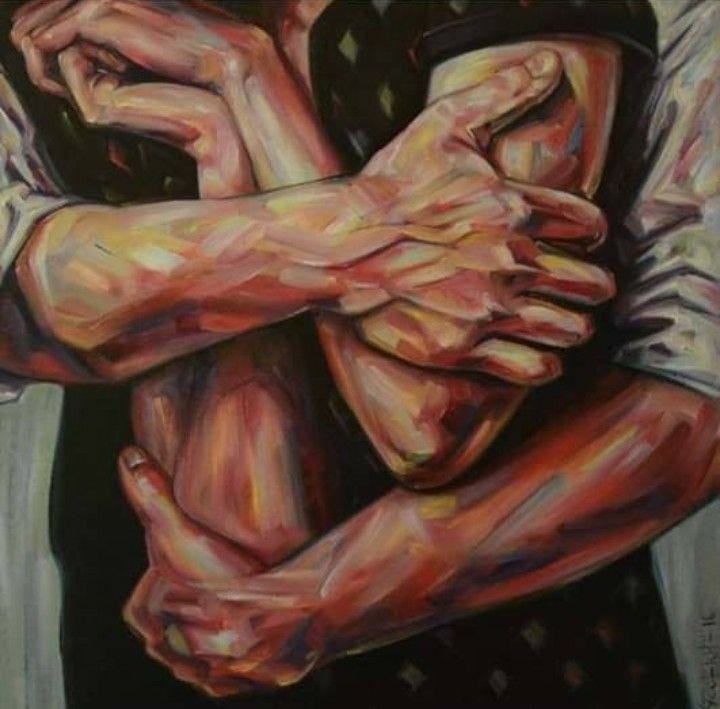
Love is supposed to feel like something steady, something you can set down for a moment without fearing it will disappear when you return. But for someone whose earliest experiences taught them that affection could be withdrawn without warning, consistency feels unfamiliar in a way chaos never does. Predictability is comforting, but uncertainty is intoxicating. Every relationship slowly transforms into a waiting room where every subtle shift in tone feels like another test they didn’t know they were taking. Their heart begins measuring love in fragments. Tiny moments become monumental because they aren’t simply gestures of affection—they are temporary proof that the catastrophe they have been rehearsing inside their mind has not happened yet.
That is why the highs feel impossibly high and the lows feel like twisting the knife on themselves. They are not chasing grand declarations or impossible romances; they are chasing the brief exhale that follows reassurance. The tragedy is that relief was never meant to carry the weight of love. Relief fades. It expires almost as quickly as it arrives, leaving them searching for the next sign, the next confirmation, the next heartbeat that says, You’re still here. You still choose me. Somewhere along the way, they stopped recognizing the difference between feeling loved and feeling temporarily safe from being abandoned. Relief is a feeling—temporary, fleeting, already slipping away. Love is a sentiment—steady, deliberate, timeless.
Comments
Nothing yet. Say the first thing.
Sign in to join the conversation.