

Patience is arguably the most underrated skill in trading and investing. While many people spend years searching for the perfect strategy, indicator or entry model, far fewer dedicate the same amount of time to developing the discipline required to simply wait.
Yet the markets have a unique way of rewarding those who can remain patient while punishing those who feel the constant need to act. The reality is that opportunities do not present themselves every day, and the best traders understand that preserving capital during quiet periods is just as important as growing it during active ones.
This week we’re shifting away from macroeconomics and instead exploring the psychology of patience. Why it’s one of the greatest competitive advantages a trader can possess, and why learning when not to trade can often be the decision that protects both your account and your long-term success.
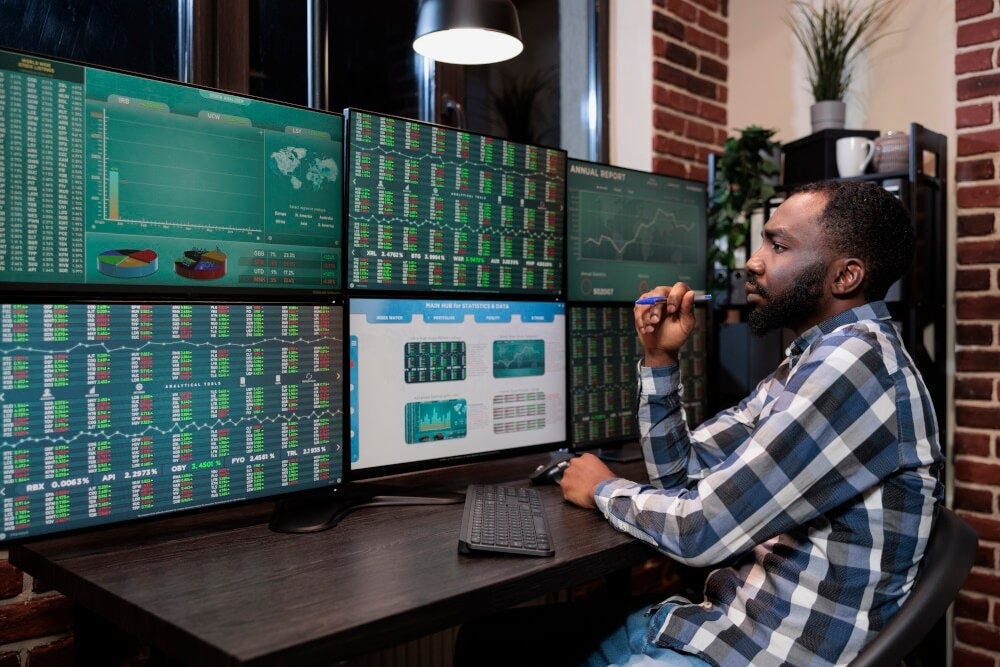
Over the past few weeks, I’ve found myself doing very little on the charts. Markets have largely been trapped within ranges, volatility has been subdued and there have been very few meaningful catalysts capable of creating sustained momentum.
As traders, we naturally want movement because movement creates opportunity. But not all movement is worth trading. There are periods where price appears busy on lower timeframes, yet ultimately goes nowhere. Those are often the most frustrating conditions because they tempt traders into believing there is something to capture when, in reality, there isn’t.
Even after six years of trading experience, I still have to consciously remind myself not to confuse screen time with opportunity. Experience doesn’t remove the temptation to trade but rather, it teaches you how to recognise it.
During quieter periods, boredom becomes one of the greatest psychological risks. You begin scanning more charts, dropping into lower timeframes or convincing yourself that a setup is ‘close enough’. Before long, you’re no longer following your trading plan; you’re negotiating with it.
One of the biggest lessons trading has taught me is that activity and productivity are not the same thing. In most professions, being busy is seen as a sign of progress. In trading, unnecessary activity often leads to unnecessary losses. Some of the most profitable weeks I’ve had have involved taking only one or two high-quality trades, while some of my least productive periods have been those where I felt the need to constantly participate.
This is where patience becomes a genuine skill. It’s the discipline to trust your process even when the market isn’t rewarding it immediately.
There is an old stoic principle that says we should focus our energy only on what we can control. We cannot control when volatility returns, when institutions enter the market or when a major catalyst appears. What we can control is our preparation, our execution and our decision-making. Once you accept that, patience becomes less frustrating because you stop fighting the market’s timing and begin respecting it instead.
The market doesn’t owe us a trade every day. It simply offers opportunities when conditions align. Learning to stay still until those moments arrive has become one of the strongest foundations of my own trading, and it’s a habit that continues to protect both my capital and my mindset.

Another major challenge that traders face today comes from comparison, and as we know, “comparison is the thief of joy”. Social media has created an environment where somebody is always posting profitable trades or showing impressive payouts. Spend enough time scrolling and it can quickly feel as though everyone else is making money while you’re sitting on your hands.
The problem is that you’re comparing your behind-the-scenes reality to somebody else’s highlight reel. What you don’t see are the days they didn’t trade, the losses they chose not to post or the periods where they simply waited. Trading is one of the few professions where doing less can often produce better long-term results, yet social media constantly encourages the opposite mindset.
This is why your trading plan should become your anchor. If your strategy says there isn’t a setup, then there isn’t a setup. It doesn’t matter what somebody else is buying or selling, how confident they sound or what profits they’re posting. Their strategy isn’t your strategy, their risk tolerance isn’t your risk tolerance and their objectives aren’t your objectives.
Some of the greatest psychological progress you’ll make as a trader happens when you choose not to follow the crowd. Every time you resist the urge to chase someone else’s trade, you strengthen your trust in your own process. That confidence compounds over time. Eventually, you stop needing validation from social media because your conviction comes from your own preparation rather than somebody else’s opinion.
Learning from other traders is valuable. Letting them dictate your decisions isn’t. The goal is to gather information while remaining completely independent in how you act upon it.
If you’re enjoying the read so far, why not click the like button and share it with a friend? It takes just a few seconds and would be greatly appreciated!
One of the biggest mistakes traders make is expecting markets to behave the same way all year round. They don’t. Markets move in cycles. There are periods where trends develop effortlessly and volatility remains elevated, followed by periods where price consolidates, liquidity dries up and momentum becomes increasingly difficult to sustain. Recognising which environment you’re trading is just as important as identifying a good setup.
The summer months, particularly July and August, have historically been associated with slower market conditions across many asset classes. Institutional participation often reduces as traders take holidays, economic calendars become lighter and liquidity can fall. The result is frequently more ranging price action, lower conviction and an increase in false breakouts. Opportunities still exist, but they often require a different level of patience and a different style of execution.
Professional traders understand that success isn’t just about knowing how to trade, it’s also about knowing when to trade. A strategy that performs exceptionally well in a strong trending market may struggle during prolonged consolidation. Instead of forcing the same level of aggression into every environment, experienced traders adapt. They reduce frequency, become more selective and wait for conditions that suit their edge.
Before looking for entries, it’s worth asking yourself a few simple questions:
Is the market trending or ranging?
Is volatility expanding or contracting?
Is there a genuine catalyst driving price?
Does this environment actually suit my strategy?
These questions often determine whether patience is the right trade.
The best traders know when to be aggressive, but they also know when to step back. Protecting capital during difficult conditions is a sign of strength that allows you to take full advantage when better conditions eventually return.
Every season in the market serves a purpose, and learning to adapt to each one is what separates consistency from inconsistency.
Patience is disciplined waiting. It is trusting that opportunities will come without feeling the need to manufacture them. It is understanding that preserving capital is every bit as valuable as growing it and recognising that your biggest edge often comes from the trades you choose not to take.
The last few weeks have been a reminder of that for me. Markets have offered very little that aligns with my strategy, and while the temptation to force opportunities is always there, experience has taught me that protecting my standards is far more important than satisfying my boredom. There will always be another trend, another breakout and another opportunity. The challenge is making sure you’re mentally and financially prepared when it arrives.
Profitable traders don’t need to be active all the time. They need to be ready when probability shifts in their favour. In many ways, that is the true art of patience. It’s not about sitting still for the sake of it, but rather in having the confidence to wait because you know your edge will eventually return.

I hope you’ve learned something new, and if you have any questions or want anything to be clarified, please leave a comment below and make sure to follow us on all social media pages.
Instagram: @lets.speculate / TikTok: @lets.speculate / X: @_LetsSpeculate
No posts
Comments
Nothing yet. Say the first thing.
Sign in to join the conversation.