
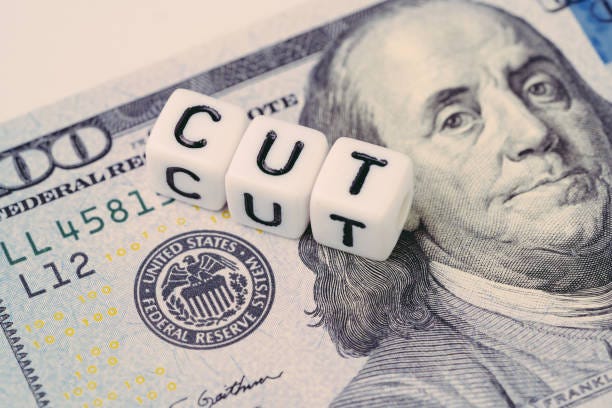
Last week, the Federal Reserve delivered its first rate cut of the year, a long-awaited shift that immediately impacted investor sentiment. For markets, this was confirmation that the Fed is ready to ease policy after keeping rates high for so long. The dollar, as the world’s reserve currency, weakened on the news, while US stocks (especially growth and tech) gained momentum as lower borrowing costs and looser conditions boosted confidence heading into Q4.
Yet this optimism comes with caveats. Inflation remains above target, the labour market is softening, and tariffs threaten to re-ignite cost pressures just as policymakers turn dovish. These risks are more likely to dominate the conversation in 2026, but for now the narrative is quite bullish. With the Fed pivoting and financial conditions easing, markets could be positioning for a strong run into year-end.

At its September meeting, the Fed cut its benchmark interest rate by 0.25%, bringing the federal funds target range down to 4.00%–4.25%. This was the first cut of 2025 and marked the start of a new chapter in the Fed’s policy approach. For much of the past two years, the central bank has been laser-focused on cooling inflation by keeping borrowing costs elevated. Now, with signs of slowing growth and a labour market that has lost some of its momentum, the Fed has chosen to step in with more supportive policy.
With the Fed now shifting into a new policy approach, they are going from quantitative tightening (raising rates to slow the economy), back to quantitative easing (cutting rates to make borrowing cheaper and encourage growth).
Markets reacted exactly as you’d expect. The US dollar slipped lower, as investors recognised that lower rates reduce the dollar’s relative appeal. This adjustment in expectations set the stage for potential further softness if easing continues. Stocks, meanwhile, responded with enthusiasm. US equities pushed higher, led by technology and growth sectors that thrive when borrowing costs fall and valuations are boosted by lower discount rates. The decision reinforced the idea that the Fed is willing to provide support, and investors embraced the shift by leaning further into risk assets.
Alongside the rate cut, the Fed also released its updated Summary of Economic Projections, including the dot plot. Compared with its last set of forecasts, the central bank now signals two more rate cuts are likely before the end of the year, most probably in October and December. Inflation, however, is expected to remain elevated at around 3.0% through 2025, showing that the path back to the Fed’s 2% target remains a drawn-out process.
Growth forecasts were nudged slightly higher to 1.6%, suggesting that the economy is more resilient than previously thought, while unemployment is expected to edge up to 4.5%, reflecting a modest cooling in the labour market. This mix of slower inflation progress but steadier growth has bolstered the bullish narrative for Q4. If all goes well, looser conditions and solid fundamentals can set the stage for risk assets to continue higher as the year draws to a close.

Of course, the bullish narrative isn’t without its risks. Inflation, while off its highs, remains sticky in areas like housing, wages, and services. If it fails to decline further, the Fed could be forced to temper its pace of cuts or even pause, disrupting markets that are betting heavily on continued easing.
The labour market is another crucial piece of the puzzle. The Fed expects unemployment to climb modestly, but if hiring weakens more sharply than anticipated, consumer spending (the backbone of the US economy) could falter. That scenario would bring recession fears back into focus. On the flip side, if the labour market rebounds strongly, wage growth could accelerate and re-ignite inflationary pressures, again complicating the Fed’s plans.
Furthermore, we should also remember that tariffs and trade tensions add yet another layer of uncertainty. Higher import costs risk feeding into inflation at the very moment the Fed is loosening financial conditions. Global factors, from shifting demand to geopolitical shocks, could also play a destabilising role. While these risks may not materialise immediately, they remain important for investors to keep in mind.
In the short term, however, market makers are squarely focused on the bullish momentum created by the Fed’s pivot. For the next three months, the easing story is likely to dominate, even if the longer-term challenges still lurk in the background.
If you’re enjoying the read so far, why not click the like button and share it with a friend? It takes just a few seconds and would be greatly appreciated!

The big question now is how to position in this type of environment. The general plan would be to jump into the assets already leading the charge such as mega-cap tech stocks, Bitcoin, and other popular names. And while these assets will likely continue higher if conditions stay supportive, the risk-to-reward ratio at these levels is less appealing.
Buying at the top of a well-worn trade often leaves less room for upside and more exposure to volatility.
More attractive opportunities may lie in areas that haven’t yet had their rally. Within equities, that could mean smaller-cap growth stocks or sectors that stand to benefit from cheaper borrowing but aren’t commanding the same attention as the giants of tech. In crypto, many altcoins remain well below their prior peaks despite improving fundamentals and growing adoption. A broadening rally could see these undervalued names play catch-up. Globally, a weaker dollar could make non-US equities (particularly in emerging markets) more compelling as capital looks for better value.
The key is to avoid crowding into the trades that everyone else is already chasing. By digging deeper into research, you could find undervalued assets with stronger upside potential and healthier risk-to-reward dynamics. This isn’t investment advice, but the principle remains clear: the best opportunities often sit beneath the surface, waiting for attention to shift their way.
For now, the path forward is tilted upward. With looser financial conditions and resilient growth, Q4 has the makings of a strong finish. The challenge will be to navigate the rally with care and avoiding overexposure to already worn-out. Optimism is justified, but selectivity and discipline will be what separates the winners from the losers.

I hope you’ve learned something new, and if you have any questions or want anything to be clarified, please leave a comment below and make sure to follow us on all social media pages.
Instagram: @lets.speculate / TikTok: @lets.speculate / X: @_LetsSpeculate
No posts
Comments
Nothing yet. Say the first thing.
Sign in to join the conversation.