

If you have an influencer program, more than likely shopping extensions like Capital One, Honey, Ebates, Coupert, and more are eating into your revenue, reducing margins, and ruining your revenue attribution.
Here are 2 ways you can mitigate that…
Shopping extensions are great for consumers, bad for business. Yes, they might nudge a certain % of shoppers to converting if there is a great deal, but more likely than not they do more harm done than good.
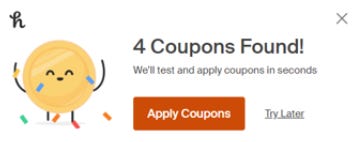
For every person that is on the fence and needs a code to convert, I’m guessing there are 10X more people who end up on checkout willing to buy, and are delighted when they are presented with a coupon that works.
To stop this, at least on Shopify - here are two apps (1 of which I’ve used and can recommend) that stop the automatic injection of codes on checkout.
Note: people can still manually search codes and apply them.
BrandLock.io - https://brandlock.io/
CleanCart - https://apps.shopify.com/cleancart
I’m in no way affiliated with either of these, and I’ve used CleanCart and works just fine - just watch out with CleanCart’s annual pricing/agreement, it’s a bit hidden.
Step 1: Go to the Shopify Customers section and define a new audience with this segment:
number_of_orders = 0 AND customer_added_date >= 7_days_ago

What the above code does: Creates a segment of customers that have 0 orders and have been added to Shopify in the last 7 days. Your choice to change the time window here, but “number_of_orders” should be set to 0.
Step 2: Apply this segment as a limit for your discount code or codes.
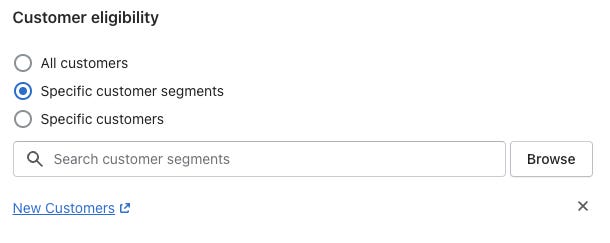
That’s it! Now your code is protected from returning customers.
Why It Works: As new customers check out, Shopify creates a “Customer” profile as soon as an email is present.
2 Scenarios:
Customer adds code first, then email: When a customer goes to the shipping step, Shopify retroactively checks the code’s eligibility against the customer email. Denying the code if not in segment.
Customer adds email, then code: This one is simple, code is denied.
These 2 methods will minimize the chance of your influencer codes spreading and being abused, but both can be worked around by a consumer (manually searching for a code for Method #1, using a different email address for Method #2).
Best strategy would be to use these methods, and at the same time monitor codes, cycle them and expire old codes when their life is done, and keep track of influencer activity (have they posted 0 times in the last 3 months but have a bunch of revenue? Red flag).
That’s it! Hope you found this useful. Please subscribe if you haven’t already to receive more E-Commerce insights, tips, and discussion.
No posts
Comments
Nothing yet. Say the first thing.
Sign in to join the conversation.