

I know people who claim to have frequent communication with dead loved ones. They talk to them and feel their presence. My neighbor, a tough-minded widow who stacks her own firewood and is obviously disgusted by the mess I’ve made of my once well-landscaped property, told me she saw her husband, in full, a few months after his death. He was standing in the hallway, just like when he was alive, she said. Not a spectral, but full body, as though I could reach out and touch him. She said it initially frightened her, but later gave her comfort. She liked knowing that in some way, he’s still here.
Most people have faith that their loved ones are somewhere waiting for them in whatever way a person without a body can be waiting. I’ve never felt this. I did not have many direct, close losses until my brother died in 2018. I was not exactly close to him, he was sixteen years older than me and we had not lived together since I was a toddler, but the potential for a relationship always felt just within reach, after he got his health together or after my son got older or after he got himself a separate house from my parents, it was always about to happen.
Even still, after he died, I never felt an intense longing for communication beyond the grave. Maybe that’s because I can’t wrap my head around who I’d be communicating with. What we are without the bodies that so obviously shape our experiences? My brother was six feet, five inches tall with flaming red hair. In his youth, he was tall and elegant. My mother’s favorite story about him was how he once modeled for the Bennington, Vermont JC Penney - her secret desire for all of us was modeling, but I disappointed her in being short and chubby and allergic to doing anything with my life or my body that would please her. But my brother was her golden child, striking and attractive and athletic, but also startlingly distant from everyone right up until the moment he’d show up at your door for a surprise visit. His life was a mystery to me for years, until he was in his fifties and moved in with my parents, destitute and running from something.
By the time he moved in with them, he had gained so much weight he was nearly immobile. Food was one of his last joys. He could barely breathe the last time I saw him, two weeks before his death. He was talking about how he’d sign up for insurance come January, when he would qualify for a new plan. He said this between gasping breaths, excited at the prospect of getting a CPAP machine. Who would my brother be without the body that formed his sense of self and eventually killed him?
When Cyndi died, I felt an acute longing to hear from her that I’d never felt before. Even before she was technically gone, when she was still kept alive in body by machines, I stood by her hospital bed, talking to her, a part of me believing that maybe she’d wake up if somebody said the right words, though I knew logically that she would not wake. When she was gone, I didn’t feel her presence, though I tried to talk to her, and still do. I pulled a tarot card that made me think of her: The Strength card, depicting a woman with greying hair, surrounded by plants and watched over by a wolf (Cyndi loved her wolf dogs and plants), but beyond that, I got nothing. I still talk to her, I visualize her as I last saw her alive, I imagine a few more grey strands, I hear her voice in my head, but I do not feel her beyond my imagination. But one time, I dreamed of her.
In this dream, I was on a cruise ship with my husband, son, sister-in-law, her family, and my niece, Cyndi’s daughter. I remember we were all in bathing suits, on the deck of a ship, rocking gently. And there was Cyndi, too, a stack of beach towels on her lap. The dream flashed the knowledge that I had within its world: this was a trip we’d planned before Cyndi died, so she was obviously still coming, but once the trip was over, she would be dead again. She didn’t know she was dead, though, so we had to do the entire trip as though she wasn’t, because in this world of my dream we would lose her if we told her, she’d disappear like vapor if somebody breathed a word about her death. I didn’t worry that the kids would slip or that any of us would tell her because we were all so delighted to see her.
I could not stop hugging her to feel the solidity of her bones beneath her skin. I cried, but I told her I was crying because I was so excited. She had the itinerary for the week and was circling everything she wanted to do. She was enthusiastic in the way only Cyndi could be enthusiastic, with a joyful vulnerability that I admired and wished I could let go enough to express.
When I woke up, I didn’t feel peace, but a deep, deep sadness. In truth, I didn’t go on many trips with Cyndi and that was a regret even before she was gone. We had a girls trip planned for the March after she died, had so many hopes of beginning a new era of physical closeness in addition to our near-daily messaging habit. I have never before in my life thought I will get closer and closer to this person and we will be old together about anyone but my husband, but I felt that way about Cyndi. And almost as soon as I knew I wanted that, it wasn’t possible anymore. The dream was a gift, but it was also a reminder of how often I’ve failed the people I love with my own insecurity.
*
I’m going through Lojong mind training. Last year, I realized between grief, the insanity and horrors of the world - the genocide in Gaza, the brutality of ICE, the opening salvo of a war with Iran being the mass murder of schoolchildren - I didn’t know how to be a person anymore or organize my mind. I first took a class in Lojong over fifteen years ago, when I was too young and stubborn to grasp most of it. The training involves these slogans that are meant to awaken a sense of compassion and get out of habitual thinking patterns - they are meant to help us see the world and other people with compassion, to dissolve some of the hard lines between self and other, to break down patterns of the mind that keep us locked in suffering.
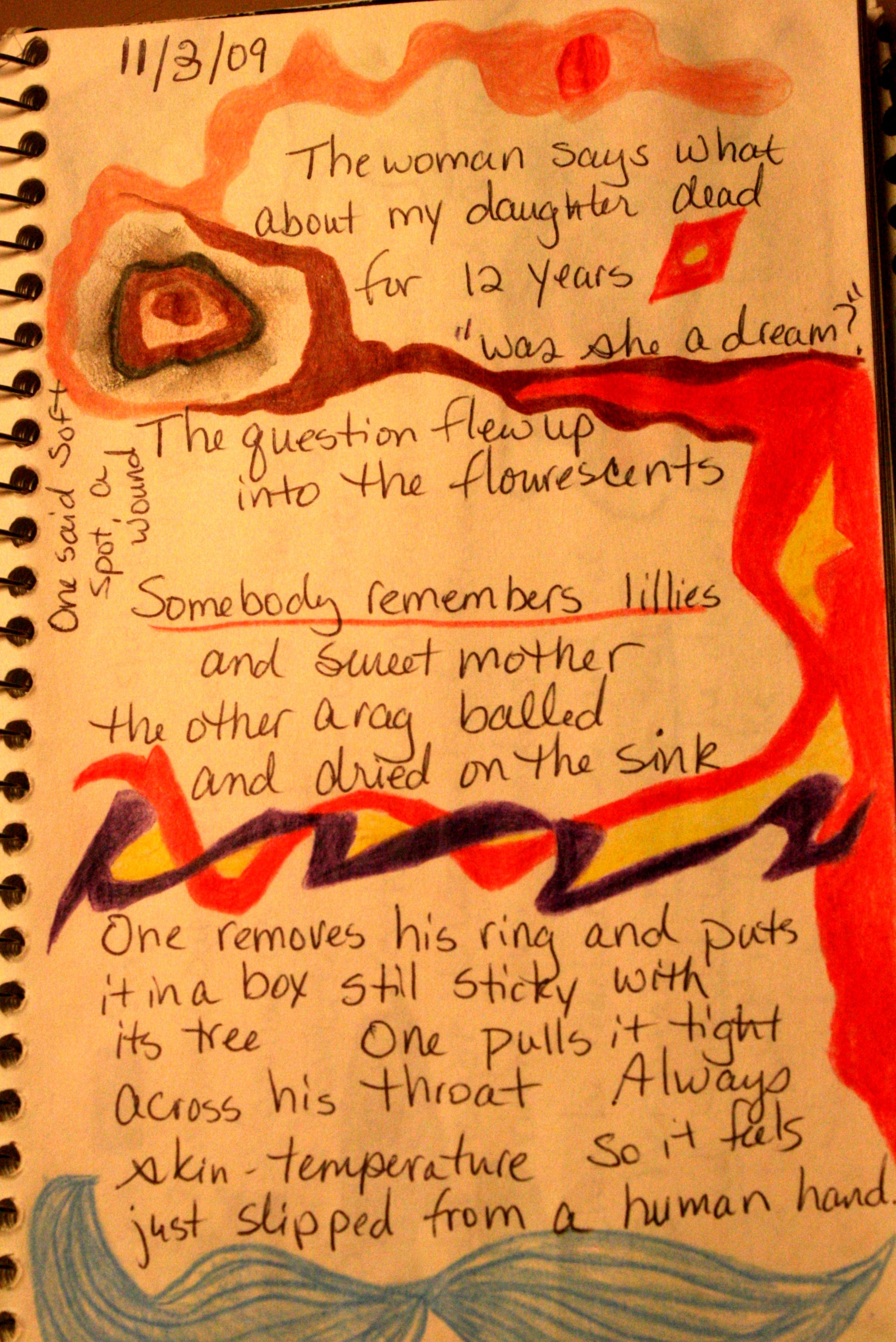
Back in Burlington, Vermont, when I did my first Lojong training, I was 28 in a room full of mostly elderly women. One of the slogans, “Regard all dharmas as dreams,” encouraged not seeing the world as solid and fixed, to not completely trust our desire to reify our experience of reality. There’s more to it than that, but I’ll leave that to more experienced people to explain. I remember one woman, discussing her difficulty with this slogan, who said what about my daughter who died twelve years ago, was she just a dream?
During this class, I took fragmented notes and drew in the margins. Here is the page I created during this conversation:
My dream of Cyndi is just a different kind of real than my twenty-five plus years of knowing her. They are both real and in some way unreal - where did those years go? Where are they now? They both happened and they are gone and they are always here with me and sometimes, I wake up and think I’ll have to tell Cyndi, because for a split second she is still alive in my mind.
No posts
Comments
Nothing yet. Say the first thing.
Sign in to join the conversation.