
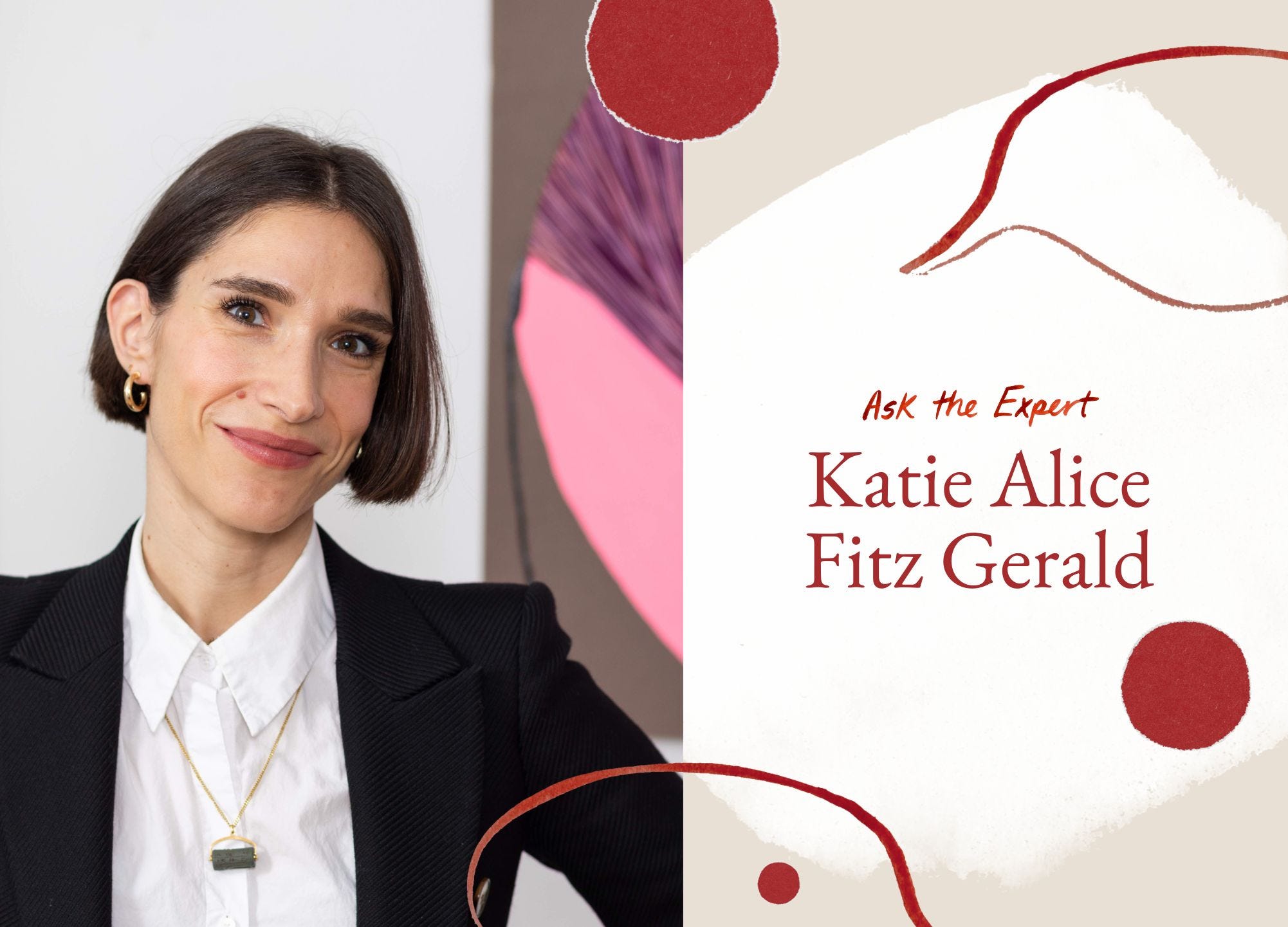
Next up in our Ask the Expert series is Katie Alice Fitz Gerald, curator, art advisor and founder of is an art advisory and curatorial practice Over/Under Fine Art.
Last month, Katie Alice joined our members for a live webinar all about navigating New York Art fairs, auctions, and events during Frieze week, and we wanted to share some of her top tips here too!
Less Than Half Essentials members have access to the full archive of Art Professional Session recordings — including last month’s session with Katie Alice — plus online community discussions, peer learning, real-world mixers, studio visits, gallery openings, art fair moments, and curated global events tied to major art world calendars.
Doors reopen to our Essentials tier on June 17. Join the waitlist to stay in the loop and access early bird pricing.
There are so many ways to connect with art: it could be a singular experience with the object itself or the process of building relationships with artists to become more in-tune with their practices or perhaps the social interaction around openings, art fairs, dinners and other events. There is joy in all of these things depending on how much or how little you want to engage with.
My job is to allow access to any of it while helping to distill some of these experiences into a curated selection of artworks that someone wants to live and grow with.
When I first sit down with a new client, I want to make room to gain insight into who they are, what their lives are like, their relationship with culture and importantly, in this era of overwhelm, what people actually have the bandwidth for.
This is to build a picture of what they want from the experience of working with an advisor. This is not to form judgement or create a didactic dialogue of making people feel like they should or shouldn’t be doing certain things, it’s to create an experience around art which suits them as an individual.
Ultimately I’m another person in their lives and so need that relationship to be enjoyable, trusting and not a strain. By allowing clients to have agency to be honest about what they want initially or in the long term, it will allow the experience to unfold organically and unlock the joy along the way.
I think that those who truly want to create an art portfolio with a focus on investment and certainty of increasing value should come to collecting with a very significant budget as it’s more common to achieve these goals when you are dealing with the top end of the market.
That is not to say that work bought in the emerging to mid-career sector won’t accrue value but it’s much more circumspect as there’s no secondary market testing that you usually get at the top end of the market.
Generally though even if you have a large budget with an eye on investment opportunities, the approach remains the same as building a collection where investment isn’t as much of a consideration. It’s the age old adage: Buy what you love and what resonates with you!
My belief is that there are no truly wrong choices when building a collection as long as you’re buying work that feels meaningful to you from places that genuinely support the ecosystem of art. By that I mean buying from galleries and platforms that give artists creative freedom, that care about the cultural value of art, and treat the objects themselves with care and reverence. But above all else the connection to the work comes first.
What I do see hold people back is the self-imposed pressure to make the perfect purchase. Art is a financial commitment, so the instinct to get it exactly right is completely understandable but that can end up becoming paralysing.
The most common version of this that I encounter is someone who has followed an artist for a while, fallen in love with their practice, and then when a new exhibition comes around and their early interest has earned them a first pick preview from a gallery, they struggle to commit.
There is a tendency to second-guess whether the specific work they’ve been offered is exactly what they imagined. In those instances I gently encourage collectors not to overthink it.
The groundwork has been done, the love for the artist is there and the opportunity to acquire their work at this price may not come around again so easily. The piece you choose will carry with it the full history of your passion for that artist and their practice. As a collector myself, I regret the works I deliberated over and missed, not those that I have bought.
I think pricing is still the biggest information gap. While the culture of opacity around pricing has certainly improved over the last few years since the market has softened, there is still a lot of gatekeeping with public exhibition previews not having prices listed or easily accessible.
Having come from the gallery world I recognise this as a mechanism to force more interaction so you can try and get to know possible buyers and build connections but I honestly think it has the opposite effect and is a real turn-off for new collectors.
I try to encourage people to have the confidence to ask if they are genuinely interested or I do that on their behalf. If I’m receiving previews or offering pieces, that work is already done so by the time it gets in front of a client, they have all the information to hand.
It’s a good question as I think each fair offers a very distinct environment and market access point. There are two that I would land on: Future Fair and NADA.
Future is a newer fair offering a smaller selection of homegrown galleries and a handful international ones who are either new to the NY fair scene or their programs showcase a roster of more emerging artists. The price points often sit under $10,000 and many under $5,000. It’s a digestible fair that avoids the viewer leaving overwhelmed and fatigued by too much imagery and information.
For collectors who want to tap into the emerging to mid-career tier of the NY gallery scene then NADA is the best fair to attend. This is where many galleries situated in Tribeca, LES and some in Chelsea exhibit. There is also a decent presence of galleries based across the US and internationally. The range of artists tend to be approaching more a mid-career positioning where they have engaged in residencies, have a growing exhibition presence and are being recognised through collection or exhibition by smaller institutions. The price point is mostly below $25,000 and often $10,000 or under.
This May in particular offers a really interesting program of institutional exhibitions. The newly renovated New Museum opened in March with a blockbuster exhibition ‘New Humans: Memories of the Future’. This has a pertinent curatorial framework which is almost an anthropological survey, connecting human evolution over the 20th and 21st century to technological innovation.
Another big exhibition that I think is worth a visit in May is the Duchamp retrospective currently at MoMA. Touted as the father of contemporary art and with good reason, this exhibition charts Duchamp’s trajectory from early painter, influenced by Cezanne through to instigator of the Readymades and other tropes of art that we continue to see today. Personally I think it gives really important historical context and credence to understanding contemporary art today.
‘Greater New York 2026’ at PS1 also gives some insight into emerging artists working in New York and of course the Whitney Biennial, acting as a survey of American art. Despite somewhat mixed reviews of both, I would say they are still worth a visit to keep on top of artists who are being noted by these important art institutions, which in turn might shape thoughts about your own collections.
Less Than Half is the membership for culturally curious matrons of the arts led by art world expert Hall W. Rockefeller.
Through specialist guidance, our online curriculum, and a global network of fellow collectors, members gain the knowledge, confidence, and connections to invest in women artists with purpose and meaning.
Together, our community of aspiring and established art buyers champion inclusion, equity, and long term stewardship of women artists in pursuit of a more equitable art world for future generations. We’d love for you to join us when doors to the membership reopen in June.
No posts
Comments
Nothing yet. Say the first thing.
Sign in to join the conversation.