
I was called a “Stoic Emo” once,
And somehow it felt like home.Like every quiet war inside me
Was suddenly something you could know ...
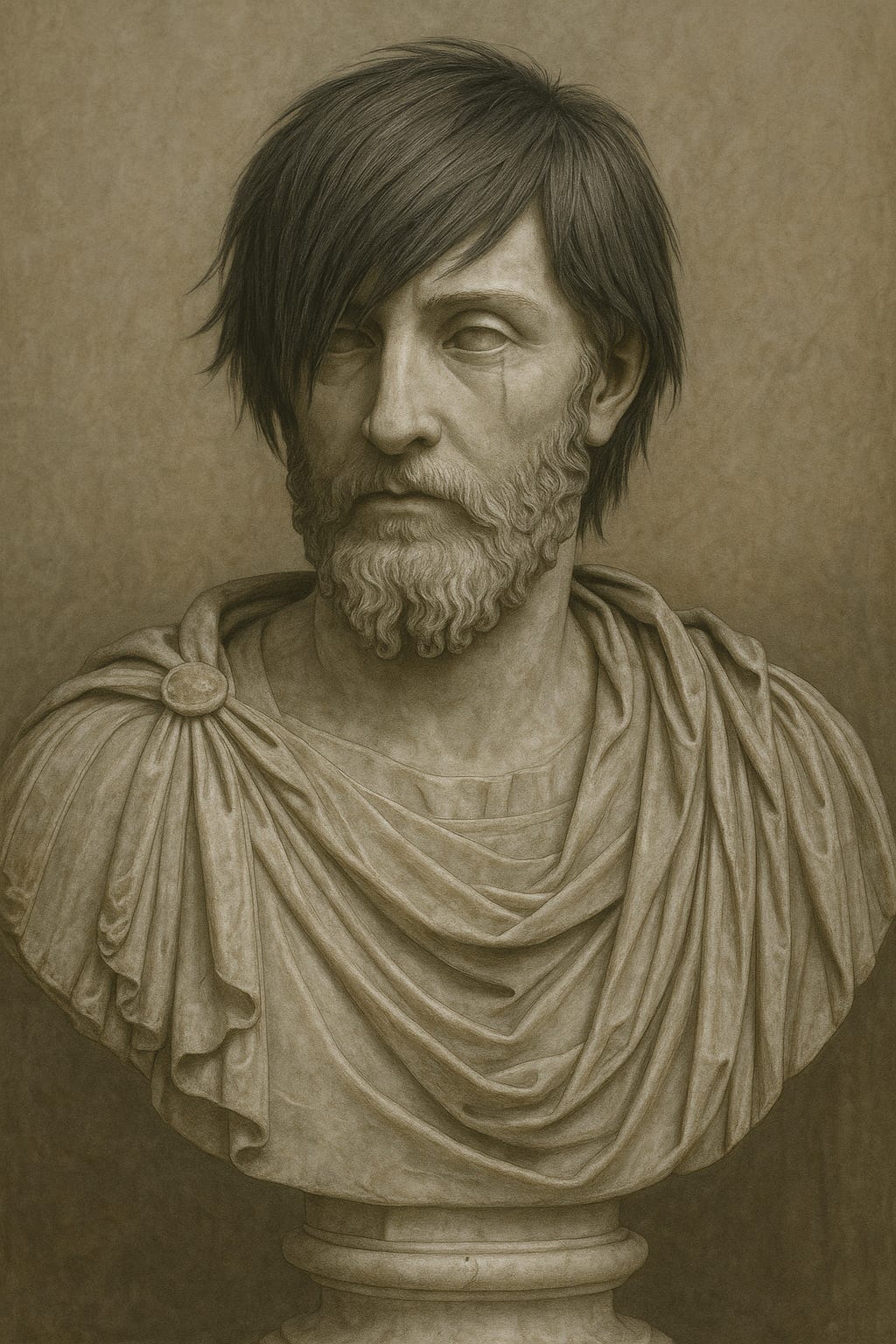
I used some techno-magic to create an emo song from a few lyrics I jotted down …
0:00
-2:21
Wow. I feel so seen.
Super seen.
Too seen.
How’s this even possible?!
“Being seen” = the hyper-cringe, therapy-speak term running wild throughout the modern world. It means that one has been finally and fully understood in both heart and mind, while carrying a manipulative subtext: the understanding achieved reflects not who they truly are, but how they want to be understood. This version is false, yet it feels safe because it presents them in a favourable and ultimately self-controllable light.
I was actually called a Stoic Emo once.
I hate-loved that, because I was meta-seen.
I was also called a “highly sensitive person” (HSP).
I just hated that, because I may have been actually seen.
I had no idea what an HSP was, but it sounded unmanly, nothing like the Stoic mensch I pretend to be: a bearded paragon with a penetrating mind, crazy discipline, and full-spectrum emotional dominance, resulting in a resting-barbarian face that scares away all fools.
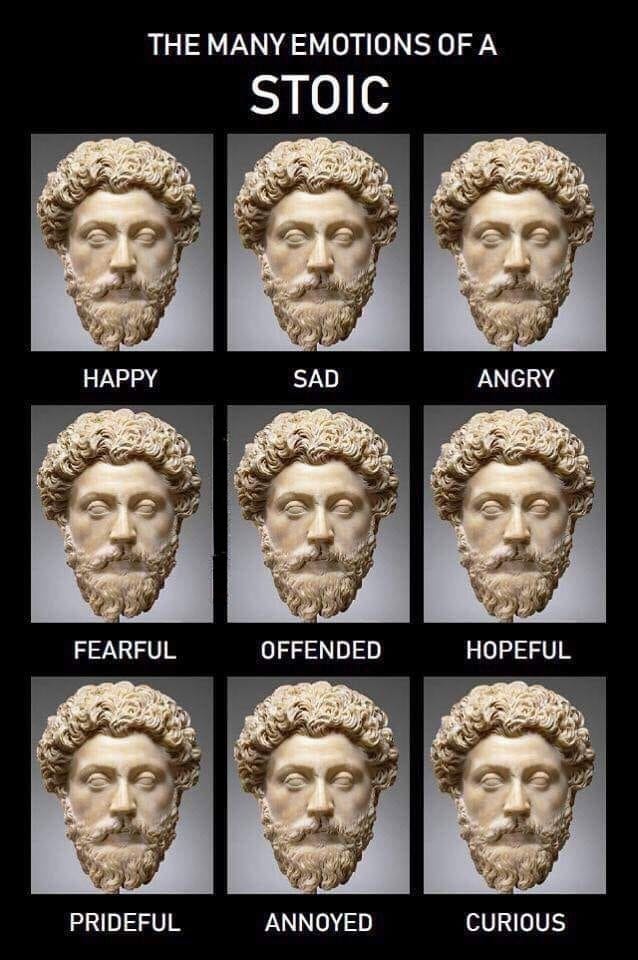
Fake it until you make it on hard mode, truly.
Apparently, an HSP is someone with a neurobiological temperament whose nervous system processes things quite intensely. Dr. Elaine Aron, who coined the phrase, describes an HSP through the DOES framework:
Depth of processing: they think deeply because they feel deeply.
Overstimulation: they can become overwhelmed more easily in social environments because they take in more emotional and social information.
Emotional reactivity & empathy: they feel strongly and tend to have “louder” emotional lives.
Sensory sensitivity: heightened sensitivity to sensory input.
🤔
I refuse to own this label, partly because it feels rude to compare one’s inner landscape to another’s, which easily leads to silly identity inflations: “Hah! I am way more sensitive than you!”
Still, my emotional and cognitive worlds do feel naturally porous, and sometimes very noisy. It’s like twenty people are trying to get my attention at once, tapping me on the shoulder, shouting advice into my ear. Everything feels urgent; my thoughts struggle to keep up, and my words have no chance of catching up, so I just shut up.
When I’m activated in social contexts, multiple narratives race through me simultaneously…
Shoot, my resting barbarian face is making them nervous, and their nerves are flowing into me. I’m becoming nervous now, which is making them more nervous. Quick, make an awkward joke!
This person is such a deep fake; their sophisticated phoniness actually hurts my body. Pretense within pretense within pretense … Why do you want me to play these games?! 😭
This person is on the brink of a spiritual emergency. Game recognizes game. Drop all thoughts. Co-regulate them. It’s going to be alrightttttt.
Uh-oh, she has some serious leaky eros. Must resist falling into a sleepily seduced trance state. Focus on disembodying ideas.
Did they just think that, or did I just feel them think that? Am I psychic, projecting, or just crazy? Are these discarnente entities messing with me again?
AHHHHH.
Everyone, please, shut the fuck up.
*** plays emo song on repeat ***
The most I’ve ever felt seen,
Like you read the shadows in-between.
Your perception so intoxicating—
Yeah, it cuts deeper than it seems.
<3 <3 <3
I feel so seen again, which really means I’m regulated.
I’ll get to that in a moment.
I hope you understand now why I was drawn to Stoicism, that terribly misunderstood philosophy.
Its promise is emotional agency: to be unflappable amid the vicissitudes of life and any sociopaths who cross your path. Yet, at worst, it becomes emotional repression plus persona aesthetics, which is the common (and often accurate) criticism.
The actual Stoics don’t help with this, giving advice such as:
“If you are kissing your child or wife, say that it is a human being [a mortal] whom you are kissing, for thus when they die, you will not be disturbed.” — Epictetus
Dude.
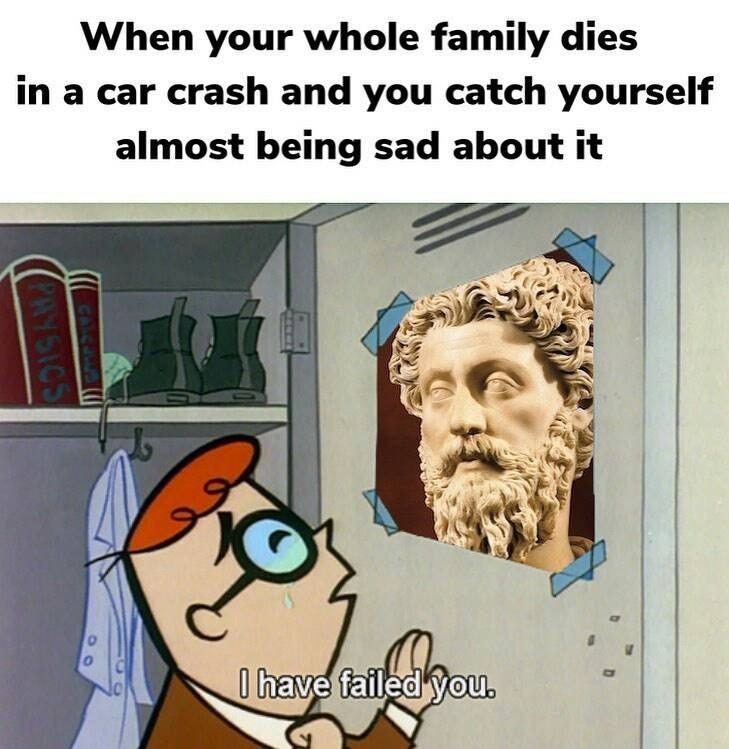
The thing is, most early Stoic texts have been lost, and I’m skeptical that we can accurately piece together how they actually practiced. While Stoicism did directly influence cognitive therapies such as REBT and CBT, I’d be disappointed if it all boiled down to cognitive restructuring through creating thought records.
That can’t be it.
Even if it was, I don’t care.
I am not playing the “mimic the ancient Stoics and whatever their weird, fragmented advice was” game. Instead, I’m drawn to the archetype of the Stoic, more specifically the Stoic Emo, that beautifully mystic man whose high sensitivity and attunement to social fields do not compromise his effectiveness in the world but rather increase it despite whatever pain comes his way.
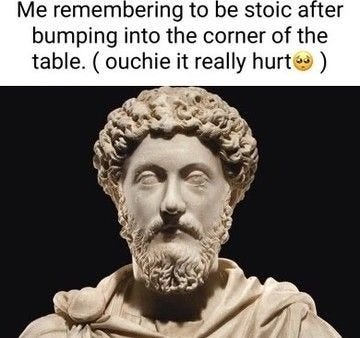
He does not repress his emotional landscape; he is fully alive within it. And with the capacity to bring himself into a state of peace, he can track that subtle, invisible vector, aligning his logic with Logos for good reasons: to guide his life and the lives of those he lives for.
In essence, he’s a wise-doer, a sagacious striver, an honest-to-God Stoic.
If such an otherworldly figure is to exist, we’ll have to invent him, first by understanding what “emo” actually is.
Everyone talks about their emotions, but no one knows what they are talking about.
Myself included, hence my desire to learn and cultivate an inner acuity that does the Stoic Emo moniker justice.
We can say that an emotion is a short-lived response that influences the body and behavior, sometimes consciously and sometimes not, for example, joy, surprise, or shame.
Here is an incomplete, personal working glossary of phenomena that people sometimes conflate with the word “emotion”:
Autonomic nervous system (ANS): The body’s automatic system for regulating arousal and maintaining internal balance through the sympathetic (fight-or-flight) and parasympathetic (rest-and-digest) systems in response to what’s happening around us. For example, your heart rate rises when a threat appears and settles when it’s gone.
Primary affective systems: Innate, evolutionarily ancient neural circuits that generate foundational affective states such as fear, rage, seeking, care, and play. (Panksepp).
Feelings: The conscious, subjective experience of an underlying affective or emotional process, for example, “I feel happy right now.”
States: Temporary, whole-system modes of being that shape perception and behavior, e.g. a calm state, a flow state, a playful state, etc.
Moods: Long-lasting states that influence a person without a specific trigger.
Subpersonalities: A constellation of emotions, along with cognitive scripts, invoked by a specific trigger that seems to have semi-autonomous agency and influences a person in unconscious ways.
That’s a lot.
I wanted a phrase that houses all of these, and I came across the “affectome,” the emotional equivalent of the genome, a framework aimed at mapping the entirety of affective architecture.
So, if Stoic Emos are to exist, they’ll need to become intimate with their affectomes, not for mere theoretical mapping purposes, but through practices that allow them to become skilled with their emotional instrument so it actually plays something beautiful.
After investigating many therapeutic, coaching, and acting modalities, I’ve broken up the talent stack of Stoic Emoism into three distinct skills, which I’ll provisionally label somatic regulation, upstating, and parts work.
Firstly, one needs somatic regulation: the ability to directly influence your ANS so it can maintain a “baseline” that doesn’t lead to overwhelm. Think slow breathing, progressive muscle relaxation, and vagal toning. Modalities like Somatic Experiencing and polyvagal-informed therapy are designed for this.
Secondly, upstating: intentionally moving into more energized or life-affirming states to meet the demands of challenging situations or to enhance overall life enjoyment. Modalities like Neurolinguistic Programming1 or Emotional Affector Patterns2 can support this process.
Lastly, parts work: the ability to track subpersonalities, enter into “dialogue” with them, meet and accept them as they are, and integrate whatever wisdom they offer. Modalities such as Internal Family Systems and Aletheia Unfolding3 are well suited for this.
Basically: get your body to equilibrium, uplift your state if needed, then integrate rejected subpersonalities when time allows.
Regarding the latter, most parts-work modalities, while effective, use a very direct approach and do not need to spend much time in the weeds of a subpersonality’s reasons. And for good reason, because the part’s “logic” is limited by the fact that it is not in conversation with the whole of the person’s other parts.
Subpersonalities, given that they are recurring emotions with associative cognitive scripts, have a coherent internal logic, but their reasoning is bounded and cut off from the whole, hence they are unwise as a (w)hole.
This is where practical philosophy, especially philosophical counselling with a parts-work sensitivity, really shines. You can compassionately engage the part, through reason, in a way that is loving and eventually integrative, while also strengthening your own reasoning capacity, a skill that most psychotherapeutic and coaching modalities do not touch.
And touch it they must, if the Stoic Emos are to arise.
***
The Stoic Emo: a manly creature who does not seek emotional mastery for its own sake, but so he can be guided by reason, not the disembodied kind, but the kind married to his body and moving him to unite with other bodies.
Logic attuned to Logos.
Power unfolding out of love.
Agency guided by wisdom: a wise agency, if you will.
Cue the music:
So I bleed out all my wisdom for you,
Write confessions in the scars you never knew.
Maybe if I give enough of me,
You’ll hear the truth inside the scream …
And then the cringe (but soooo good) chorus drops:
See me. See me. See me. See me…
I’m begging in the silence you leave.
See me. See me. See me. See me…
Before I tear apart at the seams.
<3 <3 <3

The Wise Agency experience has been great thus far. We are ending strong with Scott Britton, who will be presenting on his new book, Conscious Accomplishment.
You can still attend the last session live and get access to previous recordings and the Wise Agency syllabus by signing up below. Feel free to adjust the recommended amount and pay what feels right:
This will be the last session of The Stoa for 2025, so we hope to see you there …
Great session at The Stoa:
Another great session at The Stoa:
Comments
Nothing yet. Say the first thing.
Sign in to join the conversation.