
The spirit of spring cleaning is in full force at the distillery. We’re gathering the last loose threads, tying bows, and completing the work we began with last season’s fruits over the course of winter.
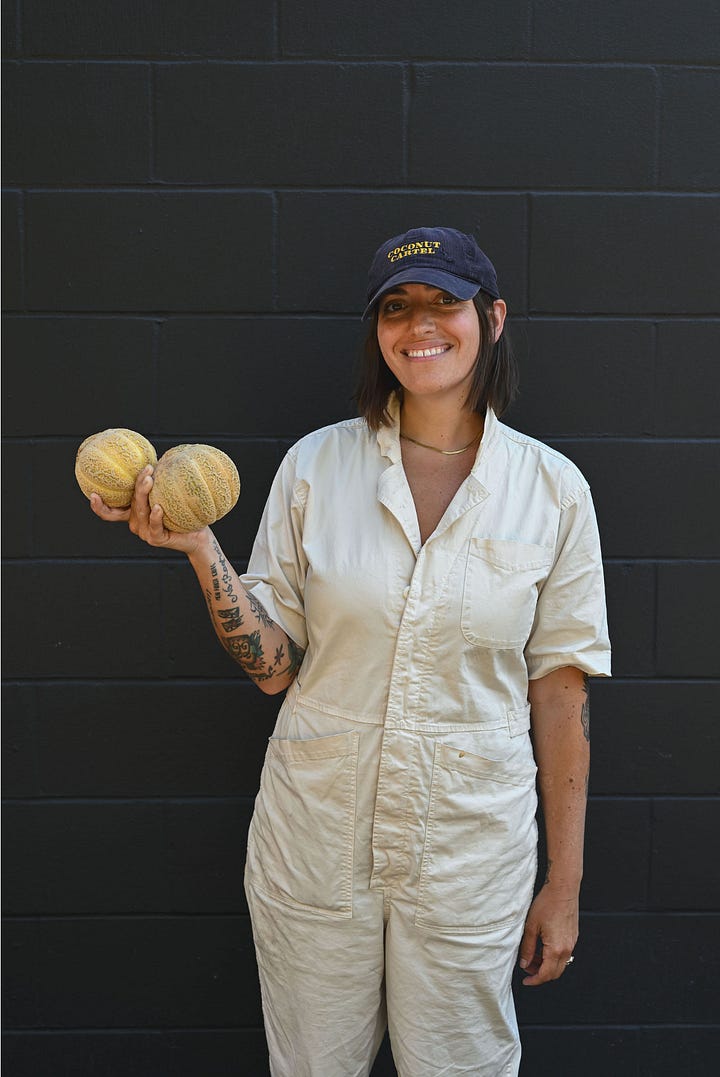
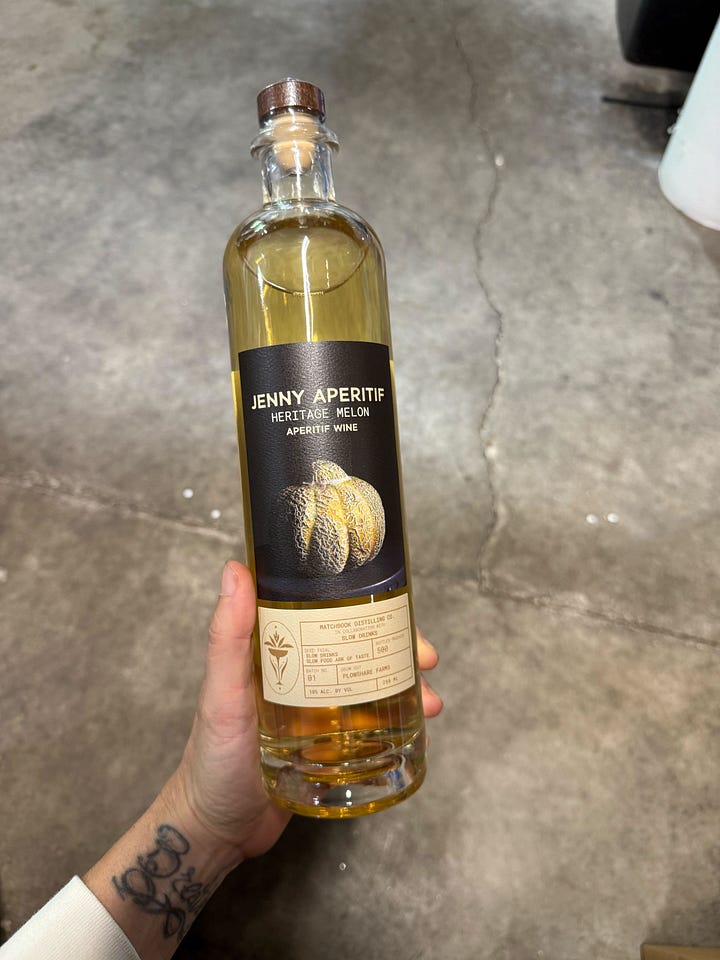
Top of mind this week is Jenny Aperitif, made from the Jenny Lind melon.
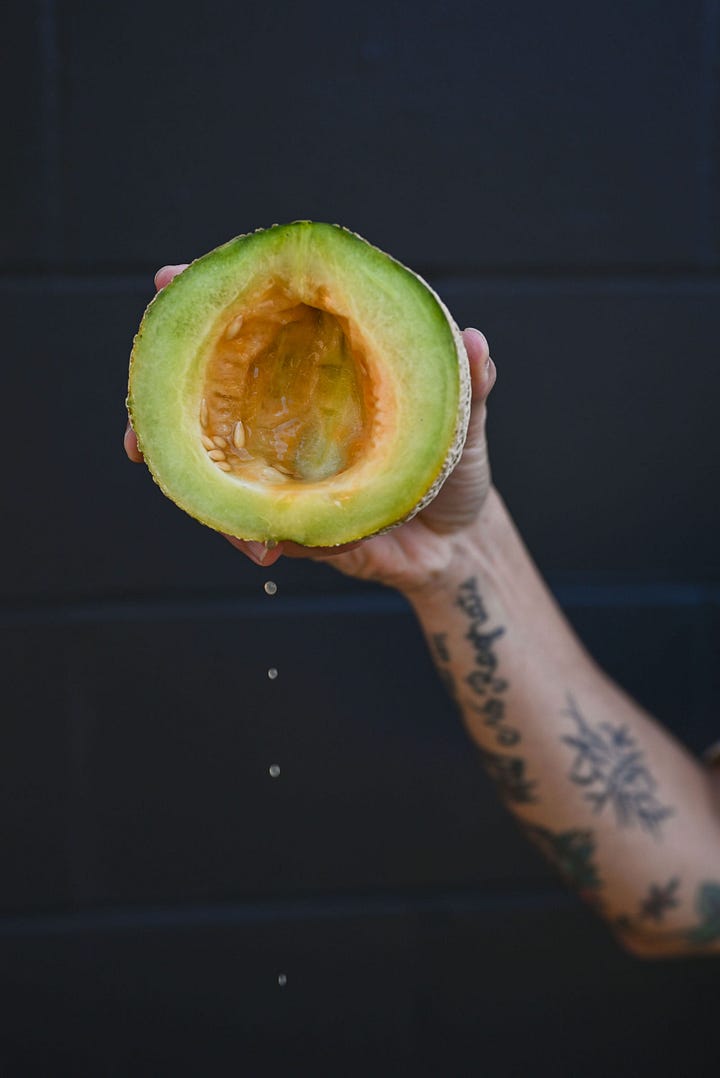
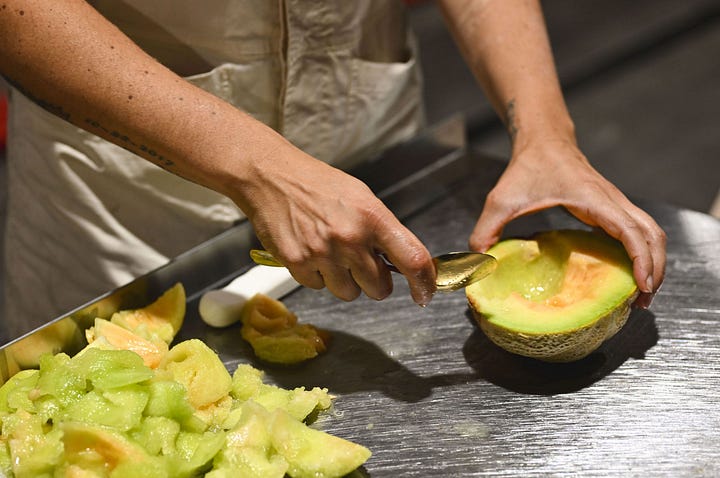
This aperitif begins with macerating the pale green to orange flesh of the Jenny Lind melon in chardonnay. I distilled the rinds with high-proof neutral spirit to unfurl what the peel’s intricate web has encoded: vanilla, lilac, honey. The resulting distillate is blended back into the melon-steeped wine, with a touch of unaged grape spirit and organic cane sugar for balance. The final spirit is layered and luminous — the full arc of the melon rendered in liquid: juice, flesh, rind, and memory.
All this work was done months ago. I sent samples to our liquid collaborators — Danny Childs, Nima Ansari, and Orlando Franklin.
Danny, author of Slow Drinks, has chronicled the Jenny Lind’s history in Modern Farmer, noting its honorable place as both table melon and cultural artifact. The Jenny Lind melon is listed in the Slow Food Ark of Taste — one of many endangered foods catalogued in the hopes of preserving what industrial agriculture increasingly leaves behind.
Danny started this collaboration with Teddy of Plowshare Farms, inviting me in nearly two years ago. Our early enthusiasm was quickly tempered: the first season delivered poor yields, with some seeds crossing into cucumber territory rather than delivering the rich Jenny Lind. But we stayed with it. And suddenly it’s all moving rather fast!
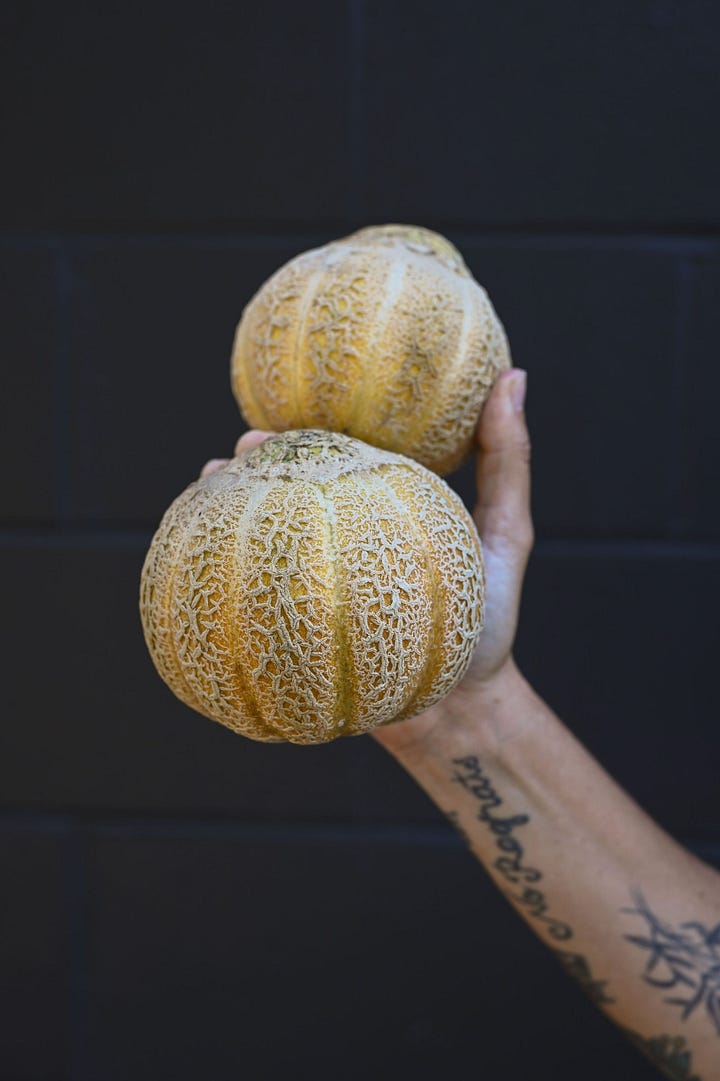
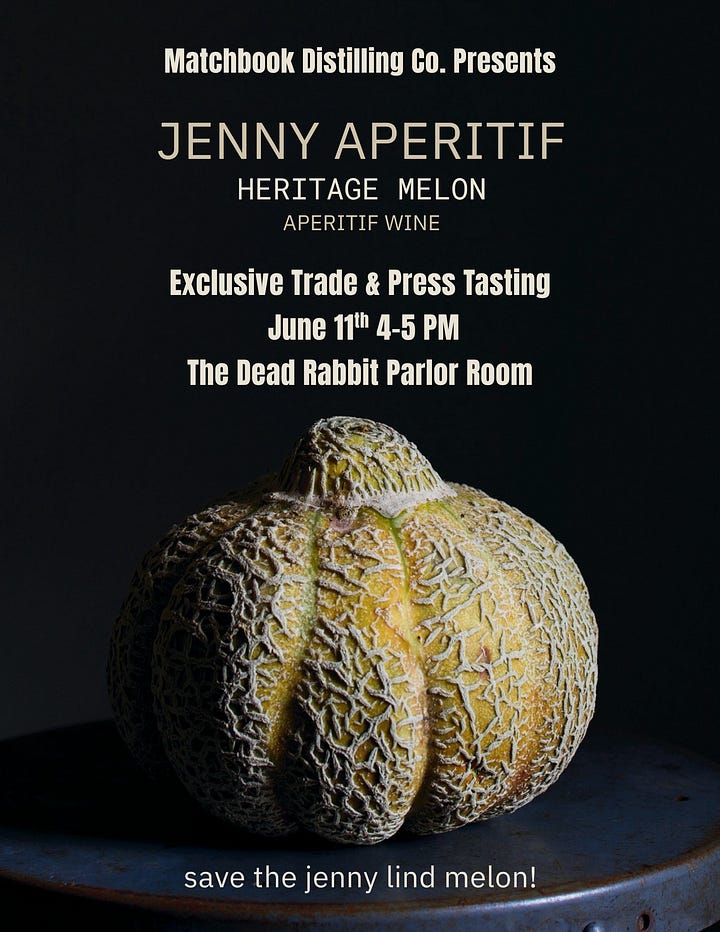
600 bottles of Jenny Aperitif exist! Once they’re gone, they’re gone. Over the last two weeks, I’ve finally found the time to proof, filter, and get it into bottling. Katie Childs took this radiant photo of the Jenny Lind melon and designed the beautiful and technical packaging. And we couldn’t be more thrilled with the results!
Join us for the premiere of Jenny Aperitif — June 11th at The Dead Rabbit! Shoot me a message if you’re interested in joining!!
As the ground thaws, we clear the brush. We make space for new growth — in the garden, on the farm, in the distillery. And just the same, in my car, my bedroom, the cellar.
In winter, I am hell-bent on building a den, insulating myself with layers against the dark and the cold. Piles grow. Sweaters and coats tower and tilt. Spring cleaning is not just practical — it feels like exhaling. Packing away the weight of winter, making room for slip dresses and t-shirts. A cool, clean respite from the heat ahead.
A summer bed is all business. No heavy blankets to fold back, no stack of decorative pillows to relocate. The days are longer, the nights more inviting. I’m not racing into bed with a book or a queued-up movie. I’m tumbling into it after a full day’s work, a swim, a frolic, cocktails in the village, a chapter and a nightcap in the garden.
Spring cleaning is preparation — making room for all the life that wakes up in us and around us come spring.
Pour 2 oz of Daytrip Strawberry Amaro in a glass with ice and top with 4 oz Mexican Coke. A requisite step for stamina and hydration to take me through Spring Cleaning.
Grab a designated garbage bag and a donation bag to pair down as you plow through steps 3 - 6.
Light a candle with citrus - lets get invigorated.
Extra blankets, heavy throw pillows, quilt into storage.
Any pants heavier than denim into storage.
Summer sweaters out of vacuum bags and winter sweaters into them.
Shorts and summer dresses moved into prime closet real estate.
Summer Loading 99%
Musk melons are intensely fragrant. Their skins are netted in a raised, lace-like web that kicks off a menagerie of volatile aromatics. These fruits ripen quickly, deteriorate just as fast — their flavor and perfume are fleeting. No wonder they’ve fallen out of favor with conventional growers, who select for fruit that can withstand months in cold storage, engineered to cross nations and oceans.
But with that trade-off, we lose something crucial. Without the farmers willing to harvest fruit when it's ready — fully ripe, utterly fragile — and sell it just as quickly for a premium to make the whole thing sustainable, these rich, evocative melons disappear. And we lose access to what the natural world, when left to its own extravagant timing, bestows.
I turn to Harold for context:
“The aromatic melons, often called cantaloupes or muskmelons, eschew cucumbery aldehydes for full-bore fruitiness, with copious quantities of several apple-pineapple esters, floral benzenoids, a number of sulfur-containing molecules that provide the musky aspect, and caramel-fruity furaneol.”
(Harold McGee, Nose Dive, p. 316)
From there I go deeper, down the flavor database rabbit hole. Five pages of compounds later: Vanillin. Violet Leaf Aldehyde. A glimpse into the molecular matrix of this miraculously flavored, eternally fleeting melon.
When our Jenny Lind Melon Aperitif is released next week, make sure to grab a bottle and taste for yourself. Let’s get this melon on the map!
The muskmelon carries a perfume older than its name. In medieval texts, it was said that the rivers of paradise ran heavy with musk — the rare, heady scent drawn from the navel of a deer, reserved for kings, priests, and gods. Musk was considered the breath of the divine, suspended between life and decay, luxury and death.
When the melon’s heavy fragrance unfurls, it echoes that ancient perfume. The webbed skin, the quick collapse of ripeness into rot — all of it mirrors the nature of musk itself: fleeting, seductive, and never entirely of this world.
The Jenny Lind, named for The Swedish Nightingale whose own rise and fall played out in quick succession on American soil, fits perfectly into this lineage of brief, blinding sweetness. To taste it is to catch something ancient and evaporating — an echo of the sacred.
As Mandy Aftel once put it, “Our time is more impoverished, aromatically, than it’s ever been in the past.” Synthetic molecules — often just a single chemical — have displaced the layered complexity of nature’s design. Rose oil holds over 100 molecules. Lemon oil, around 20. Muskmelon, countless. These expressions are worth fighting for. They unite us in a world where so much divides. We deserve to have beautiful things — and nature still offers them, if we’re willing to protect its abundance.
If you have a NYT subscription, check out this 2016 story on Mandy Aftel The Worlds Most Dedicated Natural Perfumer.
The Story of the Long-Forgotten Jenny Lind Melon Danny Childs story on the Jenny Lind for Modern Farmer isn’t paywalled.
I was hanging out in the Horticulture Diagnostic Labs at Cornell Cooperative Extension Suffolk last week. I learned that our sustained warmer temperatures and the increasing brevity of our coldest temperatures is spelling trouble in the form of extended pest activity. Turns out same is true in California.
On a sunnier note.. This is a fun read on the history of the color yellow
Any New Yorkers here? We have some stuff going on next week during Bar Convent Brooklyn! Hope you see you there!
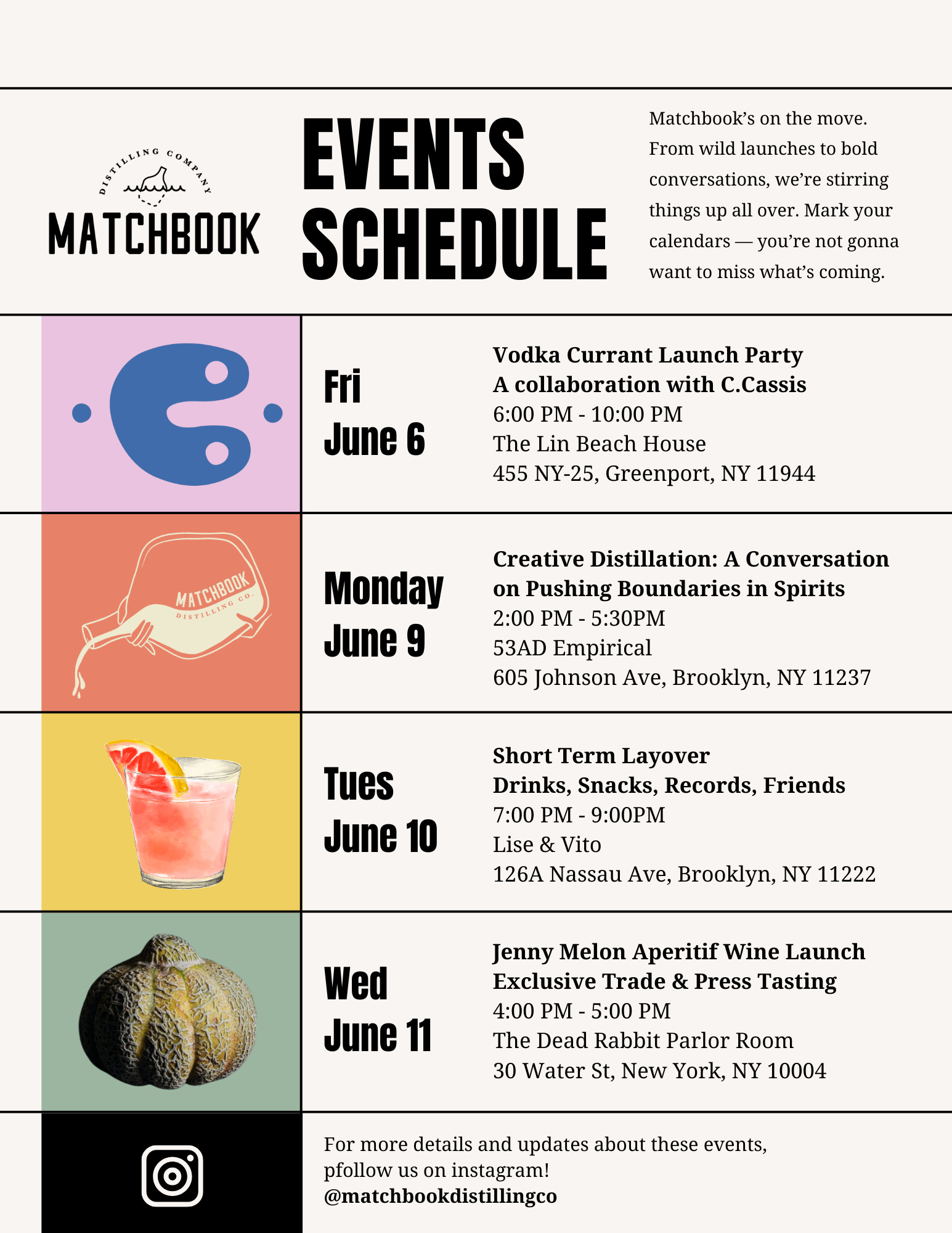
See you there!
Cheers!
Leslie
Comments
Nothing yet. Say the first thing.
Sign in to join the conversation.