
I got my job at Apple in the early 2000s after interviewing with Steve Jobs. It was my dream company. It was not my dream job.
Here’s how both were true. Apple had an inner circle, a small handful of people whose work counted as “creative.” Leading the Apple Online Stores put me outside that circle. My key card didn’t even open the door to the design building. I ran a website with millions of visitors, and I saw the pages I was responsible for only after Steve had already approved them.
This story captures the tension this distinction creates.
When Apple launched iPod engraving, the feature had a quiet second purpose: a personalized device is a lot harder to resell. But there was a problem. Customers froze. Given a blank line and a laser, most people don’t know what they want to say forever. Carts got abandoned mid-purchase, not because people didn’t want the product, but because they didn’t want to commit to eight characters they’d have to live with.
My team built a fix. We surfaced suggestions, seasonal messages, popular lyrics, and well-known sayings, so people had somewhere to start instead of a blank page. It worked. Abandonment dropped.
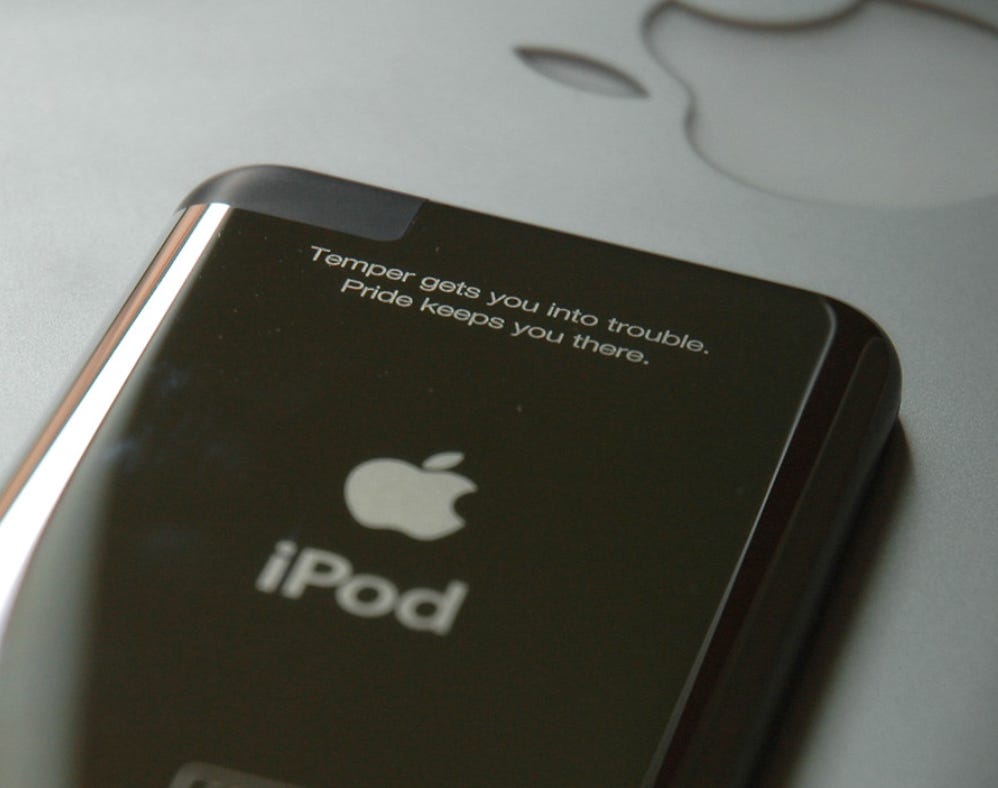
Then Steve found out and killed it.
Not because it hurt sales. Because it felt off-brand. Too common. Too close to something anyone could have done.
I’ve thought about that decision for twenty years. He wasn’t wrong that Apple’s brand depended on relentless control. That control is exactly what made the products feel inevitable, like there was only ever one right way to build them.
But at Apple, the “creatives” did not work in my building. My team saw writer’s block killing sales in real time. We didn’t need permission to notice that. We needed permission to act on it.
So how does a tightly managed brand actually make room for that, without losing the control that makes it work? Is it possible for creatives to live in finance, legal, operations, and sales? Hell, yeah!
A few things I’ve seen hold up in practice:
Separate the “what” from the “who.” Apple’s control was mostly anchored in Steve’s vision: this is what an Apple product looks and feels like. It didn’t have to also dictate who was allowed to notice a problem and suggest a solution. Brands can protect the standard while still opening up who’s allowed to surface an opportunity to eliminate a problem and propose a fix.
Build a fast, low-stakes path for small ideas. The iPod engraving fix wasn’t a rebrand. It was a checkout flow tweak. Ideas at that scale shouldn’t need a design review with the CEO; they need a lightweight way to get tested and either kept or killed quickly. Not all innovations happen with big swings. They happen when the small ones get enough oxygen to be tested.
Let data buy a hearing, even if it doesn’t buy the final call. My team had proof the change worked. That should have at least earned a conversation about how we could make the execution work for the brand, not just kill it. People stay creative when they believe their ideas are grounded in evidence, even if the answer evolves with more feedback.
Make “off-brand” a discussable judgment, not an unquestionable veto. There’s a real difference between “This breaks our standard; here’s why” and “You need to take it down.” The first teaches people what the standard actually is, so they get better at working inside it. The second just teaches them to stop trying.
So I’ll ask again. Who are the creatives in your company? If your answer isn’t everyone, then ask yourself what that may be costing you.
No posts
Comments
Nothing yet. Say the first thing.
Sign in to join the conversation.