
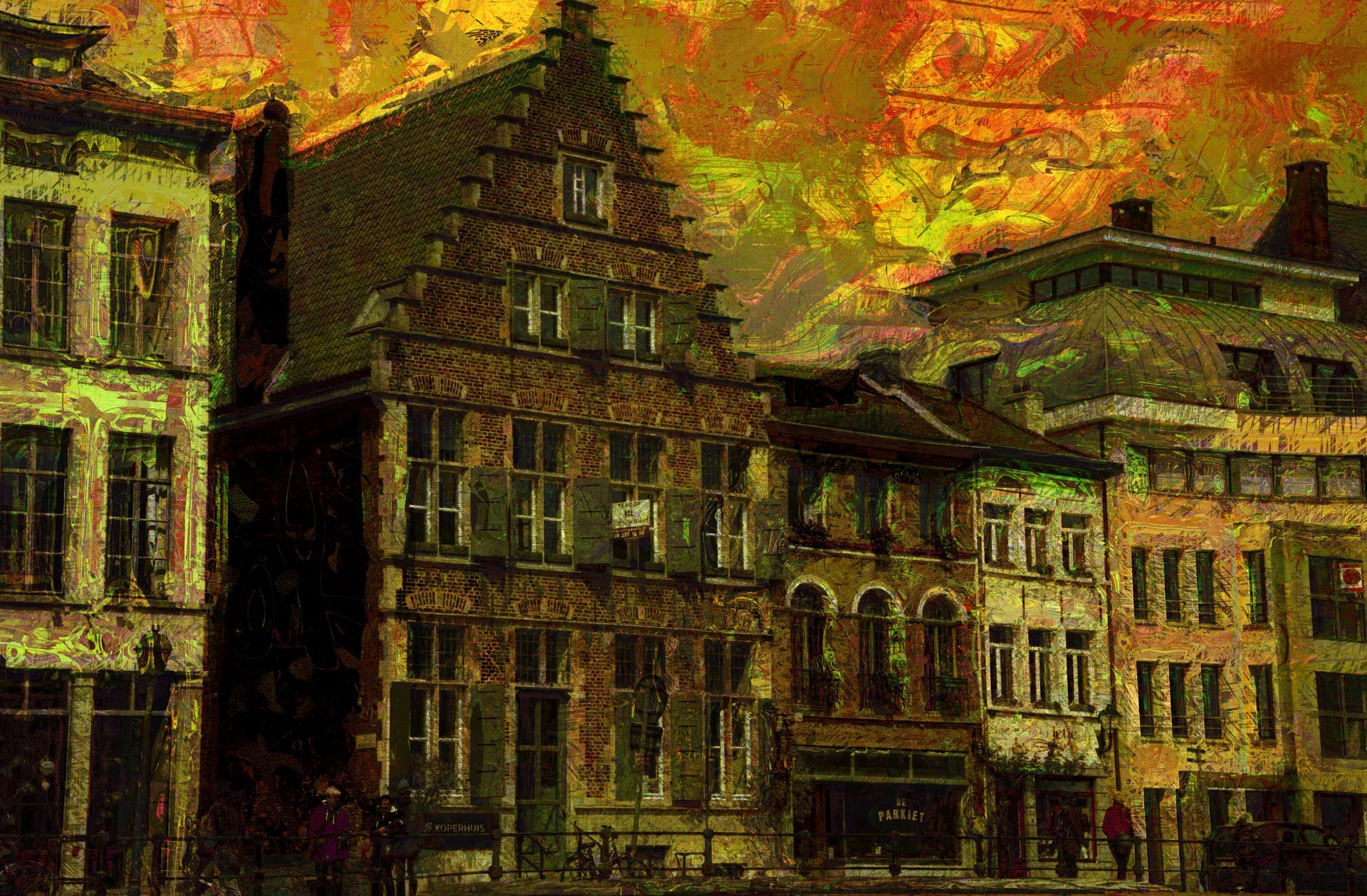
The reader may recall that, although the author of these lines generally writes in German and lived for many years in Poland, he is “actually” Belgian — and the word “actually” already says much of what these reflections are intended to address.
For a long time, I genuinely believed that a “Belgian” identity was a kind of contradictio in adiecto: a fiction resting more on the final remnants of an anachronistic, moribund political will or on mere cultural inertia than on any genuine elements capable of carrying historical and, above all, emotional weight. “Belgium” may perhaps once, in the nineteenth century, have been a buffer state necessary to preserve the balance among the Great Powers, founded on a curious mixture of Catholic political identity and bourgeois Masonic faith in progress, and held together by French as the language of the elite, the material interests of industrialisation, loyalty to the royal house and, of course, the Congo colony — yet none of this, so it seemed to me for many years, retained any significance in the twentieth or twenty-first century.
As a geopolitical construct situated between England, France and Germany, Belgium had lost all function in the age following the “end of history”. Catholicism is as extinct as bourgeois humanism has long since developed into the grimace of woke ideology. The school system has transformed the old divergence between the French of the cities and the many Walloon and Flemish dialects of the countryside into a sharply drawn linguistic frontier between French and Dutch. Heavy industry has been replaced by ruins in the south and ephemeral tech hubs in the north. No one cares about the King any longer, and as for the Congo — in an age of permanent mental decolonisation, perhaps it is better not to speak of it at all. What remains? Strong beer and mussels with chips, I thought.
Seven years in Poland taught me otherwise: partly because an external perspective naturally makes it easier to distinguish the essential from the inessential; partly because temporary uprootedness and the failure of any genuine self-”Polonisation” curiously gave rise to a longing for, and an interest in, “Belgian” history and identity. As an adolescent — yes, I confess it openly and with shame — I had nothing but boredom, indeed contempt, for “local history”. “Real” history was what had taken place in ancient Rome, Abbasid Baghdad, the Versailles of the Sun King or Victorian London. Whether, a few centuries ago, obscure cloth-makers or potters had worked in the neighbouring village, monks had produced their cheese, or petty rulers had borne grandiose feudal titles did not, to put it mildly, interest me in the slightest; nor did I care when and why my little country had once again been traversed from end to end by some hostile Great Power intent on attacking its neighbour, before the same thing happened again in the opposite direction.
Time has taught me differently. It may have been the weariness brought on by a long stay abroad, but gradually I came to see my country in another light and increasingly realised that Walloons, Flemings and, of course (yes, we exist!), German-speaking Belgians are ultimately not so very different from one another when compared with their respective large neighbours. The differences are, naturally, difficult to overlook, and yet there is much here that one searches for in vain elsewhere. First, there is a certain reserve, even insecurity, in one’s manner. Where the French, Germans and Dutch are only too fond — at least from a Belgian perspective — of adopting a “Here I am” attitude and of explaining the world to anyone within earshot, willing or not, the Belgian is by no means so sure of his own position and possesses a strong sense that things might equally be otherwise and that, in any case, it is not his role to appoint himself captain of the team. Closely connected with this is a deep desire to be left alone. As a Belgian, one is perfectly willing to let things slide and leave one’s neighbour in peace, even when he is behaving foolishly; in return, however, the unspoken assumption is that one would oneself prefer to be spared his efforts to improve the world — live and let live or, as a Belgian proverb with distinctly Hobbit-like qualities has it: “Pour vivre heureux, vivons cachés.”
Comments
Nothing yet. Say the first thing.
Sign in to join the conversation.