
Every year on August 17, Marcus Garvey’s birthday gives us another opportunity to repeat his most familiar teachings about racial pride, self-reliance, organization and African unity. Those teachings remain important. But this year, I find myself drawn to a more difficult question: How should we judge a leader who was convicted of breaking the law but was also deliberately targeted because of his political influence?
The question matters because Garvey cannot be properly understood by presenting him either as a flawless victim or as a convicted man whose entire life should be reduced to one criminal case. His Black Star Line experienced genuine financial and managerial problems. At the same time, the United States Government regarded his growing influence as a threat and devoted significant resources to investigating, discrediting and ultimately removing him from the country.
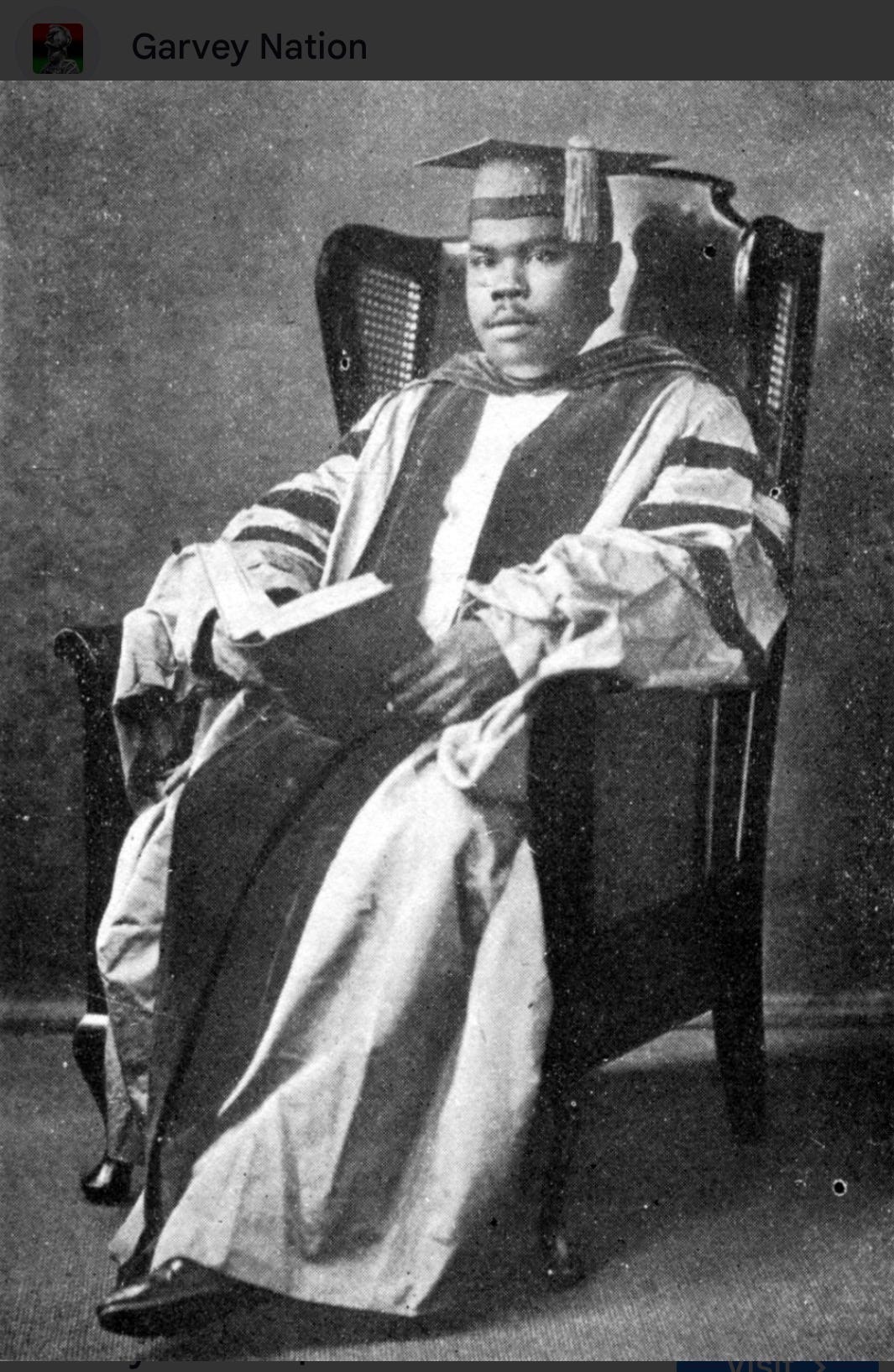
Those two realities are not mutually exclusive. A person may have engaged in conduct capable of supporting prosecution while also being investigated, prosecuted or punished more aggressively because of race, politics, nationality or influence.
That distinction helps us understand Garvey. It also raises a larger question about Jamaica itself. Garvey was not the only person condemned by law whom Jamaica later elevated as a National Hero. Sam Sharpe, Paul Bogle and George William Gordon were also treated as criminals by the governing state. Their cases were not identical, but together they force us to confront the distance that can exist between legality and justice.
The question began with Du Bois
This inquiry began for me with a comparison between Marcus Garvey and W.E.B. Du Bois. The two men represented competing approaches to Black advancement, although the difference between them is sometimes oversimplified as integration versus separation.
Du Bois sought full political and civil equality for Black people within American society. He emphasized education, organized political action and the cultivation of an educated leadership class, expressed most famously through his idea of the “Talented Tenth.” The NAACP, with which he was closely associated, pursued constitutional rights through public advocacy, legislation and the courts.
Garvey placed greater emphasis on mass mobilization, Black-controlled institutions, economic self-determination, racial pride and African sovereignty. Rather than waiting for acceptance within institutions controlled by white society, he wanted Black people to build economic, cultural and political power of their own.
Yet Du Bois was also a Pan-Africanist, while Garvey organized and conducted business within Western societies. Neither man fits perfectly into a single label. Their deepest disagreements concerned leadership, strategy, class and the institutional direction of the global Black struggle.
The conflict also became intensely personal. Each questioned the other’s legitimacy to lead. Their exchanges descended into attacks involving nationality, complexion, ancestry and social position. What began as an important debate about Black advancement became a struggle over authority and reputation.
Du Bois and the NAACP were connected, but not identical
The conflict between Garvey and Du Bois was closely connected to, but not identical with, the conflict between the UNIA and the NAACP.
Du Bois was one of the NAACP’s most influential intellectual voices and edited The Crisis, its principal publication. His views therefore shaped how many readers understood Garvey. But the institutional dispute extended beyond him. The NAACP and Garvey’s Universal Negro Improvement Association competed for members, financial support, public credibility and recognition as the leading representative of Black advancement.
The NAACP questioned Garvey’s business practices and political methods. Garvey accused the organization of undermining the UNIA and contributing to the Black Star Line’s collapse. James Weldon Johnson and other NAACP officials were also drawn into the confrontation. The Library of Congress describes the organizations as competing for the support of Black people, with that competition intensified by Garvey’s personal conflicts with Du Bois and other NAACP leaders.
The distinction matters. Du Bois did not single-handedly create the institutional opposition to Garvey. The rivalry would probably have existed without him because the two organizations represented different leadership structures, constituencies and strategies. However, the hostility between the two men made the institutional conflict more bitter.
The Black Star Line cannot be reduced to either fraud or persecution
The Black Star Line was more than a shipping company. It was intended to demonstrate Black economic capacity, connect Africa and the diaspora, support international trade and give material form to Garvey’s vision of independence. Thousands of ordinary Black people purchased shares because they believed they were investing not only in a company but in racial advancement.
That symbolic importance does not remove the company’s failures. The Black Star Line suffered from expensive repairs, inadequate administration, mismanagement and corruption. Ships were acquired under poor conditions, and the enterprise struggled financially. Those who invested their limited resources had a legitimate interest in honest information and responsible stewardship.
The federal mail-fraud case focused on promotional material for a ship presented as the SS Phyllis Wheatley. The acquisition had not been completed, and the vessel remained registered as the Orion. Garvey defended himself at trial and was the only one of the defendants convicted.
It would therefore be careless to say that the Government invented every concern surrounding the Black Star Line. But it would be equally careless to examine the prosecution without considering the Government’s sustained effort to neutralize Garvey. J. Edgar Hoover and the Bureau of Investigation had subjected Garvey and the UNIA to surveillance and investigation before the mail-fraud conviction. Government officials disapproved of his political activity, and his status as a Jamaican immigrant made deportation an available political outcome.
Garvey’s case consequently requires us to hold two thoughts at the same time. The Black Star Line had genuine problems, and investors could have been harmed. The Government also had a political interest in using those problems against the leader of a powerful Black movement.
Political targeting does not establish innocence. But evidence of possible wrongdoing does not justify political manipulation of the justice system.
The difference between conduct and prosecution
Several questions are too often collapsed into one. What did Garvey actually do? Did the evidence establish deliberate criminal intent? Was the law prohibiting fraud legitimate? Was he selected for special attention because of his politics? Did the legal process treat him fairly? Was the punishment proportionate? Did the prosecution serve a wider objective of destroying his movement and removing him from the country?
These questions can produce different answers. A legitimate law can be selectively enforced. A person who committed an offence can receive an unfair trial. A politically targeted person can also have committed the conduct charged. Conversely, intense political suspicion can influence officials to interpret organizational failure as deliberate criminality.
Garvey was convicted in 1923. After his appeals failed, he was imprisoned in 1925. President Calvin Coolidge commuted the remainder of his sentence in 1927, but Garvey was then deported to Jamaica. The commutation ended his imprisonment; it did not remove the conviction or clear his name.
The immediate political objective had nevertheless been achieved. Garvey was no longer leading his American movement from Harlem. The United States found it easier to remove Garvey from the country than, for almost another century, to remove the conviction from Garvey’s name.
Why did the pardon take so long?
Garvey died in 1940. For succeeding administrations, a posthumous pardon offered no living person release from prison or restoration of civil rights. The ordinary federal clemency process is principally structured around living applicants. The United States Department of Justice identifies an applicant’s death as one reason a pending clemency application may be closed administratively without presidential action.
There was also no simple declaration for a president to make. Pardoning someone prosecuted under slave law would symbolically repudiate an unjust legal system. Fraud law, by contrast, serves a legitimate public purpose. A Garvey pardon therefore required a president to address the more complicated possibility that an appropriate criminal law had been used selectively or disproportionately against a politically targeted leader.
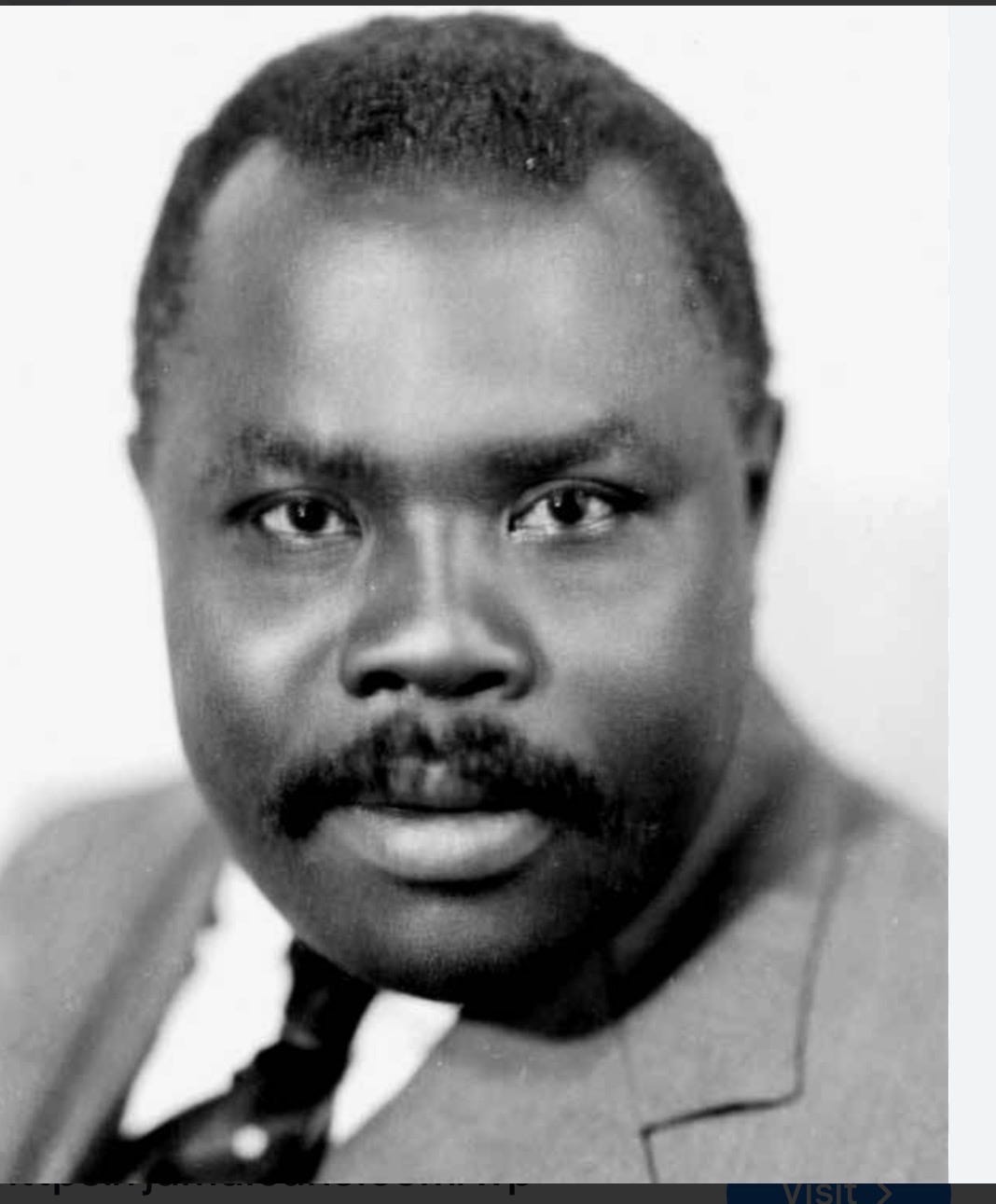
Garvey’s own controversial record made the decision more difficult. His racial separatism, meeting with members of the Ku Klux Klan, hostile exchanges with other Black leaders and the collapse of the Black Star Line all provided reasons for opponents to resist presenting him as an uncomplicated civil-rights figure.
His family, members of Congress, Jamaican governments, scholars and civil-rights advocates continued pressing for action. Congressional resolutions seeking to clear his name were introduced in 2016 and 2023, but the conviction remained.
Finally, on January 19, 2025—during his final full day in office—President Joe Biden granted Marcus Mosiah Garvey a full and unconditional posthumous pardon.
The pardon was historically important, but a pardon is not identical to a judicial exoneration. It did not retry the evidence, expunge the conviction or produce a court judgment declaring that no crime occurred. It was an exercise of presidential clemency that formally forgave the offence.
Jamaica had already rendered its judgment
Jamaica did not wait for the United States.
Garvey’s remains were brought home from London in 1964, two years after Jamaica achieved Independence, and reinterred in National Heroes Park. In 1969, he was conferred with the Order of National Hero as Jamaica’s first National Hero.
That sequence—Independence, repatriation and national elevation—carried a meaning larger than ceremonial recognition. America had classified Garvey as a convicted offender and deportable immigrant. Independent Jamaica reclaimed him as a thinker, organizer and global leader.
A foreign court had judged Garvey’s transaction. Jamaica judged the meaning of his life.
That judgment did not require Jamaica to declare every Black Star Line representation accurate or every Garvey decision wise. National-hero status is not a judicial acquittal. It is a historical judgment about the total meaning of a person’s contribution.
Jamaica determined that Garvey’s creation of a global Black movement, his challenge to racial inferiority, his promotion of self-reliance and his impact on Africa and the diaspora could not be reduced to one conviction. Jamaica reached that moral and historical judgment in 1969. The United States reached its symbolic legal judgment 56 years later.
Jamaica’s National Heroes and the law
Garvey’s designation becomes even more revealing when considered beside Sam Sharpe, Paul Bogle and George William Gordon. All were condemned by governing legal systems, but their cases represent different relationships among lawbreaking, prosecution and justice.
Sam Sharpe was legally enslaved when he organized what was intended to be a peaceful refusal to work without wages and freedom. The action developed into the 1831–32 Baptist War, involving the destruction of property and loss of life. Sharpe violated the law and was hanged on May 23, 1832.
But the same legal system treated enslaved people—overwhelmingly of African descent—as property and criminalized unauthorized resistance, including escape, refusal to work, conspiracy and rebellion. Jamaica’s slave laws made that system legally enforceable. Slavery was lawful. It was also profoundly unjust. Independent Jamaica later judged Sharpe’s resistance according to the justice of the freedom he sought, rather than the legitimacy colonial law assigned to human ownership.
Paul Bogle’s case was different. Slavery had ended, but freedom had not produced equality. Poverty, landlessness, restricted political participation and unequal justice burdened the Black majority. Bogle attempted to bring the people’s grievances to the colonial authorities. He later led the 1865 march on Morant Bay, where confrontation became rebellion, the courthouse was burned and public officials were killed.
Bogle was not an uninvolved person selected at random. He led an uprising in which serious unlawful acts occurred. But that fact does not make the colonial response just. Martial law produced summary proceedings, executions, floggings and the indiscriminate killing of Black Jamaicans, many of whom had not participated in the violence. Bogle was quickly tried and hanged.
George William Gordon presents the clearest case of political persecution and defective prosecution. Gordon was an elected representative, Baptist leader and outspoken critic of Governor Edward Eyre. Although the evidence tying him to the Morant Bay uprising was weak, he was arrested in Kingston, where martial law was not in effect, transferred into the martial-law district, tried by court-martial and executed. Jamaica’s official account describes the trial as illegal and the evidence as insufficient.
These men cannot be placed into one undifferentiated category. Sharpe and Bogle engaged in unlawful resistance against oppressive systems. Gordon was convicted through a politically manipulated process without adequate proof. Garvey was convicted under a legitimate criminal law in circumstances shaped by political targeting and a contested question of criminal intent.
Jamaica therefore has National Heroes who were lawbreakers, convicted persons and victims of wrongful or politically influenced prosecution. Those categories overlap, but they are not interchangeable.
In 2018, the Jamaican Parliament formally confronted part of this history through the National Heroes and Other Freedom Fighters (Absolution from Criminal Liability in Respect of Specified Events) Act. The legislation absolved named National Heroes, participants and freedom fighters from criminal liability associated with specified historical liberation struggles.
The legislation recognized something the title of “criminal” can conceal: conduct may violate the law governing at the time and later be judged a morally justified contribution to liberation.
What Garvey’s experience requires of us today
The lesson is not that important political leaders should be excused when they break the law. Nor is it that anyone prosecuted by a political opponent should automatically be treated as a persecuted future hero.
The proper principle is this:
Political targeting does not establish innocence, and evidence of wrongdoing does not justify political manipulation of the justice system.
That principle gives us a disciplined framework for evaluating current leaders.
1. Identify the specific conduct
We must begin by asking what the leader actually did—not whether we admire the person or support the party.
Was the conduct political dissent, civil disobedience, financial dishonesty, abuse of office, violence or personal enrichment? These are not morally equivalent forms of lawbreaking.
2. Examine the law itself
Sharpe violated laws protecting slavery. Those laws were fundamentally unjust.
Garvey was prosecuted under fraud law, which served a legitimate purpose. His case therefore turns on the evidence, criminal intent, selective enforcement, procedural fairness and political motivation—not on the inherent injustice of prohibiting fraud.
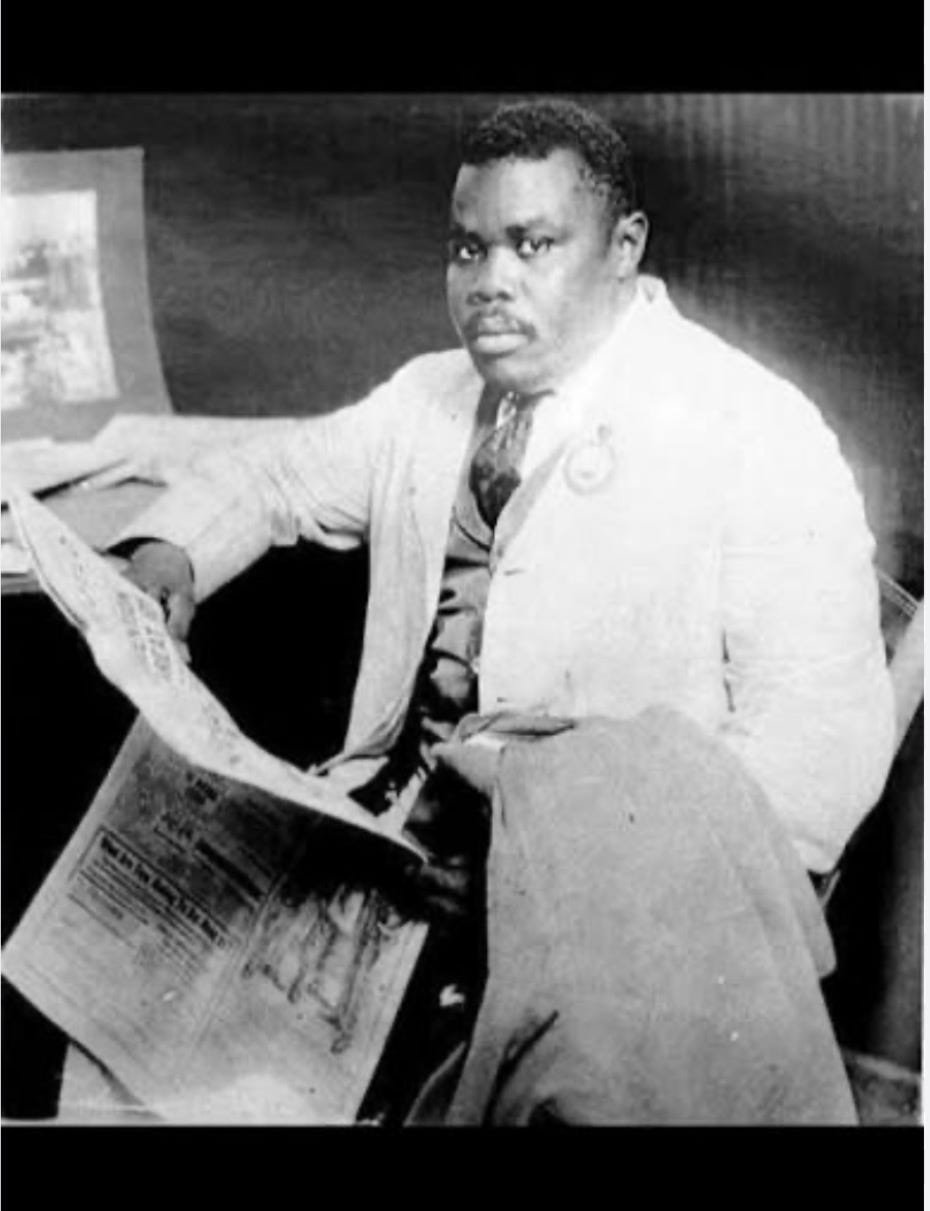
Most contemporary laws against corruption, theft, fraud and abuse of office are legitimate. A political leader cannot escape responsibility merely by claiming that the prosecution is politically motivated.
3. Examine the evidence independently of the politics
We should ask what facts have been proved, what evidence establishes personal responsibility, whether the leader benefited personally, whether public funds or private citizens were harmed, and whether the case rests on documents and witnesses or primarily on political accusation.
Political popularity cannot substitute for evidence. Neither can political hostility.
4. Test for selective enforcement
We must ask whether opponents are being prosecuted for conduct tolerated when committed by government supporters. Were similarly situated people investigated? Were established procedures followed? Did officials publicly prejudge the case? Was the investigation unusually accelerated, delayed or obstructed? Was the law applied consistently across political parties?
Selective enforcement does not necessarily make the accused innocent. It may establish that an offence occurred and that the state applied the law unequally.
5. Evaluate the legal process
A legitimate prosecution requires more than a legitimate law. It also requires an independent investigation, disclosure of the evidence, an impartial court, proper legal representation, an opportunity to challenge witnesses, freedom from executive interference and access to appeal.
A guilty person can receive an unfair trial. An innocent person can be convicted. A politically targeted person can also have committed the offence charged.
6. Separate public contribution from legal responsibility
A leader’s achievements should not erase proven wrongdoing. Likewise, one conviction should not automatically erase an entire lifetime of contribution.
These judgments belong in separate ledgers. The legal ledger asks what offence was proved, through what process and with what consequences. The historical ledger asks what the person contributed, whom the person served and what lasting effect the person had.
National recognition is a historical judgment. It is not necessarily a declaration that every action was lawful.
Liberation must not be confused with personal benefit
This may be the most important distinction when applying Garvey’s experience to contemporary politics.
Sharpe and Bogle violated laws while confronting systems that oppressed their communities. They accepted extraordinary personal risks and ultimately lost their lives. Their lawbreaking was connected to collective struggles over freedom, land, political participation and justice.
A politician who diverts public funds, abuses public office or enriches associates cannot claim the same moral protection merely because an investigation may contain political motives. Political targeting may affect the fairness of the prosecution. It does not transform private enrichment into liberation.
This is also why calling every investigation a “witch hunt” is dangerous. The language of persecution can become a shield against evidence. At the same time, dismissing every claim of political targeting can allow governments to weaponize legitimate laws against selected opponents.
The proper response is not immunity. It is equal enforcement, independent investigation, due process and proportionate punishment.
The judgment of history
Marcus Garvey’s birthday should invite celebration, but it should also invite serious thought. His life does not ask us to choose between declaring him entirely innocent and reducing him to a criminal conviction. It requires us to examine the conduct, the business failure, the political surveillance, the prosecution, the deportation, the movement and the global consequences of his ideas together.
The lesson for our time is not that political leaders who make important contributions should be placed above the law. Nor should every accused politician be permitted to convert prosecution into persecution simply by alleging political motive. Garvey’s experience requires a more disciplined judgment. We must examine the alleged offence, the evidence, the legitimacy and consistency of the law, the fairness of the process and the political interests served by the prosecution.
Sometimes the accused is innocent. Sometimes the accused is guilty. Sometimes wrongdoing and political targeting exist in the same case. Democracy requires us to be honest enough to recognize all three possibilities.
The law recorded a conviction. America eventually granted a pardon. But Jamaica had already judged the life.
References and Sources
1. Federal Bureau of Investigation. “Marcus Garvey.” FBI Records: The Vault.
2. Jamaica Information Service. “Jamaica’s National Heroes.”
3. Jamaica. The National Heroes and Other Freedom Fighters (Absolution from Criminal Liability in Respect of Specified Events) Act, 2018, Act No. 2 of 2018.
4. Library of Congress. “The New Negro Movement.” NAACP: A Century in the Fight for Freedom.
5. United States Department of Justice, Office of the Pardon Attorney. “Pardons Granted by President Joseph Biden, 2021–2025” and “Frequently Asked Questions.”
6. Grant, Colin. Negro with a Hat: The Rise and Fall of Marcus Garvey. New York: Oxford University Press, 2008.
Heuman, Gad J. The Killing Time: The Morant Bay Rebellion in Jamaica. Knoxville: University of Tennessee Press, 1994.
No posts
Comments
Nothing yet. Say the first thing.
Sign in to join the conversation.