
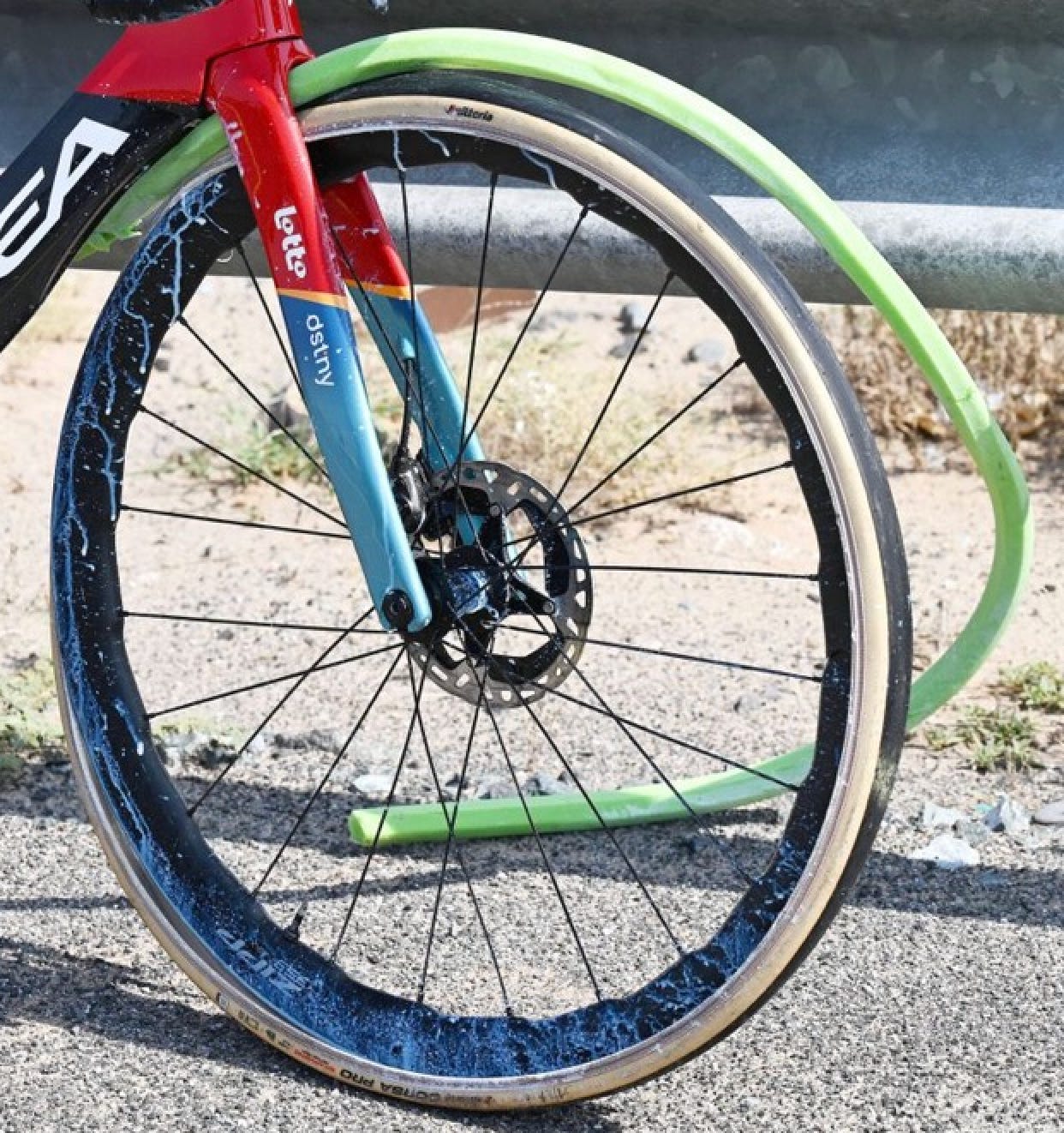
Rather than answer reader’s questions today, I will tell you about a method I have been experimenting with for over a month that I think could have the potential to eliminate the kinds of road tubeless tire failures we have discussed here in this column for the last two years. It’s something I first tested and wrote about nine years ago. It’s worked so well that I am now riding road tubeless tires for the first time since UST road tubeless tires (which I did use religiously) disappeared and were replaced by “tubeless ready,” “tubeless compatible,” and “2bliss” road tires.
I eschewed TR, TLR, TC, TL, etc. tires already almost a decade ago after receiving horrifying emails from readers of my VeloNews tech q&a column who had been badly injured when their tubeless ready tires had failed catastrophically.
Today is two years to the day since Coop-Repsol’s star rider André Drege died after his tubeless rear tire blew out sealant on a descent in the Tour of Austria, causing him to crash at 80-100kph. That was while the Tour de France was going on concurrently. As this year’s Tour has now started, I, like many of you, watch the live TV coverage on Peacock every morning. These first three stages have been great, and I hope it continues that way. I don’t want to see any tires coming off rims and causing crashes.
My avoidance of road tubeless tires started in 2018 when a reader wrote in to my VeloNews column about a horrendous crash he’d had descending a serpentine road above Malibu. His tubeless road tire burped on a hairpin and instantly depressurized, sending him flying off the steep mountainside and breaking bones. That is when I began discouraging customers of my bikes from using road tubeless tires (other than UST ones, which are heavier, require special wheels without spoke holes in the rim bed and a bead seat ridge, and don’t have the rolling-resistance advantages of TR tires). I felt particularly strongly about this because most people buying my bikes were big and tall and hence more likely to burp a tire.
In 2019, my hesitancy about road tubeless tires was reinforced by a rash of letters to my column detailing road tubeless tires, mostly Specialized ones, failing and resulting in heavy crashes and injuries. In July, 2019 Colan wrote in about both of his Specialized 2bliss tires going simultaneously instantly flat on a bump. Then, on a later occasion, he awoke in a medevac helicopter on his way to the hospital after his 25mm Continental GP5000 TL went flat for no apparent reason; there were no punctures in the tire.
Chip followed in October 2019; his front Specialized 2bliss tire came off his Giant SLR-1 tubeless compatible wheel, wrapped around his fork, and dumped him hard on the pavement. Days later, he was able to remount the tire on the rim, and it held air; there was nothing “wrong” with the tire or the rim, yet it had come off the rim while riding!
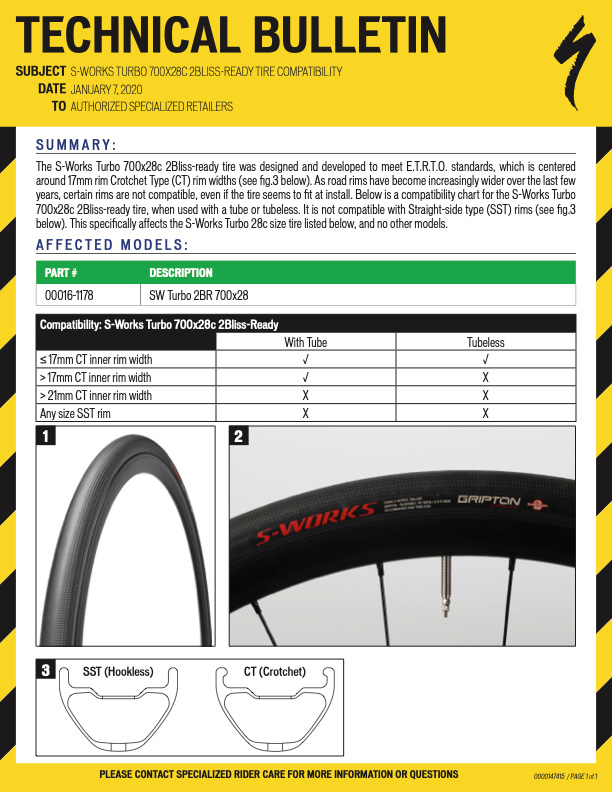
Next came Kenny, whose rear Specialized 2bliss tire came off the rim and wrapped around the cassette while leisurely negotiating a curve in November 2019. He emailed Specialized and asked if his 21mm-internal-width Roval C38 disc wheelset—a Specialized product—was compatible with his 28mm S-Works Turbo 2bliss ready tires and if that combo had been tested. He reported that Nathan from Specialized replied that they were compatible and had been thoroughly tested. However, the other shoe dropped in January 2020, when Specialized came out with this “Technical Bulletin” specifying that Specialized S-Works Turbo 700x28c 2Bliss-ready tires were not to be used on hookless (“Straight-side type,” a.k.a. SST) rims, with or without an inner tube, and further specifying that they could only be run tubeless on hooked rims with 17mm inner width or narrower.
At the time, pro riders were still primarily racing on tubulars, and the few clinchers in the peloton had inner tubes. By 2024, however, pro teams were predominantly riding tubeless tires on hookless carbon wheels, and the incidents of tire disasters started to pile up.
The first ejected tires in the pro peloton to get wide notice came off Lotto Dstny team’s bikes and resulted in the crashes of Thomas De Gendt in the February, 2024 UAE Tour and Johannes Adamietz in Strade Bianche in March, 2024. They both had hit bumps and cracked their rims.
On February 6, 2025, Kern Pharma rider Marc Brustenga’s tire came off in a sprint finish in stage 2 of the Étoile de Bessèges after he hit a pothole and cracked his rim, dropping him down hard onto the tarmac and careening into the barriers.
A video from the 2025 Paris-Roubaix that got wide attention featured Astana’s Mike Teunissen managing to stay upright after his tubeless tire and its foam insert popped off his front rim. That’s a rare occurrence—a tire coming off the rim and not resulting in a crash.
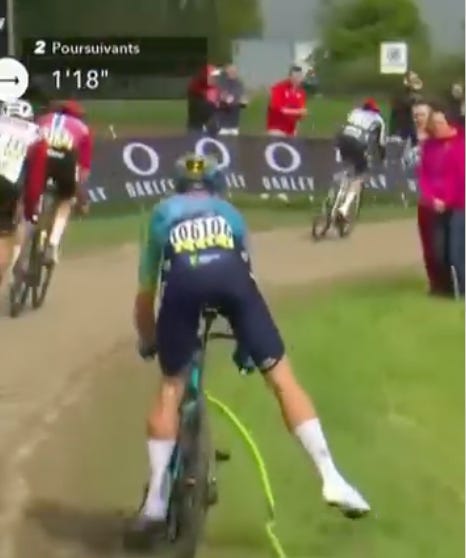
Mike Teunissen stayed upright when his front tire came off in the 2025 Paris-Roubaix
On February 19 of this year, Picnic/Post NL sprinter Fabio Jakobsen crashed when his front tire came off the rim after hitting a pothole in the UAE Tour that cracked the rim.
The following month, we discussed how Evan’s tire came off in an evasive maneuver to avoid being hit by a car
In April, I summarized many of the causes of road tubeless dangers.
Another failure method that I didn’t discuss yet resembles burping, but from a vertical impact or on the opposite side of the tire from a lateral force.
A standard tire burp can happen when cornering hard enough and with enough traction to overcome the air pressure and any frictional forces holding the tire sidewall against the rim; the sidewall moves away from the rim, allowing air to escape. When this happens on fat bikes, mountain bikes, and, to a lesser extent, gravel tires, it tends to drop the pressure significantly, but, due to the high air volume and low air pressure in those big tires, there’s generally still enough air left inside to keep riding.
By contrast, the burp of a road tubeless tire is often catastrophic. Its low air volume and high pressure means that a momentary burp can bring the pressure down instantly to almost zero, making crashing in that same corner a virtual certainty, since the tire cannot hold traction.
The other failure method resembling a burp, and often including a burp, is one that some people have used to explain some of the tubeless failures at Paris-Roubaix. This screenshot from this Silca video shows it clearly.
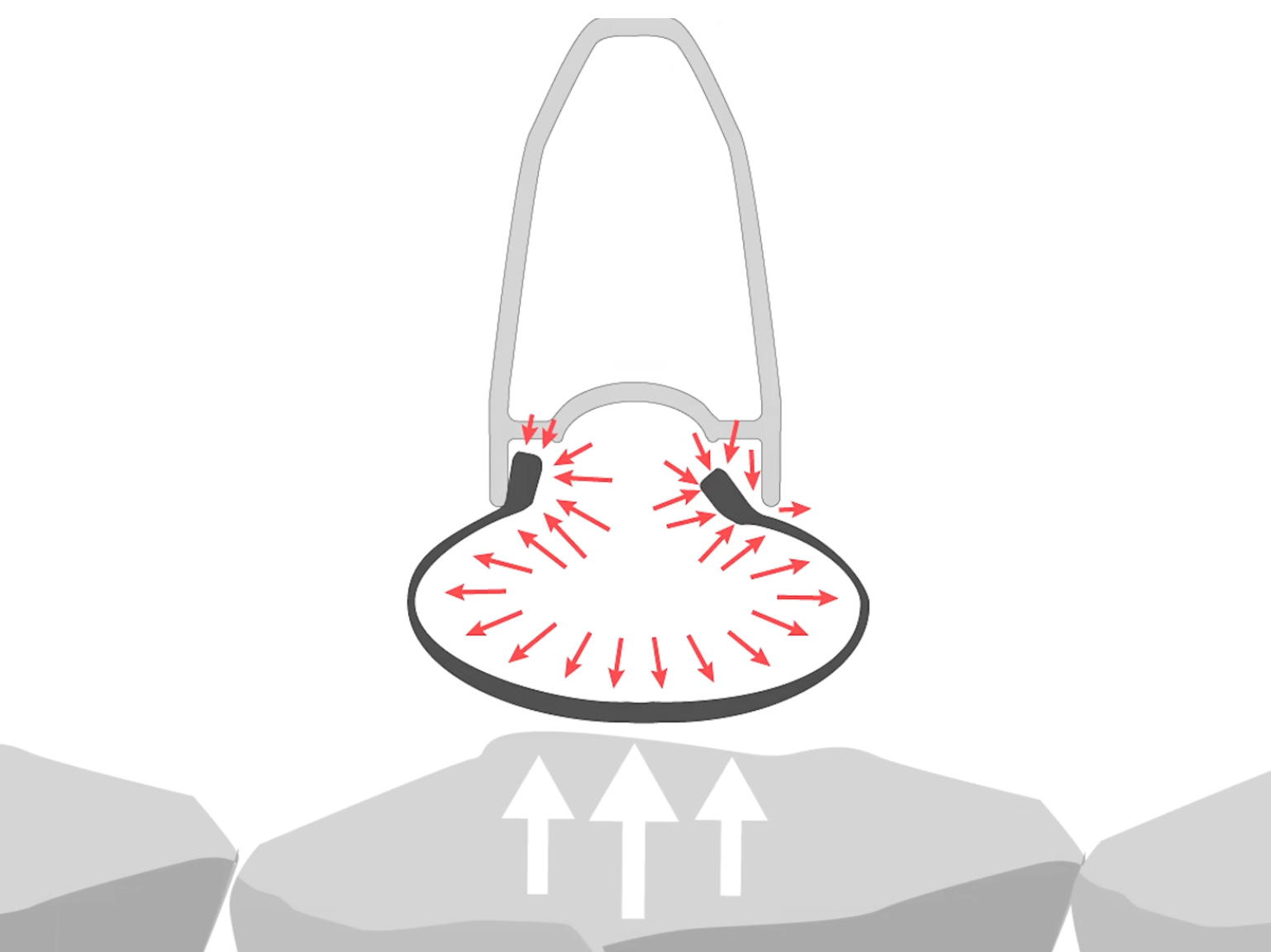
Tubeless tire sidewalls being hinged away from the rim walls on impact (screenshot from Silca video)
If a tire is pushed hard laterally or vertically by a cobblestone, the bead can hinge away from the rim wall (whether it’s hookless or hooked). Air pressure will then inject sealant into the space between the rim wall and the tire sidewall and lubricate the area so the bead can slide up and off the rim more easily. It can also burp air at the same time, leaving the rim less protected from the next impact, which can then eject the tire, especially if it cracks the rim.
One reason this hinging of the tire bead and sidewall can happen is that, when the tire is aired up, its bead is no longer resting on the bead-seat shelf of the rim, so it is free to hinge inward away from the rim wall without friction along its bottom edge to prevent it. That’s what this photo from this column shows. A Zipp engineer said it was taken with a $30 WiFi camera stuck inside the tire. Before inflation (left photo), you can’t see the bottom of the tire bead. After inflation, air pressure lifts the tire bead off the rim bead seat, and you can see its bottom edge (right photo). CT scans have also seen this effect.
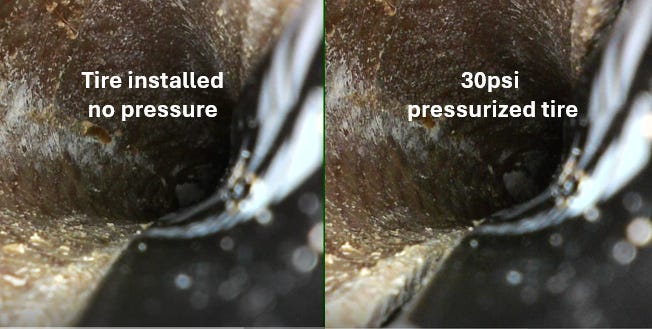
This means that the only air seal of tubeless tires is against the vertical rim walls and is why sealant getting squirted into that space under hard cornering or hitting cobbles is such a concern. This hinging effect resulting in sealant lubrication of the rim and tire walls has, according to Silca’s Josh Poertner, led some wheel brands to request that their teams not use sealant in their tires at Paris Roubaix. Since tubeless-ready tires don’t hold pressure without either sealant or an inner tube, I interpret this request as the same as asking their teams to use inner tubes.
Mechanics of teams like Jumbo-Visma have glued their riders’ tubeless tires on with tubular glue (mastic) or silicone caulk for Paris-Roubaix. By essentially making it one with the rim, the tubeless tire sort of becomes a tubular tire.
Also, Poertner reports that some tire brands have told their teams not to use tire inserts. A tire insert gets compressed down by the air pressure inside the tire. When it expands due to a burp or flat tire, the theory is that it can possibly help push the tire off the rim.
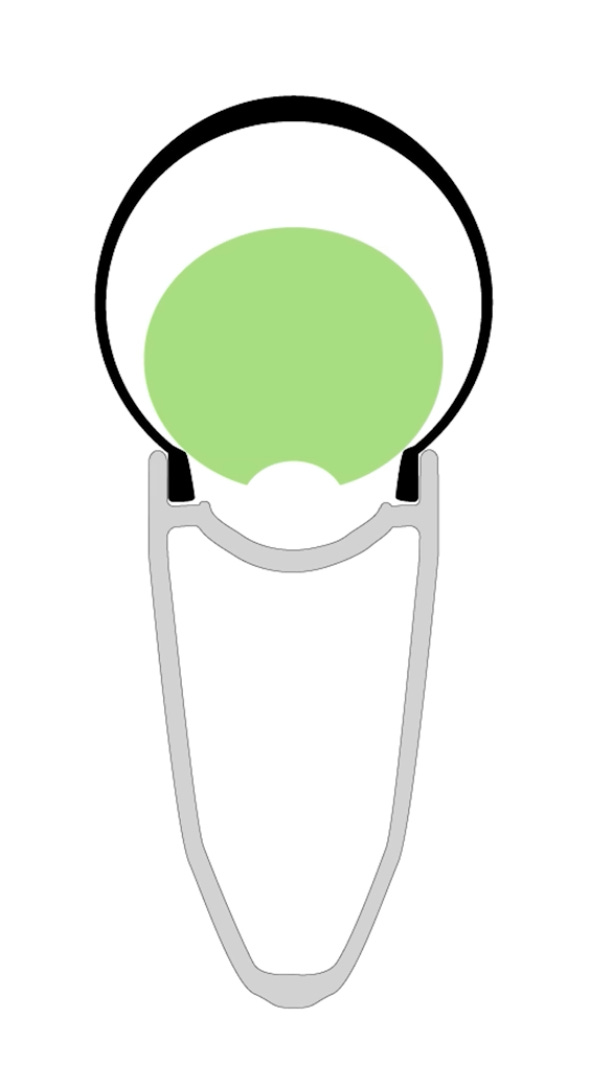
Tubeless tire inserts expand when the tire is depressurized (screenshot from Silca video)
Ever since Drege’s death, I have ruminated about how to make tubeless road tires more fail-safe. These ruminations resulted in me remembering about a product that I reviewed in my VeloNews column in 2017 that I think could prevent many of these road tubeless disasters.
I haven’t put up a paywall on my recent columns about heart conditions, since lives could be in the balance, and I want everyone I can to know about the dangers some of them entail. While that could also be argued about ensuring road tubeless tires stay on their rims, and even though I have been called a meanie when I erect a paywall, there is one today. I put a lot of work and experience into these columns and would like to be reimbursed for that. If you are a paid subscriber, I thank you from the bottom of my heart, and if you are not yet one, please consider becoming a paid subscriber and read on about how to make road tubeless tires less prone to come off the rim.
The product I think could do the trick in keeping tubeless road tires on their rims under circumstances that often eject them is called
Comments
Nothing yet. Say the first thing.
Sign in to join the conversation.