
Looking back with gratitude to a dreamy residency me and my beautiful friend Melissa Farah-Arras shared last summer thanks to SPILL Festival. From the softness of a physical and spiritual cocoon we lovingly built together, we followed threads back to ourselves and our ancestors. We placed our ideas and shared archives into an incubator, and have both watched as these have followed us into the future and grown into our lives, ourselves and our work.
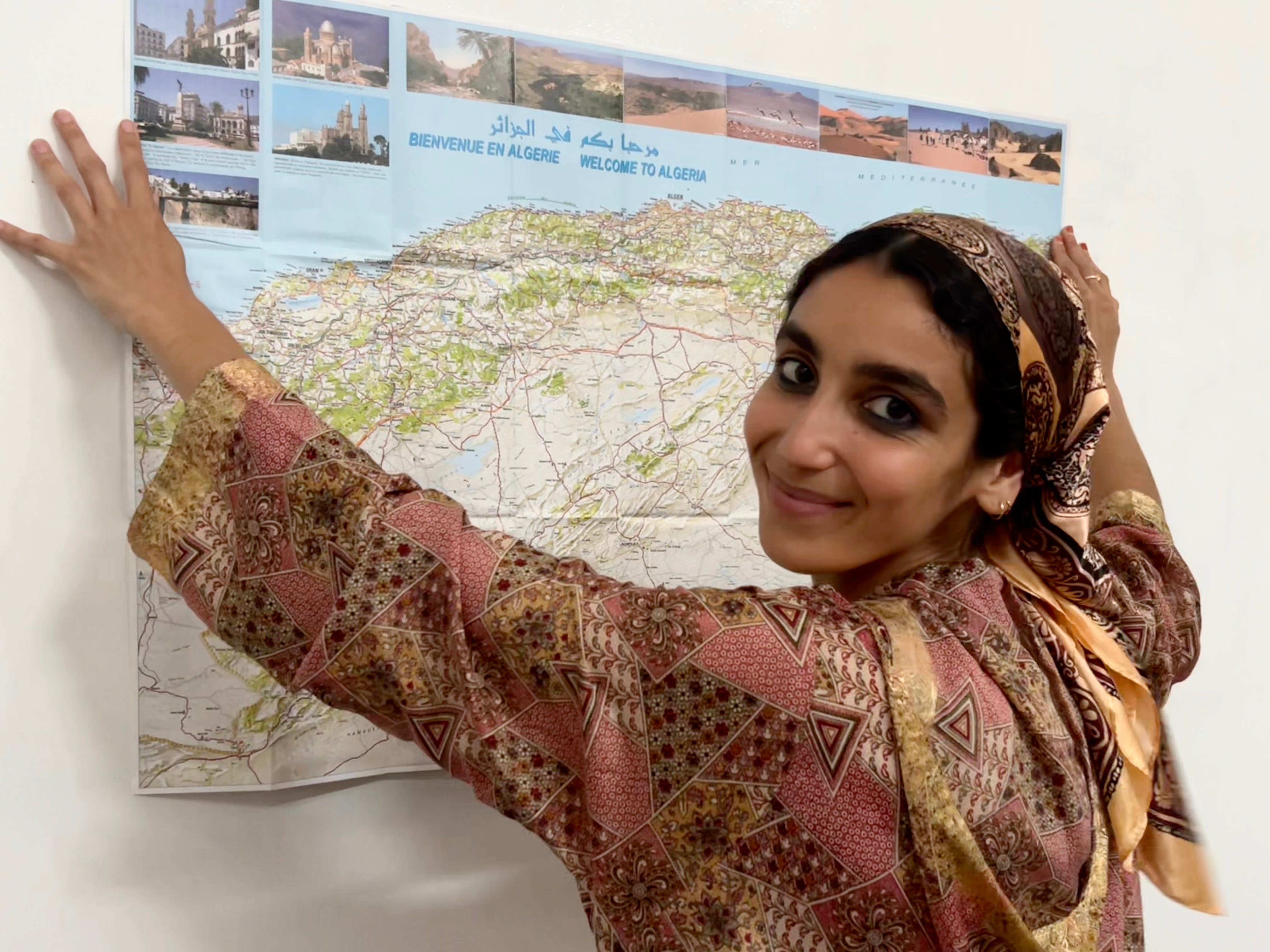
We let things unfold intuitively - our ancestors meeting through our archives and through ourselves. Layers of objects, photos and film became portals for us to access places within our bodies and voices. We listened and remembered. We trusted one another and this process of listening, allowing our embodied and physical archives to guide us.
We returned again and again to sacred items in our family - my great-grandfather’s burnoos and Melissa’s grandmother’s haik - both honoured items of clothing handed down through generations and important symbols of the Algerian resistance. I have written about each respectively here and here.
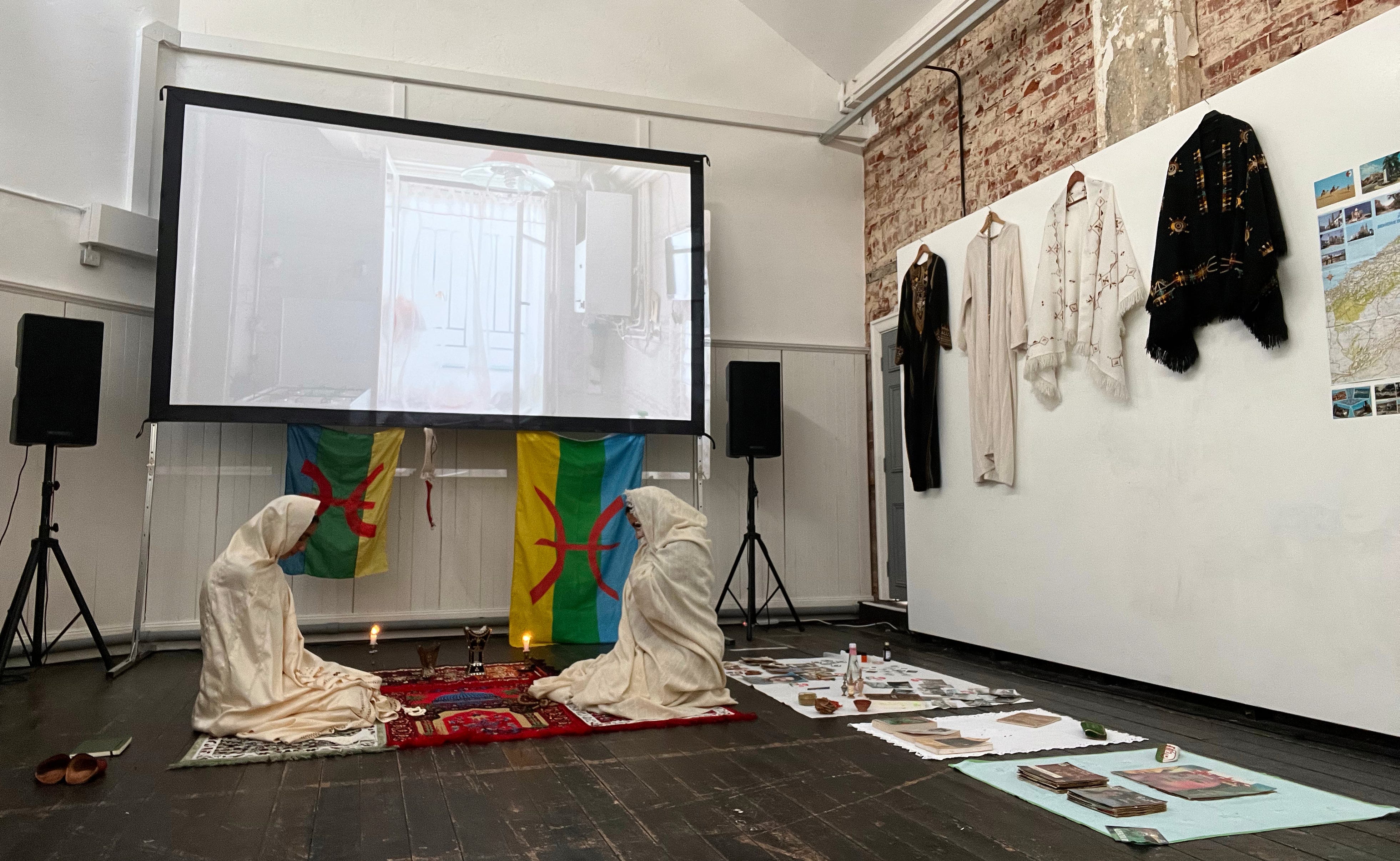
The power of these was visceral in the space. The burnoos - a cream woollen cloak woven by my great-grandmother, and the haik, a rectangular cloth partly concealing the whole body and part of the face belonging to Melissa’s grandmother. Both were worn as part of a wider consciosuness of ownership and defiance, the body becoming the container for this refusal. They feel weighty, physical manifestations and containers of this history.
I was reminded that resistance lives in our actions as well as the ways in which we inhabit our bodies, hold our histories, and pass them on across generations. The archive is not something external and seperate to us, but something we are inside of, something we move through and carry together.
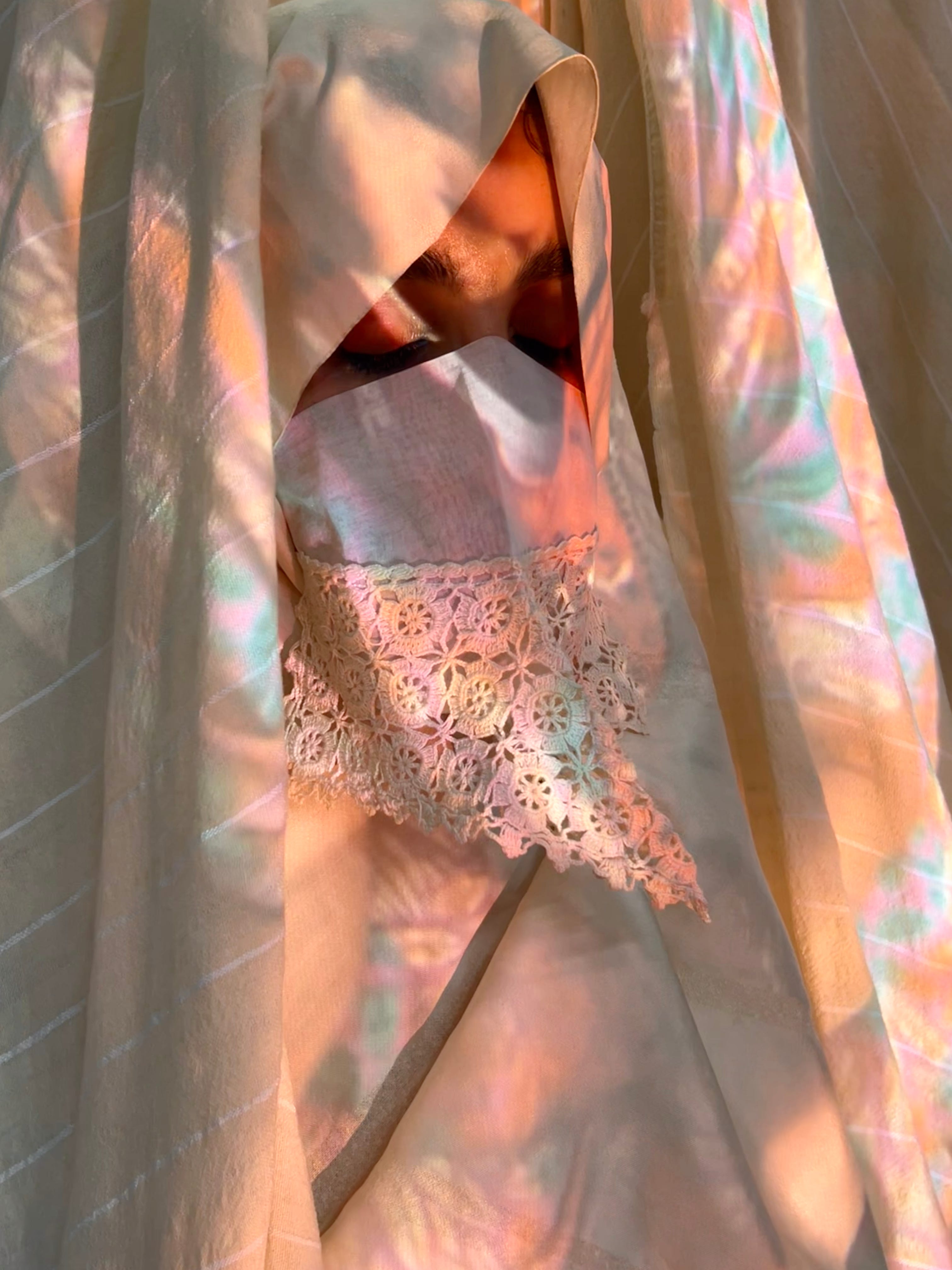
This feels especially important given how inaccessible - and often violent - state archives have been for Algerian and diasporic histories. I refuse these records, and honour what has survived and can be acessed in the absence of all else that has been lost.
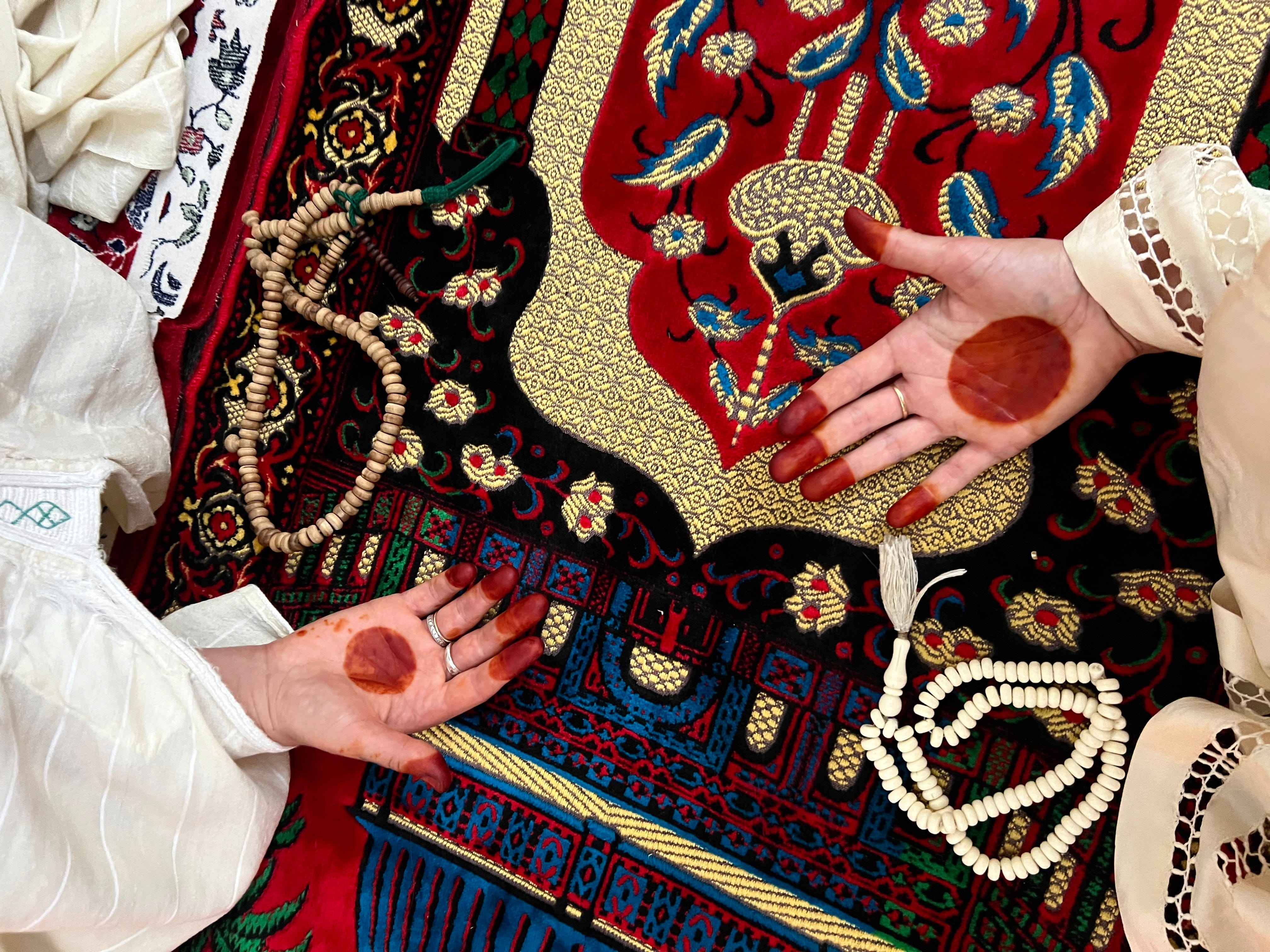
Being with Melissa left me reflecting on what dreaming an archive and counter-archiving really means to me. The word archive comes from the Latin archivum, meaning the “residence of the magistrate and those who command,” which makes me want to drop it. It is still in response to a starting point and language that isn’t ours. I question using it. It’s a convenient shorthand to talk about my work, but words do sometimes fail me - which is why I’m being increasingly pulled towards the body and the voice.
For me this is where counter-archiving and dreaming an archive is really housed. Objects contain traces and can be vehicles for remembering. But really the final frontier is the body. And like the body the archive is alive and moving, like the elements and seasons.
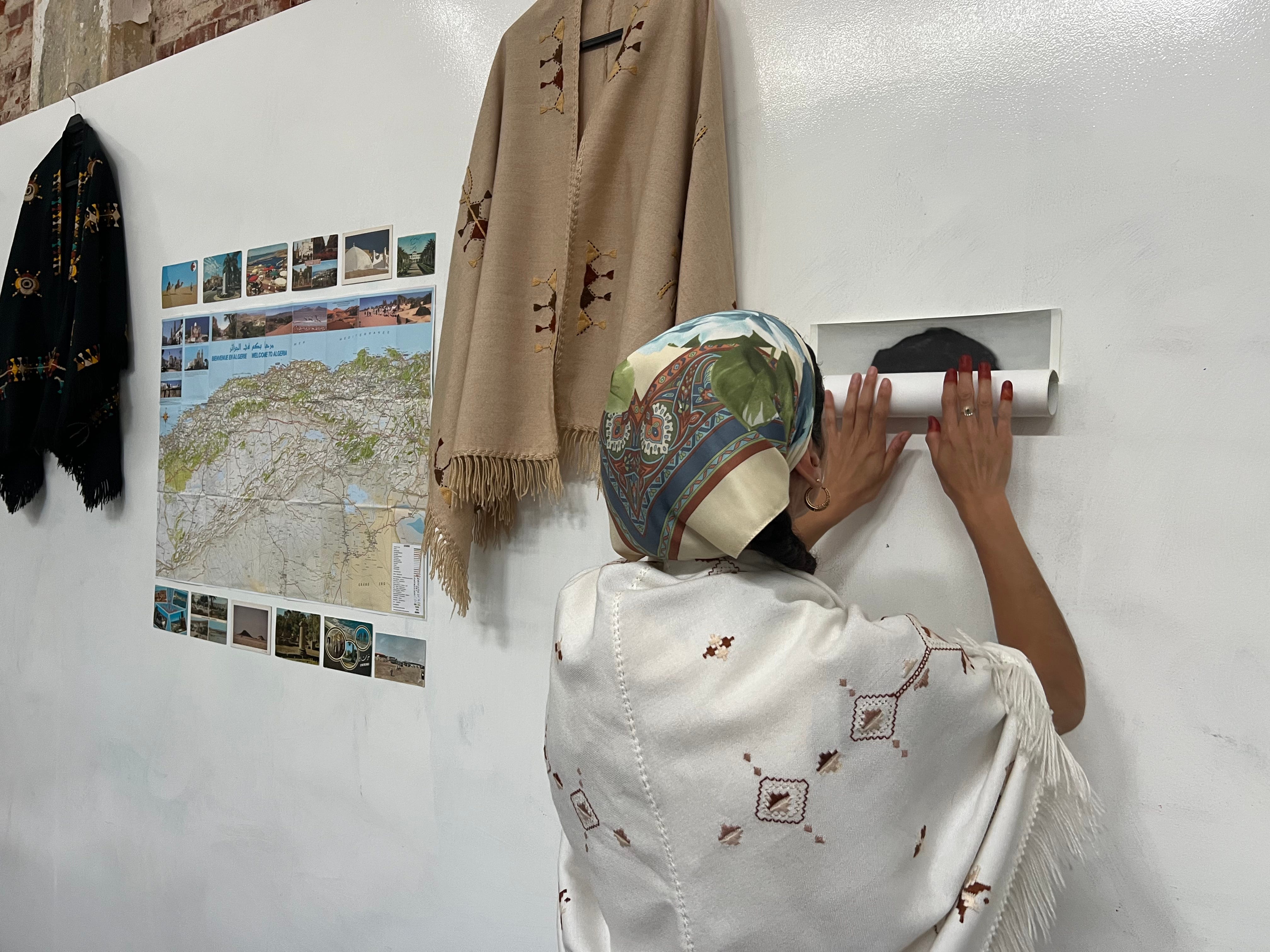
No one story is the whole story. Many things are true at the same time. Many voices are missing. Meaning emerges through layers, through overlaps, through the connections between fragments. Time is non-linear: past, present, and future coexist, moving through each other. Nothing is ever perfect or complete. Resistance is embedded through the stories we hold that persist, insist and survive. It is a refusal to be bound by erasure, and a commitment to carry what survives into the future. It is remembering that what lives in the body, in the voice, in shared ritual, in touch, in presence, is as vital - and perhaps more vital - than what is ever written down.
I spent the last day in the studio on my own, and I ended up singing melodies I’ve heard my family sing and setting them to some of my writings, which is what the below recording is.
0:00
-1:26
This is the translation:
Hna ntub3uu el athar el ba9iya
We follow the fragments that remain
Khotana ta9ouduna Ila honak
our footsteps take us there
Alssinatuna ta9ouduna Ila honak
our tongues take us there
9oloubona ta9ouduna Ila honak
our hearts take us there
Ma nssinach
we haven’t forgotten
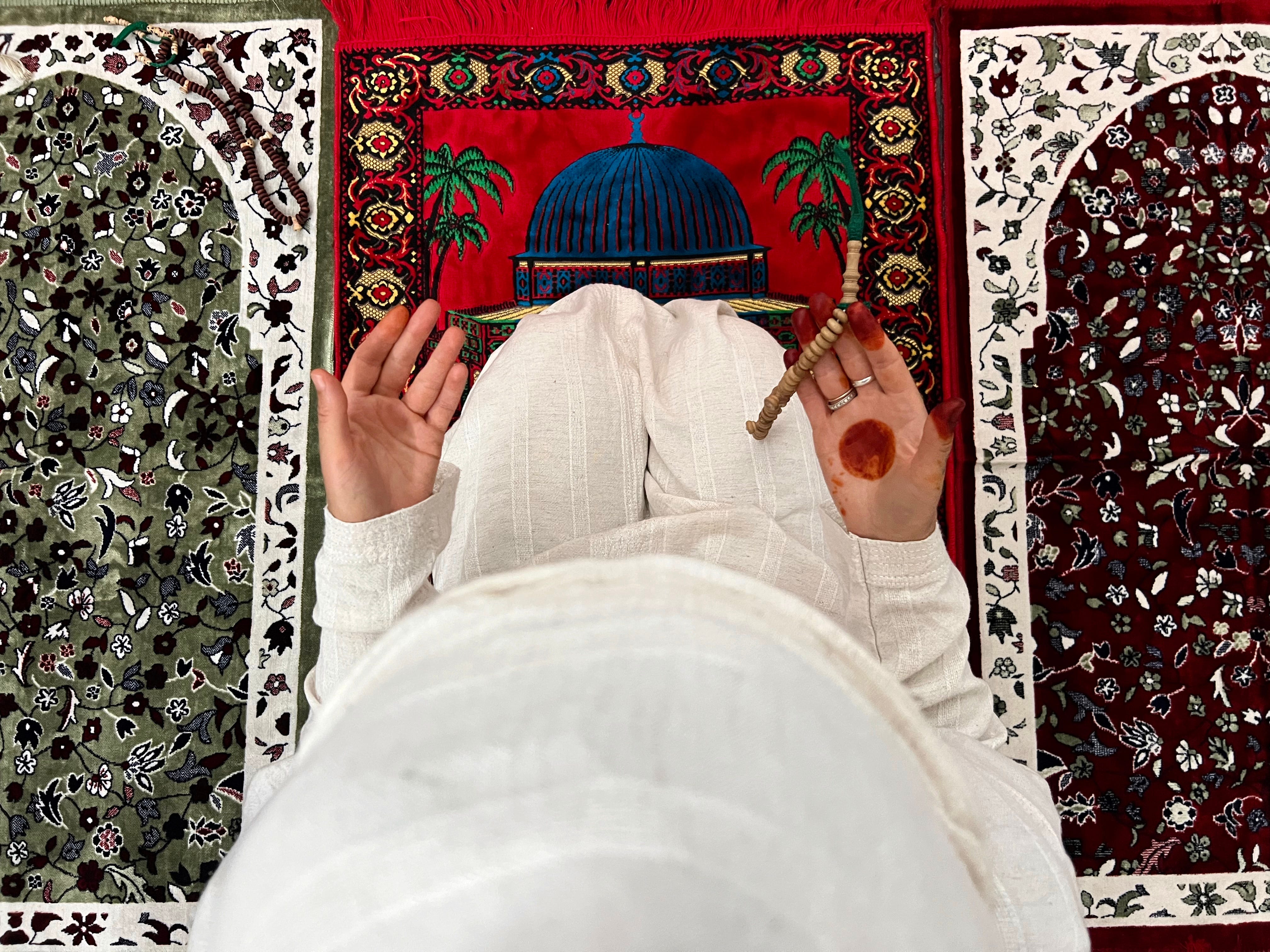
I am immensely grateful to SPILL for the time and space, and to my dear friend Melissa Farah-Arras for her open-heartedness, generosity of spirit, ideas and dreamtime.
Comments
Nothing yet. Say the first thing.
Sign in to join the conversation.