
When I first started writing about Jason, he was still alive.
I was twenty-four years old, working as the assistant to Françoise Mouly, the cover editor of the New Yorker. My friend Julia, whom I’d met as a teenager on Livejournal, had gotten me the job, because she thought I’d be good at it, and because she thought it would put 800 miles between me and Jason.
My take home pay was about $800, every other week. To make extra money, I worked for Françoise’s independent children’s book publishing company, and I taught musical theater classes to kids every Saturday morning in Park Slope. Sometimes I worked toddler birthday parties, leading scarf dances to “Orinoco Flow,” which paid more by the hour than teaching. At night, I took undergraduate classes at the New School, because Condé Nast had a tuition reimbursement program.
In a non-fiction writing workshop, I wrote nine versions of an essay that would grow up to become Land of Enchantment. Reading it back now, so many years later, I can watch myself learning where to start a story.
Version 1:
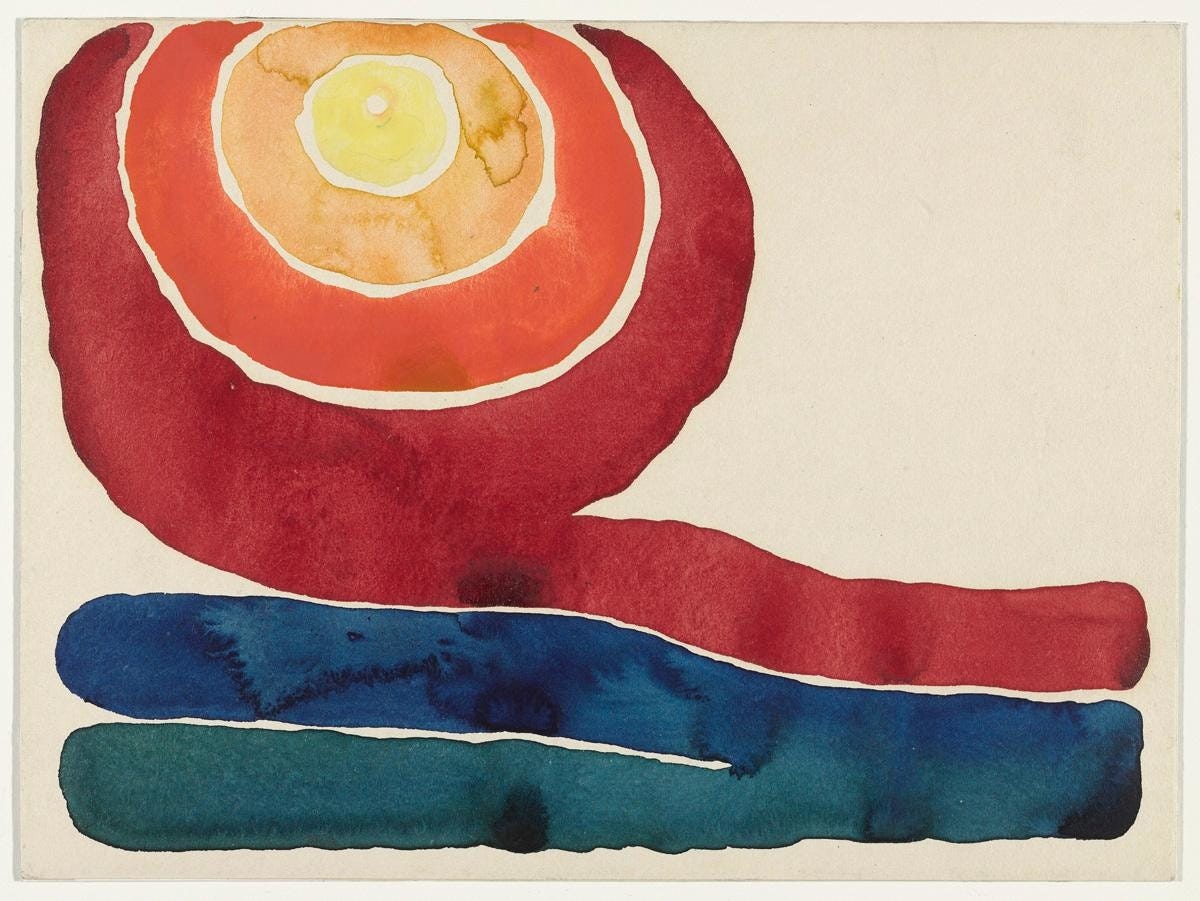
Georgia O’Keeffe loved its otherworldliness. It was her beloved faraway, the place from which she could see forever. Between 1929, the year of her first visit, and 1946, the year of her partner Alfred Stieglitz’s death, she divided her time between New York and New Mexico, but the skies, the broad dreamlike strokes of the land, compelled her to return, and it was there she eventually settled. Only in the faraway could she be so blissfully alone.
Version 9:
I remember sitting in a gun shop on Central Avenue, reading a story by Lydia Davis while I waited for my boyfriend to finish chatting up the clerk about all the guns he wasn’t legally old enough to buy. I don’t remember which story it was because there was a moose head mounted on the wall above my chair, and I was paranoid it would dislodge itself and land in my lap if I didn’t keep an eye on it. I remember Jason asking me to come over and tell him which gun I liked best.
“That one,” I said, pointing at the tiniest revolver, the kind you could hide anywhere.
“That’s a girl gun,” he said.
The clerk laughed and agreed.
“I am a girl,” I said, and waited for them to resume talking, so I could go back to my moose head.
The honeymoon was over.
By the ninth draft, I had figured out that the story starts when you give the reader something worth their attention. The voice is assured. I knew how to set the thermostat to “dread.”
The gun in the opening never goes off, but the essay is filled with references to women driven insane by betrayal (Medea, la llorona), ghosts, and violence.
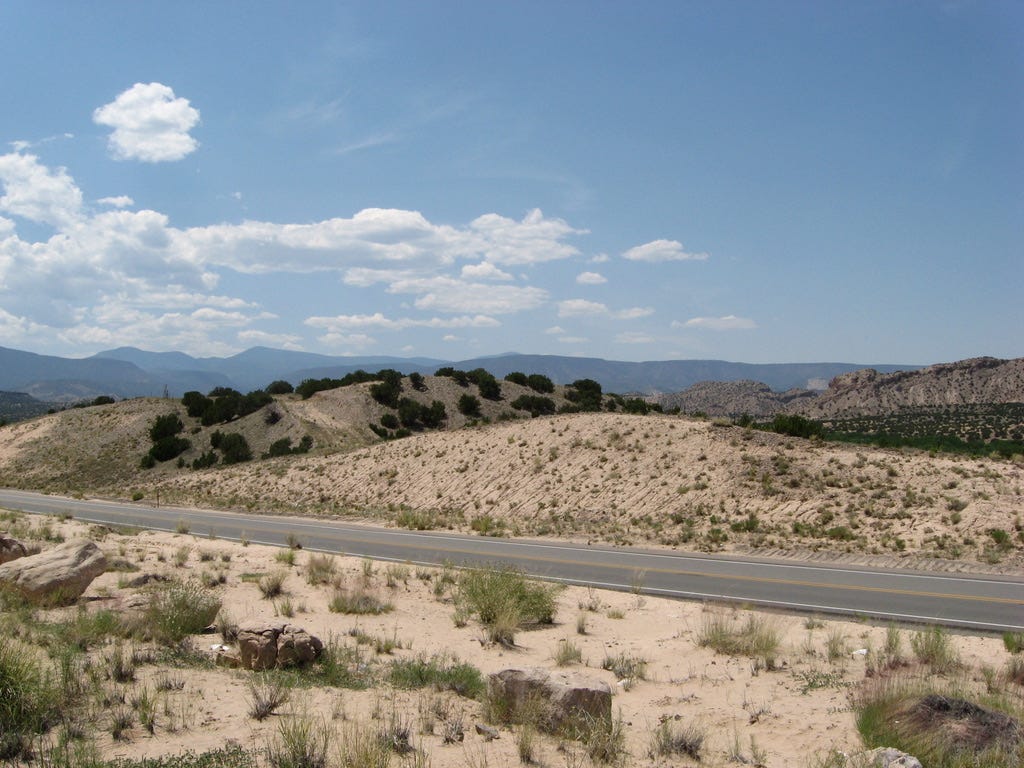
To anyone who asked Jason why he was moving to the southwest he replied, “To find el chupacabra.” Goat blood sucker. A mythical Latin American beast. On our first day in Albuquerque, as we were signing our six-month lease, Jason shook on a deal with our landlord that if he found el chupacabra, and brought her the head, we could live there rent-free.
Jason died in a motorcycle accident two years after I wrote this. When his brother called me from Jason’s phone, to give me the news, I didn’t answer. I had just seen him six weeks earlier, in a reunion that was so dramatic and crazy-making that I told myself I would never answer his calls again.
His brother tried again, from his own number, and this time I answered. After we hung up, I googled Jason’s name, looking for his obituary to prove this wasn’t one of his stunts, and instead found a local news story: “Man accused of stabbing another in a brawl.”
Eleven days before the accident, Jason had been arrested for stabbing a man in the stomach outside a gas station. When the police officer asked about all the blood on the concrete, Jason admitted “someone might have gotten cut,” and pulled a knife from his pocket.
In the comments section at the bottom of the article, someone had written “SAD DUMB THUGS.”
This was the kind of violent act that I always knew he was capable of, and that I used to worry I would be the victim of. I didn’t know what kind of woman that made me, if I still loved and missed a man like that. If I still wanted him to come back.
At first, I thought I was writing about New Mexico. Then I thought I was writing about Jason; after all, he was the most interesting character in my life. Finally, I came to the revelation that sounds obvious but is discomfiting to most memoirists: I was writing about myself. What kind of woman was I, if I loved and missed a man who hurt me? What made me want that? How do you grieve someone who wasn’t always good to you?
I was twenty-seven when I started working on the answers to these questions. At parties in New York, strangers would laugh when I said I was writing a memoir. It didn’t matter that I’d just published my first two books in a single year. Proving I could write (and publish) a book didn’t seem to qualify me for writing a memoir—age was the qualification. You had to be old enough to have had something worth writing about happen to you, and you had to be old enough to prove—to your elders—that you were capable of reflecting on that experience.
Even Mary Karr, who teaches memoir writing to students at Syracuse, writes in The Art of Memoir that “if you’re young, you might wanna wait. Most of us are still soft as clay before thirty-five. (I know, Dave Eggers was about twelve when he wrote his wildly successful Heartbreaking Work of Staggering Genius, but he’s an exception.)”
Luckily, I’ve always been extremely motivated by being underestimated. I would be the exception.
I read fifty memoirs while writing my own, to learn the form. I got into the Tin House writing workshop, where I studied with Karen Karbo, who taught me the A/B/C/D memoir structure I still teach today. I went to the Key West Literary Seminar, where I studied with Beverly Lowry, who recognized how seriously I took my writing. She found the opening line for the book:
I was with him the day he got the motorcycle, a 1988 Honda Nighthawk—1988 for the year he was born.
I wrote an essay about grief and digital mourning that Kiese Laymon published when he was editing personal essays for Gawker. And then Doree Shafrir messaged me on my Tumblr, to tell me she was trying to publish more personal essays at BuzzFeed. Did I have any ideas?
I pitched her the idea of writing about the last summer of Jason’s life. The essay went viral and for the first time, I received messages from women about their own “Jason.”
One woman told me she had left her abuser the night before, after ten years. Another told me she had to move four states away to escape the man who broke her ribs and splintered her eye socket. Yet another told me I was the only person who could understand her:
Because I don’t know anybody else who identifies like that, and my friends (the ones who still speak to me) think of me as a victim which I certainly don’t, so it’s hard to speak to them, let alone therapists, and it’s so hard to explain to them that I wanted to be in that situation more than anything, I felt more alive than ever before, and although the lows were the worst feeling in the world, the highs we had were absolute perfection.
An editor emailed my literary agent and asked to see the memoir, when we were ready to go out on submission.
By this time, I’d been working on the memoir for two years. I had started BinderCon, a conference for women writers, inspired by a Facebook group with 30,000 members. The Washington Post had named me a “leading feminist.” I had 35,000 words (a “partial”) and a book proposal.
My agent took the book out on sub but it was not an easy sell, even with my viral essay and my platform. For multiple reasons, I’d lost faith in my agent, and I turned to friends to give me tougher feedback on my proposal, so I could revise it before she went on another submission round. Finally, she sold the book in the winter of 2015.
I’d done it. I’d proven I could write a memoir worthy of the attention of strangers. I was thirty years old.
I wanted to be a writer’s writer. You can see how desperately I wanted this in the first line of my undergrad essay—I’m name-dropping Lydia Davis, trying to prove my literary bona fides. I wanted to write a memoir like Bluets—a sad, beautiful book you want to underline in dark ink.
Running BinderCon helped me get amazing blurbs for the book, from memoirists I admired, including Domenica Ruta1, Melissa Febos, Leslie Jamison, and Claire Bidwell Smith.
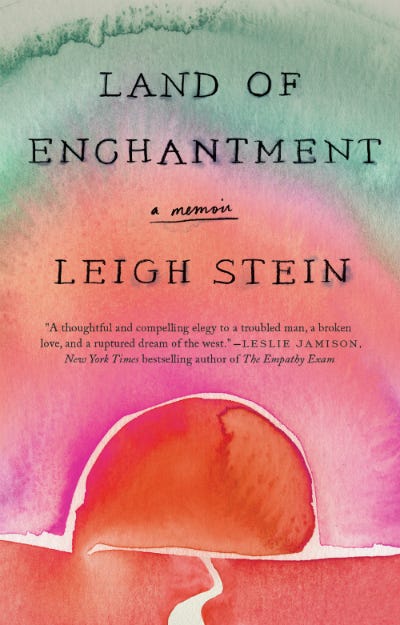
Land of Enchantment came out ten years ago, in August of 2016, during the election season that broke America. My new literary agent (my first agent left the industry after she sold my book) pitched an NPR producer she knew personally, who flat-out told her they weren’t covering books. Just the election. Election election election election election election election.
I just assumed that writers would buy my sad literary book. After all, I’d sold the memoir in part on the strength of my platform: I organized two conferences a year, for hundreds of women writers. I moderated the Facebook community that had grown under my tenure to 40,000 members. These writers wanted my help with their careers—they wanted what I’d built for them—but they didn’t want my book.
There was another way to market my memoir, I was learning, by talking about it as an “abuse memoir” and myself as a “survivor of abuse.” Choose your keywords for SEO: intimate partner violence, domestic violence, psychological abuse, victim.
Living with Jason was uncomfortable, writing about Jason was uncomfortable, telling people I was writing an entire memoir about living with Jason was uncomfortable, but branding myself as a survivor of abuse, to sell a memoir about abuse—this is what broke me. I couldn’t do it.
I wanted to be known for my work, not for what was done to me.
What that anonymous stranger had written to me in the night—it’s so hard to explain to them that I wanted to be in that situation more than anything, I felt more alive than ever before, and although the lows were the worst feeling in the world, the highs we had were absolute perfection—that’s what I’d tried to write a book about.
How do you market that?
I wrote an essay for the New York Times Book Review in defense of young memoirists. The publisher of my imprint was disappointed; it came out five months before pub date and he said it wouldn’t move the needle.
Undaunted, I managed to place an essay on psychological abuse in the Washington Post, to come out two weeks before my pub date. Perfect timing. It even went viral. I was flooded with comments about how I wasn’t a “real” victim of domestic violence, plus anti-Semitic tweets, as a bonus.
The essay had gone through so many drafts, and revisions, that I didn’t realize until after it was published that my editor had cut the paragraph about Jason throwing me against the refrigerator, without telling me. When I emailed her about maybe putting that back in, she replied that she was at a baseball game with her family. It was too late.
Now, I recognize this as a sign of my ambivalence: I wanted my pain to be taken seriously, but I also didn’t want what I’d suffered to become my identity.
On book tour, I woke up one morning to a google alert, with my name, about the murder of a woman named Megan Short. Before her husband took her life, and the lives of their three children, and their dog, and finally his own, Megan had sent a friend a link to my Washington Post article on Facebook messenger that said: This is why I’m leaving my marriage.
A British tabloid reached out because they wanted to publish an excerpt from my memoir and connect it to Megan’s murder. I said no.
Every August, I think of Megan. I remain haunted by what happened to her, at the moment she finally felt ready to leave.
Though we’d lived in New Mexico for only six months, Jason and I had spent years in a state of enchantment. In our isolated and sometimes beautiful kingdom, each moment was so intense and vivid, I felt spellbound to stay. Even when I recognized the cycle of abuse, I was convinced that if I left the lows behind I would never again have another high. The fact that my friends and family had such a hard time understanding this seemed like yet another sign that Jason and I belonged in a kingdom apart.
Land of Enchantment never sold as many copies as I’d dreamed and hoped for, but I remain proud of the work, and I was very moved by the response to my Bluebeard's Castle essay—the third time something I’ve written about Jason has gone viral on the internet.
When I started writing about Jason, in that undergrad writing workshop seventeen years ago, I was so young I thought I was the only one. I thought I was special. If I hadn’t practiced my craft, gotten better at telling the story, and published my work, I would never have reached all the readers who thought they were alone.
Last year, I visited an undergraduate class at Stanford, to talk about pitching, and one of the students said she was writing a memoir. I did not say, “you are too young to write a memoir,” but I reflexively thought it—and later had to laugh at myself. Now who’s the elder?
If my face showed a flicker of incredulity or amusement, I hope the student turned it into fuel. I hope she writes her memoir to spite me.
Tomorrow, August 19th, at 1pm ET, on Substack Live, I’m interviewing debut novelist Stacey about creating content on TikTok to build a platform and publishing her debut novel Kitten with Random House. Click here to be notified when it starts!
On Tuesday, August 25 at 1pm ET, I’ll be hosting a Chat Room event with Nneoma Amadi-obi, an editor at Norton. My Chat Room conversations with book publishing professionals are available to paying subscribers of Attention Economy. I’ll interview Nneoma for thirty minutes, and then open it up to audience questions.
On Wednesday, September 2 at 1pm ET, I’ll be hosting a Chat Room with editor Batya Rosenblum, who acquires personal development, parenting books, and non-fiction about religion and spirituality, for Tarcher, an imprint of PRH.
On Wednesday, September 16 at 1pm ET, I’ll be doing a Substack Live with Nadia Bower about her grief memoir Dear Dealer, which started as a This American Life Story. Click here to indicate you’re interested!
On Thursday, September 17 at 1pm ET, I’ll be hosting a Chat Room conversation with René Kooiker, a literary agent at Dystel, Goderich & Bourret.
On Thursday, September 24 at 1pm ET, I’ll be hosting a Chat Room conversation with Stefanie Lieberman, a senior literary agent at Janklow & Nesbit.
No posts
Comments
Nothing yet. Say the first thing.
Sign in to join the conversation.