
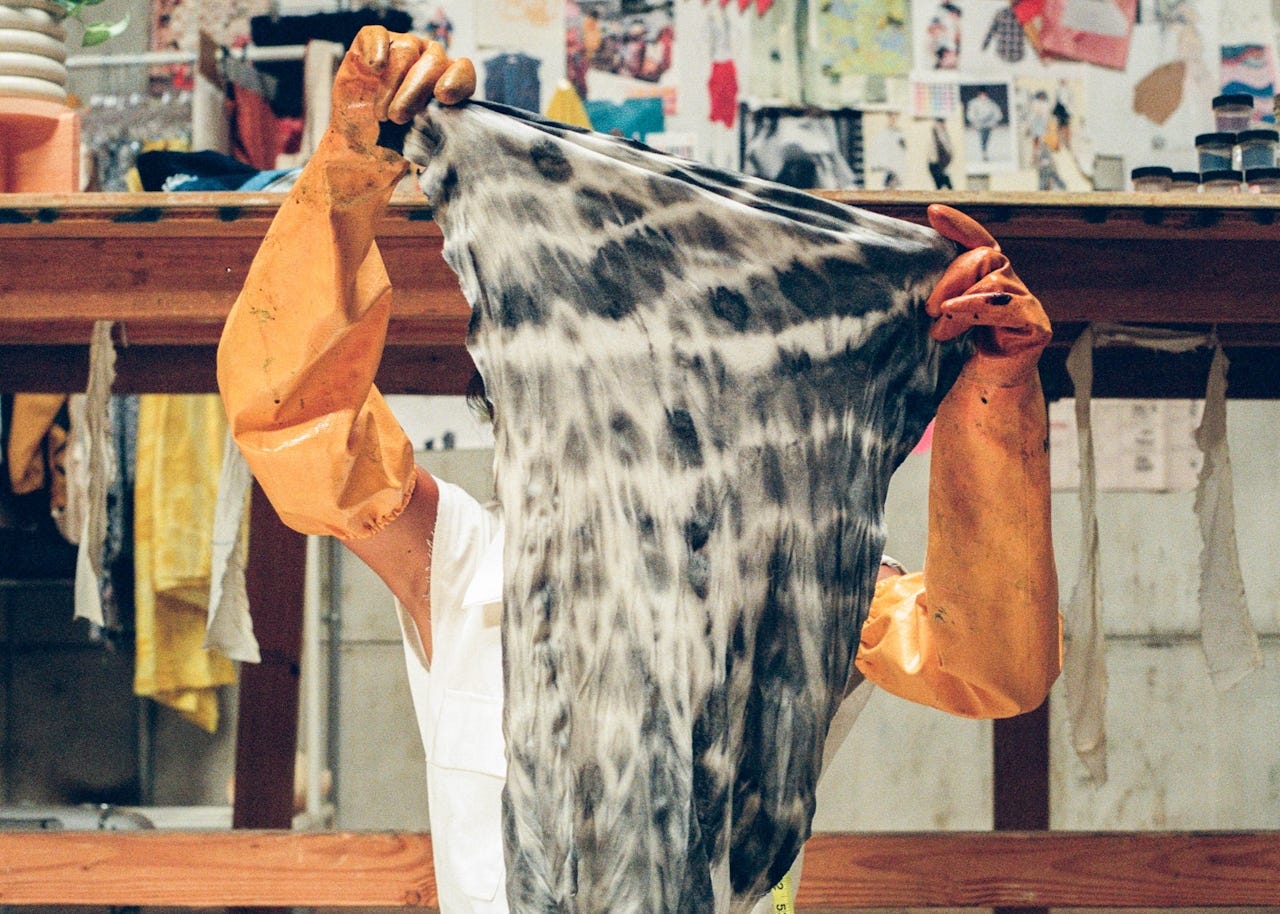
Are you looking at your clothing labels? Let's be honest, I rarely did until a few years ago. Maybe it was the narrative from my childhood, with my mom insistently talking about the dangers of seed oils and going on and on about Monsanto, always urging me to pay attention to what I was consuming. Or perhaps it was my newfound research into textile overconsumption that sparked this awareness. But what was truly affecting me day in and day out was that some fabrics were making me feel itchy, and I was wondering what was going on.
I started to realize some of the synthetic fabrics that touched my skin left me with irritations. I thought I was purchasing products that were 100% cotton, then actually after looking at the label they were 70% , 80% and any other variation combined with synthetic fibers to make a cheaper product which benefits the mass production systems. Another fun fact is that blended textiles cannot be broken down or recycled into new textiles. Study from Cornell on Social Fabrics and Textile Industry (quick read).
Doing a bit of further dive into the irritation I came to realize that synthetic fibers contain microplastics. These tiny particles can leach toxic chemicals that can be absorbed through the skin. Yikes. What are microplastics & why are they a problem as told by Client Earth.org

So what can we do? Do we have time to realistically inventory our clothing and reevaluate everything synthetic? Maybe not entirely. Instead, focus on becoming more aware of what you wear moving forward. Pay attention to how clothing interacts with your skin, body, and feelings. Evaluate each piece and decide if it's worth keeping or if it should find a new home outside your closet.
Despite my efforts to minimize synthetic fibers, it is nearly impossible to avoid them. The production of them began in 1920’s and they have become deeply embedded in our clothing and global manufacturing. Instead of fighting the brick wall, we have to figure out how you can protect ourselves from being crushed by it.
Comments
Nothing yet. Say the first thing.
Sign in to join the conversation.