
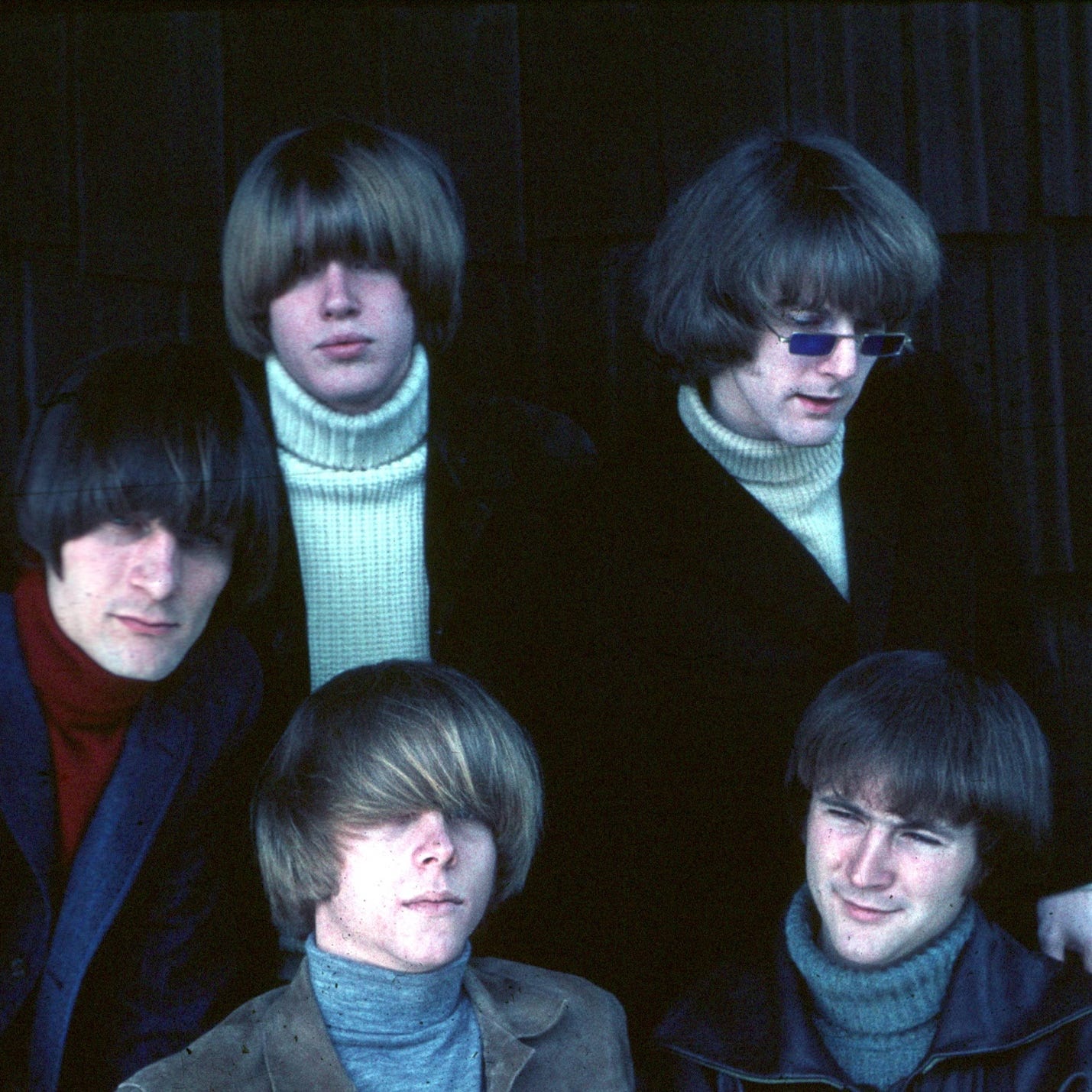
Jim Dickson: I was going around to all these shows that were popping up, trying to get the Byrds on the bill. We even went to Benny Shapiro’s house, where David Crosby, Roger McGuinn and Gene Clark took this home-tape-recording machine into his living room and played it while they sang live into the tape.
Benny Shapiro had this big, cathedral-ceiling living room, but he didn’t know what to make of that sound. He never knew; unless someone told him.
So Benny had a daughter, Michelle, who was eleven, and upstairs at the time. She hears these voices coming up to her room, they sound just like the Beatles, so she comes running downstairs, all excited!
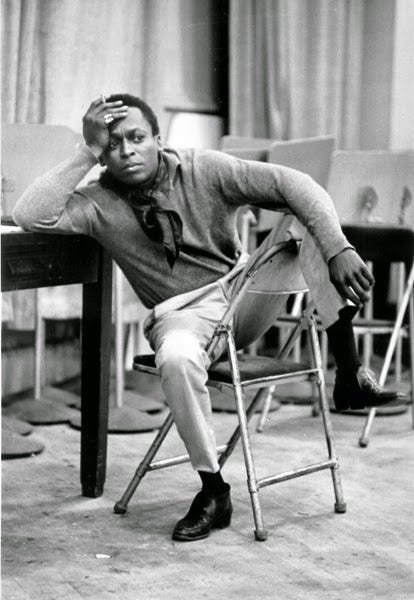
The next morning Miles Davis was over for breakfast, and Benny told him, “I don’t know what to do, Jim Dickson’s got this band, and my daughter thinks they’re hot stuff!”
So Miles called Irving Townsend at CBS Records. Irving Townsend had been kicked upstairs and all he was recording was the Air Force Band and stuff like that, in CBS’s one big studio. So Irving has some pull, and he calls the head of A&R for CBS/Columbia and says, “Hey give these kids, the Byrds, a chance.”
So CBS arranged an audition, so you can say that it was Miles Davis who, indirectly, got the Byrds started.
Jim “Roger” McGuinn: Jim Dickson realized the importance of getting us a radio hit with our first single. The Columbia deal was for one single only, and if we didn’t get a hit, we were back on the street.
Chris Hillman: We wanted to be like the Beatles, until Jim Dickson steered us away from that, and pounded it into our heads to go for substance over style; to go for depth in the material. He said, “Here’s a Bob Dylan song, ‘Mr. Tambourine Man,’ it hasn’t been put on a record, Bob just wrote it, listen to this…”
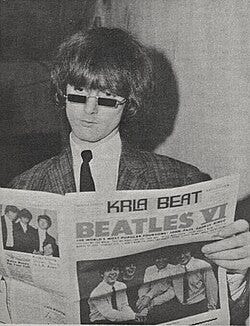
Jim “Roger” McGuinn: Jim Dickson overheard some record producers talking about a Dylan song, that Bob wasn’t able to use because someone was singing out of tune on the track. So Dickson wrote to Dylan’s publisher in New York and had them send a demo of “Mr. Tambourine Man” to California.
David Crosby: Jim Dickson brought us a demo of Dylan and Ramblin’ Jack Eliot singing “Tambourine Man,” which was truly awful, but it was a great song.
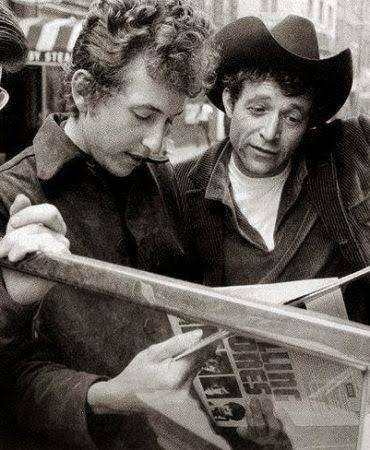
Jim “Roger” McGuinn: I wasn’t terribly impressed when I first saw Bob Dylan perform in Greenwich Village. I just regarded him as a competitor. I was surprised to see his first Columbia/CBS album, because I didn’t think he was good enough to get a record contract. But we listened to the demo of Dylan’s “Mr. Tambourine Man” in the studio, and Crosby said, “I don’t like it, man! It’s got that folkie 2/4 beat and it’s too long! Radio is never going to play a song like that!”
David Crosby: I’d watch Dylan play when I was a kid working in the Village, he was singing over at Gerde’s Folk City, and I thought he was a great writer then, but I didn’t like his voice all that much. I just thought he was an unbelievable songwriter, but I didn’t really get him until Roger translated him for me.
Jim “Roger” McGuinn: David Crosby had a valid point; folk music had been out of favor in the Top 40 for a while. Only British music was making the charts, and the songs were short, about two minutes and thirty seconds.
Chris Hillman: Nobody was really keen on “Tambourine Man” when we first heard it, maybe Roger McGuinn, but I don’t know if anybody else was.
David Crosby: Roger convinced us to do it.
Jim “Roger” McGuinn: I had an idea of how to save “Mr. Tambourine Man.” I’d been playing around with some Bach licks on the 12-string guitar and thought, “What if I put an intro like this, and we change it to a Beatle beat?!” And it worked!
David Crosby: Roger’s a genius, man. Face it, the guy is. He made Dylan come alive for me. All of a sudden I realized the real potential of those songs, because I wasn’t listening to Dylan’s voice, which I found sort of irritating.
Terry Melcher: I had a hard time getting friendly with any of the original Byrds; besides Roger McGuinn, because none of them played on the “Mr. Tambourine Man” record. It was Roger’s and their manager’s idea. They said from the start, “The group isn’t ready.” And somehow I got the blame.
Gregg Jakobson: The Byrds treated Terry Melcher with a certain amount of distain because he was a part of “Hollywood Royalty.” I mean, he was Doris Day’s son, and she was a monster of a star. And Terry drove a Cadillac convertible; he lived in Beverly Hills, so they weren’t really identifying.
Jim Dickson: Terry Melcher never saw anything like me and Crosby fighting in the studio, with me on top of him, threatening his life.
Carl Franzoni: I was in the studio with the Byrds and they would fuckin do seventy-five takes, because they were fighting so much! They were beating the shit out of each other! Mostly McGuinn and Crosby, they were punching each other out, with Jim Dickson’s right in the middle of it! I witnessed it, they were fighting as they did one take after another!
David Crosby: I think I’m the only one who punched Jim Dickson and got away with it, because Barry Feinstein and Gene Clark grabbed Jim before he could get back at me.
Jim Dickson: Terry Melcher was quoted as saying, “Jim Dickson’s got great taste, but he’s too emotionally involved.”
Gregg Jakobson: Terry Melcher wasn’t a part of that folk scene. He had produced Paul Revere and the Raiders, who were considered teeny-bopper.
David Crosby: I insisted on calling them, “Paul Retard and the Rear Doors,” because they would wear these colonial outfits and stand on their amps, dancing on the equipment. Pure corn.
Gregg Jakobson: Terry wasn’t one of them; he wasn’t one of the “street people.” And David Crosby could be somewhat of a prick, he was very demanding, he was very much of an elitist, and Terry was an elitist himself, ha, ha, ha! So they didn’t get along.
Jim “Roger” McGuinn: David Crosby did not like Terry Melcher, and Terry Melcher did not like David Crosby.
Terry Melcher: The most despicable person in rock & roll? That’s easy. David Crosby.
Jim “Roger” McGuinn: It was Terry Melcher’s idea to use a group of musicians known as “The Wrecking Crew,” Hal Blaine on drums, Larry Knechtel on bass, Leon Russell on electric piano, Terry Cole played Telecaster. And Glen Campbell was supposed to be on the session, but he couldn’t make it.
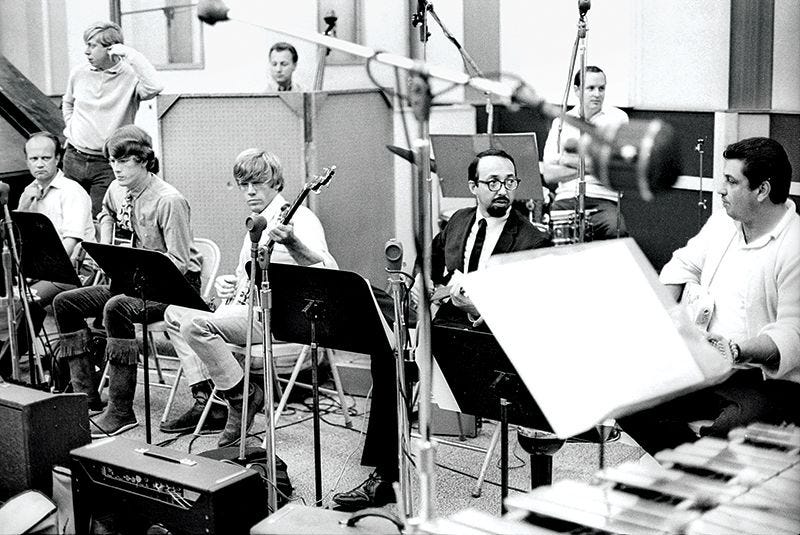
Frank Zappa: Most groups didn’t really play their own instruments for the basic tracks on their albums. They’d arrive in a purple-hazish condition, and play the song a few times, after which the producer would tweeze it, then the studio musicians would learn the tweezed version, and play it, in tune, with a “good beat.”
Chris Hillman: It was the right thing, to have session musician’s play on the first single. Those were the right moves to make. Roger was the guy who could be in there with session guys and do it. We weren’t disciplined enough.
Jim Dickson: It was some job to get Terry Melcher to go along with Roger McGuinn on the single, and I said, “We gotta have McGuinn because otherwise there’s no flavor of what they’re going to sound like...”
Jim “Roger” McGuinn: Terry Melcher put a Beach Boys kind of track to “Mr. Tambourine Man.” Terry said that it was “Don’t Worry Baby” that he was emulating.
Terry Melcher: Basically, I took the bass-drum groove from “Don’t Worry Baby,” and put “Tambourine Man” over it, and had McGuinn weave his Rickenbacker 12-string through the whole thing.
Jim “Roger” McGuinn: I was shooting for a vocal that was very calculated between John Lennon and Bob Dylan. I was trying to cut some middle ground between those two voices.
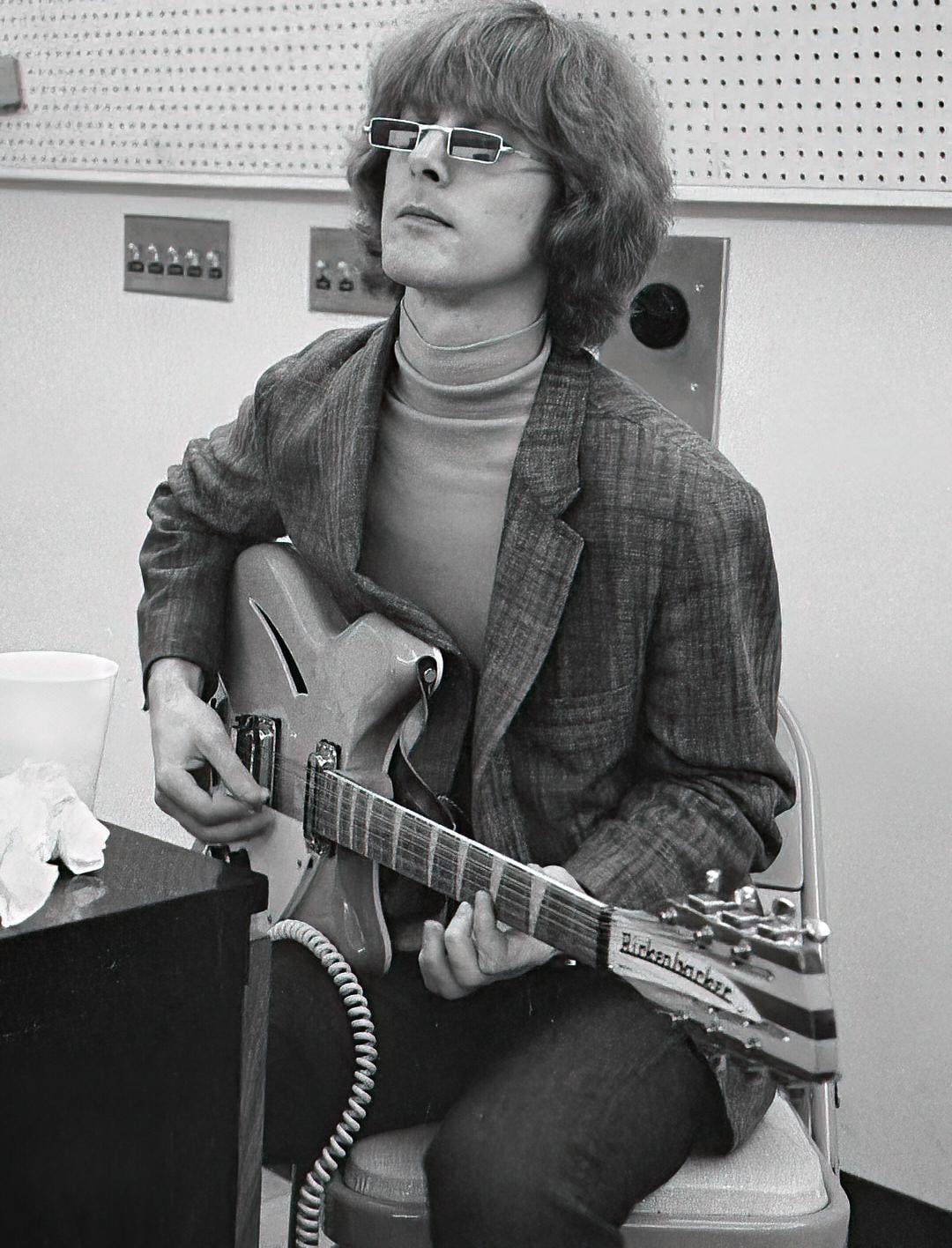
Terry Melcher: I thought the only guy in the band who could play well enough to record was McGuinn, so I used all the normal Wrecking Crew guys; Hal Blaine, Leon Russell, Larry Knechtel and Jerry Cole on rhythm guitar.
Chris Hillman: “Tambourine Man” was the only song the band didn’t play on, and, with the exception of the Beatles, a lot of bands didn’t play on their own records.
Terry Melcher: I overdubbed McGuinn’s 12 string about four times so it just jangled forever.
Jim “Roger” McGuinn: When I first heard the playback of ‘Mr. Tambourine Man,’ we were sitting on the floor of Studio A, Columbia Records on Sunset and Gower. They had these big speakers that rolled around on wheels, and Terry pulled a couple of them up, and called for a playback of “Mr. Tambourine Man,” and I just was amazed at how good it sounded!
Billy Hinsche: Roger McGuinn would come over to Dean Martin’s house and throw the baseball around or play tennis. That’s where I met him and got to know him a little. Roger, or Jim, he’s real name, was dating Deana Martin, so it was like a family thing.
Gregg Jakobson: Deena was a wild child, she was only fifteen or sixteen at the time, when I was going out with her.
Deana Martin: Terry invited us to a studio in Hollywood to watch the Byrds record their first single, “Mr. Tambourine Man,” and I sat in the back of the booth with the engineers, thinking, “The Byrds are recording a Bob Dylan song, how cool!”
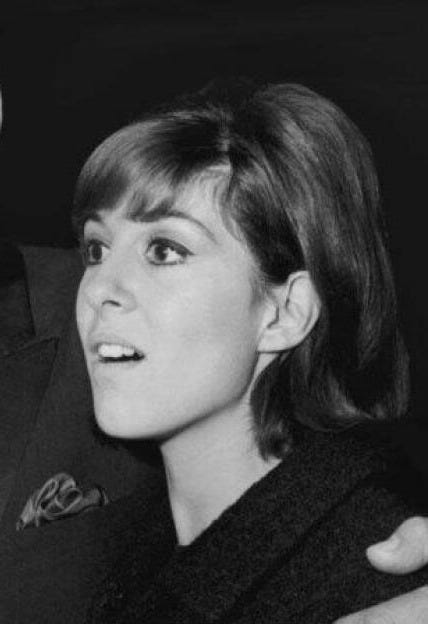
Billy Hinsche: Claudia Martin was dating Terry Melcher, right? So Claudia requested that the Byrds play at her High School Graduation at the Bel Air Country Club, not the hotel, but the Country Club, and they agreed! So we go, and the Byrds just set up here, no riser, right on the carpet. And they did their set, and GOD they were good! I mean, they were really good!
When their set was over, everyone was having lunch, and there was nobody in the room with the band equipment. So I went in, and stared at that Rickenbacker of his, and I did that ultimate, “You-don’t-do-that-move!” Yeah, I picked it up, and strummed it…
And here comes Roger McGuinn!
You just don’t do that! You know how touchy musicians are!
But McGuinn was cool. He just smiled.
Jim “Roger” McGuinn: Even though it was the Wrecking Crew playing the band track, I was surprised that we had accomplished something that good. And I was playing my Rickenbacker on it, but I just didn’t know the business well-enough, to know what would be a hit.
Bob Neuwirth: Bob Dylan and I’d gone to the office in New York, cynical as usual, looking forward to reading the fan mail, and having great cheeseburgers downstairs on East 55th Street. And somebody said, “Well there’s this ‘Mr. Tambourine Man’ record!”
So I said, “Put it on...”
It was great, because no one, except Peter, Paul and Mary, could ever cover one of Bob’s songs. And we heard the record, and cracked up, and Bob loved it.
Albert Grossman wasn’t that quick to commit; but, the upshot was that we thought this was a good idea. We didn’t get particularly head-bangingly ecstatic with it, because no one knew if this had a chance to get on the radio. But we were thinking, “Hey, well, those guys didn’t miss the point entirely….”
Jim “Roger” McGuinn: Bob Dylan flew in from New York, got to Los Angeles airport, and rang up our manager to ask what was happening. What was happening was that we were rehearsing “Mr. Tambourine Man.” So Bob turned up to hear us go through it, maybe a dozen times, and he said, “They do it well,” which is like a million-word of praise coming from him.
David Crosby: The Byrds drove up to San Francisco to play the Peppermint Tree. We had a black 1956 Ford station wagon that we had bought from Odetta for six hundred bucks. We took that car with all our equipment, and all five of us in the Byrds, and drove to San Francisco.
We stayed in some dive, a set of rooms just above the club, which was on Broadway in North Beach, and it was awesomely bad.
When we got to the Peppermint Tree, they told us that we were expected to play five sets a night, and seven sets on the weekend, and we said, “WHAT?”
We had never played that many sets, for that many nights. Not only was that bad, but there were two go-go dancers; girls in fringed bikinis, on either side of us, trying to dance while smacking their gum. They’d say things like, “Don’t you guys know anything with a beat?”
Jim Dickson: I went to Derek Taylor and said, “I’ll give you two and a half percent of this record, and you do what you think it’s worth. We won’t demand anything from you, but what we want the most is help breaking the record in England….”
Derek Taylor: I didn’t even know that much about pop. I knew about the Beatles, but basically, I was a provincial journalist. Suddenly there I was in the 9000 Sunset Boulevard building, with a press agency and a drink problem.
Bob Eubanks: I really liked Derek Taylor but felt he never could acclimate himself to doing business, the “American Way.”
Derek Taylor: When I heard “Mr. Tambourine Man” on acetate, I knew this was for me, so I left Bob Eubanks and took the Byrds with me. If I had just escaped dying for The Beatles, I positively tried to die for The Byrds.
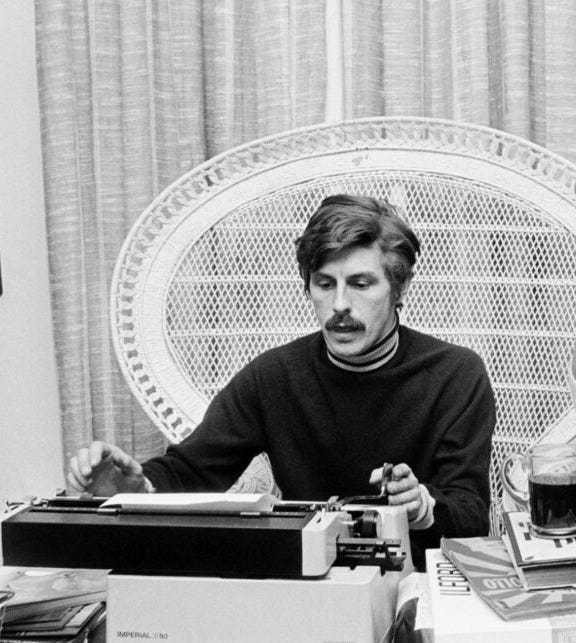
Jim Dickson: Derek got a half dozen disc jockeys on the West Coast to want to play the record, but none of them could get it past the big San Francisco program director; Tom Donahue; also known as “Big Daddy Tom Donahue.”
Loren Schwartz: “Big Daddy Tom Donahue” was tossed out of a top DJ job in Philadelphia, along with Alan Freed, when they were all busted for taking payola.
So they came to San Francisco and thought they were in Siberia! They actually said that! And they went to KYA, which was just a regular top10 station, no big deal, but they just took it over! “Big Daddy” had this big booming voice, and he was, “Here to clear up your face and mess up your mind,” that was his motto. He weighed about three hundred pounds, and everyone just worshiped him.
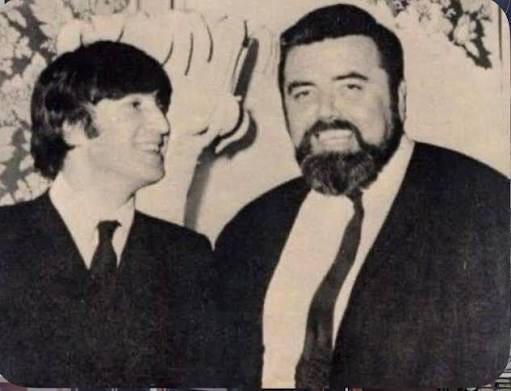
David Crosby: We’re doing our set at the Peppermint Tree; with things like Dylan’s Chimes of Freedom; and we started packing the club, which was only a couple nights into the gig, and the manager said, “Oh, hey, wait a minute…”
And we renegotiated.
After that, we did three sets a night; the go-go dancers went elsewhere, and we filled the joint, to the rafters! Everybody in San Francisco came!
And while we were playing this North Beach go-go place, “Mr. Tambourine Man” started to get airplay. “Big Daddy Tom Donahue” broke us on KYA.
Jim Dickson: “Big Daddy Tom Donahue” saw this record sitting there, serviced by CBS, and not getting promoted at all, and he noticed it was written by Bob Dylan. Well, Donahue knew his Dylan, and he had never heard of “Mr. Tambourine Man,” so he put it on, and on the following Tuesday, at Ciro’s, there had been about three hundred people from San Francisco, who had been out that Sunday on acid! And when they heard “Mr. Tambourine Man” on the radio, instead of “Splish Splash,” they showed up at Ciro’s, smiling.
Chris Hillman: I could feel this thing happening, I didn’t know how far it was going to go, but I believed in the “Tambourine Man” thing.
Arthur Lee: Dylan was the breaking point. I saw The Byrds and they were doing Dylan and I thought, “That’s me!” And I thought I could do it as well, if not better, so that’s when I switched from R&B to writing catchy lyrics with hot licks.
David Crosby: We were riding down Sunset Boulevard in that funky old station wagon, KRLA played “Mr. Tambourine Man,” and we freaked out! There is no feeling I’ll ever have like that, hearing our tune on the car radio, without warning, for the very first time ever. And then they played it again! I couldn’t drive anymore; we were so excited we had to pull over!
 - Classic Song of the Day")
Jim “Roger” McGuinn: It was a good feeling to hear it on the radio, except that we were broke. It didn’t connect. I was walking on Hollywood Boulevard, and I heard a car go by with the song playing, and I went, “Wait a minute! There’s something wrong here!” I didn’t have any money, and I’m walking in dirty jeans, and there goes a convertible down the street, playing my song!
**&**
Derek Taylor: Peter Fonda booked the Byrds to perform at a birthday party for his sister, Jane. It was very unusual for anyone in movies to know anything about rock & roll, so it was my job to make sure all the Byrds met Peter and Jane Fonda, as well as Henry Fonda, who was not to be upset by the Byrds.
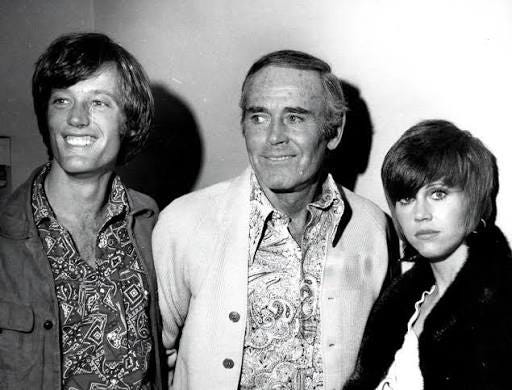
Jim “Roger” McGuinn: Henry Fonda kept saying, “Turn that down!”
And Peter kept going, “C’mon Dad!”And he’d come up to us and say, “Don’t pay any attention to him, he’s an old man, he doesn’t know what he’s talking about....”
Dominic Priore: Derek Taylor panicked, and appealed Jim Dickson, whose answer was, “This is New Hollywood. They want this madness. That’s why they got the Byrds here. This is the beginning, where worlds meet, again.”
Carl Franzoni: Jane Fonda wanted to fuck me, I know she wanted to fuck me.
Van Dyke Parks: The genie was out of the bottle.
Bryan MacLean: I did the first tour with the Byrds opening for the Rolling Stones on their first American tour. It was mostly in California. We did thirty-one-nighters. I was so exhausted, I started to hallucinate. I began to break down physically, so I started screwing up, and getting on people’s nerves. And the tighter I got, the more I became a jerk, more of a brat, more of a problem. I didn’t do well on tour.
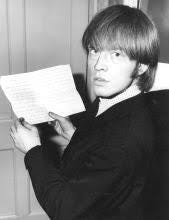
Jim Dickson: Everybody was looking at what was happening in England, and there were no American groups getting on the charts. And if we could break a record in England, then everybody would notice, so I told Derek Taylor, “What we really want the most is help breaking the record in England…”
Bryan MacLean: When I began to screw up, the Byrds went to England and didn’t take me with them. I sort of sabotaged going to England.
Carl Franzoni: The Byrds were way past us then, they were traveling the world, going to England, and they weren’t our band anymore.
Jim “Roger” McGuinn: Coming down the steps of our Pan Am plane the first time we went to England was very much like being in “A Hard Day’s Night!”
We met the Beatles and the Stones, and we went out to parties with them. This wouldn’t have happened in the States, where bands were much more competitive with each other.
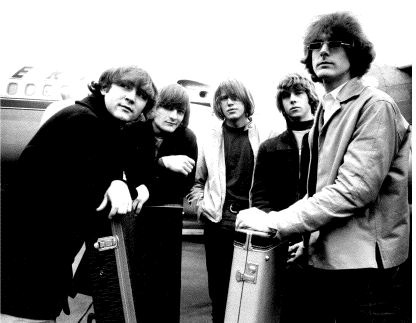
Carl Franzoni: We had to move on to other bands.
Johnny Echols: Vito, Szou, Carl and all the freaks started coming to all the Grass Roots shows because the Byrds had outgrown them.
Bryan MacLean: When the “British Tambourine Man Tour” ended, the Byrds stayed in England to hang out with the Beatles, and there was a void. I was in Ben Frank’s parking lot, and that’s where I met up with this guy Arthur Lee, and he was an interesting type, ha, ha, ha!
Rodney Bingenheimer [Disc Jockey/Scene Maker]: Arthur Lee was this black guy, but he always seemed like part of the white scene. He wasn’t playing soul, he was playing this jangly guitar music, it was almost like he was like the black version of Roger McGuinn.
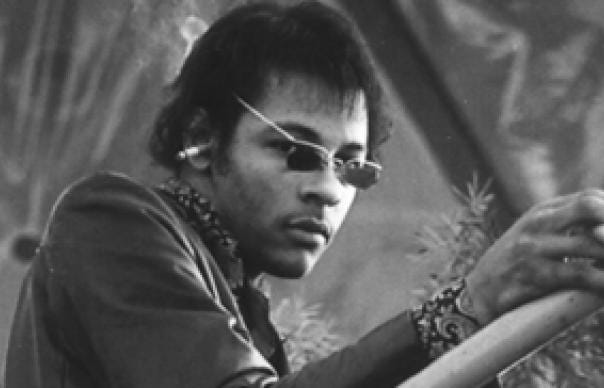
David Anderle: Arthur was the first guy who really had that LA look, with the fringe jacket and the Levi’s and the little glasses.
Jerry Hopkins [Author/Scene Maker]: Arthur had a pair of chandelier crystal glasses in 1965, which was really far out. One lens was blue and the other red, but God only knows how he walked in them, because he was always wearing them. I hear that he used to drive in them too!
Arthur Lee: While watching the Byrds, I saw a guy in the crowd who really stood out. He seemed to be attracting as much attention as the Byrds themselves. He was this redhead kid, with shoulder length hair, bangs and a ribbon.
Chris Hillman: Bryan MacLean was the equipment guy on the Byrds first tour of the Midwest in the summer of ‘65. He was younger than the rest of the Byrds by two years or more, and he was a pretty good kid, but a wee bit cocky.
Arthur Lee: This redheaded kid was always around the band, so I asked who he was, and I found out he was Bryan MacLean.
Jerry Hopkins: Bryan used to wear a cape, but I suspect he got that idea off David Crosby.
Johnny Echols: We met Bryan MacLean at Ben Frank’s, he was this gadfly character who knew everybody, and all the girls loved him! He wore striped pants and a scarf, and he had this long strawberry hair, and he’d be flitting from table to table.
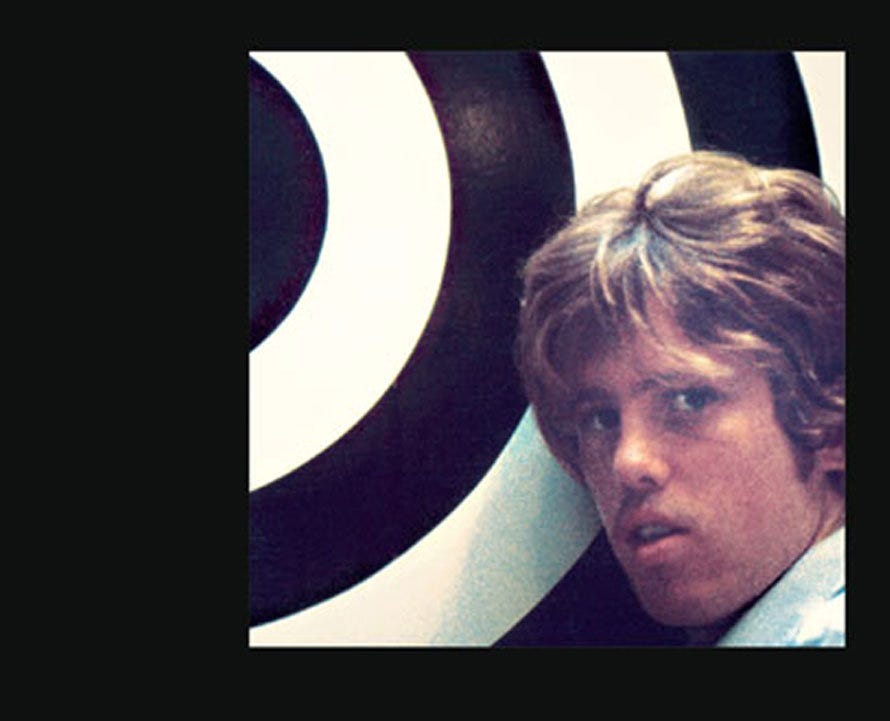
Arthur Lee: People would come to Ben Frank’s to hang out with us after we played shows, and Bryan MacLean would be there, and he would put a ribbon in his hair and flit around, and I was going, “Wow, this guy seems like he’d be interesting to have in the band…”
Bryan MacLean: Arthur’s car was stopped in Ben Franks parking lot, and I needed to get somewhere, so we all stood around and talked to each other, and then Arthur jumped back in the car, a silver-blue Corvair, and drove me wherever I was going. Later on, I found out he was in the Grass Roots.
Bobby Beausoleil: One of the bands that opened for the Byrds was called the Grass Roots, but this wasn’t the “Grass Roots” that most people would be familiar with.
Johnny Echols: We’d seen this album, “Up from the Grassroots of Malcolm X,” and decided that would be a cool name for a group. So we were the Grassroots LONG before that other group, and we even got the poor man’s copyright; where you register a letter and send it to yourself. So we did that and thought we were all set.
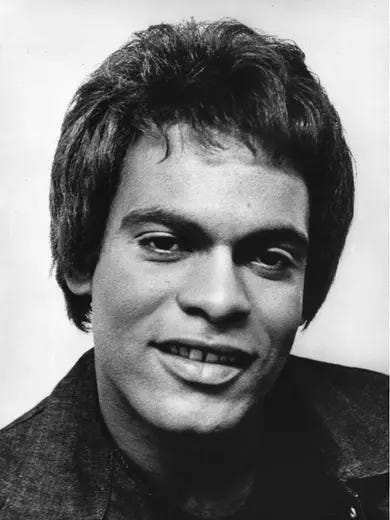
Bobby Beausoleil: The Grass Roots were the first time that I’d ever seen music being played by integrated musicians, you know, a couple of black guys and a couple white guys playing together. Some of the R&B bands were integrated, but none of the California rock bands had been, so this was a whole new thing in and of itself!
Arthur Lee: I had the first integrated rock group; I mean as good as the Beatles are, they’re four white boys; as good as Rolling Stones are, they were white, you know?
Bobby Beausoleil: The Grass Roots were doing Stones tunes as well as some originals, and it struck me, that if they had another guitar player, Johnny Echols could free himself up to play more lead. That would fill out the sound of the band. I could just see a fifth member in that band, and I realized, I could be that guy, you know?
So I basically stalked the band.
Johnny Echols: Bobby was very personable, sort of a “gadabout,” he knew everybody and everybody knew him….
Bobby Beausoleil: Arthur Lee was just beginning to write his own material, and I saw tremendous potential in the band, so I went to Arthur and told him he needed a rhythm guitar player, and I tried out for him.
Johnny Echols: Bobby Beausoleil was a competent guitar player, he played basically covers, and a little rhythm & blues.
Bobby Beausoleil: Then I made a rush trip to Santa Barbara to get my guitar. I snuck into my parents’ home when I knew they weren’t there. My father would be at work, so I got my guitar, but my father caught me just as he was coming home for lunch, as I was leaving, I didn’t get away scot-free.
My dad was flabbergasted; I had long hair, I was wearing very, very strange clothes compared to anything he’d ever been exposed to. He didn’t know what to make of me, and the only words he said were: “I don’t know you anymore….”
But I got my guitar, and my dog, Snofox; he and I got to be fairly well known. So I had my guitar, I had Snofox, and I had a gig in a band, everything I needed!
Pamela Des Barres: Bobby was so beautiful! He was so gorgeous and smart and full of himself. Bobby was just gonna make it, and his life was his life!
Bobby Beausoleil: Arthur and the band were getting ready to play a gig at The Brave New World, which was a gay bar, although they didn’t know it at the time.
Johnny Echols: Over the several months, that we played together, we had developed a genuine fondness for Bobby, plus___his playing added a (raw) bluesy quality, too the mix.
Bobby Beausoleil: Arthur didn’t expect too much attendance, so he decided I could get on stage with them. I’d already played impromptu in front of him, but he thought he’d try me out, so I could learn the songs as I went along.
Johnny Echols: It was good to have Bobby on rhythm guitar, so I could concentrate on playing lead.
Bobby Beausoleil: It was just the right time, right place, right people; it was great, because we had our own place, it wasn’t some sleazy club owner taking advantage of the freaks. So the place was packed from that point on, and The Brave New World was a happening thing.
John Echols: While we were playing at The Brave New World the record companies would come down because they were looking for musicians, and they always tried to sign us. They’d come from Columbia, Capitol, Decca and Dot Records, but none of them would allow us to own our publishing.
Michael Stuart-Ware: The Grass Roots were a powerful group then, they were the number one group in Hollywood, they had the crowd and it was an incredible scene, the whole art crowd was there, Carl Franzoni and Vito and Sue and all of these people just packed on the dance floor. But they weren’t hippies, you know?
They were art students and artists and they were having a good time, and all of the bands in Hollywood wanted that crowd to be in their club.
Jerry Hopkins: Vito wanted to go on and launch the Grass Roots, like he’d helped to launch The Byrds.
Bobby Beausoleil: When I first saw the Grass Roots, they didn’t have much of a following. I was probably the most enthusiastic fan they had. Then we got this gig at the Brave New World, where we were playing for this private gay audience, we’ve got men dancing with each other, which was not what we wanted to do.
So after I played a few sets over a few evenings, I went up on the Strip one night on our break. I just got tired of the situation, we were all tired of it, we wanted an audience. We didn’t want to be playing gay bars, we weren’t oriented for that, so I went out on Sunset Strip and told everybody: this is where it’s happening, and I gave out directions to the club. By the time I got back to the club, people were already starting to arrive, and between that set and the next, the place was packed.
There was a huge caravan of cars which came down from the Strip. It was just the right time, right place, right people, I guess. It was great, because we had our own place. It wasn’t some sleazy club owner taking advantage of the hippy kids—of course they weren’t called hippies then-- this was a couple years before the term was coined. It was the colorful people—or the “freaks” as we were called. So the place was packed from that point on, and Brave New World was a happening thing.
John Echols: The black and white thing was a perfectly symbiotic relationship on the Strip, and there were no problems whatsoever, until we found out there were places we couldn’t play. We always sold out where ever we went, so and we didn’t realize there were many places in the South, where, if you were black, you could only play to segregated audiences. And there were no places in the South, and Midwest, that we could play, other than college towns.
Jimi Hendrix: Colored artists didn’t dare go near some southern audiences.
John Echols: Jimi Hendrix went through the same thing, but he had the temperament, we just couldn’t deal with it. We wouldn’t play for segregated audiences.
David Crosby: The Civil Rights thing was just starting. It was pretty heavy.
Bobby Beausoleil: Things were really dicey in the Civil Rights Movement, and there was a huge backlash, and a lot of anger and unrest, you know? When we were driving around, we’d pass painted graffiti that said, “Burn Whitey Burn!”
**&**
No posts
Comments
Nothing yet. Say the first thing.
Sign in to join the conversation.