
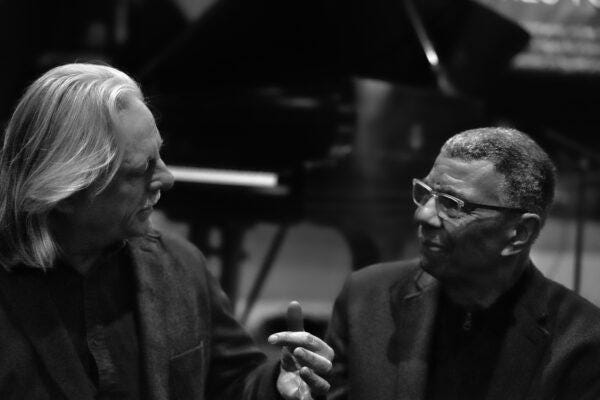
Manfred Eicher and Jack DeJohnette (c/o ECM Records)
Quick: Name the five most influential and important jazz record labels of the 20th century. Me first. Naturally, Blue Note comes to mind for its long history and incredible track record from 1939 onward. Thanks to Bruce Lundvall and now Don Was, its legacy didn’t end in the 70s when it went into hiatus after founders Alfred Lion and Francis Wolf sold it to Capitol Records. Likewise, Verve, which was founded and run by impresario Norman Granz, rose from the ashes of various acquisitions and mergers to continue to record noted jazz artists of every generation from the 80s on. Prestige was only around for 20 years, but its founder Bob Weinstock managed to release more than 1,600 albums from a virtual who’s who of modern jazz (Charlie Parker, Miles Davis, Sonny Rollins, Thelonious Monk and dozens more), before he sold it to Fantasy Records. Columbia, though not solely a jazz label, set a standard not only for great recordings but also for sophisticated marketing, turning artists like Miles, Monk, Dave Brubeck and Wynton Marsalis into household names.
For my money, much of which has been spent buying records from this label, ECM ranks right up there with those four. Founded in 1969 by producer Manfred Eicher (along with associates Karl Egger and Manfred Scheffner), ECM effectively became a brand with an associated look, thanks to its distinctive covers, as well as a just as its distinctive sound. There is an almost crystalline quality to the recordings. The new age label Windham Hill was clearly inspired by both the look and sound of ECM’s records.
Indeed, some jazz cognoscenti complain that ECM often veers more to new age than to jazz, but that’s a false narrative. It’s true that some recordings have a chamber jazz quality, and the label has an imprint called ECM New Series with modern classical and chamber music, but jazz artists and their improvisational efforts dominate the label’s output.
Another complaint about ECM is that it’s white, male and European-focused. Looking hard at the catalog it’s not an inaccurate observation, given the large percentage of releases from white male leaders. However, we should keep in mind that the first album that the label released was Mal Waldron’s Free at Last, and many notable Black artists have recorded outstanding albums for the label, including Jack DeJohnette, the Art Ensemble of Chicago, Sam Rivers, George Adams, Roscoe Mitchell, and in recent years Charles Lloyd and Mark Turner. Not to be a white male apologist, but the label is based in Munich, Germany so it seems to me that a focus on Europe is not at all inappropriate. In addition, over the years the quality and quantity of European jazz artists have grown substantially, as Matt Merewitz wrote about in this Substack piece.
Besides Eicher’s singular vision, one incredible aspect of ECM is simply its longevity. Almost 60 years in, Eicher is still producing creative and innovative records. I can’t think of another jazz label that has maintained a distinctive identity and musical greatness under the leadership of one person for so long. There are many other labels that made important records, but did so only for a relatively short time, like Impulse, Savoy, Milestone, Emarcy, CTI, GRP, Gramavision, Riverside, Concord and dozens more.
A few criteria for this list. First, I am only featuring one album from any given artist as a leader. I’m sure some folks would want to include multiple recordings from Keith Jarrett, Chick Corea, Pat Metheny or Jack DeJohnette, each of whom recorded numerous outstanding albums for the label, but I wanted the list to have more breadth. Of course, artists like DeJohnette and Jarrett show up on multiple recordings. Second, I didn’t choose recordings based on historical importance but rather on my enjoyment of them. Do I listen to the album over and over? Do they still sound good to me decades after their initial release? I chose albums that were important to me, but hopefully to others.
Finally, the albums are listed in chronological order according to the year of their release. You’ll note that most of the albums here were recorded in the 70s, which might imply that the label has not continued to release outstanding music to the present day. Given that I recently listened to new releases by Scofield/Holland, Steve Swallow, Jacob Bro, Miroslav Vitous and Joe Lovano, I can assuredly say that the label has continued to thrive. My choices here may simply be biased by my own coming of age as a jazz listener during those halcyon days of the label.
Feel free to recommend some of your favorites from the ECM catalog in the Comments.
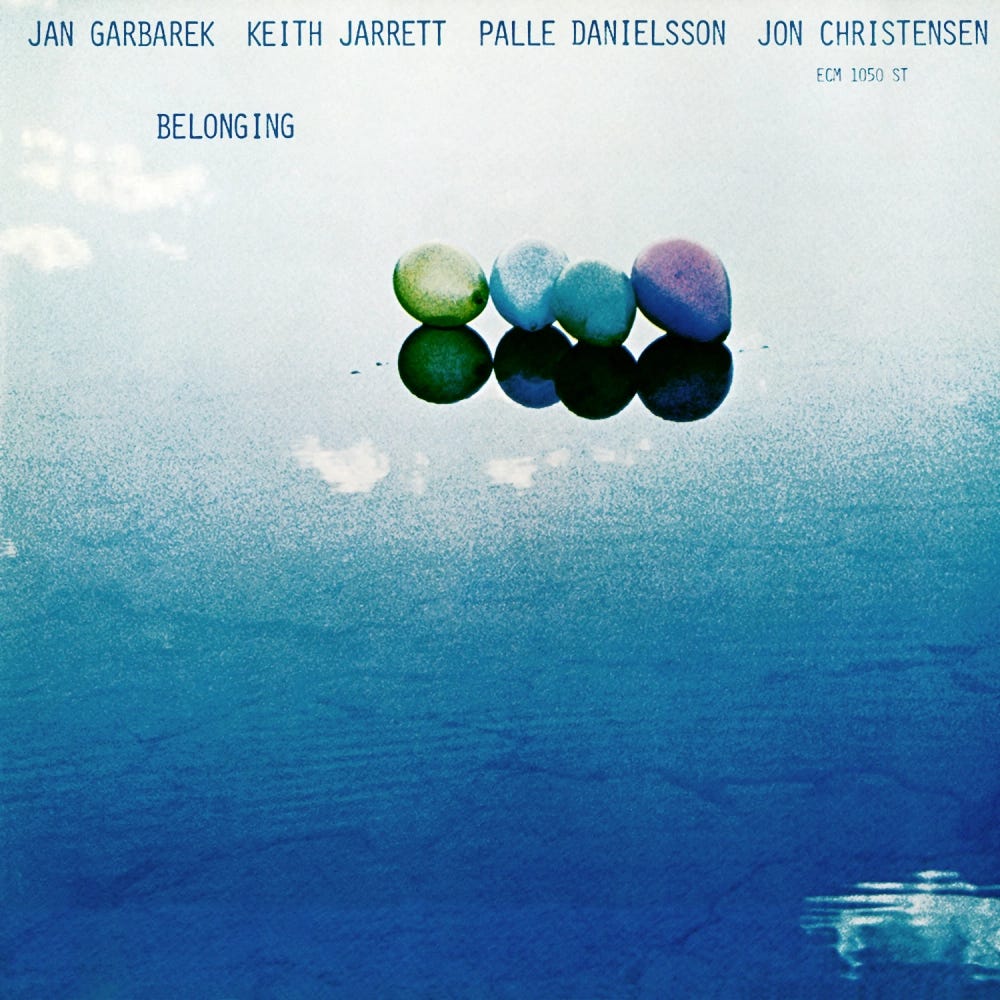
Keith Jarrett Belonging (1974)
How appropriate that this list starts off with an album from the artist who has likely recorded more as a leader than any other for the label? This record features Jarrett’s European quartet of Jan Garbarek (saxophones), Palle Danielsson (bass) and Jon Christensen (drums). Technically, the album is listed under all four names, putting forward that Belonging is the name of the quartet. Apparently, Jarrett was still under contract with ABC as a leader, so that was a legal workaround. No matter. It’s Jarrett’s band.
I’m sure there are fans out there who would have opted for The Koln Concert or Facing You or one of his Standards Trio albums with Gary Peacock and Jack DeJohnette, but I love the melodicism of this recording. So did Branford Marsalis who last year released his longstanding quartet’s interpretation of the album. Jarrett’s quartet released a few other albums, including the also excellent My Song. Interestingly, it may have been the last group of Jarrett’s that featured a horn. In addition to various solo endeavors, he went all in with that Standards trio.
A funny, well not for Steely Dan, footnote to Belonging is that the basic melody of the title tune for the band’s Gaucho album released in 1980 bore a remarkable resemblance to Jarrett’s “As Long As You’re Living Yours.” When asked in an interview with Musician magazine about the two tunes’ similarity, Donald Fagen cheekily said something to the effect of, “What can I say, we’re the robber barons of rock.” Soon after, Jarrett sued them and eventually settled on an undisclosed amount, as well as a songwriting credit for “Gaucho.”
Those same “robber barons” Fagen and co-writer Walter Becker also grabbed the bass line from Horace Silver’s “Song for My Father” for their hit “Rikki Don’t Lose That Number.” When I asked Horace why he didn’t come after them for it, he told me, “Well, it was just a bass line and I was happy that they dug it.” For his part, Fagen said that he got the bass line from Brazilian jazz records. Good answer.
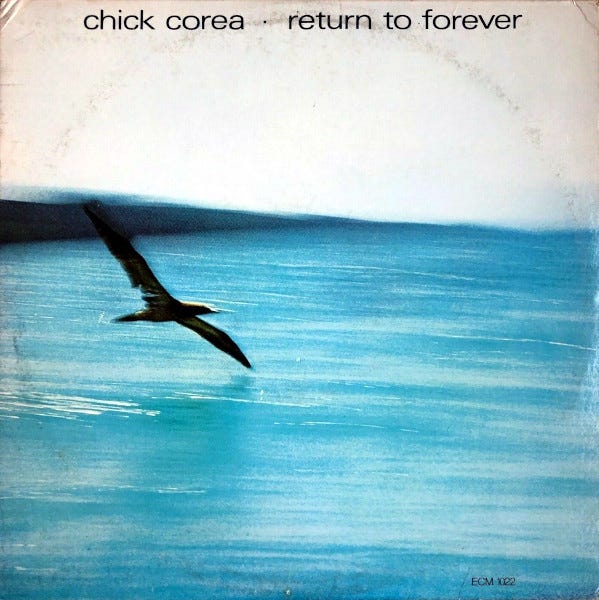
Chick Corea Return to Forever (1975)
I can’t believe how many times I have played this album. For one thing it was the first jazz record I really appreciated, having been introduced to it by my friend John Schu not long after it was released - as an import, no less. So it’s been in my collection for more than 50 years. The album is both of its time (the 70s with an electric piano, you dig?), yet completely timeless. Melodic and rhythmic, it’s one of those records you can put on whether you’re alone in the house or have non-jazz-loving company. They’ll love it.
Featuring Joe Farrell on saxophones and flute, Stanley Clarke on, yes, acoustic bass and Airto on percussion and drums, as well as Flora Purim on vocals on a few cuts, the album was recorded and released in Europe in 1972, but was not released in the U.S. until 1975. The music is often described as Brazilian jazz, but to my ears, it’s just plain Chick Corea, whose touch on the Fender Rhodes is unparalleled and whose compositions have as much Spanish influence as Brazilian.
The same group would record the equally excellent Light As a Feather a year later, but that was released on the Polydor label, though it sure sounds like an ECM record. Both albums have compositions that have become jazz standards, including “La Fiesta” and “Spain.” After these two recordings, Purim and Farrell were replaced by guitarist Bill Connors who was in turn succeeded by Al Di Meola, who along with drummer Lenny White (replacing Airto) would establish the band’s most well-known identity in full jazz fusion mode. Odd that for someone raised in 60s and 70s rock, I did not take to the very electric and chops-heavy albums that followed, although they proved to be hugely popular for many years and nearly emblematic of that period in jazz, standing alongside Weather Report, Mahavishnu Orchestra and Herbie Hancock’s Headhunters band as the popular offspring to the groundbreaking electric Miles, with whom they had all played.
Corea recorded other albums for ECM, including his Piano Improvisation series— solo acoustic piano records that showcased both his compositional brilliance and his distinctive phrasing.
For the record, literally, I have four copies of the LP, enabling me to give a call to the vinyl bullpen when one copy is worn down by the usage. Though I may need to acquire a few more copies at the trade deadline.
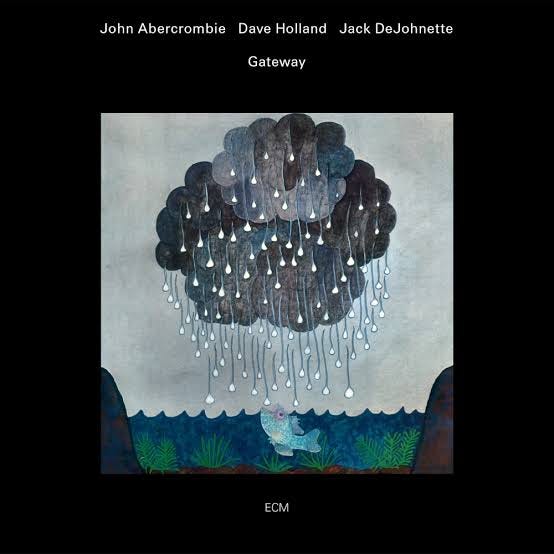
John Abercrombie/Dave Holland/Jack DeJohnette Gateway (1976)
All three of these artists had a long association with the label, as both sidemen and leaders. This is the first of the many quintessential ECM recordings on this list, combining ethereal improvisation with a floating yet driving rhythm. It’s free jazz, but without the dissonance so often associated with that genre. Though the group is billed and viewed itself as a leaderless trio, I can’t help but hear the music as led by Abercrombie. I mean, it’s a guitar trio, after all.
I fear that Abercrombie’s contributions to the jazz canon may have been lost to history. It’s sadly a common problem, owing to any number of factors – management, public persona, changing tastes, professional ambition (or lack thereof) and other intangibles. But his electric guitar sound and phrasing were highly distinctive, not relying on technical virtuosity, ala someone like Pat Martino, but instead on a more darting and angular approach. John Scofield told me that his guitar colleague was very innovative starting in the early 70s. “John was really doing some stuff that influenced everybody,” Scofield explained. “He used lighter strings, often with a solid body instrument. The way he hit the guitar was coming from Jim Hall a lot, because Jim played with a beautiful sound and very legato. John was one of the first guys to do that in that way.”
And what a rhythm section. If it was good enough for the turning-electric Miles, it was good enough for Abercrombie. John and Jack had a particularly close musical relationship and would record together in various configurations including in Jack’s band New Directions, which we’ll talk about down the line. The trio released a follow-up Gateway 2 two years later and then reunited in the 90s for two more albums. Their Homecoming recording in 1995 is particularly outstanding. John also recorded numerous albums as a leader for ECM (more than 20!) and will forever be associated with the label.
We’ll let John (Abercrombie) have the last word. In an interview with All About Jazz, he said, “I’d like people to perceive me as having a direct connection to the history of jazz guitar, while expanding some musical boundaries.” That he did. John died in 2017 at the age of 72. Only 72! Yes, I’m 72.
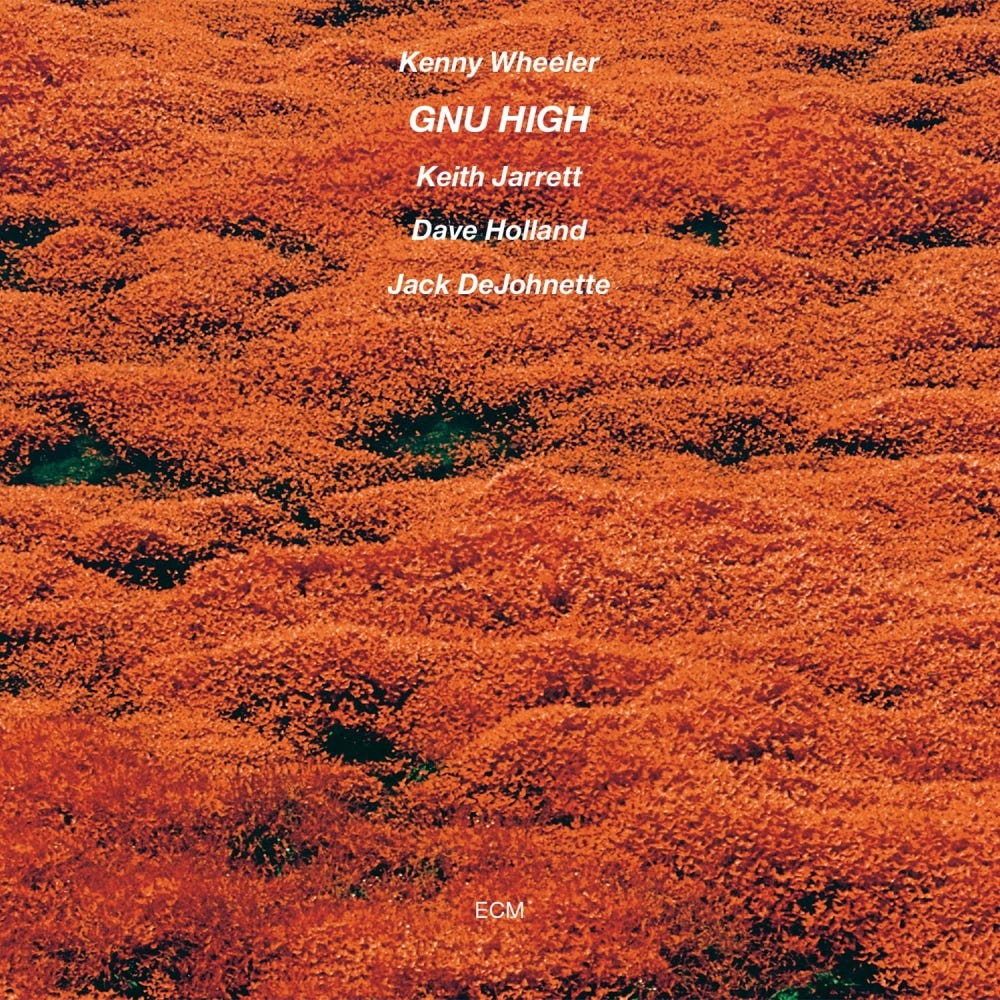
Kenny Wheeler Gnu High (1976)
I said that last album was a quintessential ECM recording, but this one is really all that. The Canadian trumpeter Wheeler enlisted a quasi-house band of Jarrett, Holland and DeJohnette. Eicher was not like the late Gerry Teekens of the Dutch-based label Criss Cross, who loved to bring great U.S. jazz musicians into the studio overseas and then record multiple albums during one or more sessions. Understandable given the serendipity of all of those artists converging on a studio in Europe. Eicher didn’t often double up (see Charles Lloyd album below), but his collaborative relationships with American artists occasionally resulted in unique creative opportunities.
The album consists of only three tunes with “Heyoke” comprising the entire first side, sort of like a jazz version of Iron Butterfly’s “In-A-Gadda-Da-Vida.” Hey, it was the 70s when you would just put on an album and let the music flow for 20 minutes or so. And the music does indeed flow on this album. I could describe Wheeler’s sound as a cross between Miles Davis and Chet Baker, but in fact Wheeler inhabited his own musical space.
In writing this story, I couldn’t help but look up the reviews of the albums I’m recommending. I found this one from Mikal Gilmore, written for DownBeat no less: “Wheeler’s attack and dynamics are monotonously dispassionate, his coloring and sonority undilutedly dull.” It seems that Mikal, author of Shot in the Heart about the life and death of his brother and convicted murderer Gary Gilmore, is an excellent writer, but a lousy listener. But you judge for yourself.
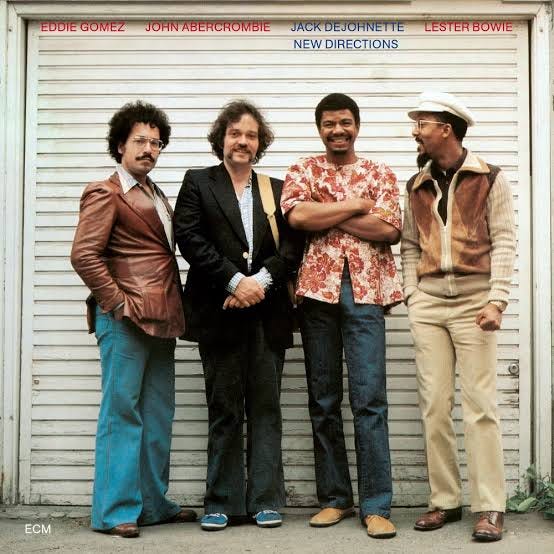
Jack DeJohnette New Directions (1978)
I’ll have to ask AI how many albums Jack DeJohnette recorded for ECM as both a sideman and a leader. I doubt that his widow Lydia could even answer that one. I mean, it has to be in the high double figures. Maybe even triple figures. During his long career, the late drummer recorded for other labels, but Eicher seemed to capture his unique propulsive yet impressionistic sound like no other.
I remember years ago asking my friend Tom Nickels—a DC lobbyist, amateur drummer and lifelong jazz fan—what made ECM’s recording of Jack’s drumming so singular. He said that Eicher captured the way that the drums sounded to the ear of the drummer. I’d have to think that it was more about how it sounded to the ears of the band. But in Eicher’s recordings of DeJohnette you can hear every little thing (or ting) from that drum set. And somehow being powerful without Jack hitting anything hard.
This group featured Jack’s longtime colleague Abercrombie on guitar, as well as bassist Eddie Gomez (a frequent rhythm section partner during that period) and trumpeter Lester Bowie. Somehow it’s the presence of Bowie, a longtime member of the Art Ensemble of Chicago, that really brings the music to life on this album or at least gives it a more playful sound. Lester would go on to record his nutty but lovable group Brass Fantasy with ECM.
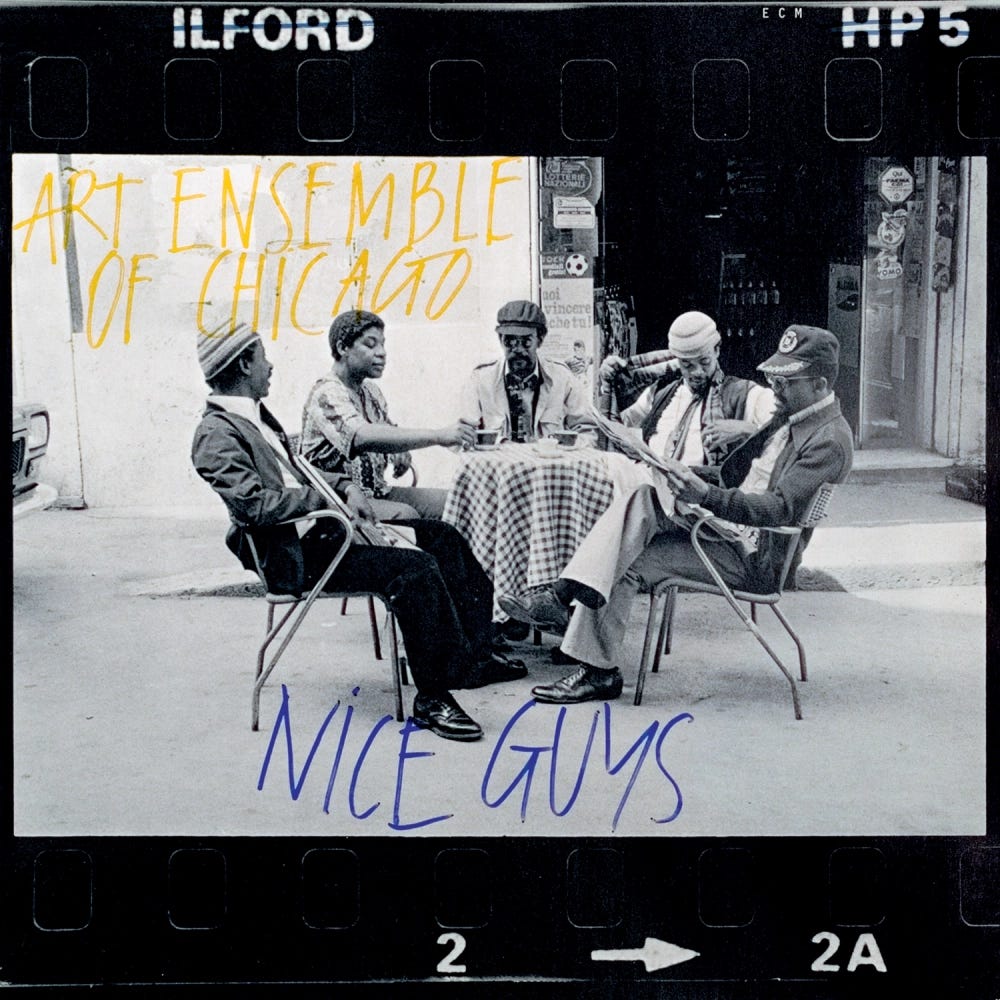
Art Ensemble of Chicago Nice Guys (1979)
Speaking of Lester Bowie. The very Afro-centric and aptly named band from the Windy City may have seemed like an odd match for the heretofore so-called Euro white jazz label. But as I stated in the intro, ECM began with a release from the pianist Mal Waldron who had played with Billie Holiday. It’s difficult to describe the force of nature that was the Art Ensemble because it wasn’t just their playing but their presentation that made an impression.
Although the group is well-represented by records for Atlantic and other labels, I love that Eicher captured them with that hallmark clarity of sound, so you can hear the very different voices in the group. Coming out of the Association for the Advancement of Creative Musicians (AACM) in the late 60s, the Art Ensemble was for much of its long history a quintet (pictured in the cover photo above) featuring Bowie, saxophonist Joseph Jarman, saxophonist Roscoe Mitchell, bassist Malachi Favors and drummer/percussionist Famadou Don Moye.
A visually striking group thanks to colorful African and Asian dress and face-paint, they were dynamic performers who brought both accessibility and credibility to their multi-national version of avant garde jazz. “So what we were doing with that face painting was representing everyone throughout the universe, and that was expressed in the music as well.,” Jarman told interviewer Jason Gross in 1999. “That's why the music was so interesting. It wasn't limited to Western instruments, African instruments, or Asian instruments, or South American instruments, or anybody's instruments”
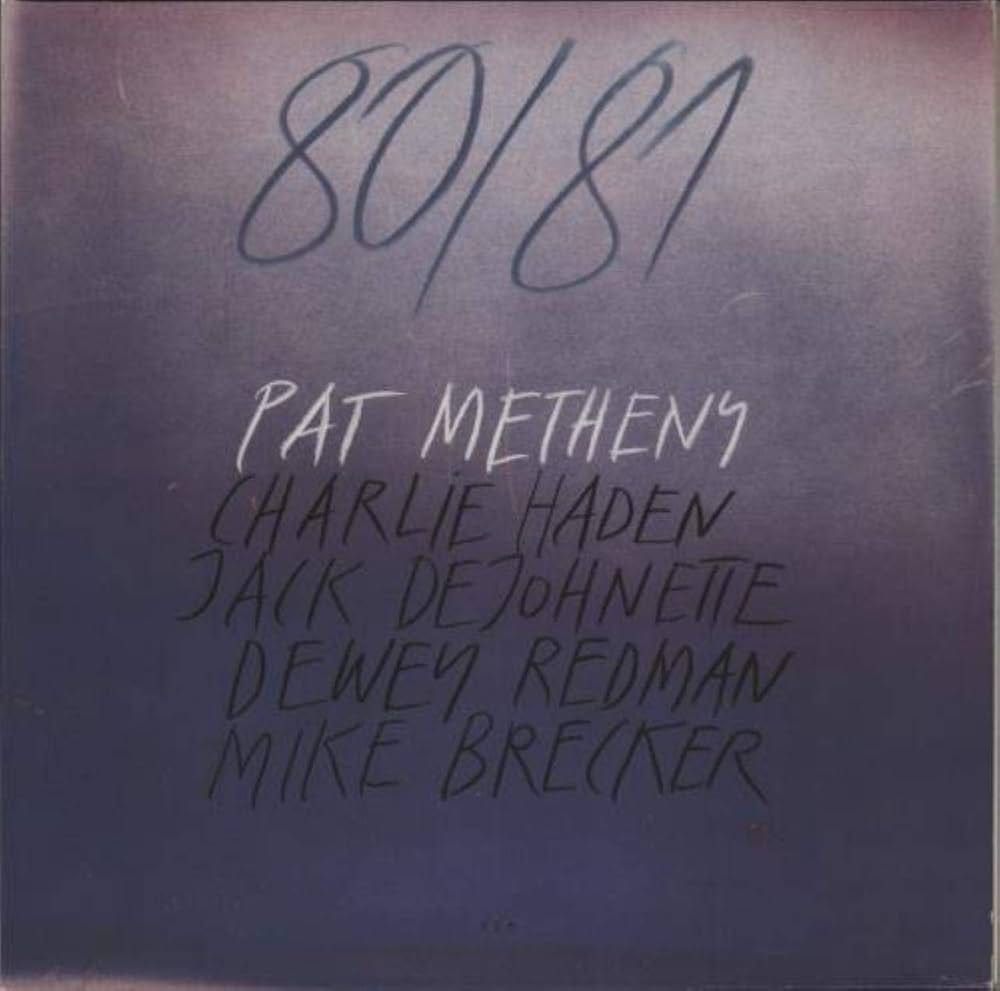
Pat Metheny 80/81 (1980)
ECM truly launched the career of Pat Metheny. Which is not to say that someone or something else wouldn’t have done it later, because his gifts were self-evident from the jump. This was a guy who went to Berklee to study as a teenager and shortly thereafter was teaching there. Metheny’s personal and professional relationship with Gary Burton was formed there. He would go on to play in Burton’s group, which certainly contributed to his introduction to ECM.
The albums that Metheny recorded for ECM are all essential listening – from his first in 1976, Bright Sized Life with Jaco Pastorius and Bob Moses, to First Circle his last for the label in 1986. Almost midway through his decade-long tenure with the label, it was his third album as a leader, the eponymous Pat Metheny Group, with its semi-hit song “Phase Dance,” that catapulted the guitarist into super stardom, jazz style. The followup American Garage featured that same band and also resonated with audiences. The band became a favorite headliner at jazz festivals and theaters thereafter.
This album though is nothing like those popular and influential recordings by the Pat Metheny Group. Instead, it features Metheny with an all-star band, anchored by the earthy and sympatico rhythm section of Charlie Haden and Jack DeJohnette, and a two-tenor saxophone front line of Michael Brecker and Dewey Redman. To jazz fans, I don’t need to write another word after listing that personnel. But to non-jazz people, I can say that this album blends improvisation with melodicism. After all, is there a more melodic jazz musician than Metheny? No. And are there more fiery tenor players than Brecker and Redman? Well, yes. But the two blend together in a way that’s quite different than Sonny Rollins and John Coltrane on Tenor Madness, back in the day. It all made for that rare combination of artistry and accessibility. And all with that patented crystalline ECM sound, albeit a bit dirtier and more wooden in this case.
At the after party for Charlie Haden’s memorial concert at Town Hall in 2015, I approached Metheny and told him how much I loved that album. And that I appreciated how the label kept in his exhortation at the end of “Turnaround” when he yelled “Wooo, Jack DeJohnette.” Metheny corrected me and said, “That was Charlie, but we were all in awe of Jack and his playing.” Oops, I mixed up Pat’s heartland Missouri accent with Charlie’s heartland Iowa one.
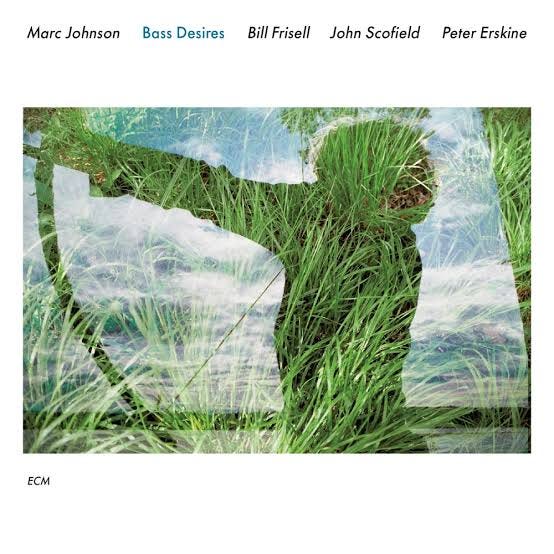
Marc Johnson Bass Desires (1986)
This short-lived band featured a two-guitar frontline of John Scofield and Bill Frisell, along with a rhythm section of Johnson on bass and Peter Erskine on drums. I’m glad that I got to include Bill Frisell within this list because, like Metheny, Scofield and Abercrombie, he released many excellent albums on the label over the last several decades.
In accordance with the album (and band) title, the project was the brainchild of Johnson, who had performed and recorded with Bill Evans, Stan Getz and John Lewis, but went on to play with more age-appropriate peers such as Joe Lovano, John Abercrombie, Mike Mainieri, Fred Hersch and Lyle Mays (with whom Marc went to college at North Texas State). “We were all living in the city, and it was Marc’s idea to get us all together,” Scofield said. “It was so much fun and we all got along. I just thought everybody played so well. I mean, Bill is a giant and has taken the guitar to some great new places. Erskine, what a fantastic musician. And he wrote for the band as well as played great drums. Marc is a phenomenal bassist, actually underrated. Recently I went back and saw the video of him with Bill Evans and Philly Joe Jones when Marc was like 20.”
For my part, I saw this band perform live back in the day at a NYC club called Fat Tuesday’s. It was one of my first dates with my girlfriend and later wife Irene. That club, run by Stan Getz’s son Steve, was a basement joint in the Village with the band set up in a most slender of stages. The four of them were positioned nearly in a straight line, interestingly with the cerebral introverts Frisell and Johnson lined up on the left with physical extroverts Erskine and Scofield on the right – each guitarist a wingman. Not to say that Peter and John aren’t intelligent. They just presented themselves in a much more upfront and visceral way compared to Bill and Marc, who seldom looked up from their instruments or at the audience. That sort of yin-yang chemistry is often what can give a band a unique sound and such was the case with this short-lived but outstanding ensemble.
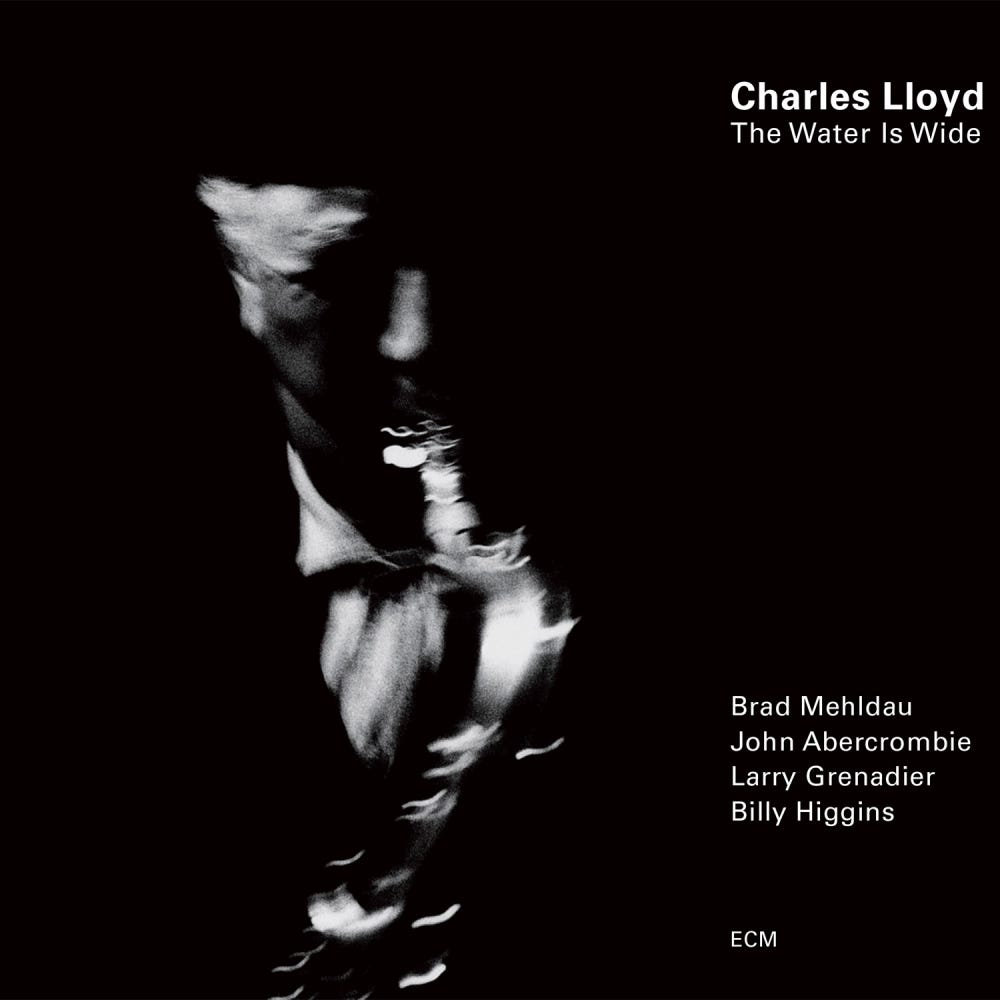
Charles Lloyd The Water Is Wide (2000)
The saxophonist was a latecomer to the ECM party, signing with the label in 1990. But he would go on to record 19 albums with the label in the next three decades. Lloyd always brought into the studio a great band, one that he had often taken on the road, so the resulting performances on record were elevated. Of all those albums, this one has always stood out to me because he both revisits some gospel music classics, and brings that same vibe to other tunes.
The album features a truly all-star band of like-minded musicians: John Abercrombie, Brad Mehldau, Larry Grenadier and Billy Higgins. During that same session in 1999, they also recorded another album for ECM, the aptly named Hyperion for Higgins, which was released in 2001, just a few months after the great drummer’s death. So go ahead and put them together to make this a double album and imagine, when vinyl was the only format and when Charles released his seminal 60s LP Forest Flower, its gatefold cover.
Trio Beyond: Jack DeJohnette/Larry Goldings/John Scofield Saudades (2006)
I mistakenly assumed that this band was under the leadership of Scofield, but when I called him to talk about the album, he corrected me that the group was founded and to some degree led by DeJohnette who wanted to pay homage to Tony Williams, whom he succeeded in Miles Davis’s band many years ago, and to Williams’ 70s power trio Lifetime, originally featuring Larry Young and John McLaughlin. “But we never thought about doing it like the way they did it, because nobody wants that, and that doesn’t work anyway,” Scofield told me. “It was just to play some of those tunes and to acknowledge Tony’s greatness.”
Scofield has played with DeJohnette before, but in this case they toured multiple times in Europe and the U.S. and they established a personal and musical connection. DeJohnette would go on to be a part of Sco’s great quartet (with Joe Lovano and Dennis Irwin), as well as work with him more recently in the band Hudson (along with John Medeski and Larry Grenadier). “With Trio Beyond, I really got to hang with him, and it was very special for me,” Scofield explained. “Now that he’s gone, I realized that I was in the presence of an incredible jazz musician with roots and his own way of playing and a philosophy about the jazz music. And Goldings is just one of my favorite musicians in the world.” In addition to his longstanding gig with James Taylor, Goldings was in many groups with Scofield and continues to collaborate with him including with the Scary Goldings project.
Although the album title means “Blues” or “Melancholy Sadness” in Portuguese, Scofield said it was also a tip of the hat to the Austrian-based booking agency and promoter founded by Thomas Stowsand, who not only presented them and so many U.S. artists in Europe, but was also an important part of the ECM team for many years. He died in 2006 and is remembered in the album notes.
I think it’s fitting too that I ended this list with a release which has much sentimental value, because for many of the artists, ECM was (and is) like a family. At least as a fan, I like to think so, in the same way that we want to think actors on a long-running TV show are close friends. In the case of so many of the artists on ECM, it was true.
You can learn more about ECM and its catalog and history at their website here.
No posts
Comments
Nothing yet. Say the first thing.
Sign in to join the conversation.