

Professor Jason Arday’s resignation from the University of Cambridge has become something larger than the fate of one academic. It now sits at the intersection of race, credibility, institutional judgement and the politics of Black advancement in Britain. The easiest responses are also the least serious: Arday as either innocent victim or calculating fraud; Cambridge as either progressive institution or gullible accomplice; those who supported him as either courageous anti-racists or naïve members of a Black establishment closing ranks. Reality is more difficult. Arday has substantive questions to answer, Cambridge must account for its own decisions, and the wider anti-racist movement has lessons to learn about the relationship between solidarity, evidence and institutional power.
There is no point pretending the questions surrounding Arday are trivial. Allegations concerning academic attribution have been joined by questions about professional affiliations, publications and elements of the extraordinary personal biography that accompanied his rise. Daniel Engber’s examination in The Atlantic, Icarus in the Faculty Lounge, shows how closely that exceptional life story became entwined with Arday’s public standing. Had I known earlier the full extent of some of the claims now being reported, several would have struck me as remarkable enough to require verification before I repeated them. Cambridge is continuing to examine the circumstances around his appointment and tenure, while nearly 100 of its academics have called for a broader independent inquiry into both the appointment and the university’s handling of the affair. (theatlantic.com)
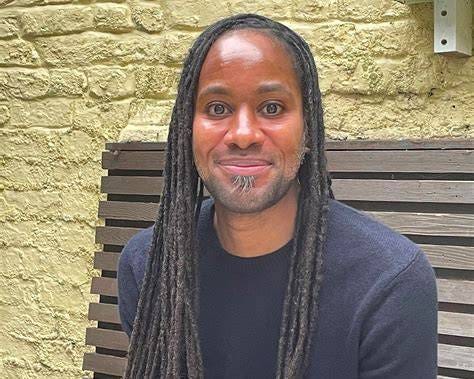
Arday therefore has agency and responsibility. He is an experienced professional man who occupied positions of enormous prestige. Where representations he chose to make about his life, career or achievements were inaccurate, embellished or unsustainable, responsibility for those representations belongs to him. Experiencing racism does not confer immunity from accountability, and serious anti-racism cannot require us to suspend ordinary standards of evidence whenever somebody with whom we identify comes under pressure.
Yet the reverse proposition is equally important. If Arday exaggerated parts of his biography, that does not retrospectively prove that the racism directed towards him was imaginary. Human beings are perfectly capable of being both flawed and discriminated against. Somebody can exercise poor judgement and still be subjected to racism; an academic can have legitimate questions to answer while some of those pursuing him simultaneously racialise the controversy and weaponise it against Black people more generally. A politics incapable of holding those two truths together will understand neither racism nor human nature.
The danger is that this distinction is already disappearing. Arday is being transformed into evidence that equality, diversity and inclusion itself corrupts academic standards. The case offers the anti-EDI right an almost perfect culture-war morality tale: an inspirational Black breakthrough, an ancient elite university, extraordinary personal claims, questions about credentials and an embarrassed institution. The intended conclusion is obvious: this is what happens when race replaces merit. The Guardian has already warned that the affair is being used to discredit diversity initiatives more generally, while Cambridge academics have themselves warned of the “toxic and frequently racist commentary” now surrounding the case. (theguardian.com)
One disputed Black professor cannot logically prove or disprove the case for racial equality. If Cambridge failed in recruitment, verification or governance, that is Cambridge’s responsibility. If Arday misrepresented aspects of himself, that is Arday’s responsibility. If commentators use either failure to cast suspicion upon unrelated Black academics, that is racialised collective judgement. White academics have plagiarised, falsified research and embellished CVs without their misconduct becoming evidence against the legitimacy of white academics as a category. White failure generally remains personal. Black failure becomes ideological.
Black professionals were hardly suffering from insufficient scrutiny before Jason Arday.
We know the old instruction handed down from one generation to another: work twice as hard because you will be allowed half as many mistakes. Beneath the cliché lies a credibility asymmetry. Black competence can remain provisional even after appointment, while suspicion requires comparatively little encouragement. Promotion becomes tokenism, confidence arrogance, independence aggression. Once doubt attaches itself to a prominent Black professional, scrutiny can migrate remarkably quickly from what they did to whether they ever deserved to be there.
I know something about that terrain from my own experience in the Mayor of London’s Office. I entered City Hall with responsibility for policing and equalities in the aftermath of the Stephen Lawrence murder and the Macpherson Inquiry, when London was attempting to turn recognition of institutional racism into practical reform. I was not there simply to occupy a chair; I was there to move the dial. Legitimate scrutiny of my public responsibilities eventually expanded into an extraordinary examination of relationships, associations, motives and personal credibility. Some criticism was proper, some ordinary political warfare and some profoundly racialised. I learned that institutions can welcome Black representation while becoming considerably less comfortable when Black people begin exercising authority, redirecting resources and challenging established power.
I also learned what solidarity means when the room begins to empty.
Lord Simon Woolley, now Principal of Homerton College at Cambridge, was one of many who stood beside me during that period from beginning to end. I have never forgotten it. That experience necessarily informs the generosity with which I view his decision to support Professor Arday. Simon has spent decades opening British institutions to Black talent and was among those who publicly stood beside Arday when the controversy intensified. That does not make him responsible for every claim Arday ever made, any more than it makes other signatories guarantors of his biography. Solidarity is not certification.
There is a historical reason why Black communities instinctively take claims of racism seriously. Many of the anti-racist truths Britain now treats as obvious began their public lives as blasphemies. Institutional racism was once denounced as an outrageous accusation before Macpherson placed it within the official vocabulary of the state. The racial injustice of stop and search was rationalised long after the disparities became undeniable. Windrush citizens were disbelieved before the scandal finally forced itself onto the national conscience. Racism is frequently easier to experience than to prove and easier for institutions to redefine than to acknowledge.
Complaining about racism can therefore be one of the most consequential decisions a Black professional ever takes. Its effects are not merely procedural. Stress settles into the body; sleep disappears; families absorb the anxiety; relationships strain beneath the prospect of lost income, damaged reputation and uncertain futures. Every email begins to feel potentially evidential, every meeting acquires a new tension, every silence from a previously supportive colleague can feel like abandonment. For some people, the psychological, physical, familial and professional consequences are life-changing.
Most Black professionals I know do not rush towards that experience. They accommodate, rationalise, question themselves and seek informal solutions before formally naming racism, knowing that the person identifying the problem can very quickly become the problem.
A presumption that such a complaint deserves seriousness is therefore not blind racial loyalty. It is socially learned judgement. But a presumption of seriousness cannot become a final evidential conclusion. We should believe people enough to listen, enough to ensure they are not isolated and enough to establish what happened. Solidarity should open an inquiry, not close one.
That is why I remain generous towards those who signed the Good Law Project statement supporting Arday.
They were responding to a Black professor who said that legitimate scrutiny had mutated into a sustained racialised attack, against a background in which earlier institutional reviews were widely understood not to have upheld misconduct allegations and Cambridge itself had publicly celebrated his appointment and academic standing.
Full disclosure did not sign the letter because I was not asked to do so. Had I been approached at that stage, on the information then publicly available and recognising the racialised character of some of the attacks, I may well have signed it too.
Hindsight is cheap, and I have no interest in using it to sneer at people who acted in good faith under conditions of uncertainty.
The Good Law Project itself occupies a different position because it drafted the intervention and invited others to lend their reputations to it. Its statement went beyond asking that Arday be treated fairly. It described allegations in categorical terms and relied heavily on earlier institutional findings when presenting those accusations as effectively baseless. That raises a reasonable question: what additional evidence did it independently examine, and what contrary material did it consider before asking prominent people to attach their names to assertions of considerable intensity and doing so with such unshakeable certainty? (goodlawproject.org)
Maybe if the GLP has seasoned Black governance and staff itself - their line may have been more informed by that lived black experience and professionalism and they would have avoided the giddy inflated excitement of some white liberals when seeking to raise their own profiles rather the substantive issue itself. I guess a story about Cambridge University, racism and Black genius was far too tempting
That is not an argument against organisations supporting Black people who allege racism. Such organisations are necessary precisely because discrimination is so frequently minimised. But serious anti-racism carries a duty of care towards the solidarity it mobilises. Moral urgency cannot replace forensic scrutiny. The answer is not less solidarity but better solidarity: strong enough to stand beside somebody facing injustice and independent enough to ask difficult questions before certainty becomes politically convenient.
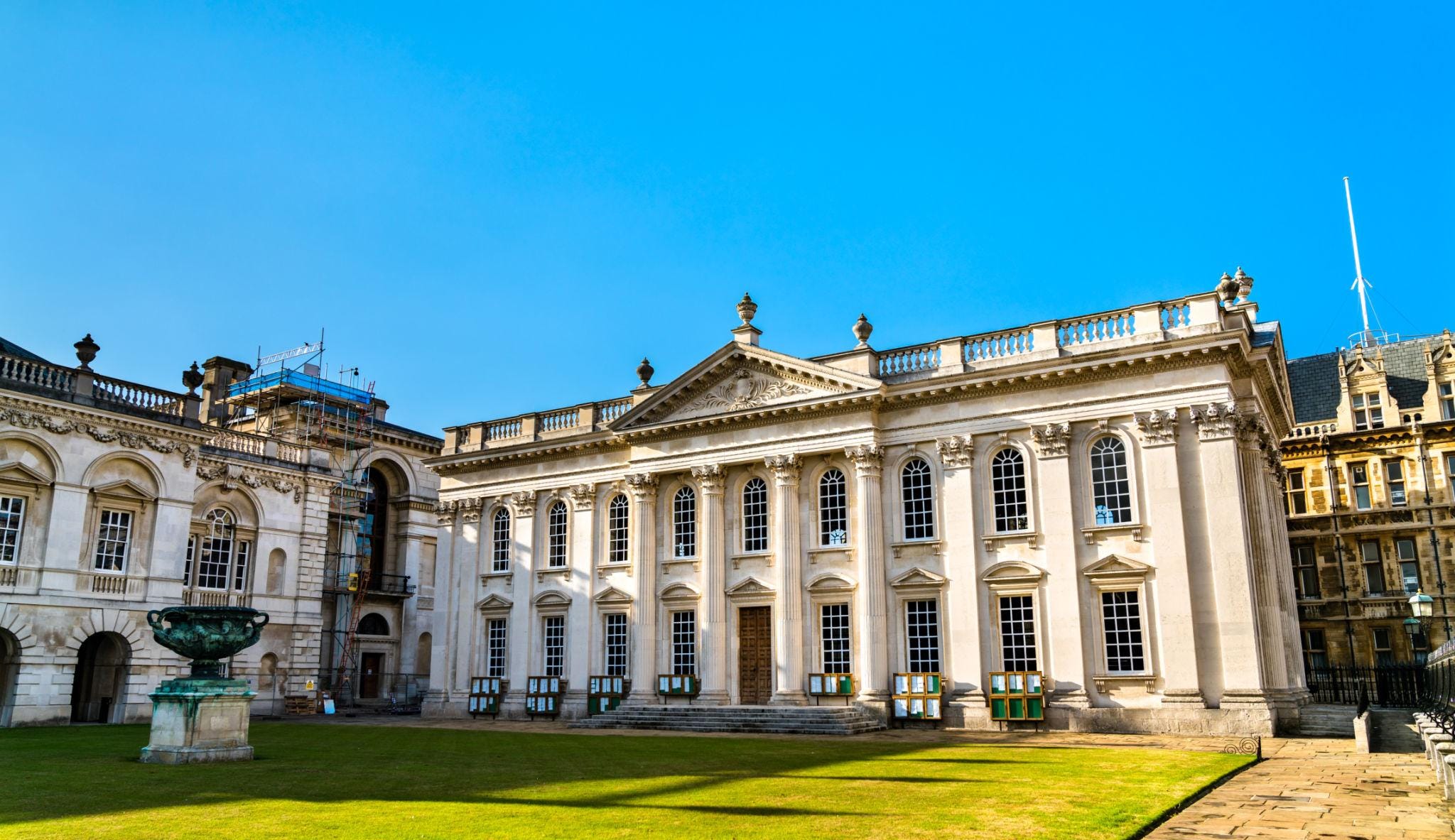
Cambridge carries the greatest institutional responsibility. It appointed Arday, promoted the significance of his breakthrough and lent the authority of one of the world’s great universities to his standing. It cannot now behave as though everybody else was naïve while the university itself was merely a spectator. If its recruitment, verification, governance or support mechanisms failed, Cambridge must own those failures and explain how they occurred. Nearly 100 of its academics are now demanding a wider independent inquiry while insisting, rightly, that academic integrity and anti-racism should reinforce rather than cancel one another. (theguardian.com)
Cambridge’s own racial profile makes the emerging argument about an excess of diversity difficult to sustain. Its recent Race Equality Charter work acknowledges persistent Black under-representation at senior levels. The existence of an equality framework or accreditation cannot itself be treated as proof of transformation. That is where my own scepticism lies. I have engaged with university race-equality work and have seen how easily institutional self-assessment, action plans and process can become confused with actual change. Accreditation may reassure, while the underlying distribution of power remains remarkably familiar.
Black success inside an unequal institution should increase our responsibility to interrogate that institution, not diminish it.
I intend write further on this issue but for now lets keep our focus.
This discussion points to a wider left critique of EDI that should not be surrendered to the political right. The problem tends to be not that institutional equality work has become too radical, but that organisations have become extremely adept at domesticating its radical implications. They commission uncomfortable diagnoses and purchase managerial treatments. Policies are rewritten, strategies refreshed, training commissioned and breakthrough appointments celebrated while questions of authority, accountability, promotion, resources and institutional culture remain substantially untouched.
As the Black intellectual A. Sivanandan warned us decades ago, anti-racism can become preoccupied with attitudes while leaving the structures of power largely intact.
Thought my political life and recent constancy career I have watched that process unfold repeatedly . An organisation commissions a serious review, the evidence points towards structural failure, recommendations arrive that would require uncomfortable changes in power or accountability, and the institution accepts what fits within its existing risk appetite while quietly discarding the rest. What emerges is an equality programme bearing only a faint resemblance to the diagnosis that produced it. The photograph becomes more diverse while the architecture of authority remains familiar.
This matters because right now in the UK the wider political stakes are rising.
More than a century ago W.E.B. Du Bois wrote that “the problem of the twentieth century is the problem of the color-line”. I increasingly believe race and racism will be among the defining issues of Britain’s twenty-first century.
Britain is already an irreversibly multiracial democracy. The real question is whether its institutions and politics can accommodate that reality without retreating into racial hierarchy, exclusion and suspicion. The answer to that question will be shaped not only through employment law or equality policy, but through increasingly bitter arguments about migration, asylum, Islam, citizenship, national identity and who is entitled to belong.
That is why symbolic diversity is increasingly inadequate. Cambridge could celebrate its youngest Black professor while still having very few Black professors overall. One exceptional individual then becomes employee, role model, marketing story and evidence of institutional progress simultaneously. No human being should be required to carry that burden. When the individual falls, opponents announce that the entire equality project was fraudulent.
A genuinely transformed institution would not need Jason Arday to prove anything about Black academia. There would be enough Black professors that his success or failure remained precisely what it ought to be: his own.
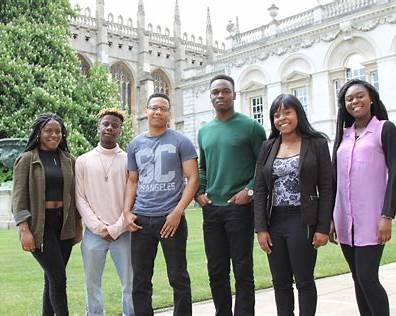
That is why the anti-EDI exploitation of this affair is dangerous.
Arday risks becoming shorthand for the proposition that Black candidates receive preferential treatment and insufficient scrutiny. Yet Black candidates already live beneath unusually intense scrutiny. If universities now respond by introducing an informal additional forensic test for Black applicants because nobody wants “another Arday”, racial inequality will simply reproduce itself through the respectable language of protecting standards. The proper response is rigorous due diligence for every senior appointment, not exceptional suspicion of Black candidates.
The practical lesson is that Black leadership requires stronger collective infrastructure. Britain now possesses generations of Black leaders who have survived political attacks, institutional battles, public controversy and professional isolation. Too much of what we learned remains stored in individual memories, private conversations and personal scars. The people coming behind us should not have to purchase the same knowledge with the same pain.
Later this year I intend to convene a parliamentary roundtable on Black leadership. I do not want to arrive with a predetermined organisational structure or another fashionable acronym. I want to ask people who have actually been through these experiences what they needed, what was missing, what advice saved them and what they wish somebody had told them before the storm arrived. From that conversation I hope we can begin exploring a serious Black leadership support network capable of offering counsel, solidarity and advocacy when pressure becomes overwhelming, while remaining honest enough to challenge those it supports when necessary.
Jason Arday must answer for Jason Arday. Cambridge must answer for Cambridge. Good Law Project should answer reasonable questions about the evidential certainty with which it invited others to lend their names.
Those who offered solidarity should be judged according to what they reasonably knew at the time, not condemned retrospectively with the privilege of information that emerged later. And Black academics who had nothing whatsoever to do with this affair must not be made to pay a racial tax on one man’s disputed record.
If, as I believe, race and racism will be among the defining struggles of twenty-first-century Britain, then Black leadership cannot be left to survive on talent, resilience and individual networks alone.
We fought for generations to open the doors of institutions that scarcely imagined us occupying positions of authority. The next responsibility is to ensure that those who walk through them inherit wisdom, honest counsel, organised solidarity and institutions capable of distinguishing accountability from racialised suspicion.
Every breakthrough should become a bridge, not another lonely summit.
No posts
Comments
Nothing yet. Say the first thing.
Sign in to join the conversation.