
If you’re raising a child with high energy or a short attention span, you may feel you need to plan every second of every day yet your child still says, “I’m sooooo bored!”
And, if you’re raising a child with anxiety or sensory sensitivities who is happy as a clam at home, you may be worried about their lack of sunshine and exercise.
Free time can be hard for neurodivergent kids because of executive functioning weaknesses. Executive functioning skills encompass attention, memory, motivation, and self-awareness, all of which are necessary to keep us organized and moving forward. Without structure, some neurodivergent brains wander into blissful creativity while others struggle to come up with ideas to pass the time. I discuss both below, but first, let’s talk through the benefits.
The Benefits of Free Time
There is plenty of advice out there encouraging parents to promote free time for children. Free time encourages autonomy, provides time and space to practice social skills, and builds resilience when things don’t go as planned.
While free time is beneficial for children who are ready to practice independence, have an understanding of the social dynamics around them, and are able to problem-solve when something unexpected happens, free time can be difficult for neurodivergent children.
When Free Time Backfires
“The Blissful Solo Player”
For many autistic, gifted, and anxious children, solo play feels like the safest kind of play. No one enters their space, no one throws off their plan, and if allowed, they never have to transition away from this blissful play to do such boring things as use the bathroom or eat a snack. These children often have enthusiastic interests that allow solo play to serve as recovery after an overstimulating day.
Parents of "the blissful solo player" are grateful for the time their child entertains themselves so they can make dinner or return emails, but worry that too much time alone limits their child's opportunities for social practice and language development.
“The Never Leaves You Alone Player”
If your child falls into this category, you’re already nodding your head. These children are either too anxious to play alone, too high-energy to settle into play, or struggle to come up with ideas for play. They persistently seek connection from parents which can be overwhelming. It’s helpful to understand the skill weaknesses that lead to a child being unable to entertain themselves.
Children experiencing anxiety may follow you around the house and need support to play in an area of the house where they cannot see or hear you.
Children with executive functioning weaknesses can struggle to plan their play, begin their play, and sustain their attention long enough to stick with their play. This might look like a child who frequently complains of being bored when you see lots of things for them to do or the child who loses interest quickly.
Children can struggle to come up with ideas for play which has to do with a difficulty visualizing a plan and getting started. They may wander around and never settle into an activity, unlike a child who has the skills to plan, execute, and create in playtime.
Parents of the “never leaves you alone player” often feel “touched out” and annoyed when they hear “Mom!” If you feel this way, it’s time to add some structure to your family’s schedule. Here’s how to do it.
Supporting Free Time: Make a routine when there is no routine
We know that children benefit from routine, but there are some who really struggle to stay emotionally regulated without one. Think about how your child handles weekends and days off from school. Are you able to work from home when they are in the house? If not, what works on those days?
(1) Schedule free time within the routine like you would any other activity. Frame free time as “free-choice” time rather than an open-ended free-for-all where “the blissful solo player” may disconnect from the family and “the never leaves you alone player” either interrupts you relentlessly or wanders around aimlessly.
As Kim Hughes, Conscious Discipline Master Instructor, explains:
“Where there is chaos, add structure.”
(2) Create a visual daily schedule but make sure the schedule isn’t too detailed. I call this a skeleton schedule. If the schedule is too detailed and something doesn’t go as planned, you could face the additional problem of an upset child due to rigidity when plans change. Usually something like the following, written on a white board in your kitchen, does the trick:
Morning List (e.g., dressed, brush teeth, feed the cat)
Breakfast
Morning Activity
Snack
Free-Choice time (provide a menu with 3-5 options)
Lunch
Afternoon Activity
Snack
Free-Choice time
Dinner
Night time List (e.g., bath/shower, brush teeth, stories)
(3) Make this routine consistent and then follow through with morning and afternoon activities chosen by the parent (this can be errands or can be something fun!), and free-choice time chosen by the child.
(4) Sit down with your child and create a free-choice menu where they can practice brainstorming things they like to do alone knowing that you will not be available for a certain amount of time.
(5) Use a visual timer to tell them when you will be available. For instance, you can say, “Come get me when the time goes off and we’ll play a card game.”
How This Helps “The Blissful Solo Player”
"The blissful solo player" will benefit from a visual routine with a few tweaks. This child will absolutely love free-choice time, so you have to help them expand their ideas as they grow and develop. The goal for "the blissful solo player” is to successfully transition away from free time play.
(1) You can support the transition by joining them just before the shift needs to happen.
(2) Engage with them, ask them to tell you what’s going on in their play, and then help them transition by moving on together.
(3) Create a visual STOP sign or PAUSE “button” to place on the play area to indicate that the play is “to be continued” so they know it’s time to move on but they can come back to it later.
(4) Teach siblings that when they see a STOP or PAUSE sign on a dollhouse or Lego creation that they do not touch it because it’s being saved for someone’s play.
How This Helps “The Never Leaves You Alone Player”
As the expert on your child, you will need to decide what an appropriate time span and location will be for free-choice time. Start with what you think your child can do and expand the time frame from there. Some children will need for you to get them started on an activity, be reassured when something is a small problem they can solve on their own, or be reminded when it's okay to come get you for help.
Remember, you are increasing their autonomy, so encourage and praise their independence. Let them know how helpful it was that you were able to call a friend, check your email, or feed the baby.
Just remember, for most neurodivergent children, more structure is better, visuals are helpful, and consistent schedules are often magical.
A Note About Siblings
Some siblings are not developmentally ready to play without supervision. If you can’t walk away without someone getting hurt or calling someone a name, your kids might not yet have the social skills to consistently take turns, compromise, and ask for help without supervision.
Until at least one sibling has these skills, a parent or older child likely needs to be in the mix to keep everyone safe while playing. If siblings are not able to play without supervision, schedule alone time and supervised together time.
Share what’s working for you this summer in the comments!
Let’s keep learning together,
~Dr. Emily
Blog
But Timers Make My Kid Anxious
·
September 8, 2025

If our kids can’t feel time, it makes sense to show them time, right? Well, this only works if they can tolerate the feelings that come with realizing they are running out of time.
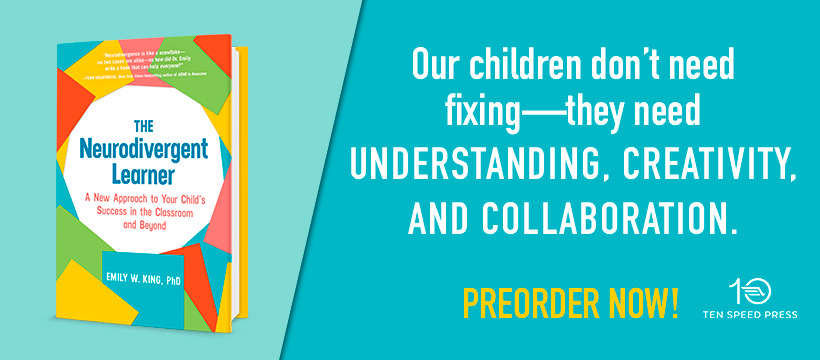

I’m Dr. Emily, child psychologist and former school psychologist, and I’m on a mission to help parents and teachers be the best adults we can be for the neurodivergent kids and teens in our lives. This isn’t about changing the kids, it’s about changing us. Learn more with me at www.learnwithdremily.com.
**All content provided is protected under applicable copyright, patent, trademark, and other proprietary rights. All content is provided for informational and education purposes only. No content is intended to be a substitute for professional medical or psychological diagnosis, advice or treatment. Information provided does not create an agreement for service between Dr. Emily W. King and the recipient. Consult your physician regarding the applicability of any opinions or recommendations with respect to you or your child's symptoms or medical condition. Children or adults who show signs of dangerous behavior toward themselves and/or others, should be placed immediately under the care of a qualified professional.**
Comments
Nothing yet. Say the first thing.
Sign in to join the conversation.