
In this lesson, we will explore the cultural and linguistic world of marriage in ancient Rome, from the negotiations that preceded the wedding to the rituals that solemnised it. We will examine the social meaning of marriage, the respective roles of husband and wife, and the father’s responsibility for arranging a suitable match, preparing the dowry, and securing his daughter’s place in another family.
We will then turn to the wedding ceremony itself—its principal stages, objects, and symbolic gestures—paying particular attention to the joining of right hands, the sharing of the spelt cake, and the famous formula Ubi tū Gāius, ego Gāia. By the end of the lesson, you will be familiar with the essential Latin vocabulary and expressions associated with Roman marriage, betrothal, and wedding ritual.
The traditional Roman spirit aspired to eternal glory, and if a people was to endure through time, it had to ensure the continuity and stability of its most fundamental union: marriage (mātrimōnium). Ancient Roman society was therefore rigorously monogamous.
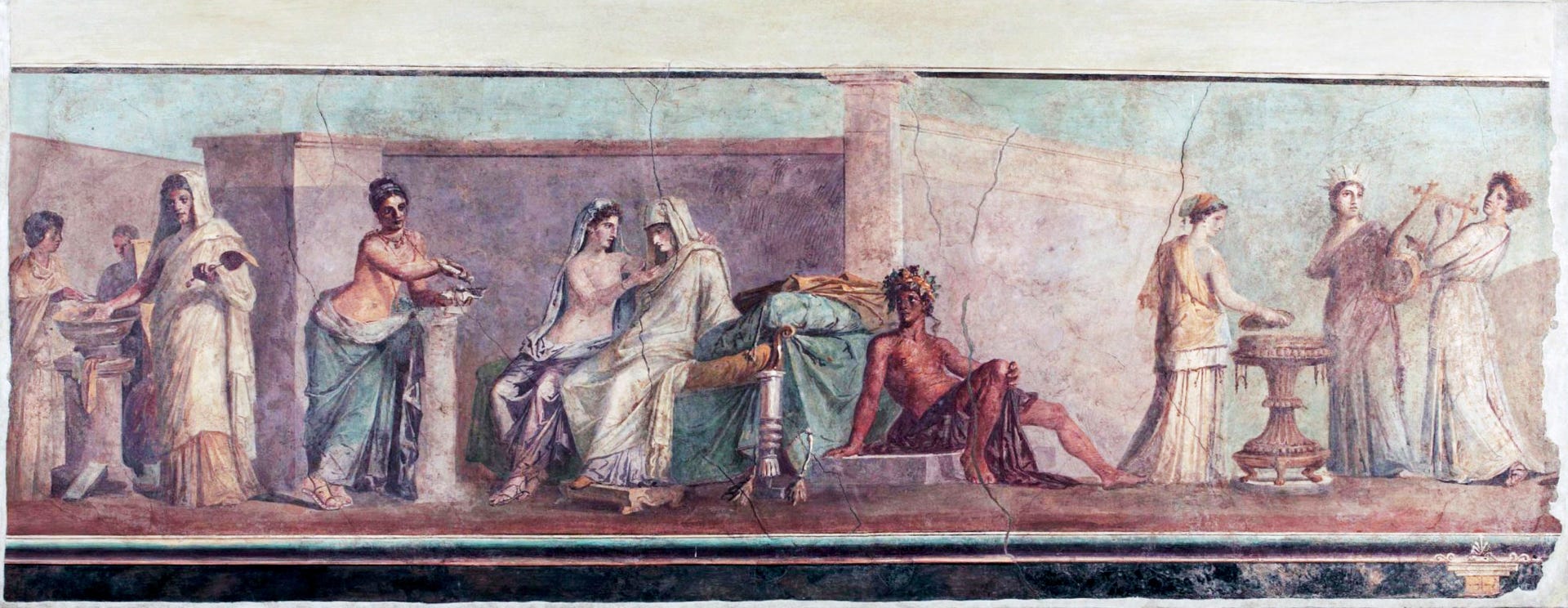
Mātrimōnium was the recognised union (coniūnctiō) of a free man (vir) and a free woman (mulier) in a common way of life (cōnsuētūdō). Marriage was also a cōnsortium (con-, “together,” + sors, “destiny”), that is, a communion in both good and bad fortune. After the wedding (nūptiae), the spouses (cūniugēs) became husband (marītus) and wife (uxor) and were then legally and socially entitled to have legitimate children (līberī), thereby establishing a family (familia), the essential unit of Roman society.
To explore the Roman family in greater depth and learn the essential Latin vocabulary associated with it, see the previous lesson devoted to this topic:
In the earliest Roman tradition, marriage entailed the submission of the woman to marital authority. The wife was said to “enter under the hand” of her husband (in manum convenīre; by synecdoche, “to enter under his power”) and to assume “the position of a daughter” (fīliae locō). A woman therefore remained under her father’s authority (patria potestas) until marriage, when she passed under the manus of her husband.
Roman society was strictly patrilineal: only male descendants transmitted the family name (nōmen), domestic cult (cultus domesticus), and inherited wealth (patrimōnium) to future generations. Why, then, does such an important institution as mātrimōnium derive its name from the mother (māter) rather than the father (pater)?
If you enjoy learning about Ancient Rome and want to build a solid foundation in Latin through a structured online programme taught by a PhD instructor, my beginner course is the ideal place to start:
→ Start Learning Latin with Latin I
The second part of the word mātrimōnium, the suffix -mōnium, derives from the Latin mūnus, which properly means “duty” or “function.” From the husband’s perspective, marriage established a solemn marital bond (foedus) in which the wife had the duty of bearing children—that is, of becoming a mother.
A married woman who was unable to bear children (sterila) was therefore regarded as failing in a duty that was not only biological but also legal, and thus as not fulfilling her part of the bargain. This was, in fact, one of the principal grounds for repudium, that is, the rejection of the wife by her husband, and the earliest valid form of divorce (dīvortium) in ancient Rome.
Roman marriage was, for the most part, foreign to the idea of romantic love. Only rarely did the bride and groom arrive at the altar already in love. As a rule, a patrician marriage was the result of a compact (pactiō) between the parents of the prospective spouses, intended to increase either the prestige (dignitās) or the wealth (opēs) of the families involved.
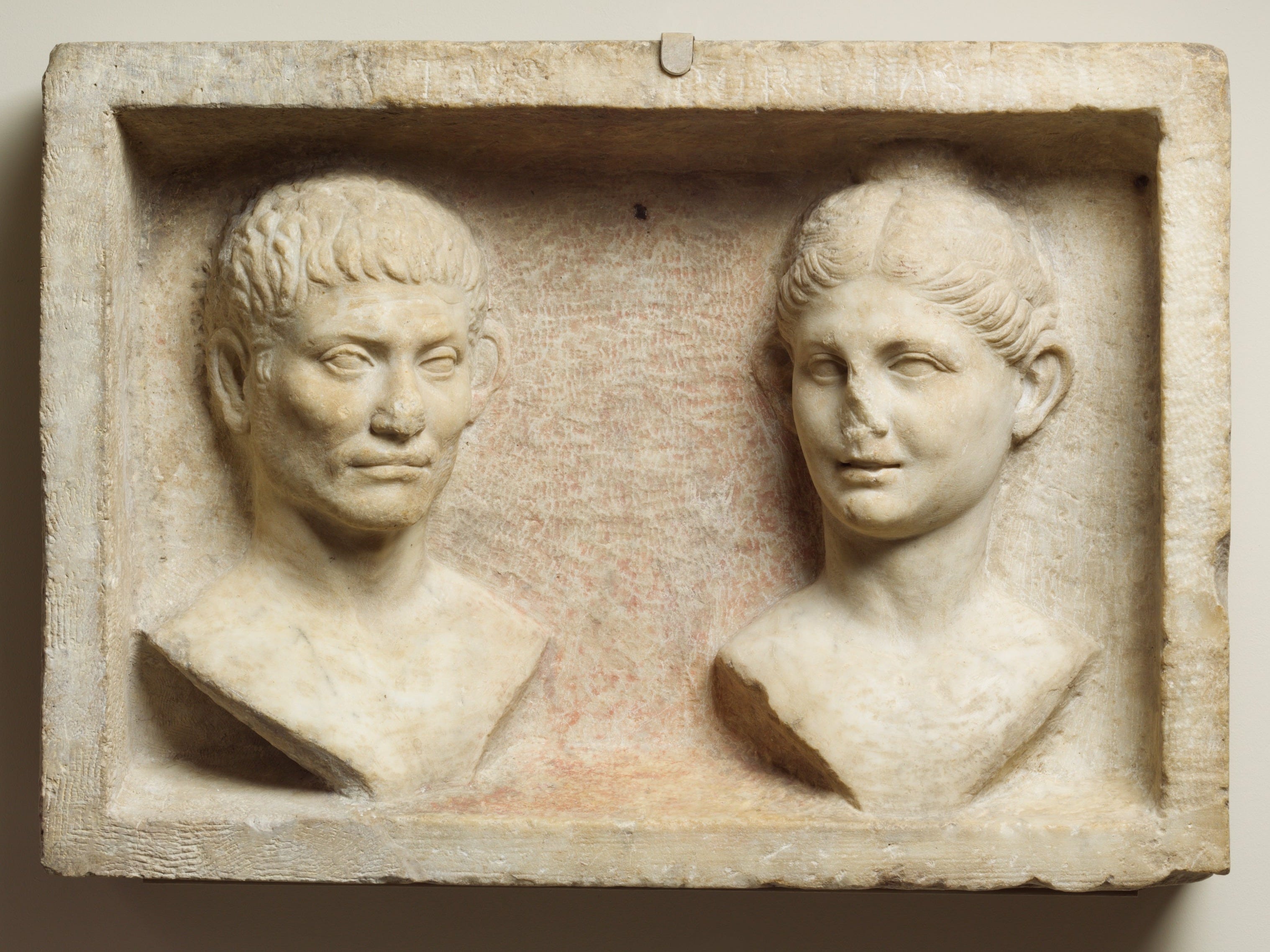
The Roman comedies of Terence provide literary evidence of resistance, protest, and suffering in the face of marriages arranged by parents. It is above all the young man who, being in love with another woman—often a clever prostitute (scortum)—seeks to escape the agreement, clashing with the inflexible severity of his father, who usually prevails either through argument or through authority (auctōritās).
While the wishes of the bridegroom might exercise some influence, however slight, over his father’s decision, the young virgin (virgō) was left only with the silence of acceptance, subjected as she was to patria potestās.
To promise a daughter in marriage (dēspondēre fīliam) was the exclusive right of the head of the family (pater familiās), who—far from merely taking pleasure in his patriarchal position—assumed the grave responsibility of finding the best possible match among other familiae: typically friends, clients (cliēntēs), or even neighbours.
In a society in which women did indeed bear children but contributed little to the family economy, the birth of a daughter represented a considerable burden upon the family estate (patrimōnium). The father’s anxiety and concern to settle his daughter’s prospects (condiciō) favourably are reflected in the expression used for this task: fīliam collocāre, literally, “to place” the daughter in another family.

Wear the voice of the ancients. Discover historically inspired Latin T-shirts featuring classical inscriptions, symbols, and designs made for lovers of Rome and the Latin language.
Hence the need—eventually established as custom—to set aside a sum of money to be given as a dowry (dōs) to the daughter’s future husband. The dowry and the promise of fertility were the principal advantages a bride “brought to the table.” A substantial dowry could also serve as a family’s chief bargaining asset in forming an alliance with a family of higher rank (dignitās), or even in gaining access to public offices (honōrēs).
In Terence’s Heauton Timoroumenos, a subplot illustrates particularly well the emotional and economic conflict faced by a father at the prospect of having to place a daughter in marriage (fīliam collocāre). As a young pater familiās, Chremes orders his wife to expose their newborn daughter to death because he lacks sufficient wealth either to support her or, still less, to provide her with a dowry for her future marriage.
According to the most severe Roman custom, the father was expected to lift the newborn child from the ground (tollere fīlium) as a sign of recognition. If, on the contrary, he refused to recognise the child as legitimate, the infant was left exposed to the elements. The Latin verb is expōnere, and the cruel act itself was called expōsitiō. The baby’s death, Chremes argued, was preferable to seeing her earn her living through prostitution (quaestum facere).
One day, however, his wife Sostrata suddenly discovers that their daughter has been saved by the elderly neighbour to whom—unable to carry out the act herself—she had entrusted the child for exposure:1
Sostrata: “Do you remember that, when I was pregnant, you emphatically ordered me not to rear the child if I gave birth to a girl?”
Chremes: “I know what you did: you reared her.”
Syrus: “So it has happened: I have gained another mistress, and my master another expense!”
Sostrata: “Not at all; there was a respectable old Corinthian woman here, and I gave the child to her to be exposed.”
At this news, Syrus, Chremes’ slave, is not particularly pleased: he himself will now have another female master (domina), while his master will suffer a considerable loss (damnum) to his estate—namely, the cost of her dowry.
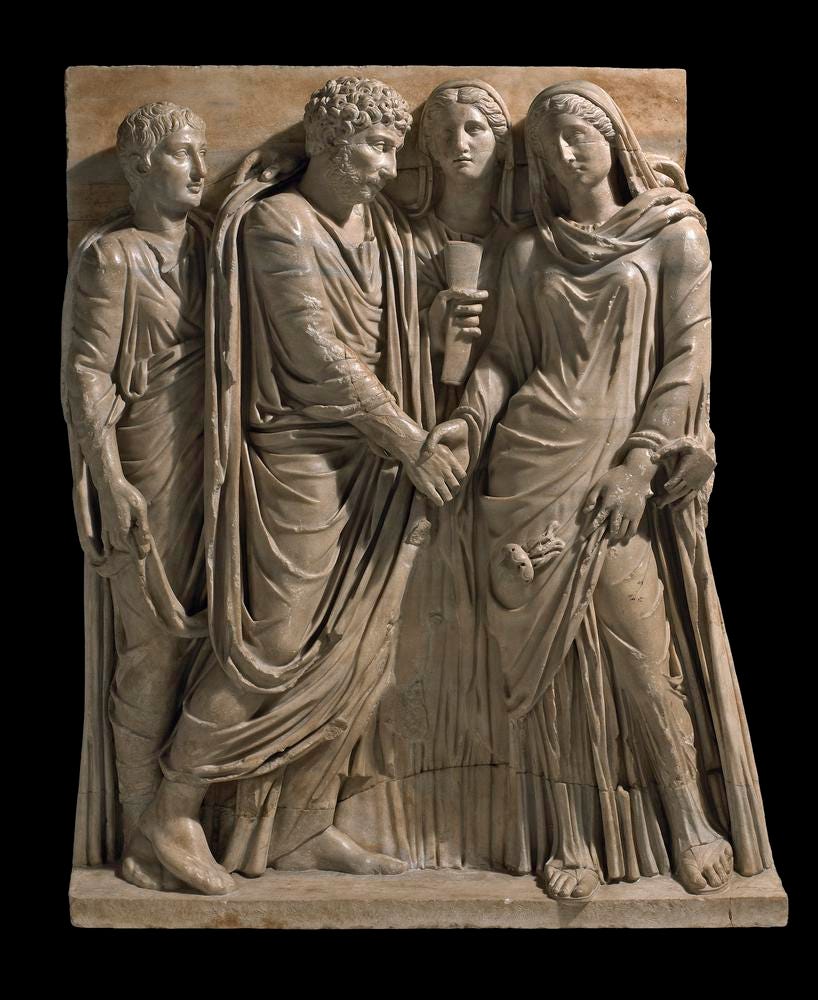
Despite the suddenness of the discovery, the heart of the now elderly Chremes has not hardened with time. He readily forgives his wife’s imprudence and gladly accepts his newly recovered daughter. His financial circumstances have improved with age: he can now afford the luxury of having a daughter:2
Sostrata: “How terribly I feared that your heart might now be as hard as it was then, when you refused to rear her, Chremes!”
Chremes: “A man often cannot be as he wishes when circumstances do not allow it. My situation now is such that I desire a daughter; before, nothing could have been further from my wishes.”
Yet with the recovery of a daughter comes the problem of finding her a husband. Chremes cannot help complaining bitterly that he must now surrender a considerable portion of the estate earned through his own hard work to an undeserving stranger. He even condemns—in a verse that reveals all the humanity behind the apparent severity of the Roman father—the injustices caused by having to follow traditional customs (mōrēs):3
“How many unjust and perverse things are done because of custom!
I must now set everything else aside and find someone
to whom I may give the property earned through my own labour!”
Later, Chremes discovers that the son of Menedemus, his neighbour, is in love with his daughter. He gladly agrees to give her to him in marriage, settling upon a dowry of two talents—a sum befitting a respectable Roman patrician family.
The promise of marriage, known as the spōnsālia (from the verb spōndēre, “to promise”), was an oral contract between the parents of the prospective spouses, At this stage, the amount of the dowry (dōs) that the bride’s family undertook to give the bridegroom on the wedding day was also determined, together with the date of the wedding itself.
Comments
Nothing yet. Say the first thing.
Sign in to join the conversation.