
If you missed Part 2, we traced how the master-apprentice model shaped some of history's greatest minds - da Vinci, Mozart, Newton - and why that model worked so well. You can read it here.
For roughly a thousand years, from the fall of Rome to the Industrial Revolution, most people didn't receive a formal education at all. Those who did were mostly the privileged: trained by a master in a workshop, taught by a tutor at home, or formed through apprenticeship in a guild. For everyone else, learning happened through family, community, and the work itself. The church offered some access, though mostly through the lens of scripture and doctrine. Patchy, uneven, and entirely dependent on who your family was.
Then the Industrial Revolution changed the equation.
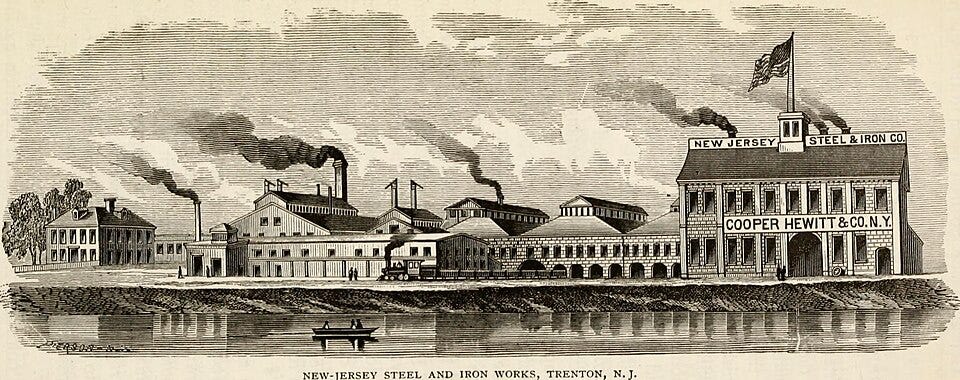
Factories were multiplying. Cities were growing. Governments needed populations that could show up on time, follow instructions, and do the same task repeatedly without question. Education, for the first time, became a political problem, not just a private one.
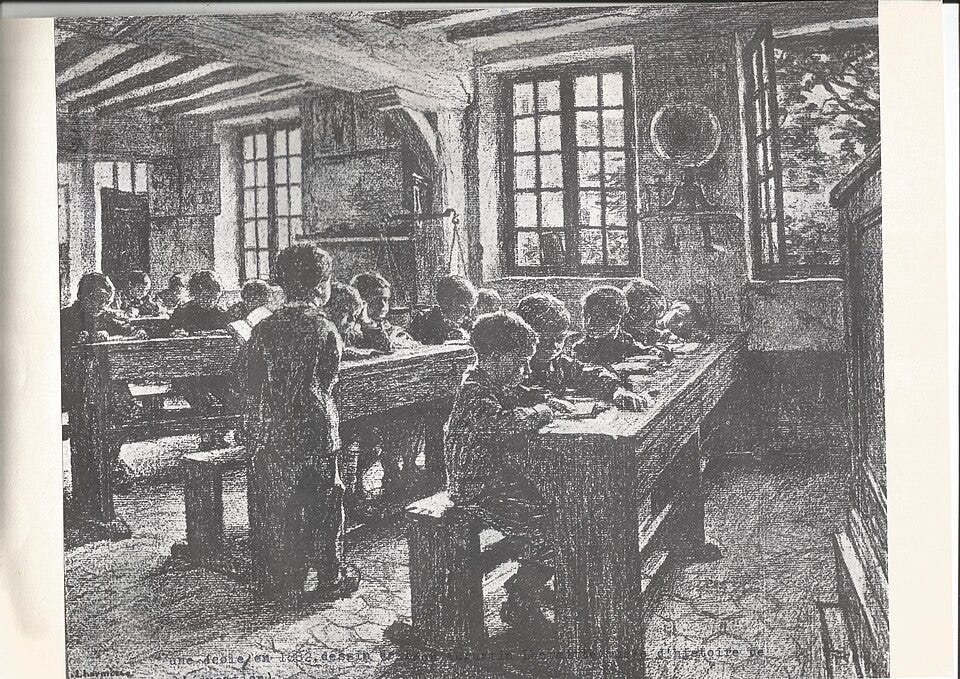
In 1763, Frederick the Great of Prussia issued one of the first government decrees making school compulsory. Every child between 5 and 13 had to attend. The system he designed for it was nothing like the Greek parks or the master's workshop. One teacher, thirty kids, sorted by age. Bells marking the start and end of each subject. You learned what the state decided mattered, at the pace the state decided was right. There was no room for wandering curiosity or a child who learned differently. The goal wasn't to cultivate curious minds - it was to produce a population that could follow orders, do reliable work, and serve the state… obedient workers, soldiers, and civil servants who could function in an industrializing economy. Prussia was modernizing fast, and it needed people who could fit into that machine. The schools delivered.
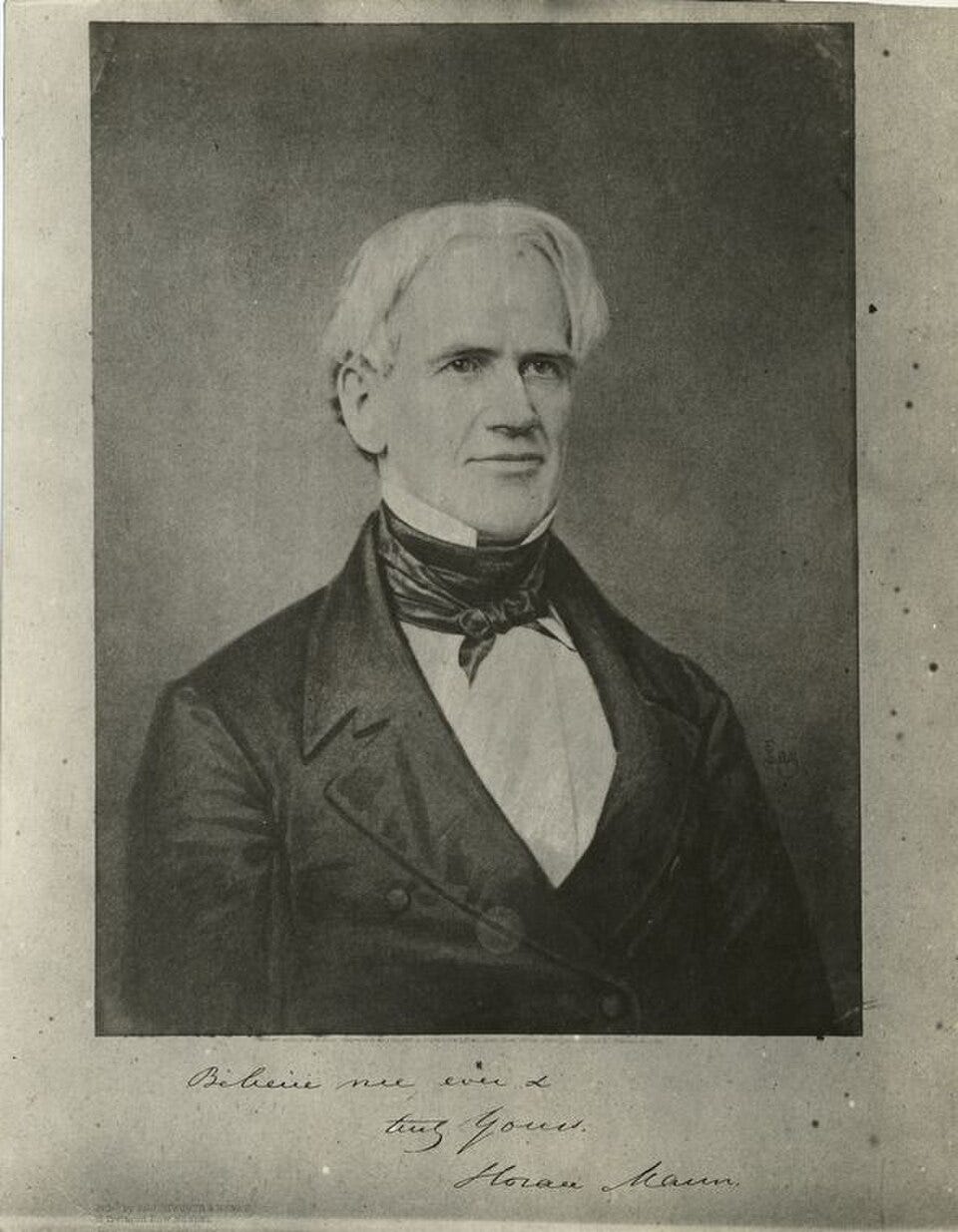
Eighty years later, in 1843, Horace Mann, a lawyer, politician, and the first Secretary of the Massachusetts Board of Education, visited Prussia. He toured the schools, observed the classrooms, and came back with pages of notes. He came home impressed, and brought the blueprint with him - bells, grades, age-sorted classrooms, a teacher in front of 30 kids. Massachusetts passed the first compulsory attendance law in 1852. Other states followed, but without a common standard, every school was doing something slightly different. In 1892, the National Education Association decided to fix that. The Association convened the Committee of Ten - ten men who decided that American schools should consist of eight years of elementary education followed by four years of high school, recommending that all schools teach the same subjects the same way. No research on how children actually learn. No input from children. Ten men in a room.
From there, it spread. State by state, decade by decade. Towns that had never had a school built one. Teachers were trained to deliver a standardized curriculum. The rhythm of the school day became as familiar as the calendar. The last to pass a compulsory attendance law was Mississippi in 1918, sixty-six years after Massachusetts. By then the structure was settled everywhere. The industrial economy kept growing. The schools kept producing what it needed. Nobody stopped to ask whether the design still made sense - because for a long time, it did.
But is a system adopted around 130 years ago still the right one for the kids growing up today? The economy those schools were designed for has changed fundamentally, and it keeps changing. The factory floors and clerical pools they were built to supply look nothing like they once did, and the ones that remain are rapidly being automated. The jobs that required obedience and repetition are disappearing. AI is now doing work that once required years of training. The jobs our kids will have may not exist yet. The skills that actually matter now - creativity, critical thinking, adaptability, collaboration - were never really on the curriculum to begin with. The bells, the grades, the siloed subjects, the standardized curriculum - what most kids walk into today looks remarkably similar to what those ten men designed.
The system wasn't without its critics. A philosopher named John Dewey spent fifty years in the early 1900s making the case for exactly the opposite of the Prussian model: curiosity over compliance, doing over memorizing. The system didn't follow. That story deserves its own newsletter, and we'll get there.
If you're curious, look up when your state first passed its compulsory attendance law. In California it was 1874, earlier than most people expect. The range across states tells you how much of this was actually debated before it became just how things are. Which makes me wonder: if you could change one thing about how school is structured today, just one, what would it be?
Also, what’s something you actually wanted to learn growing up that nobody ever taught you?
This is basically why I started Learning Lot. A kid obsessed with something that has no class, no grade, no place in the schedule. The tutors we match families with aren't running Prussian classrooms. They're following curiosity. Smaller groups or 1-1, real conversations, someone who actually knows your child. Not a replacement for school. Or maybe - should it be?
Want to match your child with an inspiring tutor in the Bay Area? Join us here →
History of Education in the United States (Wikipedia)
Committee of Ten (Wikipedia)
Prussian Education System (Wikipedia)
Who Was Horace Mann? (Grading for Growth)
No posts
Comments
Nothing yet. Say the first thing.
Sign in to join the conversation.