
There is a four-acre dog park on the edge of my city that has been my respite, my solid sane, even as the dogs and the people change.
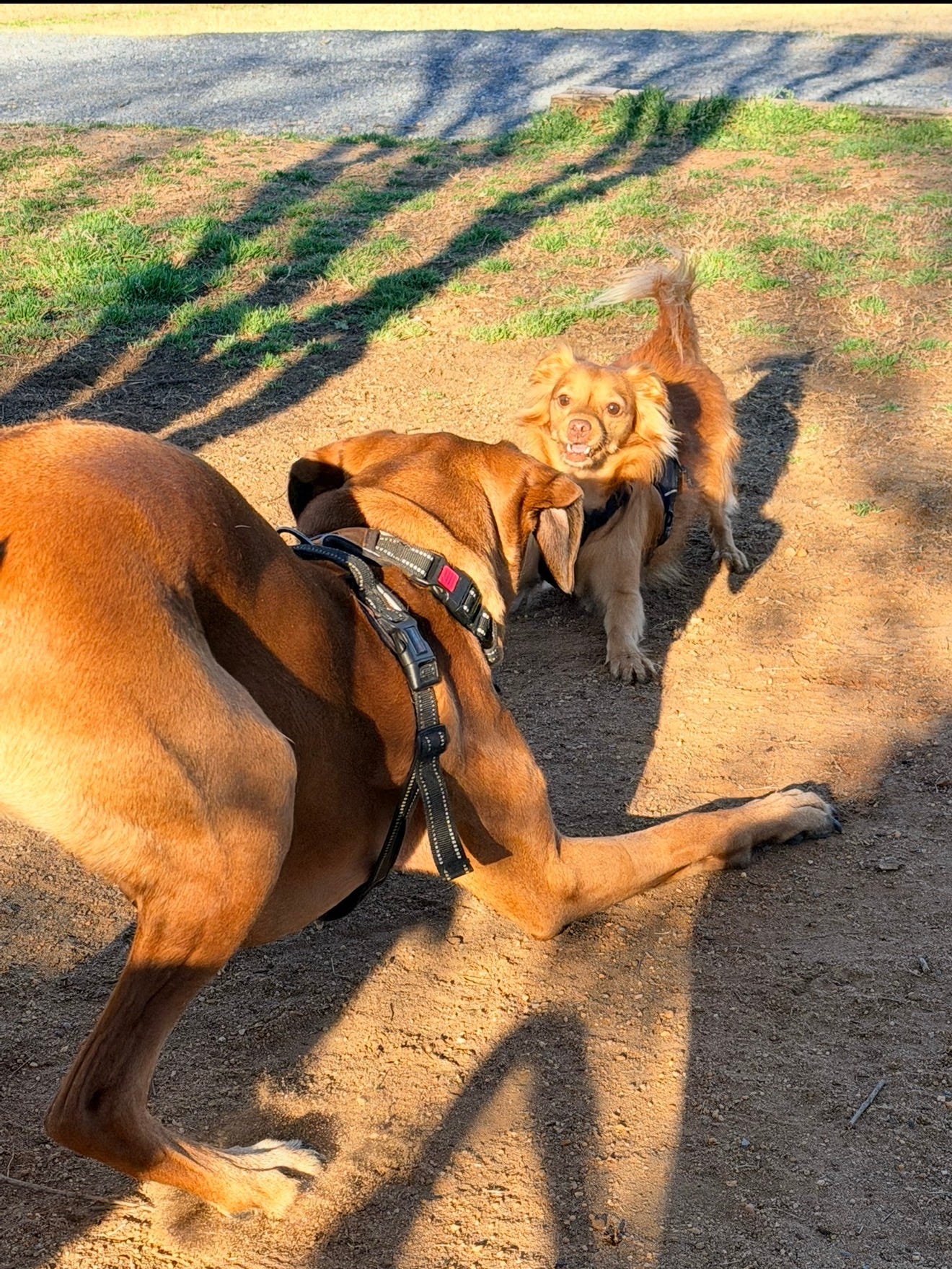
I don’t say that lightly. I say it because I know what it has given me, and I’m not sure I could have found it anywhere else. Running water. A lawn the city maintains. And Cam — a woman from the Humane Society who makes sure there are always poop bags at the stations, the cans are emptied, and the Facebook group keeps the community connected. her two mini aussies are some of my Peaches best friends. Nobody asked her to care that much. She just does. It is, by any reasonable measure, a well-loved place. And well-loved places are rarer than we admit
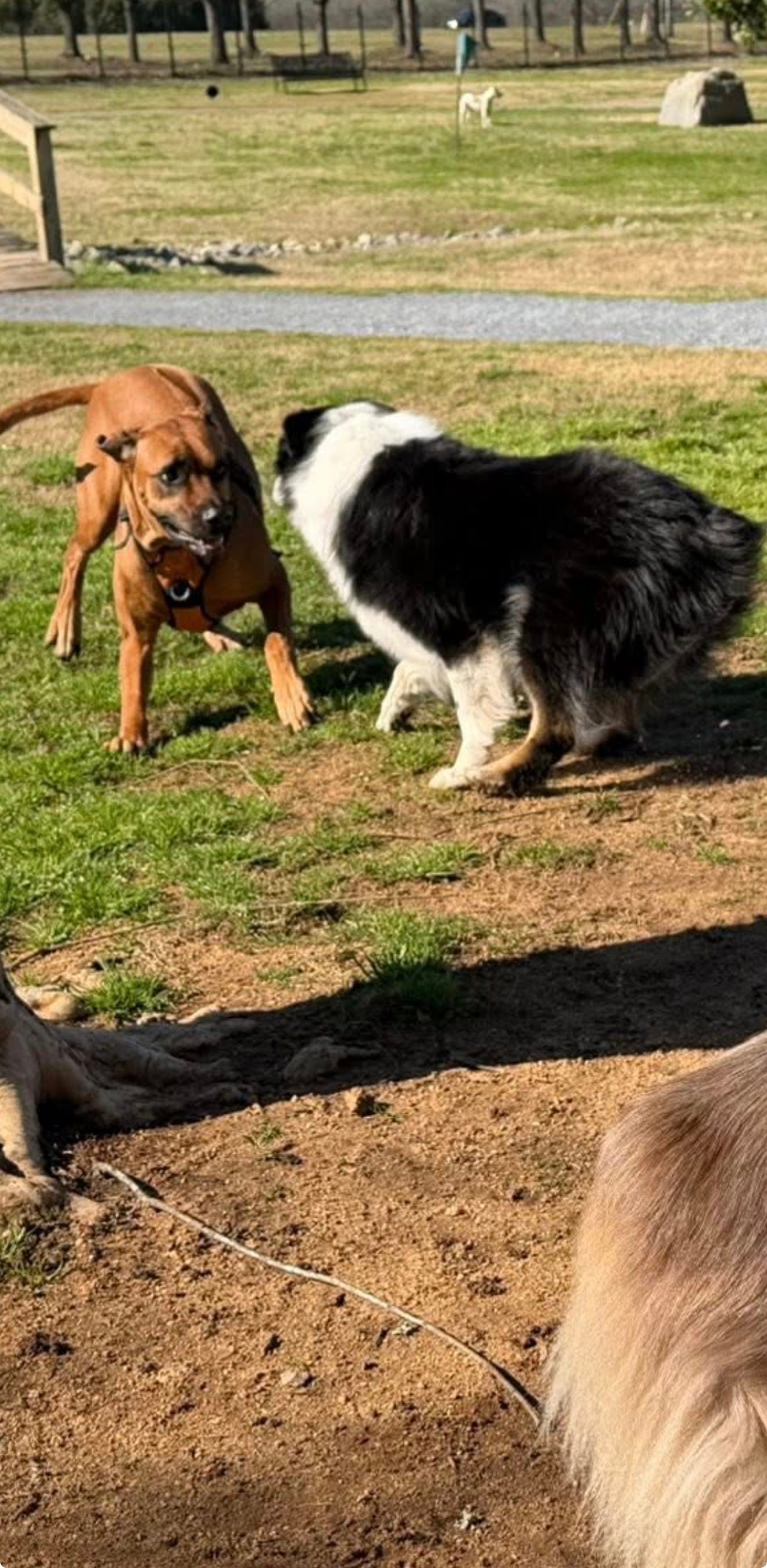
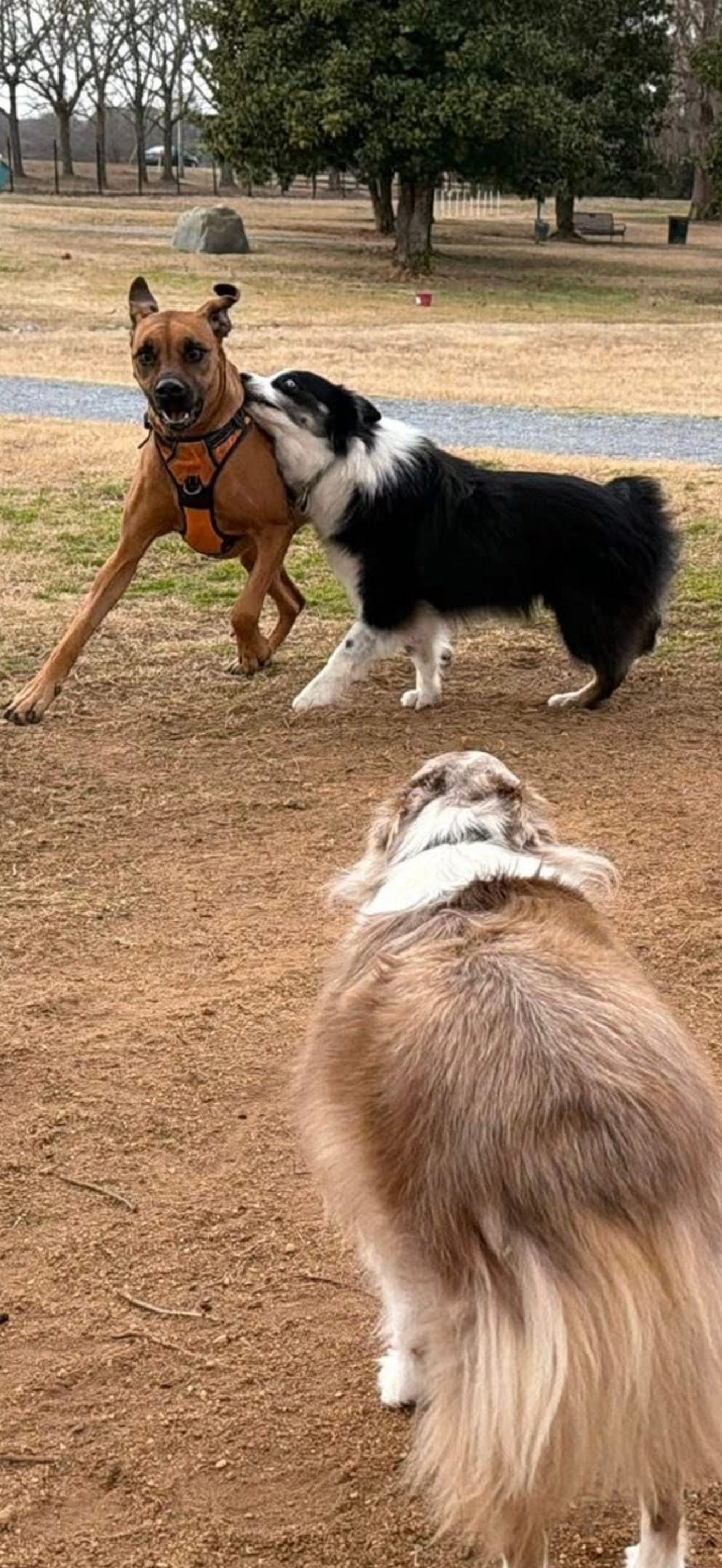
I go in the mornings. My dog has her reasons for being there. I have mine.
I moved to Montgomery in 2014, two years into a relationship with someone who lived here. I came in four years sober, which felt like solid ground until it wasn’t. I relapsed. The relationship didn’t survive it. I did the slow, unglamorous work of getting sober again — alone, in a city where I knew almost no one, starting over in the way that doesn’t look dramatic from the outside but costs everything on the inside. The park was where I went when I didn’t know where else to go. Not because anything was fixed there. Because nothing was required of me there. I could just show up, sit in the grass, watch my dog run, and exist without having to explain myself to anyone. In the vocabulary of recovery, people talk about higher powers and sanctuaries and the places where you feel held without being grabbed. For a long stretch of my life, this field with a fence around it was all of those things.
I stayed. I built a life I couldn’t have predicted and wouldn’t trade, closer to family than I’d been in years. I’ve come to believe the Lord works in ways we can’t always see at the time, moving us toward where we need to be through doors we didn’t choose to walk through. Montgomery is where I needed to be. The park is part of why I know that.
Sociologists call them third places — the spaces that are neither home nor work, where something looser and more human happens. Ray Oldenburg, who gave the concept its name, argued that third places are the heart of civic life: the barbershop, the coffee house, the corner bar. Places where you show up without an agenda and leave knowing something you didn’t before. He wrote about them in 1989, and in the decades since we have watched them disappear one by one, replaced by drive-throughs and delivery apps and the long, efficient slide into privatized everything.
The dog park is one of the places that survived. Maybe because it was never really about consumption — you can’t monetize a field where people stand around watching their dogs. Maybe because the dogs make strangers into neighbors faster than any chamber of commerce event ever could.
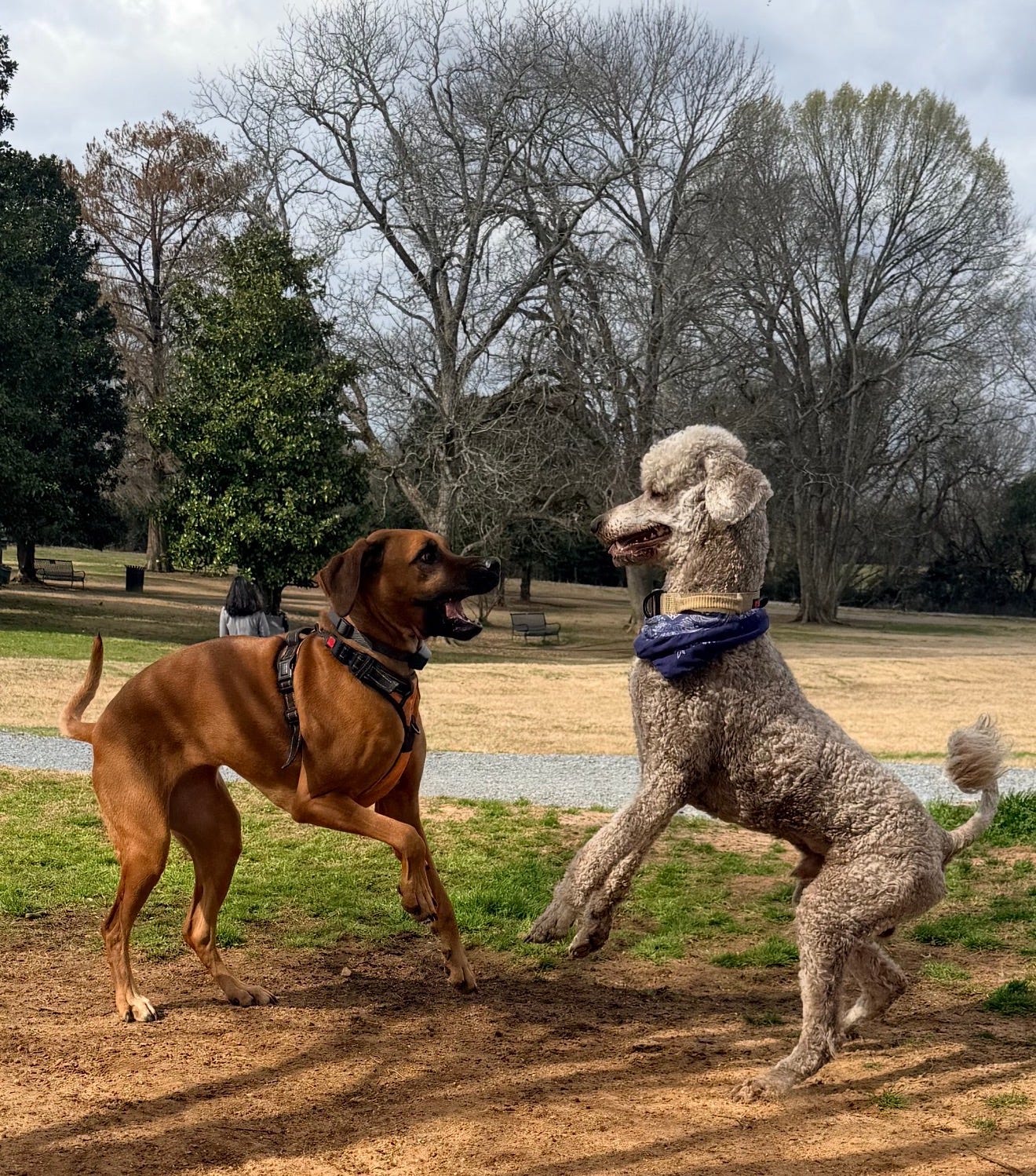
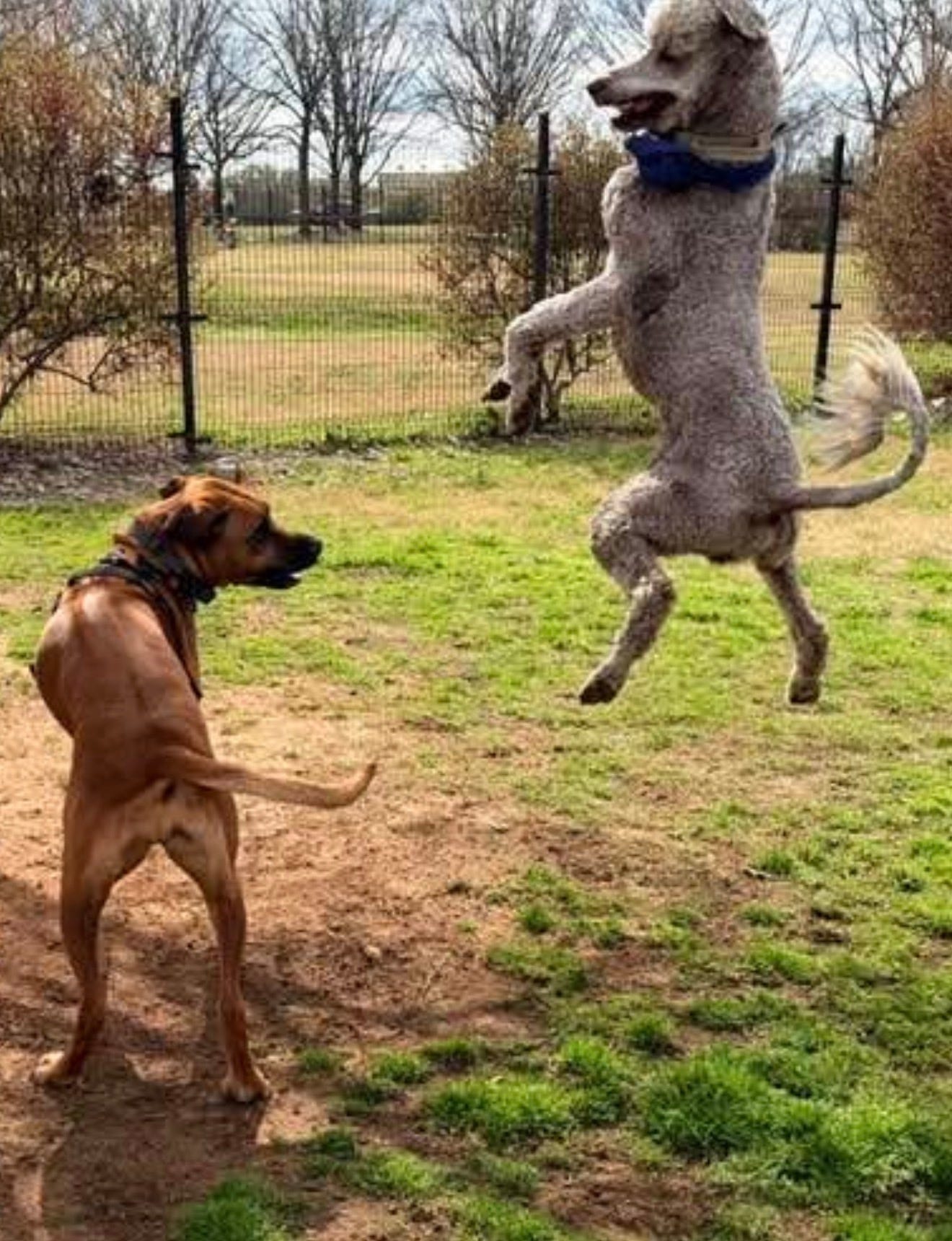
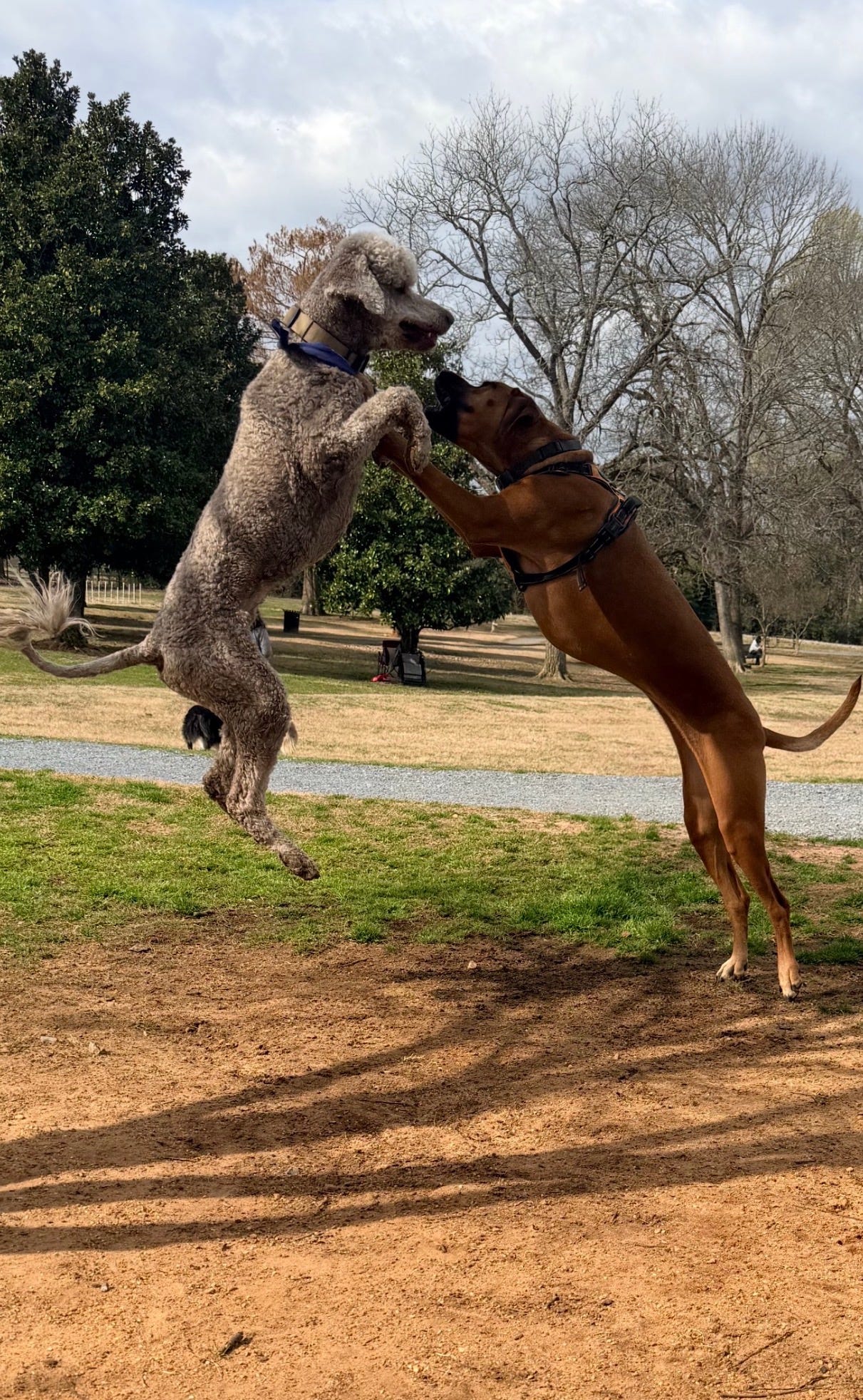
There is something disarming about a place built around animals. You can’t perform at a dog park. You can’t arrive with your guard fully up when your dog is sprinting in circles and making you laugh against your will. The social contract is different there. People talk to each other not because they have been introduced or share a professional affiliation, but because their dogs are wrestling and that is apparently sufficient.
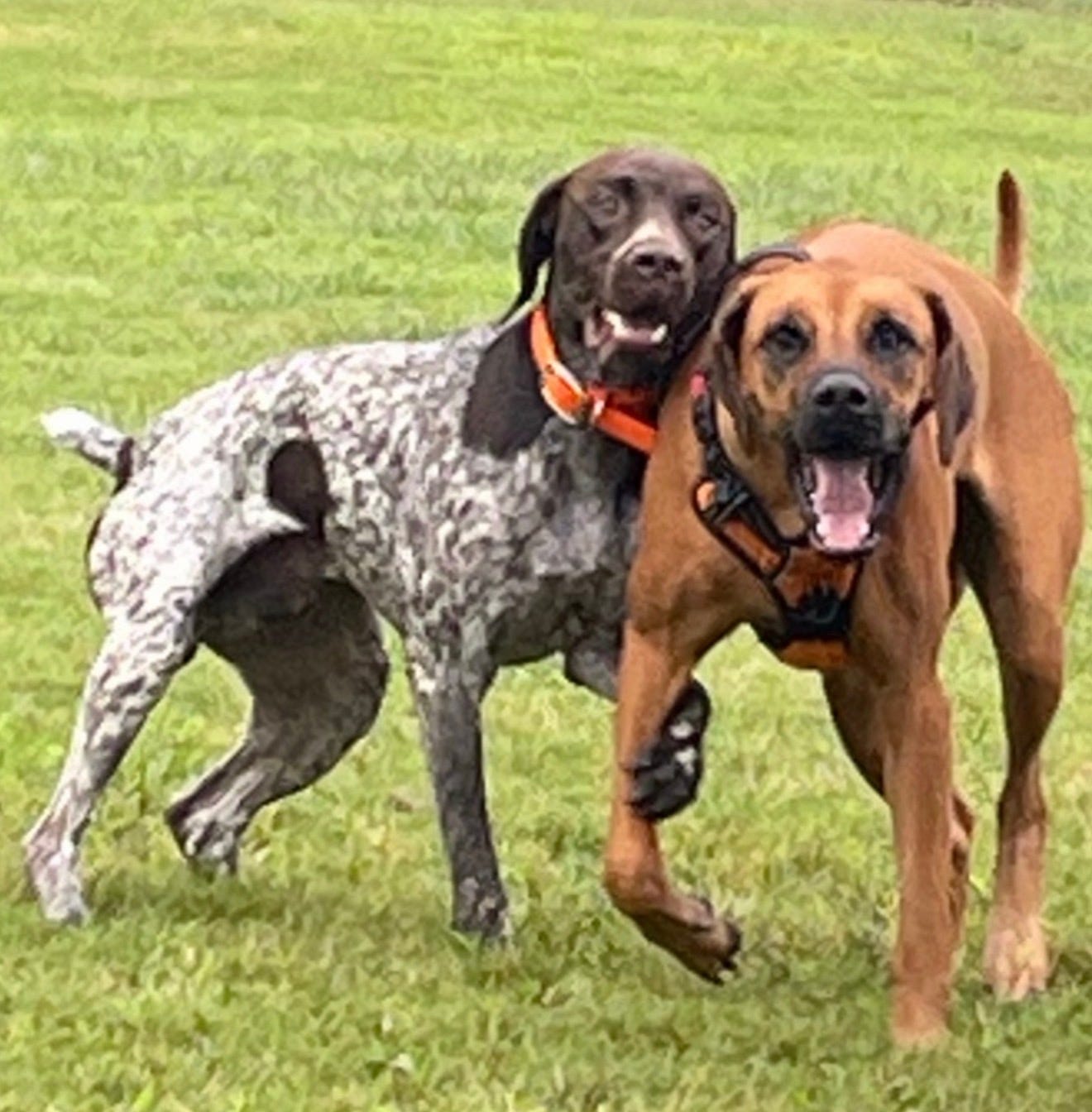
In ten years I have made as many real friends at that park as anywhere else in my life. Our group on weekends spans from people in their late twenties to folks in their early nineties — a retired schoolteacher, a college kid, a contractor, a nurse, people I would never have landed beside in any other context. All walks of life, united by dogs and the particular freedom of a Saturday morning with nowhere urgent to be. We talk sports — a lot of sports. A little politics. And somewhere along the way I became the person who educates this unlikely congregation on the world of gender critical advocacy, which most of them had never heard of before they met me. That is one of my favorite things about the park. It puts you next to people you would never have found otherwise, and then it gives you enough time together that real conversations happen.
But I want to tell you what mornings are like there, because the friendship — and even the recovery — is only part of it.
In the early hours, when the dew is still on the grass and the light is coming in sideways, there is a quality of stillness that I have not been able to replicate indoors. I sit on a bench or in a folding chair I’ve learned to bring, and I watch. My dog explores. Other dogs drift past. Conversations start and trail off the way good conversations do — nobody has anywhere to be yet. And in that space, in that unhurried, unstructured hour, my mind does something it refuses to do at a desk.
It thinks.
Not the grinding, task-oriented kind of thinking that productivity culture sells us. Something more like noticing. An idea surfaces that I didn’t know I was having. A connection forms between two things I’d been holding separately. I reach for my phone not to scroll but to write something down before it leaves me. Some of my best writing — pieces that have meant the most to readers, that came from somewhere true — started as a half-formed thought on that bench, my dog rolling in the grass twenty feet away.
I don’t think that’s a coincidence. I think that’s what happens when you give your nervous system permission to rest in a place that is genuinely good.
Emily Dickinson wrote that some keep the Sabbath going to church — she kept it staying home, with a bobolink for a chorister and an orchard for a dome. I have always loved that poem. I think about it at the park. There is no steeple there, no order of service, no passing of a plate. There is grass and running water and dogs and people who show up because something in them needs to. If that isn’t worship, it’s close enough for me.
My dog would agree. She is not subtle about it
Comments
Nothing yet. Say the first thing.
Sign in to join the conversation.