
To all that is chaotic in you,
let there come silence.
Let there be a calming of the clamoring,
a stilling of the voices
that have laid their claim on you,
that have made their home in you
that go with you even to the holy places
but will not let you rest,
will not let you hear your life with wholeness.
~ Jan Richardson, Blessing in the Chaos
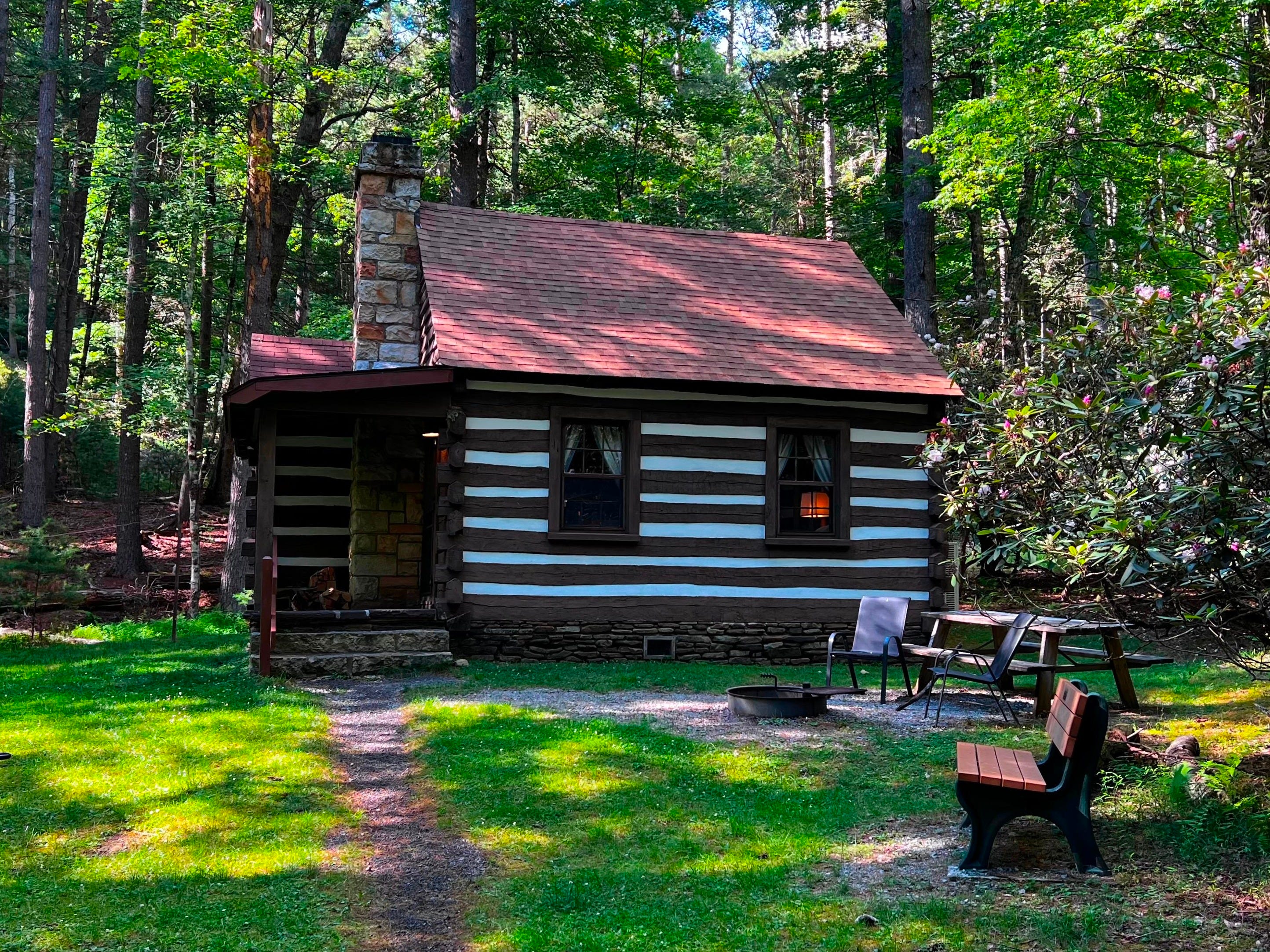
After four plus hours of driving - including a final, dizzying 90 minutes navigating narrow, hairpin turns - it was a relief to arrive at our charming, cozy cabin at the end of the lane. Luggage unpacked and ingredients for future meals stored in the tiny kitchen, we are free to sink into the chairs outside.
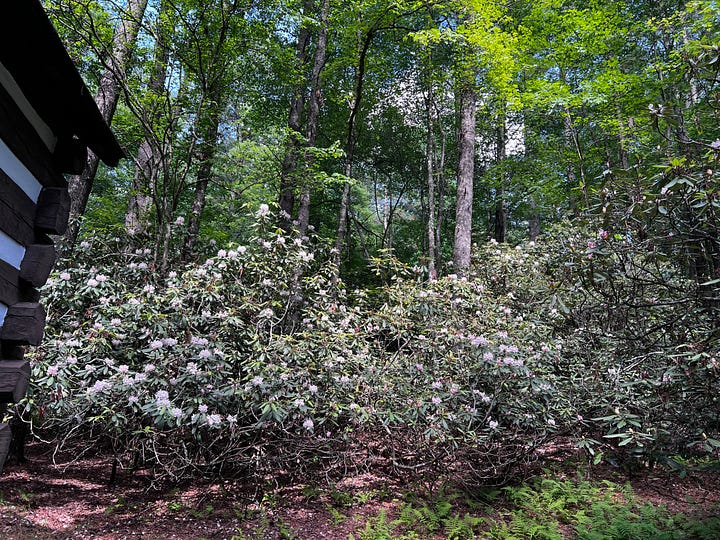
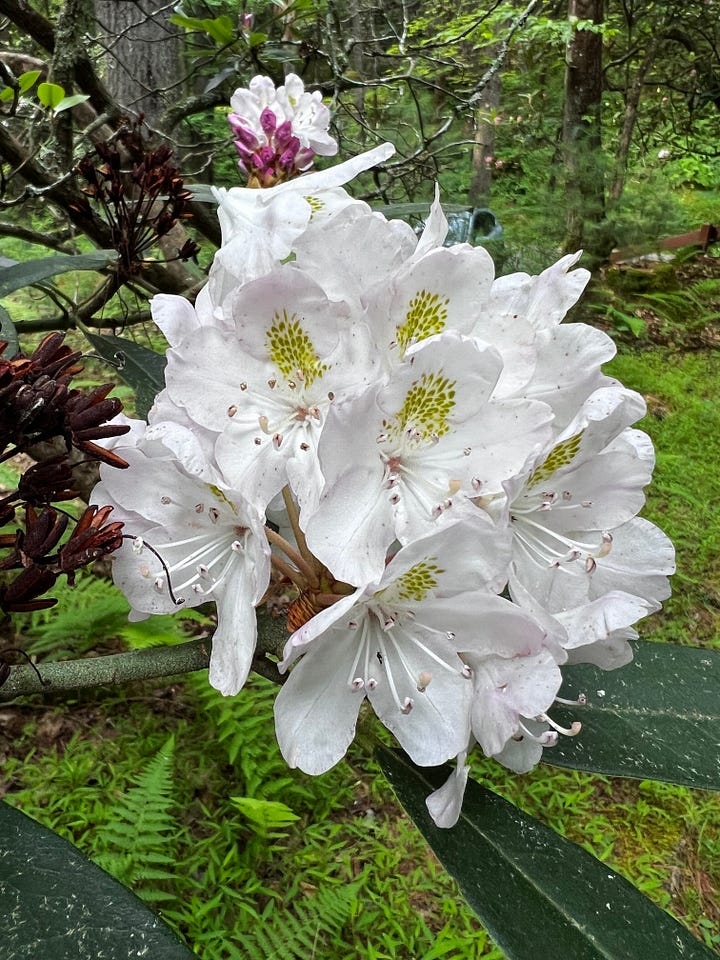
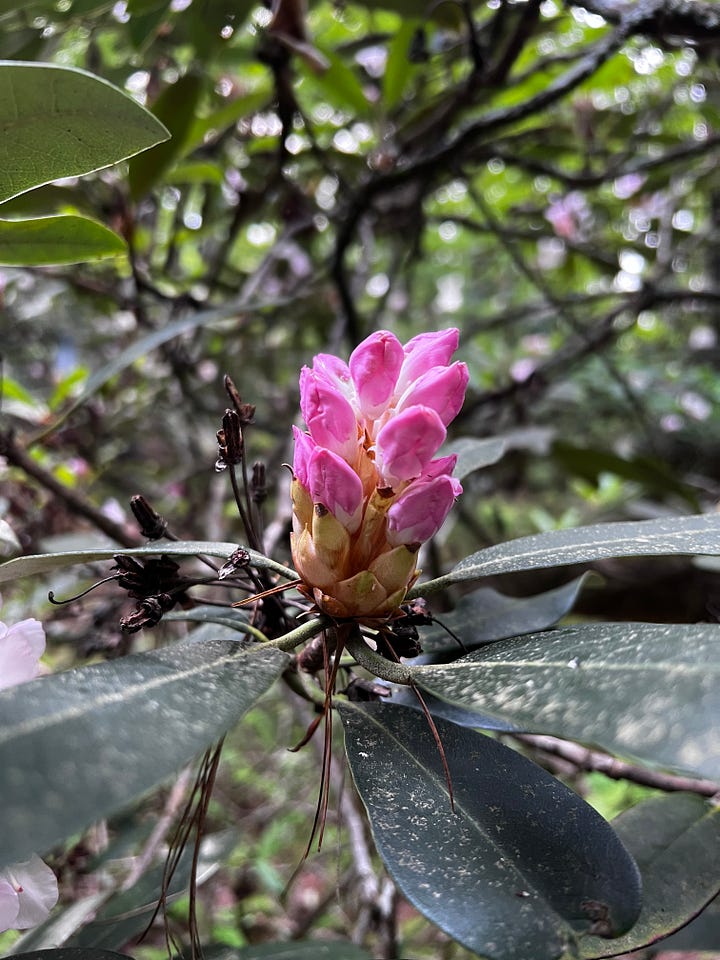
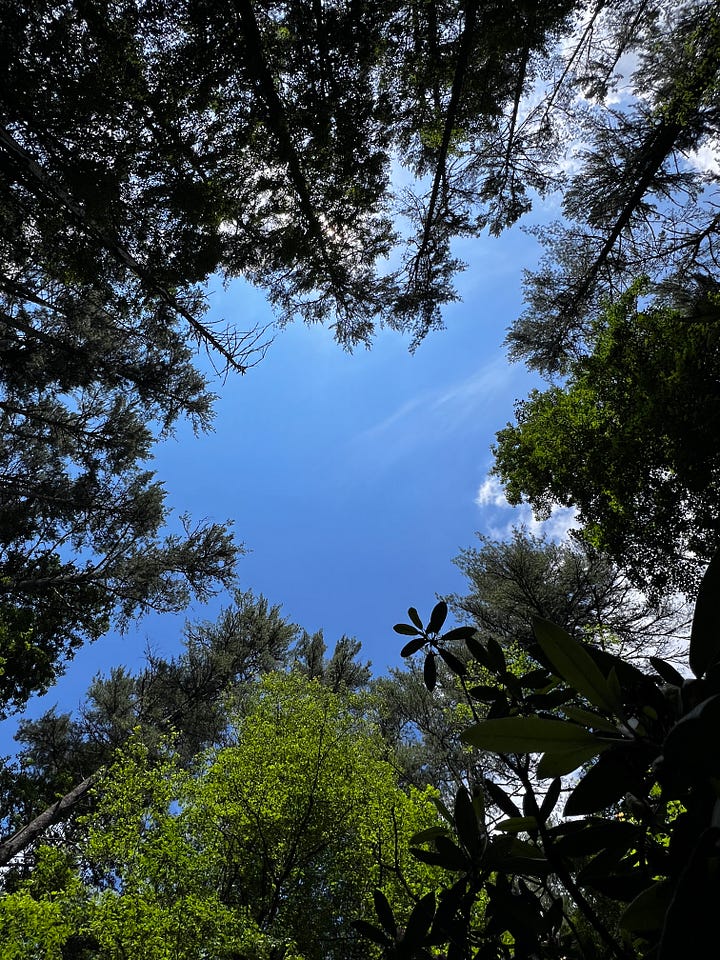
We have arrived for a four-night stay at Watoga, one of three official Dark Sky Parks in West Virginia. A wall of rhododendrons, the WV State Flower, runs the length of the winding path. Twelve feet tall with thick and twisted branches, they bear large and delicate white flowers along with many pink buds promising more flowers to come. Encircling the rhododendrons, the cabin, and us are decidedly tall deciduous trees interspersed with conifers – mostly endangered hemlocks. I tilt my head back, gaze up at blue sky with a smear of clouds, and exhale fully. How will the dark sky display the stars on such a small canvas, I wonder? But darkness is still hours away, and I let that concern float away – as I do with any others that arise unbidden. There is no cell service, no internet. I am here. Now.
That’s when I really notice: it’s quiet. Quiet with a texture, a presence. No traffic, no conversations, no ambient noise that shows up regularly in most of our lives. The dense vegetation within this narrow valley mutes sound waves.
It’s not silent; there’s rich and abundant birdsong against this background of stillness that I struggle to name. I sink more deeply into this space, surprised by the depth of release I feel in this motionless, alive, vibrant, quiet place. There is only birdsong and our own soft breath. Surely this is how it was for the lives of all but our most recent ancestors. I melt into forest.
---
Human created noise can be more than annoying. It can lead to chronic health conditions including poor sleep quality, high blood pressure, increased risk of heart attack, stroke, diabetes, and cancer. Intense and/or frequent noise is a psychological and physiological stressor.
Research has found that in noisy areas people are less likely to help each other. Cut off from the nuance of tone and context, people feel more isolated and report less of a sense of intimacy with others.
---
I recall so clearly our 2016 visit to the Ho Rainforest in Washington state, one of the most pristine, ecologically untouched, and perhaps at that time, the quietest location in the United States. A moss-covered log surrounded by red stones marked One Square Inch of Silence within the park where, except for occasional conversations, no human noise is heard. Acoustic ecologist Gordon Hempton wrote a book entitled One Square Inch of Silence and co-founded Quiet Parks International.
To be a designed quiet place requires a minimum of 15 minutes or longer of silence during daylight hours. Only 15 minutes of no planes, trains, or automobiles, jack hammers, chain saws, leaf blowers, or data center hums. Does that seem like a low bar to you? If so, then you might be doubly surprised to know that when Hempton’s book was published in 2010, only twelve such places in the US met that criterion for being a place of silence. Twelve square inches. And none were protected.
A year after our visit to the Ho Rainforest, researchers at Colorado State University and the National Park Service found that “In 21 percent of parks, human noise increased background sounds 10-fold, interfering with visitors’ experiences and disrupting wildlife behavior. With an increasing popularity, National Parks were reported to “feel more like standing in line at Disney World.”
The gift of silence is both precious and endangered.
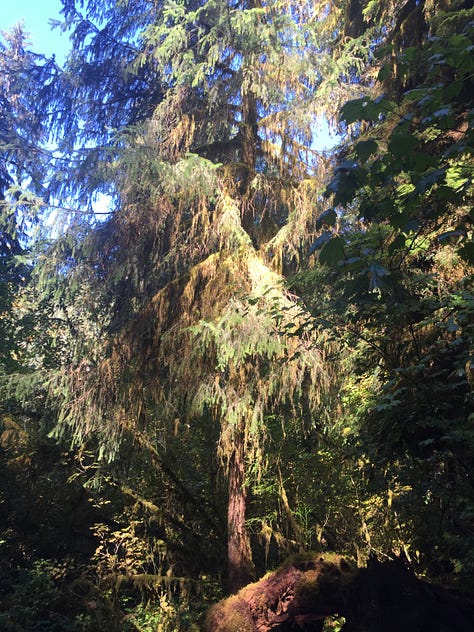
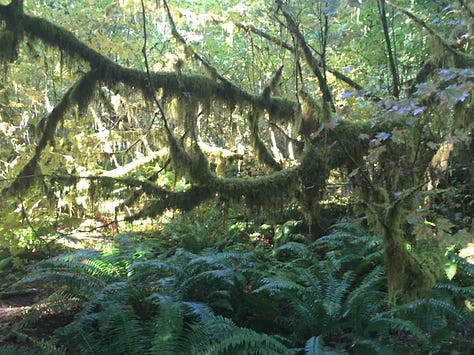
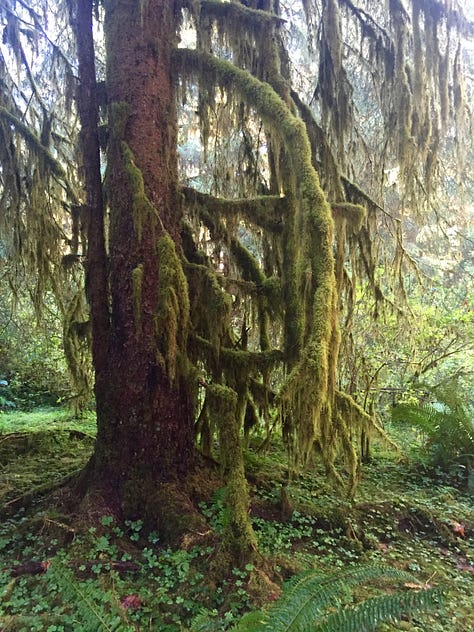
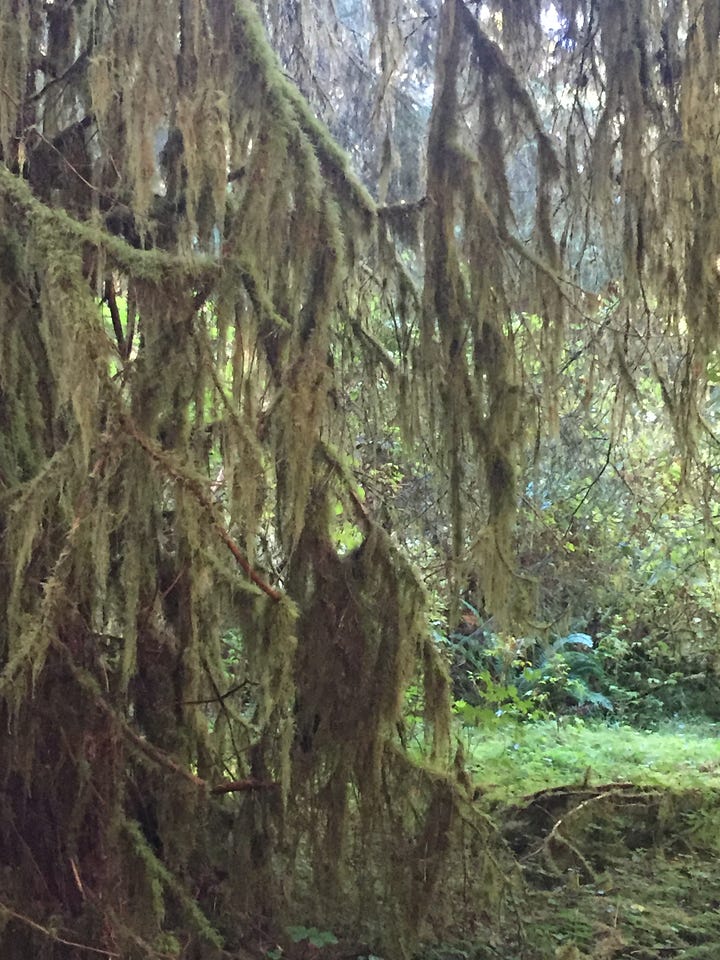
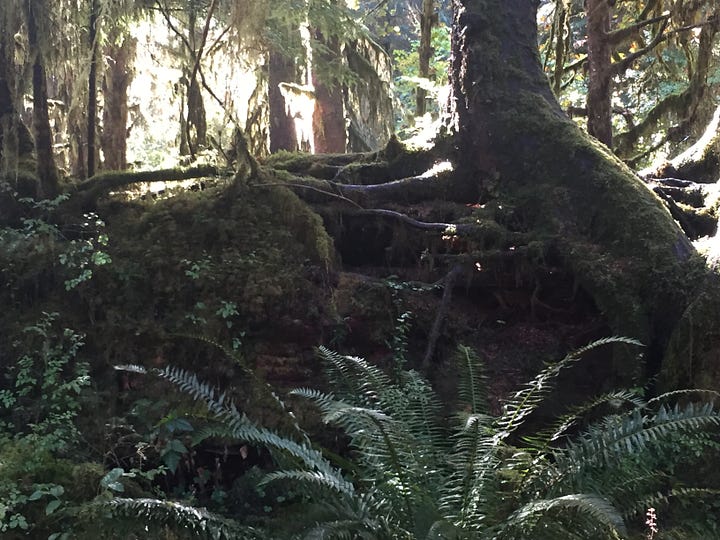
Two years after our visit:
“… in 2018 the United States Navy escalated electronic warfare exercises over and around Olympic National Park using EA-18G “Growler” jets, despite public outcry, legal challenges, and condemnation by UNESCO World Heritage Committee. As of November 16, 2020, more than 4,400 Growler flights occurred over Olympic Park annually with plans to increase training exercises further by adding 36 more Growlers. The maximum noise levels heard on the ground can be as high as 100.6 decibels (dB).”1
Every higher vertebrate species has an ability to hear, a capacity that keeps us safe, Hempton has noted. We can close our eyes. We cannot closer our ears. We once needed to be awakened in the night by growls, distant cries, or footsteps drawing nearer.
Sitting outside later than night, the silence as deep as the darkness, I wait for my eyes to become night friendly. Slowly they adjust. Perhaps my hearing grows sharper too. The faintest sound, a kind of shuffling in the nearby bushes. Every sense, every fiber of my body, comes alive. I am animal, still, ready to flee, alert. I think of the mother bear and her three cubs that had been spotted earlier that day. Surely, they would not be out at night. How little I know of this territory of dark quiet, nearly nothing of the habits of creatures who make this home.
How can we live in kinship with the living world if we cannot hear her many voices? Did you know that shorter needles on pine trees create higher pitches in the wind than do longer needles? How can we know the way of trees if we are unable to discern how they sing to the breeze?
I go among the trees and sit still.
All my stirring becomes quiet
around me like circles on water.
My tasks lie in their places
where I left them, asleep like cattle.
- Wendell Berry from “I go among the trees and sit still”
We are calmer in quiet places. Sacred places are often quiet places. Monasteries and cathedrals are built to be hushed. Sanctuaries are places of safety; we cannot imagine them filled with noise and chaos. Caves where ancient peoples painted their stories on the walls were of flickering torches and deep silence. Where is our sacred silence now?
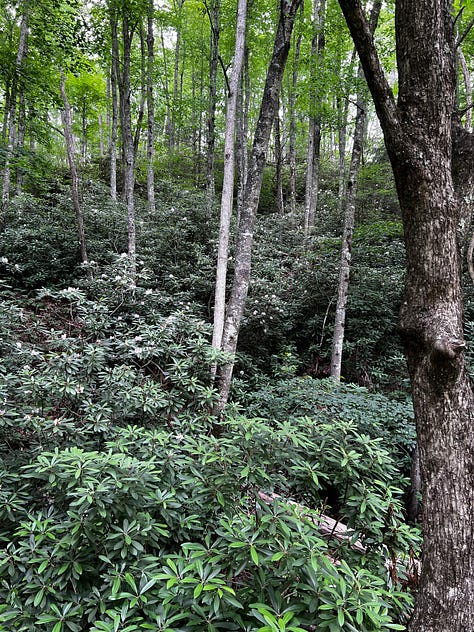
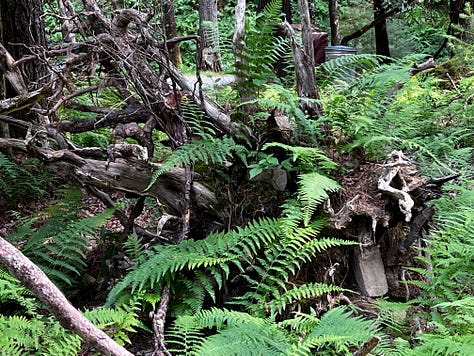
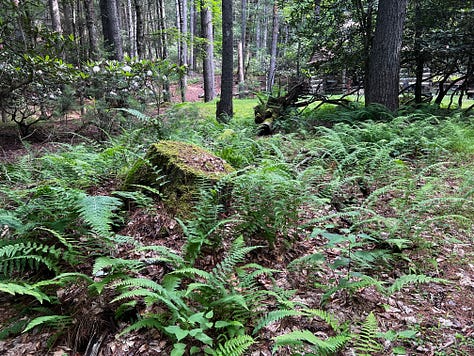
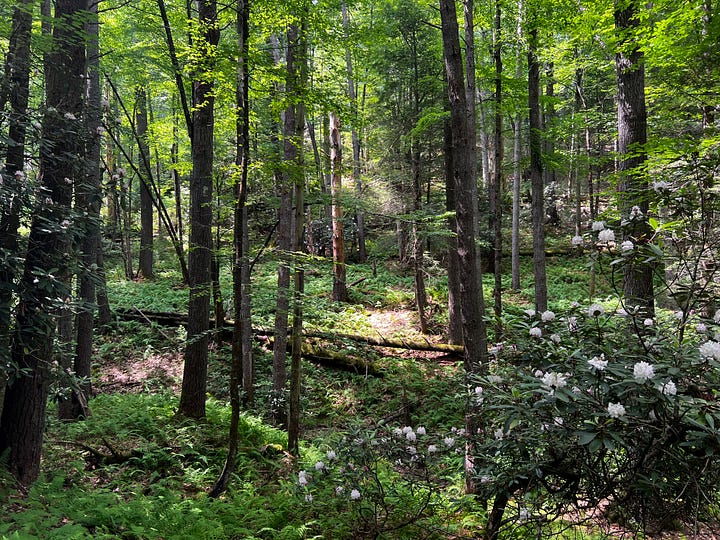
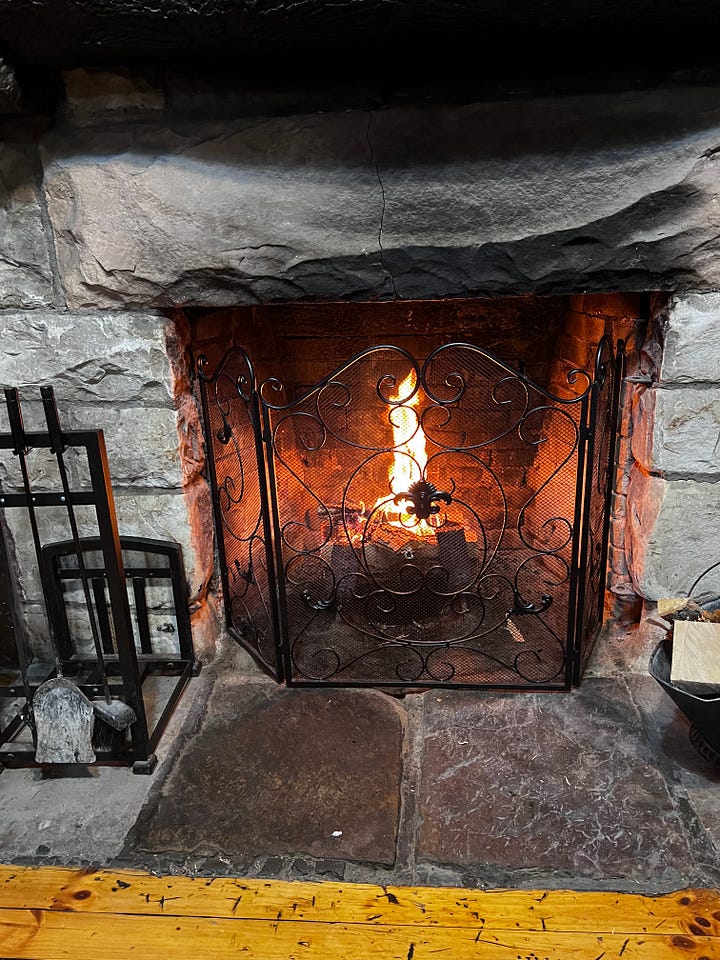
For three full days and four nights, we were drenched in quiet in our cabin in the woods. We thought we were coming for the dark sky. Moonlight and rain had other plans. Yet in the night, on walks along leafy forest trails, near the blazing fire on our final rainy day, the sounds of silence prevailed. Among the trees, sitting still, our tasks remained asleep in their places. We thought we were coming for the night sky. The forest offered the gift of silence.
~~~~~~~
~~~~~~~
I’m aware that this essay speaks only to the human need for silence. So many creatures are even more dependent upon hearing than we are for their health and well being. I highly recommend Quieting the Anthropocene Seas, a series by Jason Anthony on the devastating impacts of intense noise on our kin of the seas.
Are there others whose writing you recommend? What has been your personal experience of being in a place of deep silence? Please share in the comments.
~~~~~~
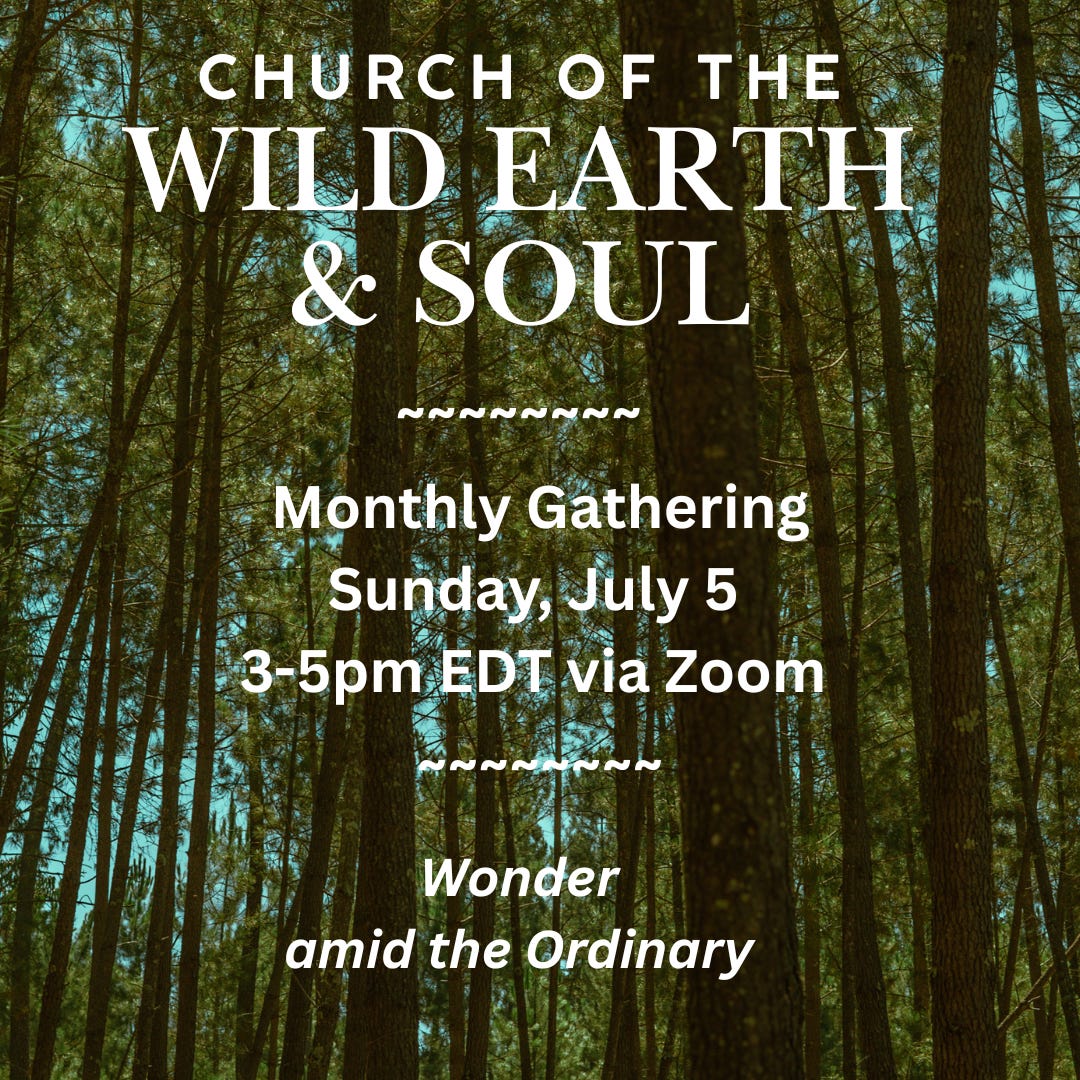
Registration is free via the button below.
Register to receive your Zoom link
We are called repeatedly to bear witness to loss in these edge times. Our broken hearts long to be sustained by wonder, beauty, and belonging. The living Earth opens herself to us in every moment, gifting us even on the bleakest of days. As we pause to accept, honor, and cherish the wonder of this world, we deepen our relationship beyond the bounds of language and re-member our place in the family of things.
In our time together, you can expect shared conversations, small group discussions, and space for quiet reflection as we open to discovering Wonder Amid the Ordinary. An important part of every online gathering will be approximately 30 minutes of silence where you can move away from technology to be present to the more than human world.
In preparation for participating: Consider how you might engage in an extended offline opportunity for opening to wonder in the living world around you. This might take the form of sitting silently to rediscover a small space in your yard; attending to a tree or the sky from your deck or porch; lingering with leaves, seeds, or stones that you have placed nearby; or even attending closely to a special location in your memory.
I would be delighted to gather with you on Sunday.
All photos were taken by the author.
https://onesquareinch.org/
No posts
Comments
Nothing yet. Say the first thing.
Sign in to join the conversation.