
In 1913, the composer Lili Boulanger made history by becoming the first woman to win the prestigious Prix de Rome composition prize, with her cantata Faust et Hélène. ‘The suffragettes smash windows and burn houses. But a maiden of France has gained a better victory,’ wrote one commentator. Lili’s win was positioned as a win for women’s rights, and it made her a musical celebrity.
To put into perspective why Lili’s success was so important, the Prix de Rome was a big deal in France at the time. The final six competitors were photographed and interviewed by the newspapers, and the winner got a state-funded residency in Rome to focus on their craft. Any intrigues or gossip from the competition were automatically news-worthy. And women had only been allowed to compete since 1903. That, in itself, had caused scandal. The conservative Académie des beaux-arts, who administered the prize, had barred women but were overruled by a minister with a reputation for “radical” politics.
Rather than concede defeat, the academy dug in their heels, and the dispute between politicians and academicians was widely reported. The academy protested the minister’s intervention as ‘an attack on the moral dignity and, in consequence, the very existence of the Académie.’ The odds were severely stacked against women competitors, so Lili managing to take the top prize was seen by feminists and misogynists alike as a significant coup for women.
As so often when a single woman is celebrated for being the “first” to do something, though, it obscures both the many other women who made their achievement possible — and the women who followed in their footsteps. I don’t want to diminish Lili’s abilities as a composer. Faust et Hélène is a phenomenal piece of music, and deserved to win no matter what the composer’s gender was. But it’s important to recognise that Lili’s achievement didn’t happen in isolation. Other women failed before Lili could win — including her own sister, Nadia Boulanger. Nadia competed for the prize in 1907, 1908 and 1909, and all kinds of sexist shenanigans were pulled in the voting to prevent her from winning, even though it was widely acknowledged that her compositions were the best submitted. The furore caused by Lili winning pushed her sister’s achievements into the background, and Nadia eventually gave up composing in the 1920s. It’s Lili who’s remembered as the composer, and Nadia is remembered as a (phenomenal) teacher.
And although Lili was the first to win the Prix de Rome, she certainly wasn’t the only woman to do so. Celebrating Lili as the first woman to win the prize recognises an important historical moment — but what about the other brilliant women who won the prize after her? We rarely hear their names, but they were exceptional composers too. Isolating Lili makes her presence as a composing woman seem more unusual than it was. She was one in a centuries-long lineage of composing women, and there were many other women composing in France at the same time as her. If we only hear about Lili as the One Token Woman, it negates the main point of her victory — that all women deserve to be taken seriously as artists and as musicians.
So for this week’s post I’m diving into the history of the Prix de Rome, and the best of the music written by women other than Lili Boulanger. The Prix de Rome winner only give a highly selective snapshot of French musical life at the time (Ravel was, famously, denied first prize on multiple occasions, causing such outrage that the entire music prize administration was changed). One thing is abundantly clear though. Women were creating music at the highest possible levels, writing pieces of a standard that was judged prize-worthy as soon as they were allowed to compete. Lili was not the “only”. And she was only sort of the “first”. Other women won second and third prizes before she took the top spot. This matters because historical women composers are so often spoken about as though they were unusual — as though the successful ones were the exceptions that proved the rule that women couldn’t or didn’t compose. But that’s not true. Women have always composed, and composed well. We just have to choose to listen.
I would love to be able to play you the music of Juliette Toutain, the first woman to attempt to compete for the music prize in 1903. Her known works include songs, piano pieces, and a cantata on the beatification of Joan of Arc. She was also an excellent pianist and organist, and Louis Vierne dedicated his Suite Bourguignonne to her. Unfortunately, it doesn’t seem as though any of her own music has been recorded.
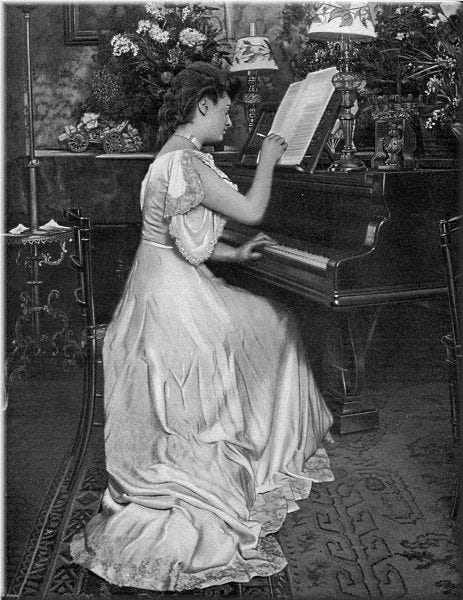
Toutain’s story is unbelievably frustrating. The rules of the Prix de Rome stated that the competitors had to be locked in a house together to compose their entries, so they could not get outside assistance. Toutain’s family were concerned about her reputation, as all the other competitors would be men, so they asked for concessions such as a female maid to accompany her. The Académie stalled and stalled, and only granted permission for these concessions on the day the lock-in began, by which point it was too late for Toutain to reach the house in time. She did not compete. She married in 1904, which prevented her from competing again — married women were not permitted to enter until 1954. 1954! The recentness of historical prejudice never ceases to astonish me.
Fleury won third prize in 1904. The minister who had pushed for the admittance of women was deeply gratified by this, and announced that ‘It is not just a prize that Mademoiselle Fleury has won; it is an act of possession that she has carried out over a domain from which an obsolete tradition wanted to keep women away. She has made a conquest.’ Which no doubt did absolutely nothing to ingratiate Fleury with France’s conservative musical elite. From Fleury’s long works list, very little has been recorded. But here’s her pensive and beautifully evocative Fantaisie for Viola and Piano, written in 1906.
Nadia Boulanger is without question one of the most influential figures of twentieth-century music. As a pedagogue, she taught such diverse individuals as composers Philip Glass, Aaron Copland, Thea Musgrave, Grazyna Bacewicz and Marion Bauer; composer and producer Quincy Jones; pianists Dinu Lipatti and Idil Biret, and conductors Daniel Barenboim and John Eliot Gardiner. She lectured widely on contemporary composers, especially Stravinsky, and helped to establish his reputation as one of the greats of modern music.
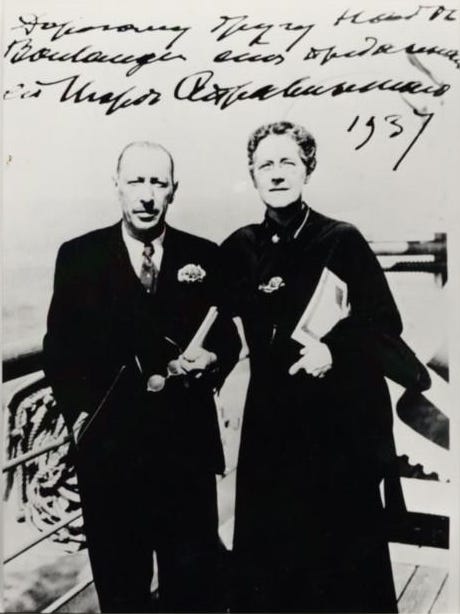
As a conductor, too, Nadia was a pioneer. She championed the modern composers she loved — she conducted the first performance of Fauré’s Requiem in the UK, and the private premiere of Stravinsky’s Dumbarton Oaks concerto, whose commission she had also brokered. If we know Lili as a composer now, a lot of that is down to Nadia, who conducted and performed Lili’s music after her untimely death in 1918. Nadia was also a leader in the rediscovery of early music, especially Monteverdi. She was the first woman to conduct major orchestras including the Boston Symphony, London Philharmonic and the Hallé. (She was not, however, the first woman to conduct the New York Philharmonic, as is sometimes cited. That was Antonia Brico, in 1938.) When questioned about how she felt about being the “first” woman to lead these ensembles, Nadia replied with characteristic wit:
I have been a woman for a little over fifty years, and have got over my initial astonishment.
I’m convinced that Nadia never got to fully explore who she might have been capable of becoming as a composer. Her father Ernest was seventy-two (!) years old when she was born, so she knew from very, very early on that as the eldest child she would be responsible for the family’s finances. Ernest died when she was only thirteen, and Nadia became the family’s breadwinner in her teens, supporting both Lili, who was six years younger than her, and their mother. Teaching was the most obvious musical route through which Nadia could make a sustainable living. Making an income from composition was difficult for anybody — and especially so when you were blocked from many of the official opportunities that men took for granted, courted scandal whenever your name was billed above the name of a man thought to be more famous than you, and dismissed by the press as a “difficult” woman. It was just too risky for Nadia to really put her heart into developing herself as a composer.
Within Nadia’s relatively small output, we sometimes get a glimpse of the composer she might have become had she not been locked in to a career with a guarantee of regular income from such an early age. This is the third of her Three Pieces for Cello and Piano, which is full of the energy and directness that defined her personality. You can also hear Alexandra Dariescu give the Proms premiere of her Fantasie Variée here, with my commentary in the interval.
Canal was the second woman to win first prize, with her cantata Don Juan in 1920. As well as being a composer, she was also a singer, conductor, and teacher, and taught at the Paris Conservatoire for many years. Many of her larger works feature the voice, but she was also adept at instrumental composition too. This is her Violin Sonata, from 1922. (If you’re interested in finding out more about her, there’s information about her scores via the Bibliothèque nationale de France website here.)
As if being an extraordinary composer wasn’t enough. Leleu gave the premiere of Maurice Ravel’s piano duet Ma mère l’Oye with Geneviève Durony when she was just 11 years old. She won the Prix de Rome first prize in 1923 with her cantata Beatrix. Her music is more than overdue a revival — she wrote symphonic works, ballets, solo pieces, songs and chamber works, which received a number of broadcasts and were performed at venues including the Opéra Comique. This is her Piano Quartet of 1922.
Barraine has been experiencing something of a resurgence recently, and it’s well deserved. Her music is wonderful! She won first prize in 1929 with her cantata La verge guerrière, and this was only one of her considerable musical achievements. During the Second World War she became involved with the French Resistance, and was involved with setting up their musical arm, the Front National des Musiciens. Her works range from anti-war pieces like her Symphony No. 2, to a homoerotic ballet based on writing by the French author Colette. I’ve written more about Barraine’s life and work here, with links to many of her pieces.
The composer who defied the Nazis
·
September 21, 2025
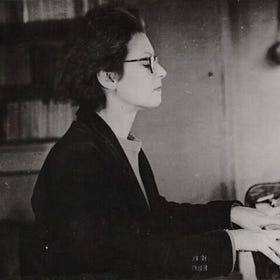
I was thrilled to see Elsa Barraine’s name on the Proms programme this year — her Proms debut, to the best of my knowledge (you can catch up on the concert here, with yours truly speaking in the interval). It marks a recent increase in interest in this twentieth-century French composer, who wrote powerful, opinionated, and often explicitly political mus…
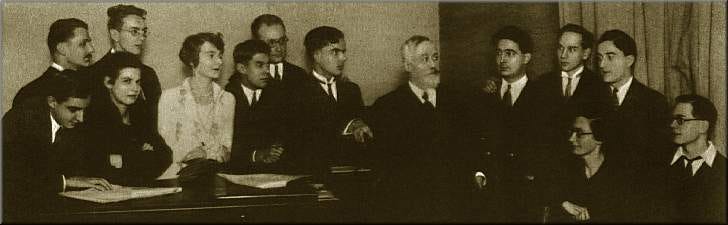
Desportes was a prolific composer, producing over 500 works, and was winner of the first prize in 1932. That she is not more widely performed and recorded is truly baffling. She has a Tailleferre-esque sparkle to her sound. Her oeuvre includes operas, symphonies, instrumental pieces, chamber works and songs. Fellow composer Jacques Casterede summed up her style and her personality wonderfully:
I always was (and still am) dazzled by the number of works that she wrote, and by the facility with which it came out of her pen. […] Her music, always spontaneous and lively, sometimes willingly displayed a rebelliously humoristic and anti-conformist spirit rare in contemporary music.
Her work is witty, sprightly, and fits so so well with her contemporaries Poulenc, Tailleferre, or Stravinsky. This is her glorious French Suite for Four Clarinets from 1939 (despite the photo, which shows Barraine, not Desportes). The style is so fresh that I could see it being programmed alongside current composers like Shelley Washington.
Puig-Roget won third prize in 1931, the same year that Desportes came second, and won the second prize two years later, in 1933. Over her lifetime, she composed around 250 works, a tiny fraction of which have been published (about forty), and even fewer recorded. Like Nadia Boulanger, she was better known as a teacher, and as a performer. In 1991, sixty years after her Prix de Rome prize, Puig-Roget confessed that she still despaired of ‘a mindset in the wider public, which considers “women’s works” with some condescension.’ I’m fascinated by her music. Nothing is obvious — it’s spiky but subtle, and full of hidden meanings and intense harmonies that reward multiple listens. Here are two songs from her blistering Trois Ballades Françaises, which were published in 1935.
A composer, pianist and teacher, Gartenlaub won the first prize in 1948. This was despite having been forced to stop her studies at the Conservatoire in 1941, because students of Jewish descent were barred from the institution during the Nazi occupation. Again, Gartenlaub’s output is expansive, and ranges from works for soloist and orchestra (such as Profils for bassoon and orchestra) to solo piano pieces. And she is not messing about. Have a terrifying Fantasque. (This is one for the Prokofiev fans.)
Rueff won second prize in 1948, the same year that Gartenlaub came first. Following the pattern of women who succeeded in the Prix de Rome, besides being a composer she was also extremely well renowned as a teacher. She specialised in writing for winds and brass, and saxophone in particular. Rueff is definitely one of the more often-performed composers on this list. Even so, much of her work has not been recorded, including her chamber opera La femme d’Énee (The Wife of Aeneas), which I would love to hear! She’s got a really accessible style, bringing in jazz influences in her saxophone pieces especially.
Clostre won the first prize in 1949, the year after Gartenlaub. She had a flair for dramatic composition, and inspiration from literature and philosophy runs throughout her work, from her opera Julien l’Apostat on a text by Ibsen, to her Waves for piano, inspired by Virginia Woolf. This is her 1975 Nietzsche, setting writings by the philosopher.
Pliacque-Andréani won first prize in 1950 with her cantata Bettina, the third year in a row that the prize was won by a woman. And in a pleasing case of history coming full circle, she was taught by none other than Nadia Boulanger. After winning the Prix de Rome, she was one of the founders of the music department at Centre universitaire expérimentale de Vincennes, later becoming a professor and then vice-president of the university. Despite having an extensive works list including symphonic works and large choral works with orchestra, very few of her pieces have been recorded. If you enjoy tracking down CDs, her Missa Defunctorum was released on Mandala.
Brenet’s music Is so powerful — spiritual in the broadest sense, and always surprising. As one critic puts it, ‘Thérèse Brenet’s music is unforgettable … she writes in a personal style outside of all movements and schools, and never fails to move the audience.’ She won the Prix de Rome in 1965 — the first year in which every single prize was won by a woman (see below). Much of her music is inspired by science and astronomy. This is Le Livre de l’Harmonie du Monde.
Robert also took a first prize in 1965, alongside Brenet. After her prize residency she began teaching harmony, piano and theory at the conservatoire, where she stayed until 2001. Like Rueff, Robert wrote a number of works for saxophone especially, as well as songs and other chamber and orchestral works. This is her Cadenza for alto saxophone and piano.
Cecconi-Botella took home second prize in 1965, and came first in 1966. She was one of the composers involved with setting up the ensemble L’Itinéraire, which is now legendary in France for its promotion of new, avant-garde composition. Alongside composition, performance and arts administration was an important part of her career, and she helped to create opportunities for contemporary composers through the creation of multiple ensembles, and by getting involved with municipal arts leadership. Her works range from solo instrumental pieces (including for organ, guitar, and percussion) to orchestral pieces and opera. The majority of her compositions, though, involve the voice in some way. This is the first concert recording of her concerto for organ, soprano and strings.
Lejet was the third-prize winner in 1965, and won second place in 1968, the last year that the competition ran. Like almost all of the women who won the prize before her, Lejet had a distinguished teaching career, teaching at the Sorbonne, Paris Conservatoire, and the École normale de musique de Paris “Alfred Cortot”. Her music is quietly humorous, always smart, and has a hypnotic quality to it.
Thanks for reading! If you want to read more, I’ve written about the problem of stressing “first” performances of work by women here.
Focusing on “first” performances keeps women on the margins
·
March 26, 2022
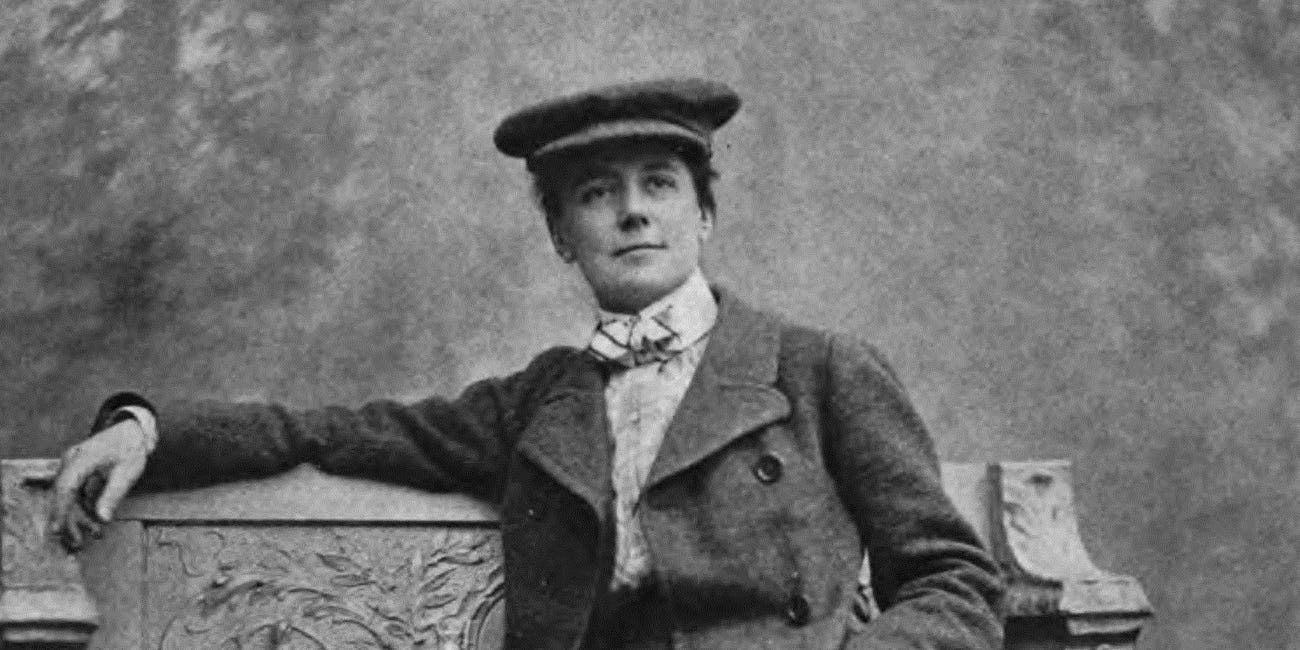
Momentum has been gathering behind Ethel Smyth’s music recently. A statue commemorating the composer has gone up in Woking; last year a recording of her symphonic cantata The Prison won a Grammy; and this season, for the first time in the opera company’s history,
Comments
Nothing yet. Say the first thing.
Sign in to join the conversation.