
I’m sorry I’m a day late this week, so I’ve picked a really special piece by way of apology for the delay. This week’s Slow Listening is Rebecca Clarke’s Viola Sonata. This is quite simply one of the best pieces ever written for the viola. It’s also the piece that first got me seriously questioning the narrative that music by historical women was generally poor quality.
Clarke was a solo violist herself, and it shows in the way she writes for the instrument. The sonata opens with a cadenza that is a real gift for the soloist. It’s an opportunity for them to stamp their personality on the piece from the very beginning — no two players will render these bars in the same way. It’s bold, it’s exciting, it’s theatrical.
This piece was written in 1919, for a chamber composition competition that required all entries to be submitted anonymously. When Clarke’s work was allowed to stand on its own merits, rather than being heard as music by a woman, it was appreciated for just how brilliant it was. The judges put this sonata in joint first position. Publication followed, and it’s now one of the staples of the viola repertoire.
It’s in three movements:
Impetuoso
Vivace
Adagio
What images does this piece evoke for you?
What does bravery mean to you?
Vinciane Béranger & Dana Ciocarlie: Rebecca Clarke, Works for Viola
If you’re interested in finding about more about Clarke, her great-nephew-by-marriage, Christopher Johnson, runs a wonderful website with up to date information about publication and performances. You can buy my biography of her here, or read more about her below.
Who was Rebecca Clarke?
·
March 8, 2022
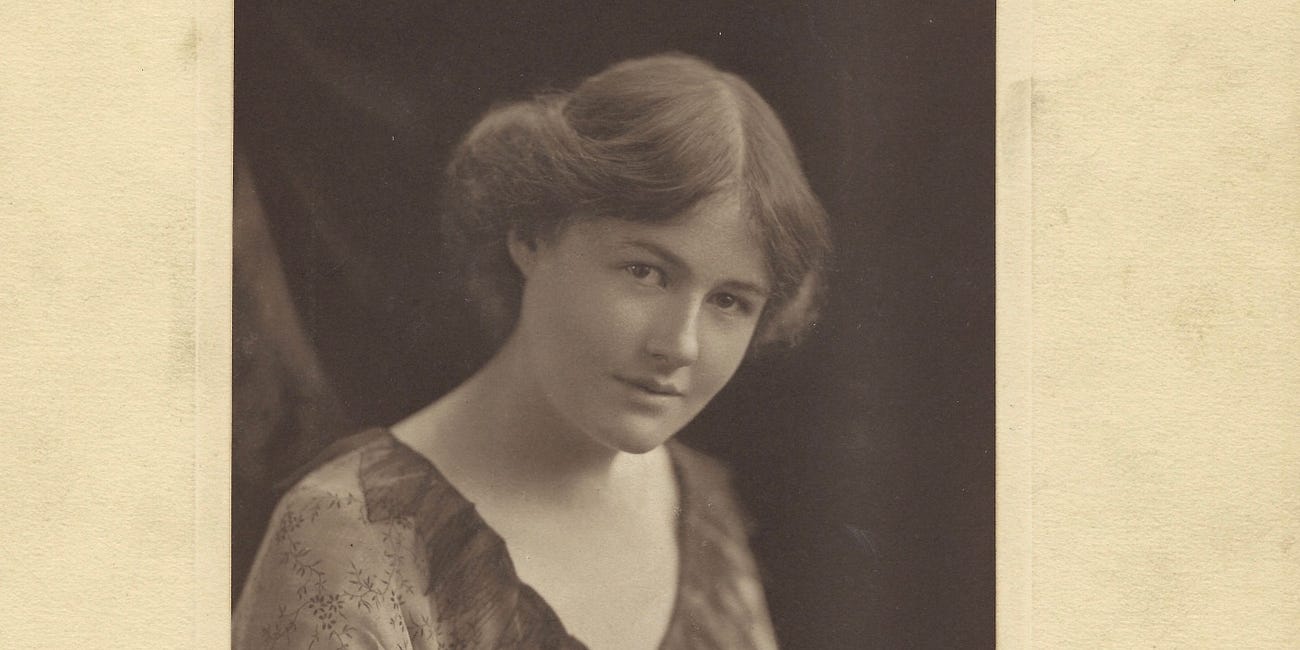
Look up the composer and violist Rebecca Clarke on Wikipedia and you’re presented with one of the best-known images of her, taken in 1919. She’s sitting holding her viola, face turned down away from the camera; she seems absorbed by the instrument and the music she might make with it, lost in a reverie, moving her fingers along the fingerboard. Her hair…
Comments
Nothing yet. Say the first thing.
Sign in to join the conversation.