
Sometimes, people like to try telling me that there hasn’t been much gender prejudice against women in classical music. Feminists are making a fuss about nothing, they say. Maybe one or two people were sexist, but it wasn’t everyone, so it can’t have impacted on women that much.
To show how completely daft this is, all we need to do is flip the script and insert men in place of women in writing about music. So here’s an alternate history, if men had been talked about as though they were women. If anyone ever tries to tell you that there was no historical prejudice towards women musicians, you can show them this post. The most recent quote I’ve included is from 2021.
Happy Sunday!
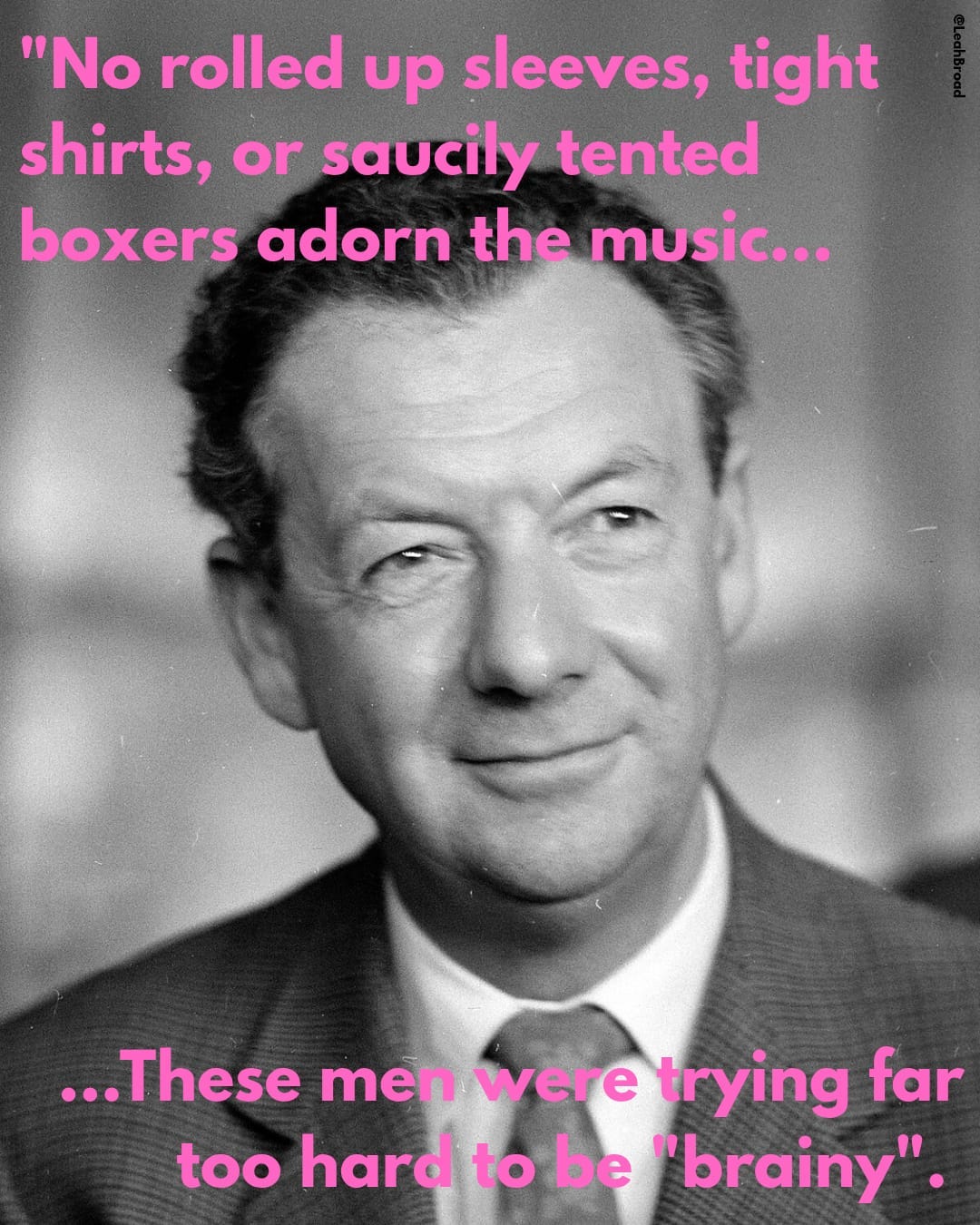
Original: ‘No lip-stick, silk stocking, or saucily tilted hat adorns the music…these three ladies were too formidably clever, or tried to be.’ (William McNaught, ‘The Mind of a Woman Composer’, Evening News, 5 Feb. 1935, reviewing Elizabeth Maconchy, Elisabeth Lutyens, and Grace Williams)
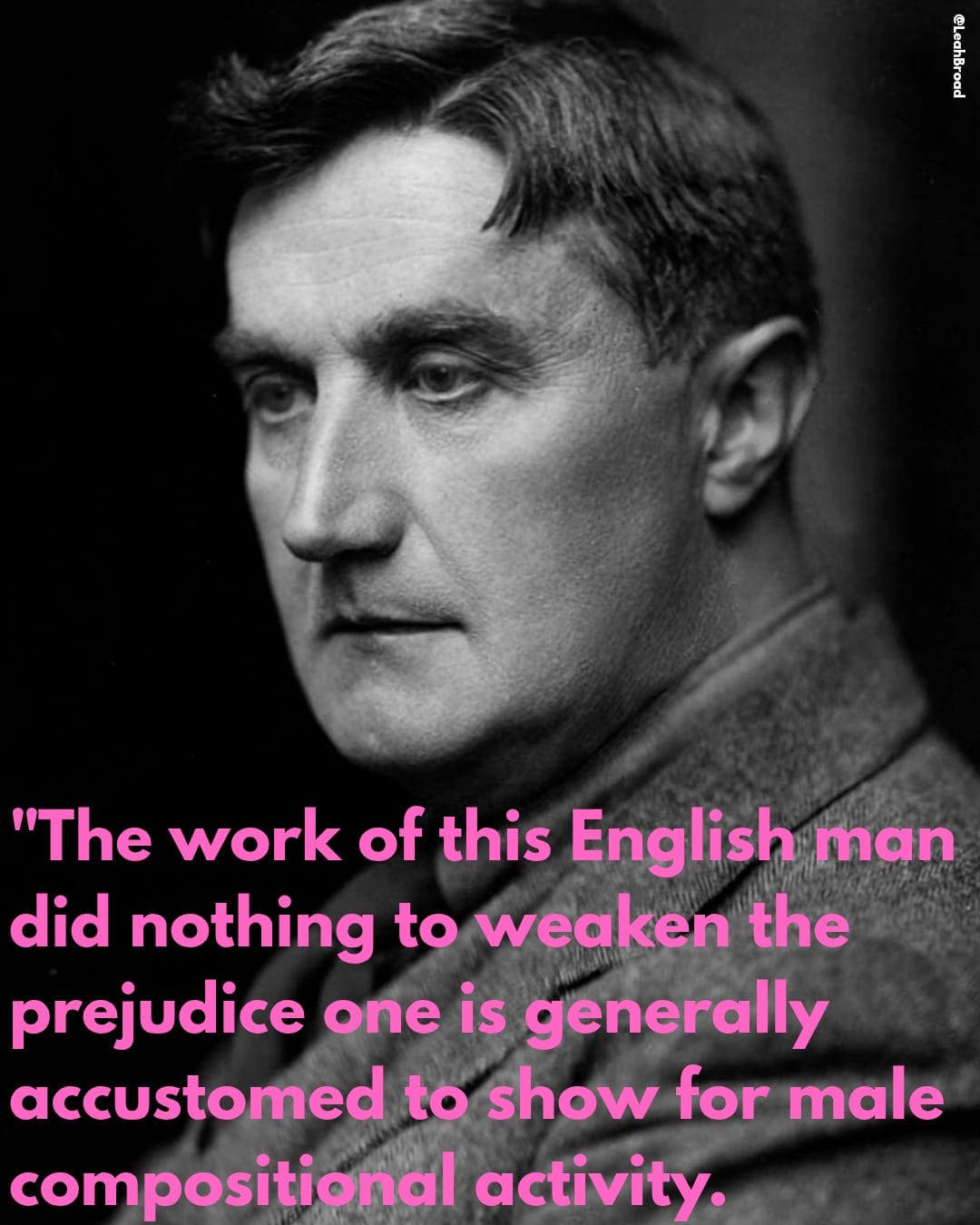
Original: ‘The work of the English composeress did nothing to weaken the prejudice that one is generally accustomed to show for female compositional activity.’ (D. Warte, ‘Erstaufführungen’, Deutsche Bühnen-Genossenschaft, 18 May 1902, reviewing Ethel Smyth’s opera Der Wald)
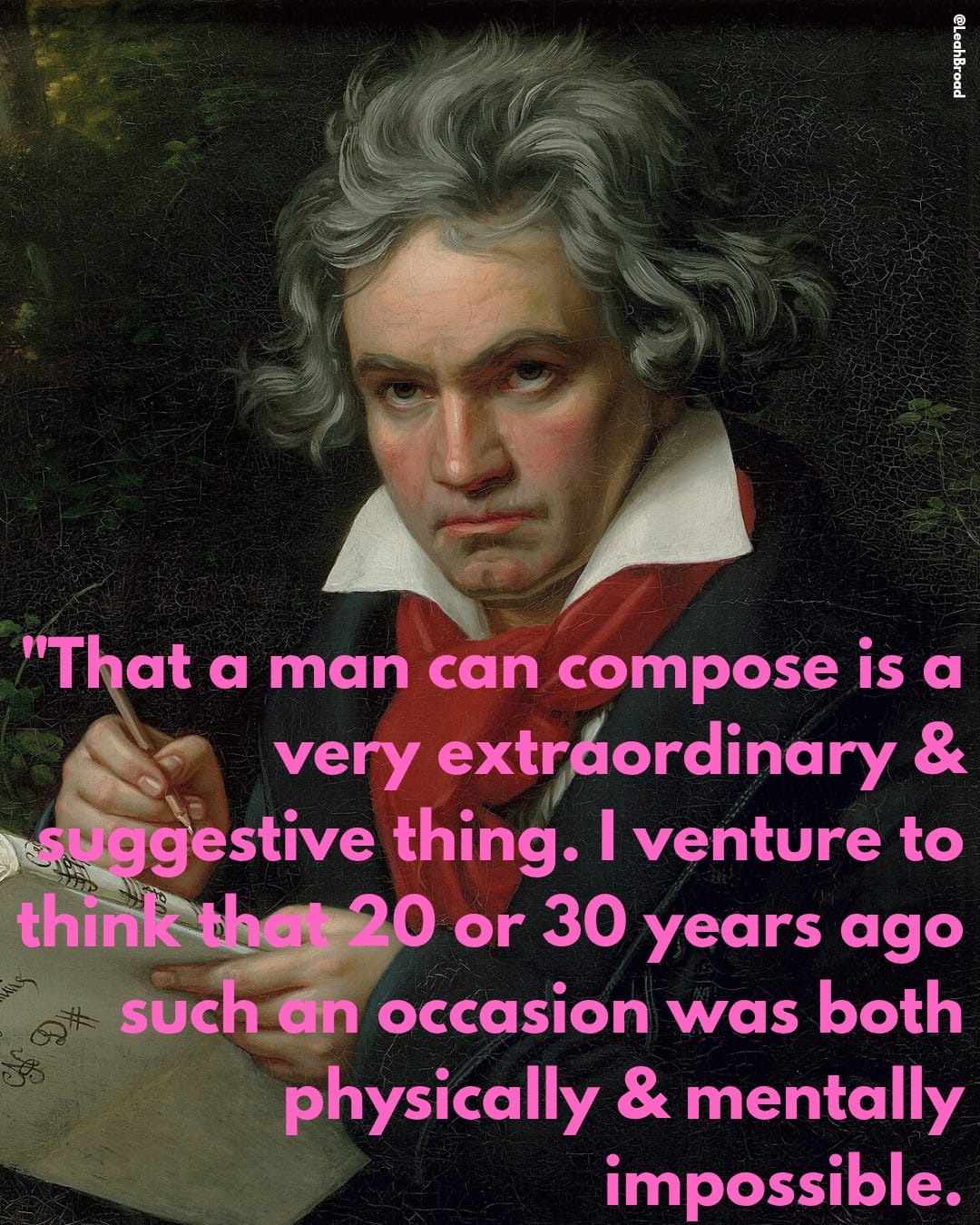
Original: ‘In a girl I think [compositional talent] is a very extraordinary & suggestive thing. I venture to think that 20 or 30 years ago such an occasion was both physically & mentally impossible.’ (J. B. McEwen, 20 Apr. 1919, writing about his student Dorothy Howell)
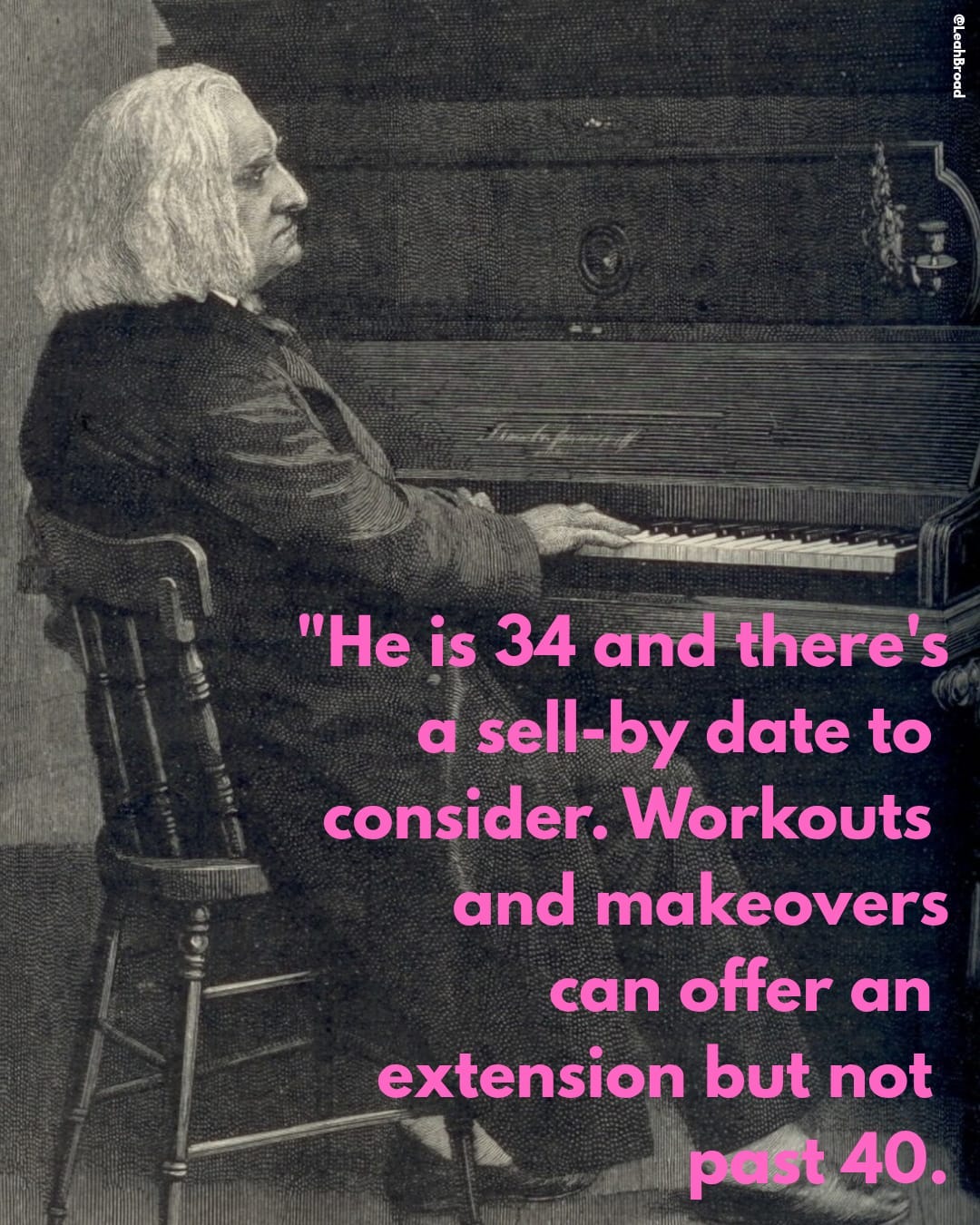
Original: ‘She is 34 and there’s a sell-by date to consider. Workouts and makeovers can offer an extension but not past 40.’ (Norman Lebrecht, ‘Spare us the skintight sonata’, The Critic, Nov. 2021, reviewing pianist Yuja Wang)
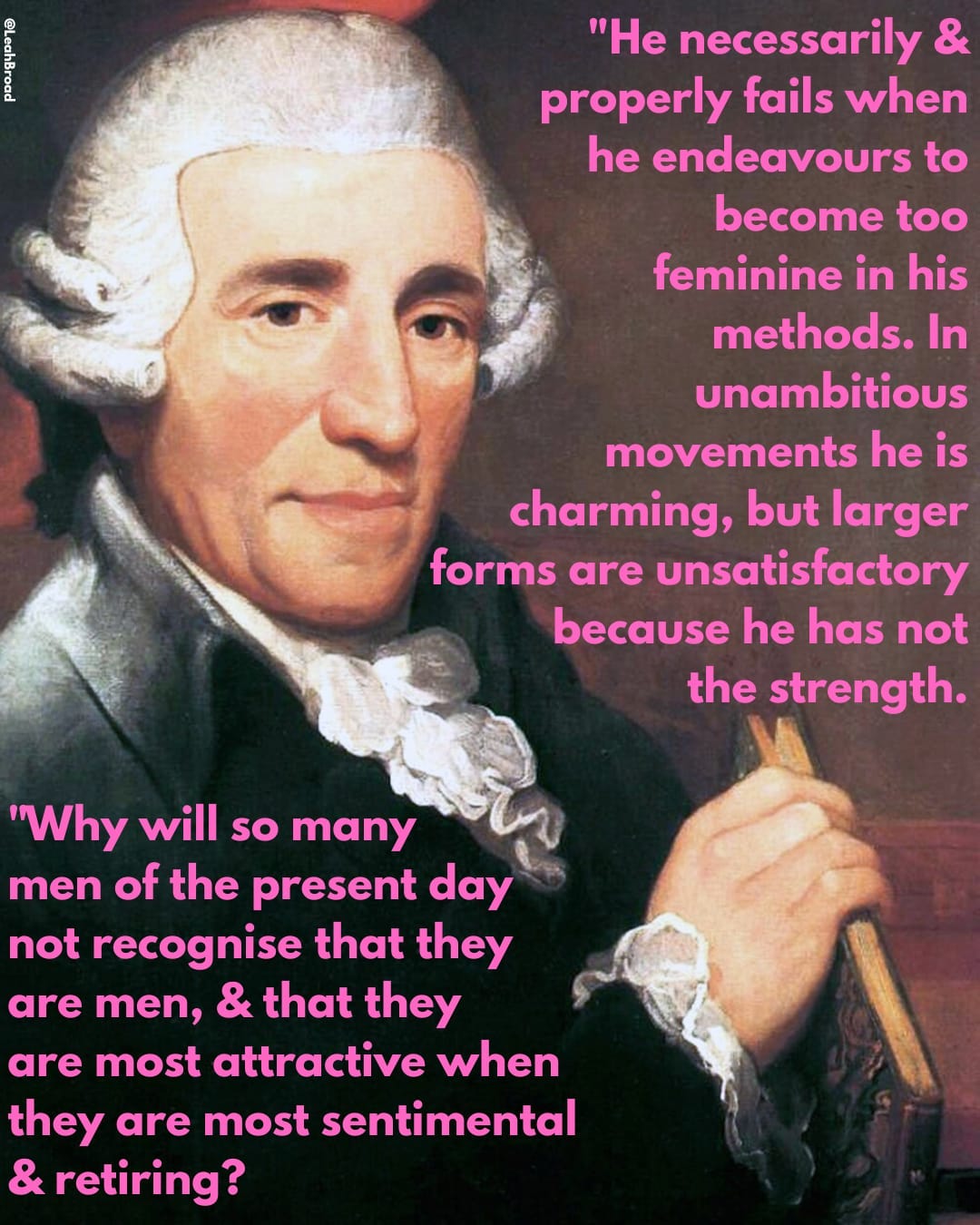
Original: ‘She necessarily and properly fails when she endeavours to become too masculine in her methods… In such unpretentious movements as her “Sanctus” and “Benedictus” she is charming, but her “Gloria” and “Credo” are unsatisfactory, because in these she attempts to handle large forms for which she has not the strength. Why will so many women of the present day not recognise that they are women, and that they are most attractive when they are most womanly?’ (‘Dramatic and Musical Gossip’, Referee, 22 Jan. 1893, reviewing Ethel Smyth’s Mass)
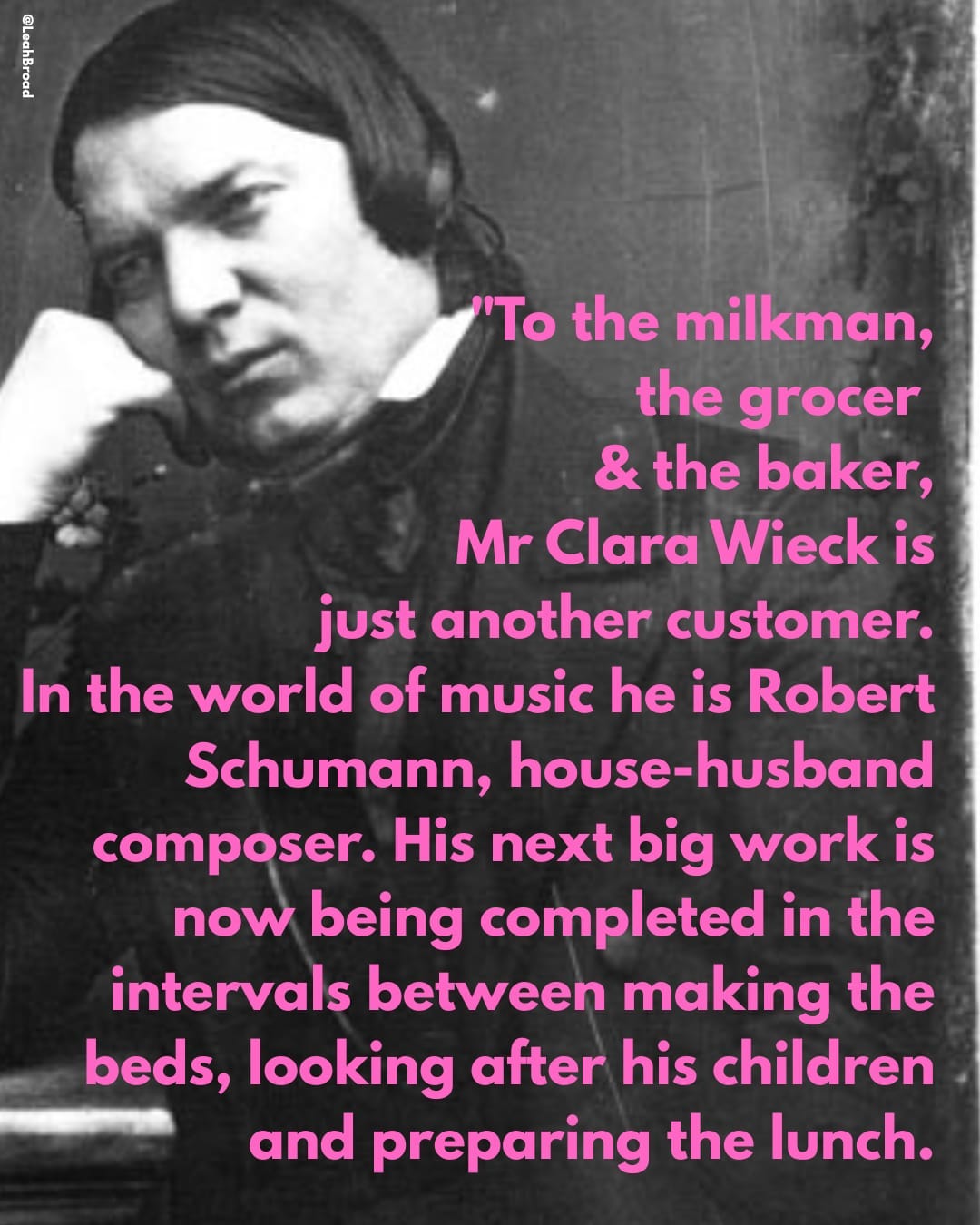
Original: ‘To the milkman, the grocer, and the baker… Mrs Ruth Baker is just another customer. In the world of music she is Ruth Gipps, housewife composer… Her next big work is now being completed in the intervals between making the beds, cooking the breakfast and preparing the lunch.’ (Daily Mail, 24 Oct. 1946, profiling composer Ruth Gipps)
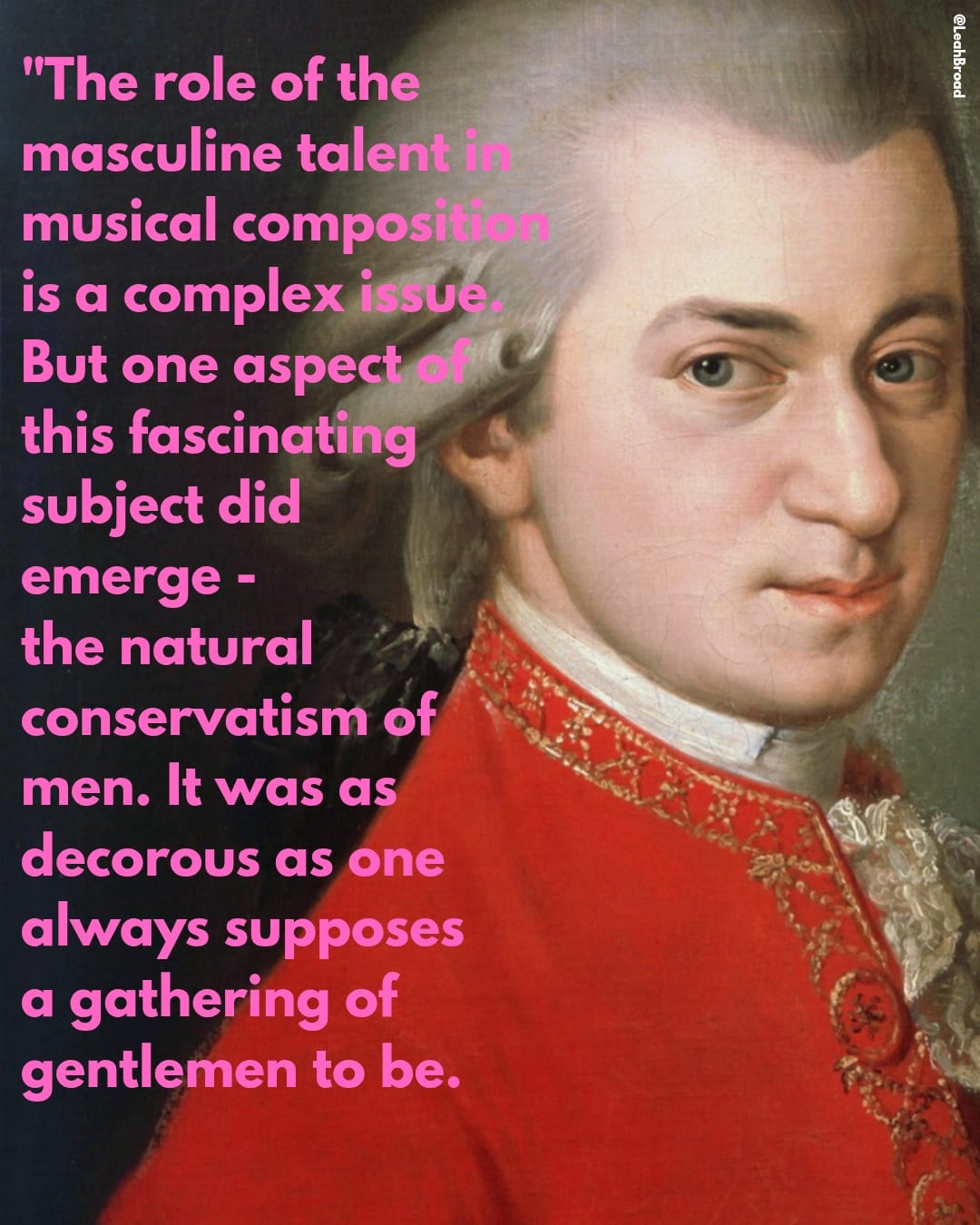
Original: ‘The role of the feminine talent in musical composition is a complex issue, not to be embarked upon in a small space. But one aspect of this fascinating subject did emerge — the natural conservatism of women. There was scarcely an emancipated note sounded from one end of the concert to the other. It was as decorous as one always supposes a gathering of ladies to be.’ (Donald Mitchell, ‘Too Decorous Women Composers. Gauche Works’, The Daily Telegraph, 29 Apr. 1960, reviewing a concert of works by Ina Boyle, Dorothy Howell, Grace Williams, Elizabeth Maconchy, Ruth Gipps and Antoinette Kirkwood)
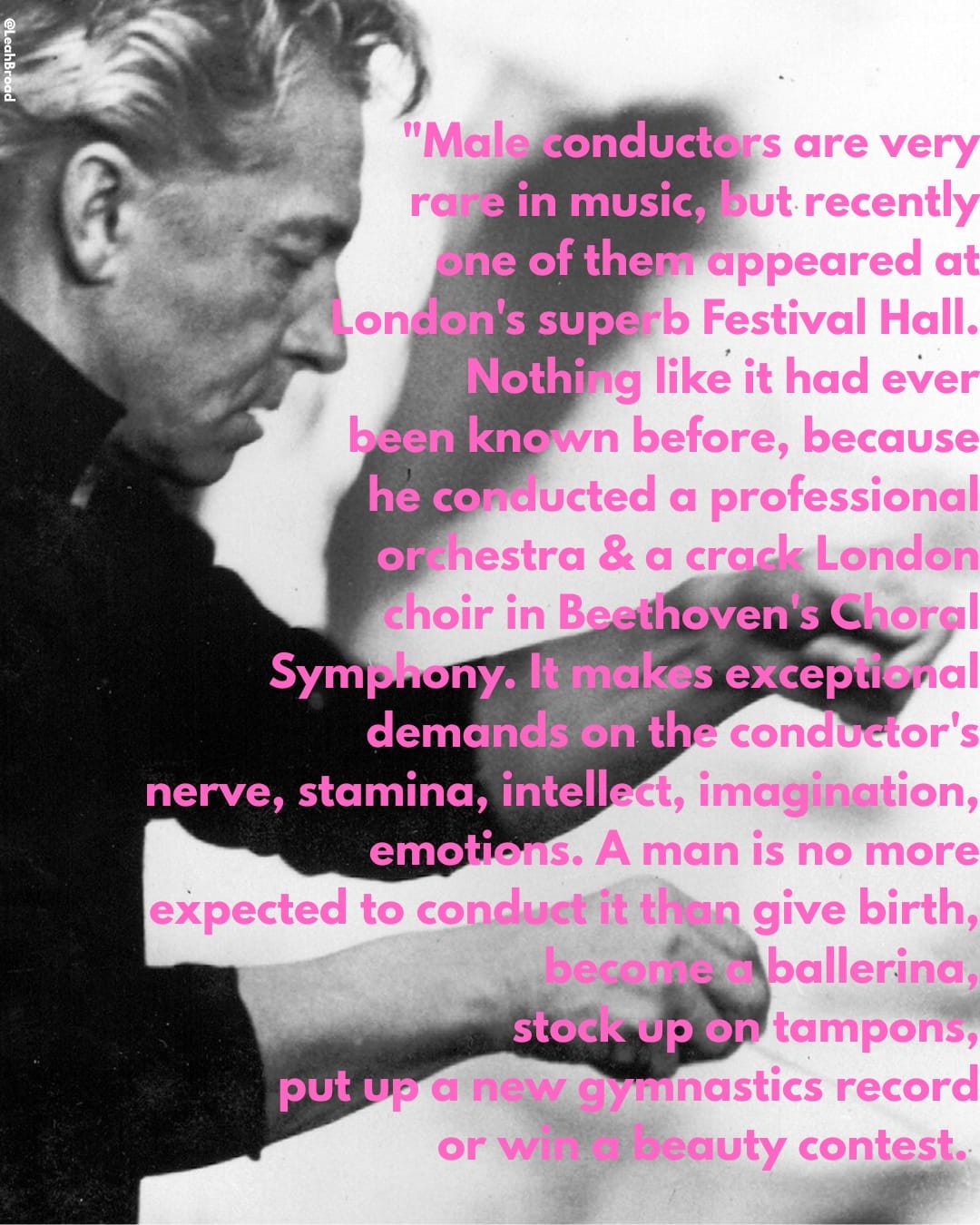
Original: ‘Women conductors are very rare in music, but recently one of them appeared at London’s superb Festival Hall. Nothing like it had ever been known before [as she conducted] a professional orchestra and a crack London choir in Beethoven’s Choral Symphony … one of the Everests of music. It makes exceptional demands on the conductor’s nerve, stamina, intellect, imagination, emotions. A woman is no more expected to conduct it than build a Great Boulder Dam, pilot a space rocket, buy ten million surplus Army razor blades, put up a new deep-sea diving record or win a cheese-eating contest.’ (Frances Wilson, Everybody’s Weekly, 16 Mar. 1957, reviewing Ruth Gipps conducting Beethoven’s 9th Symphony)
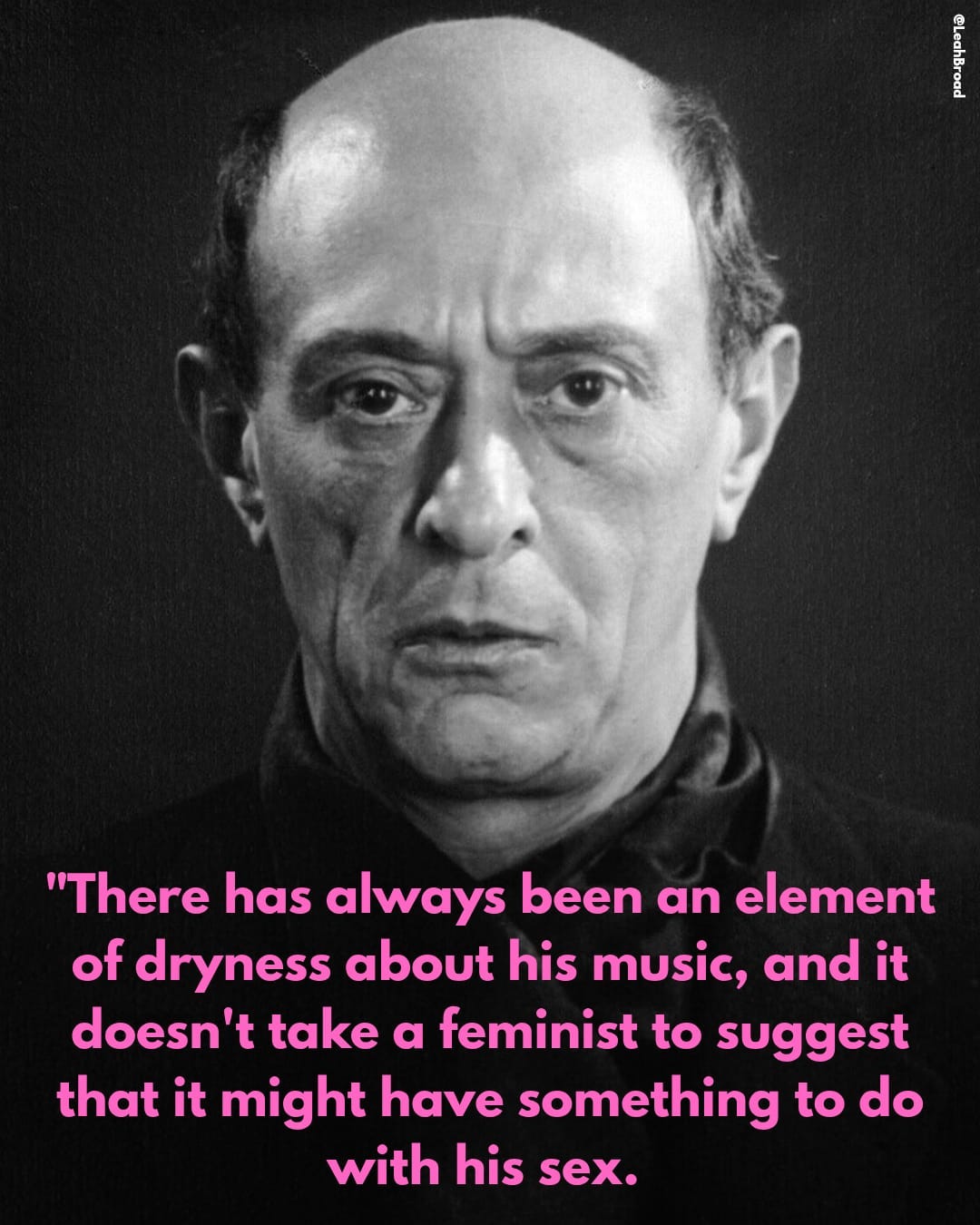
Original: ‘There has always been an element of dryness about her music, and it doesn’t take an anti-feminist to suggest that it may have something to do with her sex.’ (Stephen Walsh, ‘Music Last Week’, The Listener, 8 Dec. 1966, reviewing Elisabeth Lutyens)
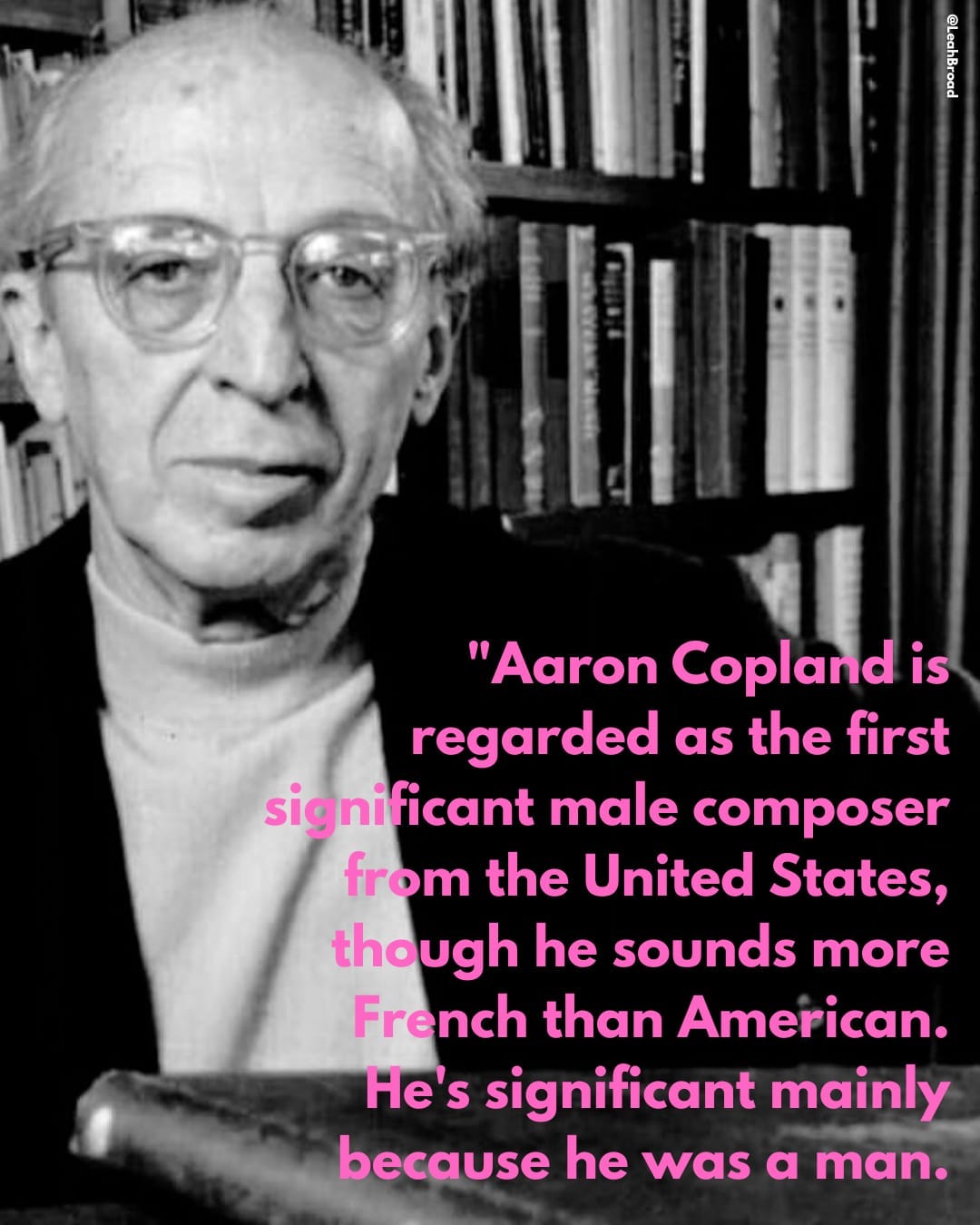
Original: ‘Amy Beach (1867–1944) is regarded as the first significant woman composer from the United States, though she sounds more French than American. She’s significant mainly because she was a woman.’ (Damian Thompson, ‘There’s a good reason why there are no great female composers’, The Spectator, 16 Sept. 2015)
The language we use to talk about gender matters. Words shape our beliefs and expectations about what is possible. I’ve written more about language and unconscious bias in classical music here:
What counts as a "smoking gun"?
·
May 5, 2024
Hi folks — it’s been a little while since I posted, so thank you for bearing with me. I’ve been taking research time for my next book, and more on that soon!
Comments
Nothing yet. Say the first thing.
Sign in to join the conversation.