
Good sleep is essential for human health and a good quality of life. Yet, in modern society, insufficient and poor sleep is a pervasive problem that often goes unnoticed and unaddressed.
Reduced sleep duration has been linked to 7 of the 15 leading causes of death in the United States, including cardiovascular disease, malignant neoplasm, cerebrovascular disease, accidents, diabetes, septicemia, and hypertension.
Quality of sleep also matters. Sleep disruptions - whether caused by lifestyle or environmental factors - impact the continuity of sleep and have substantial short-term and long-term consequences, even in otherwise healthy adults. Short-term consequences include increased stress responsivity, somatic pain, emotional distress, mood disorders, and performance deficits. The long-term consequences include, but are not limited to, colorectal cancer, metabolic syndrome, type 2 diabetes mellitus, and increased all-cause mortality in men.
Beyond personal health, the societal toll is also staggering. One study estimates that insufficient sleep alone costs the US economy up to $411 billion per year due to increased risk of sickness and dying, reduced work performance, and suboptimal school performance in children.
People struggling with sleep go to enormous lengths to get a good night’s rest. In 2024, the global market for sleep aids was valued at $64B and is expected to grow to $89B by 2030.
Consumers are actively seeking solutions for better sleep, making the category the second-highest wellness priority after general health - taking precedence over nutrition, fitness, mindfulness, and appearance. In the pursuit of better rest, consumers are trying products such as earplugs, eye masks, weighted blankets, mouth tapes, nasal dilators, nasal strips, magnesium foot sprays, smart alarm clocks, and smart mattress systems, among others.
Yet, despite years of innovation and strong demand, many consumers still find current products and services insufficient to meet their sleep needs, making the sleep category one with the greatest unmet consumer need.
The caveat is that better sleep can often be achieved through consistent habits rather than more products. Diet, exercise, exposure to natural daylight, bedroom darkness at night, reduced screentime at night, and avoiding caffeine and alcohol later in the day can all help improve sleep.
With that said, life circumstances - such as caring for a newborn, working night shifts, and frequent travel - can all disrupt good sleep hygiene and increase the demand for innovation to achieve better sleep.
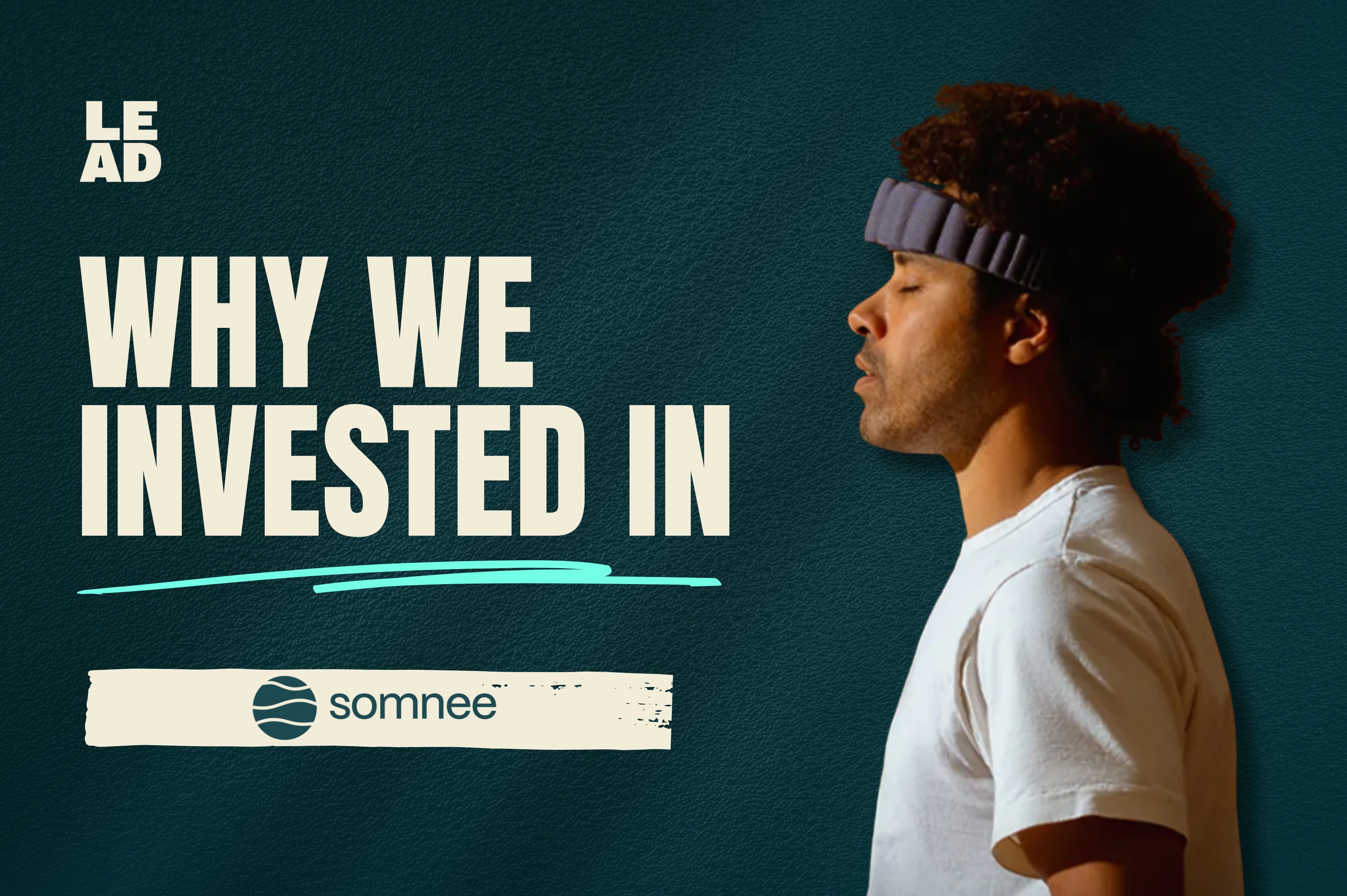
Somnee is a sleep headband that creates a proprietary brain mapping diagnosis with EEG sensors and provides non-invasive, gentle, and personalized electrical stimulation (tES). The product reduces sleep onset latency and increases both sleep duration and sleep efficiency.
Co-founded by Dr. Matt Walker, Dr. Ram Gurumoorthy, Dr. Robert Knight, Dr. Richard Ivry, and led by Tim Rosa, Somnee is a clinically validated product shown to be more effective than melatonin in improving sleep efficiency and duration.
We invested in Somnee because it addresses a profoundly underserved market with serious health implications and is led by a world-class team delivering a clinically validated solution.
Addressing the epidemic of poor sleep requires innovation and collaboration. We are proud to partner with Somnee alongside Khosla Ventures, Marc Benioff’s TIME Ventures, the DeVos Family, Seaside Ventures, Nelstone Ventures, Metalab, and others, to advance effective sleep solutions and improve public health worldwide.
Thanks for reading! Feel free to share this with anyone who might find it insightful.
No posts
Comments
Nothing yet. Say the first thing.
Sign in to join the conversation.